
If your dog lives with a hidden medical condition or a specific behavioural requirement, a standard pet tag is often the only thing standing between a safe return and a dangerous misunderstanding. You understand the constant worry that comes with a "silent" disability, especially when standard engraving fails to communicate the urgency of the situation. Finding the right id tags for special needs dogs australia shouldn't be a matter of trial and error or settling for flimsy materials that won't survive a single summer in the harsh Australian sun.
It's frustrating when vital medical info wears off or when people approach your dog despite their needs because your signage isn't clear enough. You deserve the peace of mind that comes from professional grade gear that stays legible for years, not weeks. This guide will show you how to choose and customise the most durable, high-visibility ID tags to protect your special needs dog in any Australian environment. We will look at the technical advantages of deep-engraved stainless steel, the benefits of smart tags for storing complex vet records, and how to create a layered safety system that keeps your best friend secure.
Key Takeaways
- Learn why standard name-and-number engraving fails special needs pets and how to prioritise life-saving medical information for first responders.
- Discover why deep-engraved stainless steel is the gold standard for durability in the Australian climate compared to inferior alternatives.
- Understand how to use Smart Pet Tags to store complex veterinary instructions and digital profiles that won't fit on a physical tag.
- Find the most effective id tags for special needs dogs australia to communicate behavioural boundaries and prevent unwanted public interaction.
- Explore secure attachment methods and silent ID solutions designed specifically for dogs with noise phobias or sensory sensitivities.
Beyond the Name: Why Special Needs Dogs Require Specific Identification
A special needs dog in Australia isn't just a service animal in a vest. This category covers a broad spectrum of pets, including those with chronic conditions like epilepsy or diabetes, and sensory impairments such as blindness or deafness. It also includes dogs with specific behavioural requirements, such as those recovering from trauma or those who are highly reactive to strangers. For these animals, Pet identification tags serve a purpose far beyond simple contact information. They act as a vital communication tool when you aren't there to advocate for your pet's safety.
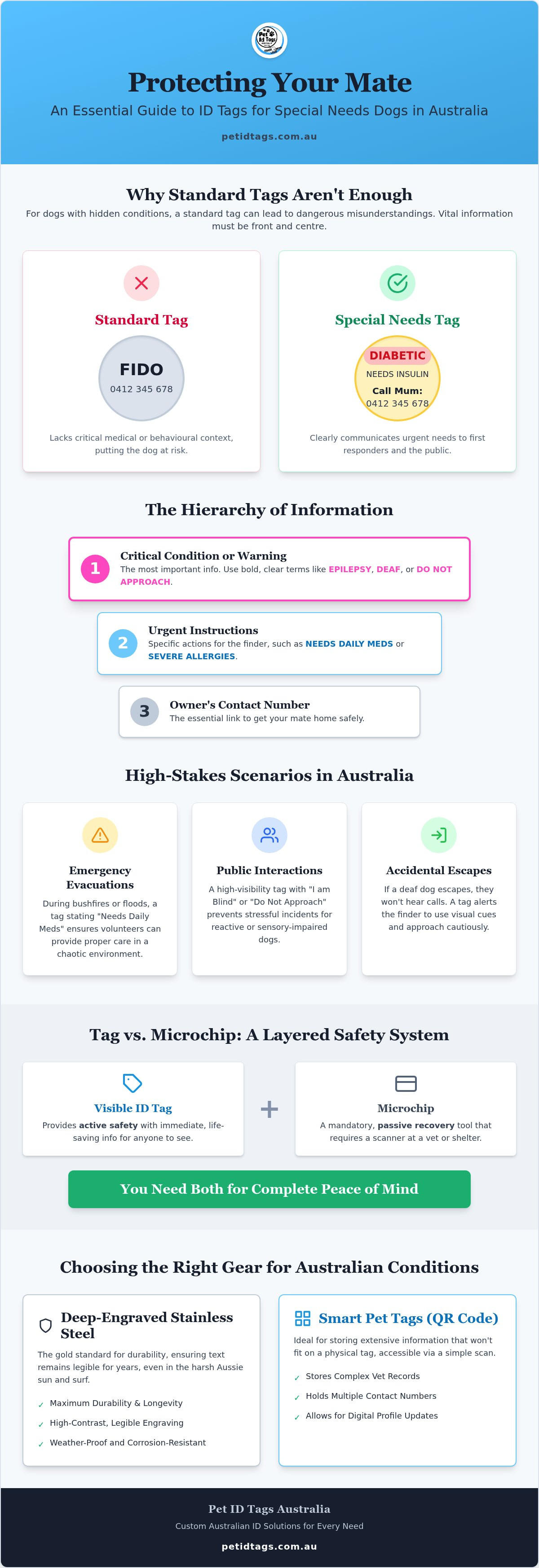
Relying on a standard name-and-number tag is often insufficient for a dog with a hidden disability. If a dog with severe food allergies is found by a well-meaning stranger, they might offer a treat that causes a life-threatening reaction. Without specific id tags for special needs dogs australia, a finder has no way of knowing that your dog requires immediate medication or specific handling. The tag becomes your dog's voice, providing instant context to anyone who finds them and ensuring their immediate needs are respected.
The Critical Difference Between ID Tags and Microchips
While microchipping is mandatory across all Australian states, it's a passive recovery tool. A microchip requires a vet or animal shelter with a specialised scanner to access the owner's data. In contrast, a visible ID tag provides active safety. It communicates needs instantly to a neighbour or a passerby, often preventing an unnecessary trip to the pound. For a comprehensive look at why you need both systems, read our guide on Pet Tag vs Microchip Australia: Why Your Pet Needs Both in 2026.
Common Australian Scenarios Where Special ID Saves Lives
In the unpredictable Australian environment, specific identification is a necessity. Consider these high-stakes situations where clear messaging is vital:
- Emergency Evacuations: During bushfire season, pets are often handled by emergency services or volunteers. A tag clearly stating "Needs Daily Meds" ensures your dog's health isn't compromised during the chaos of a relocation.
- Public Interactions: High-visibility tags with "Do Not Approach" or "I am Blind" messaging help manage public interactions, preventing stress-induced incidents in crowded parks or cafes.
- Accidental Escapes: If a deaf dog slips out of a gate, they won't hear a person calling their name. A tag that identifies them as deaf alerts the finder to use visual cues or approach from the front to avoid startling the animal.
Investing in specialised id tags for special needs dogs australia ensures that no matter who finds your dog, they have the information required to keep them safe and comfortable until you're reunited.
Tailoring the Message: Essential Engraving for Medical and Behavioural Needs
When customising id tags for special needs dogs australia, the hierarchy of information changes. For a healthy pet, the name is often the largest text. For a dog with a hidden disability, the medical or behavioural condition must take priority. First responders and members of the public need to know exactly what they are dealing with before they attempt to handle the animal. Clear, high-impact terminology ensures that your dog receives appropriate care even if they are distressed or unable to communicate their needs.
The "Less is More" rule is vital here. Overcrowding a tag with too much text reduces legibility from a distance. Stick to universally understood terms that Australian emergency services can recognise quickly. In 2026, microchipping remains mandatory across all states, and most local councils require a registration tag to be worn in public. For example, Brisbane City Council dog registration fees are $57 for desexed dogs, while Gold Coast fees sit at $74. Failing to have visible identification can lead to fines of $345 in many Queensland jurisdictions. Using a high-quality stainless steel tag ensures this mandatory information remains readable for the life of the pet.
Engraving Templates for Sensory and Medical Conditions
Specific conditions require specific language to ensure the finder acts correctly. Use these bold, capitalised templates for maximum impact:
- Sensory Alerts: "I AM DEAF" or "BLIND DOG" helps a finder understand why a dog might not respond to verbal commands or may startle easily.
- Medical Warnings: "EPILEPTIC – NEEDS MEDS" or "DIABETIC – DO NOT FEED" provides immediate instructions that can prevent a health crisis.
- Behavioural Needs: "GIVE ME SPACE" or "NERVOUS DOG – DO NOT TOUCH" sets clear boundaries for well-meaning strangers.
While a tag provides essential external communication, supporting your pet's internal health is just as vital for their long-term well-being. For owners managing animals with chronic conditions or mobility issues, PetREGEN offers science-based resources and supplements focused on regenerative nutrition.
What to Include for Emergency Recovery
Redundancy is the cornerstone of emergency recovery. Always include two contact numbers: a primary mobile and a secondary contact or your local veterinarian. This ensures that if you are unreachable during an emergency, such as a bushfire evacuation, there is a backup plan. Including the word "REWARD" is a proven way to incentivise a quick return, though you should never list a specific dollar amount on the tag itself. For a full breakdown of how to organise your layout, see our Pet ID Tag Engraving Ideas: The Ultimate 2026 Australian Checklist. Clear, deep engraving on a durable surface is the most reliable way to ensure these details stay permanent.
Choosing the Right Gear: Stainless Steel vs. Smart Tags for High-Stakes Safety
Selecting the material for id tags for special needs dogs australia is the most critical decision in your pet's safety plan. While aesthetic tags might look appealing on a shelf, they often fail when subjected to the rigours of the Australian environment. For a dog with a medical condition or sensory impairment, a failed tag is a safety breach. You need a solution that remains legible regardless of whether your dog is swimming in saltwater or scratching at their collar. The foundation of high-stakes safety lies in choosing materials that offer permanent, unalterable communication.
We advocate for a hybrid safety strategy. This involves using a physical, deep-engraved tag for immediate identification and a digital smart tag for detailed medical data. This redundancy ensures that if a finder is in an area with poor mobile reception, like many rural parts of Australia, they can still read your phone number and your dog's primary condition. Conversely, if they have a smartphone, they can access a full medical profile that no physical tag could ever hold.
The Durability of Stainless Steel in the Aussie Climate
Stainless steel is the gold standard for physical ID. It offers superior resistance to saltwater corrosion, making it essential for coastal living. Unlike aluminium or plastic, it won't snap or wear thin over time. UV exposure in Australia is exceptionally high, and surface-printed tags often fade into illegibility within months. Deep laser engraving into stainless steel creates a permanent mark that survives years of friction and environmental stress. For a technical breakdown of why this material outperforms all others, consult our Stainless Steel Dog Tags Australia Pillar Guide.
Leveraging Smart Pet Tags for Complex Medical Histories
A physical tag has limited real estate. If your dog has a complex history, such as specific medication dosages, multiple allergies, or surgical records, a Smart Pet Tag is the logical solution. These tags use a QR code that links to a secure online profile. You can update this information instantly if your vet changes a prescription or if you are travelling and need to list a temporary contact.
One of the most valuable features for 2026 is the GPS "ping" notification. When someone scans your dog's tag, you receive an immediate alert with the location of the scan. This provides a secondary layer of tracking that works alongside your dog's mandatory microchip. By maintaining an up-to-date digital profile, you ensure that anyone who finds your dog has the exact tools needed to manage their specific health requirements safely.
Attachment and Comfort: Ensuring the Tag Stays Secure and Silent
Standard split rings are a common failure point for active pets. These thin wire loops can easily stretch or snag on bushland during a walk, leading to the permanent loss of vital identification. For a dog with a medical condition, this loss is more than an inconvenience; it's a safety breach. High-quality id tags for special needs dogs australia require a fastening method that matches the durability of the tag itself. Beyond physical security, the sound of the tag matters. Dogs with sensory processing disorders or noise phobias can find the constant metallic jingle of a tag against a buckle highly distressing. This persistent noise can increase cortisol levels and make an already anxious dog more reactive to their environment.
Regular maintenance is essential for long-term safety. Check your dog's gear weekly to ensure the tag hasn't become obscured by thick fur or caked in mud after a trip to the park. A quick wipe with a damp cloth keeps the engraving sharp and readable. For dogs with skin or sensory sensitivities, using a gentle organic dog shampoo during their wash can further enhance their comfort. Ensuring the tag remains visible and the attachment remains tight prevents the information from being useless when it's needed most.
Using a Dog Tag Quick Clip allows you to swap identification between different gear effortlessly. If your dog uses a custom harness for walks but a soft collar at home, a quick clip ensures they are never without their ID. These clips also help reduce tag jingle by providing a more stable attachment point. For owners with limited dexterity, these clips are far easier to manage than traditional rings. If you're unsure about the best way to secure your pet's ID, our guide on How to Attach a Dog Tag to a Collar offers step-by-step instructions for the most secure fit.
Visual Signalling Beyond the Tag
While the tag carries the specific data, visual signalling on the dog's body provides an immediate warning from a distance. Colour-coded gear is an effective secondary layer of communication in Australia. A yellow harness or lead often signals an anxious dog that needs space, while red can indicate a dog that should not be touched. Combining these visual cues with deep-engraved id tags for special needs dogs australia ensures your dog's needs are understood before a stranger even gets close. It's vital to use "Service Dog" or "Assistance Dog" patches responsibly. These should only be used if your dog is legally accredited, as misrepresentation can undermine the rights of legitimate handlers in public spaces.
Choosing the right attachment is just as important as the tag itself. Secure your pet's safety by choosing a durable attachment solution that won't let them down during an emergency.
Protecting Your Mate: Custom Australian ID Solutions for Every Need
Since 2004, Pet ID Tags Australia has operated as a dedicated specialist in pet identification. We understand that for owners of special needs pets, a tag is much more than a decorative accessory. It is a critical safety lifeline. Our commitment to quality means we only use materials capable of withstanding the unique demands of the Australian environment. From the intense UV radiation of the outback to the corrosive salt air of our coastal towns, our id tags for special needs dogs australia are built to remain functional and legible for the long term.
We take a no-nonsense approach to craftsmanship. Every tag undergoes a precision engraving process that creates deep, permanent marks in the metal. This ensures that vital medical information or behavioural alerts won't rub off over time. We recognise that the special needs community requires specific, clear communication, and our personalised service is designed to cater to those exact requirements. When you choose a professional solution, you are investing in the peace of mind that comes from knowing your dog can be identified and assisted correctly in any situation.
Why Thousands of Aussie Owners Trust Our Tags
With over two decades of experience, we have seen firsthand how inferior products fail when they are needed most. This is why we focus heavily on high-grade stainless steel. We understand why pet id tags fade in our harsh climate, and we have engineered our products to combat this issue. While surface-printed or lightly etched tags may look fine initially, they quickly become unreadable under the Australian sun. Our deep laser engraving method ensures that your dog's name, your contact details, and their specific medical needs stay visible for the life of the tag.
Final Checklist for Your Special Needs Dog’s ID
Before you finalise your safety plan, run through this essential checklist to ensure your id tags for special needs dogs australia are as effective as possible:
- Legibility Check: Review your text layout. Can a stranger understand the most critical medical or behavioural alert in a three-second glance?
- Attachment Security: Is the fastening method appropriate for your dog's activity level? If they are a "bolter" or prone to scratching, ensure you are using a secure clip or reinforced ring.
- Redundancy: Have you included a secondary contact number or vet details as a backup?
- Information Accuracy: Double-check that all phone numbers and medical terms are spelled correctly.
Ordering is simple and efficient, with a fast turnaround specifically for Australian pet owners. Don't leave your dog's safety to chance with a flimsy, generic alternative. Design your custom special needs tag today and provide your mate with a durable, professional voice that will protect them for years to forget.
Securing Your Dog’s Safety for the Long Term
Protecting a pet with medical or behavioural requirements demands a specialised approach that goes beyond a standard name tag. We have looked at how high-impact engraving and a hybrid strategy of physical and digital identification provide the most reliable safety net in the Australian environment. Choosing the right materials, specifically high-grade 316 Stainless Steel, ensures that your dog's vital information remains legible through years of intense sun and coastal salt.
Investing in professional id tags for special needs dogs australia is a practical decision that offers immediate peace of mind for you and protection for your mate. As trusted Australian pet safety experts since 2004, we pride ourselves on delivering deep-engraved solutions for lifetime legibility. Your dog relies on you to be their voice when you aren't there to advocate for them. Make sure that voice is clear, durable, and permanent.
Browse our durable Stainless Steel Tags for your special needs dog today
Frequently Asked Questions
What is the most important thing to put on a special needs dog tag?
The most critical information is a clear medical or behavioural alert that tells a finder exactly how to handle your dog. Use large, bold text for conditions like deafness or epilepsy. This ensures that someone who finds your pet understands their needs within seconds. Including id tags for special needs dogs australia as part of your safety plan means prioritising communication over aesthetics. Always include two contact phone numbers for redundancy in emergencies.
Can I put medical instructions on a standard dog tag?
You can certainly include medical instructions on a standard tag, but you must be concise due to the limited surface area. Stick to high-impact phrases like "NEEDS MEDS" or "SEVERE ALLERGIES" rather than long sentences. For complex instructions, a smart tag is a superior choice. It allows you to link to a digital profile with unlimited text. This ensures that finders or vets can access your dog's specific care requirements without space constraints.
Are smart tags better than engraved tags for dogs with epilepsy or diabetes?
Smart tags and engraved tags serve different but equally important roles for dogs with chronic health conditions. An engraved stainless steel tag provides immediate, low-tech information that doesn't rely on mobile reception or battery life. A smart tag allows you to store detailed medication dosages and surgical histories that won't fit on metal. We recommend a hybrid approach where the physical tag alerts the finder to the condition and the smart tag provides the full medical context.
How do I stop my dog’s ID tags from making a jingling noise?
You can eliminate the jingling noise by using a Pet Tag Quick Clip or a silicone tag silencer. These accessories stabilise the tag and prevent it from hitting the collar buckle. This is particularly important for dogs with sensory processing disorders or noise phobias. Many owners search for silent dog tags australia to find solutions that keep their anxious pets calm during walks. A secure, silent attachment ensures your pet stays comfortable while remaining fully identified.
Do I need a special tag if my dog is an assistance dog in Australia?
While there is no single mandatory special tag for assistance animals, they must be easily identifiable in public. Legitimate assistance dogs in Australia are protected under the Disability Discrimination Act 1992 and usually wear specific harnesses or tags provided by their training organisation. However, a durable, custom-engraved tag with your contact details and the dog's status is an excellent secondary safety measure. Always ensure you carry your official handler identity card as proof of accreditation.
What happens if my dog’s special needs tag becomes unreadable?
If a tag becomes unreadable, your dog's safety is at immediate risk because a finder cannot contact you or understand your pet's medical needs. Standard aluminium tags often wear down or fade in the harsh Australian sun. You should replace any worn tags immediately with deep-engraved 316 stainless steel. This material is the gold standard for durability and ensures that vital information remains legible for the entire life of the tag, even with heavy daily wear.
Can I use a harness instead of a collar for my dog’s ID tags?
Yes, you can use a custom harness to display your dog's identification and special requirements. Harnesses offer a larger surface area for high-visibility messaging like "ANXIOUS DOG" or "DO NOT PET." This is a great secondary layer of communication. However, your dog should still wear a durable ID tag on their collar or harness at all times. This ensures that if they slip out of their harness, they still carry your contact information and medical alerts.
How often should I update the information on my dog’s smart tag?
You should update your dog's smart tag profile immediately whenever there is a change in their medical condition, medication dosage, or your contact information. It is best practice to review the digital profile at least once every twelve months to ensure all data remains current. Keeping this information accurate is vital for id tags for special needs dogs australia, as it ensures that first responders or vets have the most recent instructions during an emergency or health crisis.