

Imagine trekking through the Victorian high country or letting your kelpie sprint across a Queensland beach, only to realise their ID tag has vanished into the scrub. Learning how to attach dog tag to collar securely is often an afterthought until the moment your pet’s safety is on the line. Most owners have felt the frustration of a broken fingernail while wrestling with a flimsy split ring or the constant jingle of metal on metal. It's even worse when you accidentally clip your lead to the small tag ring instead of the sturdy D-ring, risking a snap and a loose dog.
You deserve a solution that offers permanent security without the physical struggle. We will show you exactly how to achieve a professional, reliable fit that withstands the harshest Australian conditions. This guide explores the most dependable methods for fastening identification, from heavy-duty stainless steel rings to the convenience of Pet Tag Quick Clips, ensuring your mate stays identifiable no matter how far they roam into the paddock.
Key Takeaways
- Understand why a secure connection is the vital link in pet safety and how to prevent tags from falling off in the scrub.
- Discover the easiest methods for how to attach dog tag to collar using everyday tools to save your fingernails from traditional split rings.
- Explore Pet Tag Quick Clips as a modern, tool-free alternative for owners who need to swap tags between collars quickly and securely.
- Learn the critical difference between attachment points to ensure you never accidentally clip a lead to a flimsy tag ring.
- Select the right materials, such as lightweight aluminium or heavy-duty stainless steel, to withstand the harsh Australian climate.
Why Knowing How to Attach a Dog Tag to a Collar Correctly Matters
A Pet tag is your pet's fastest ticket home. It provides immediate identification that anyone with a mobile phone can use. However, the most expensive tag is useless if it's sitting in the dirt at a local park because a flimsy attachment failed. Understanding how to attach dog tag to collar systems properly is the difference between a quick reunion and a long night at the pound.
Mechanical failure is the leading cause of lost ID. Many standard split rings are made from soft, plated metals that stretch under pressure. If your dog catches their tag on a branch or a fence, a weak ring will simply pull open. In Australia, our environment accelerates this process. Salt spray at the beach causes rapid corrosion in inferior metals, while the rough terrain of a bush walk puts constant physical stress on the hardware. When you master how to attach dog tag to collar hardware correctly, you choose materials like high-grade stainless steel or hardened aluminium that are built to last.
The Consequences of Poor Attachment
Poorly fastened tags create several hidden risks. A loose or dangling tag is more likely to snag on external objects during play. This doesn't just result in a lost tag; it can lead to collar injuries if the dog panics while caught. If the attachment allows the tag to rub constantly against other hardware, the engraving can wear down over time. This friction also causes the "tag jingle" that many owners find irritating. A secure, snug attachment reduces noise and preserves the legibility of your contact details.
Microchips vs. Tags: The Attachment Factor
It's a common misconception that a microchip replaces the need for a physical tag. While microchips are vital for permanent identification, they require a scanner and a trip to a vet or council facility. A visible, securely attached tag is the first line of defence. It allows a neighbour or passerby to return your dog instantly. For a complete safety net, you need both systems working together. You can read more about why this dual approach is essential in our guide on pet tag vs microchip australia. Every second counts when a pet goes missing, so ensuring that tag stays fastened is a non-negotiable part of responsible ownership.
Method 1: Using the Traditional Split Ring
The split ring is the most ubiquitous piece of hardware in the pet world. It is essentially a coiled spring that relies on physical tension to keep your pet's ID safe. While it seems straightforward, many owners struggle with the actual mechanics of how to attach dog tag to collar systems using these rings. Beyond the frustration of the task, there is a clear legal obligation. Under NSW legislation on dog identification, dogs must wear a collar and tag in public places. Ensuring that tag stays put is a matter of legal compliance as much as pet safety.
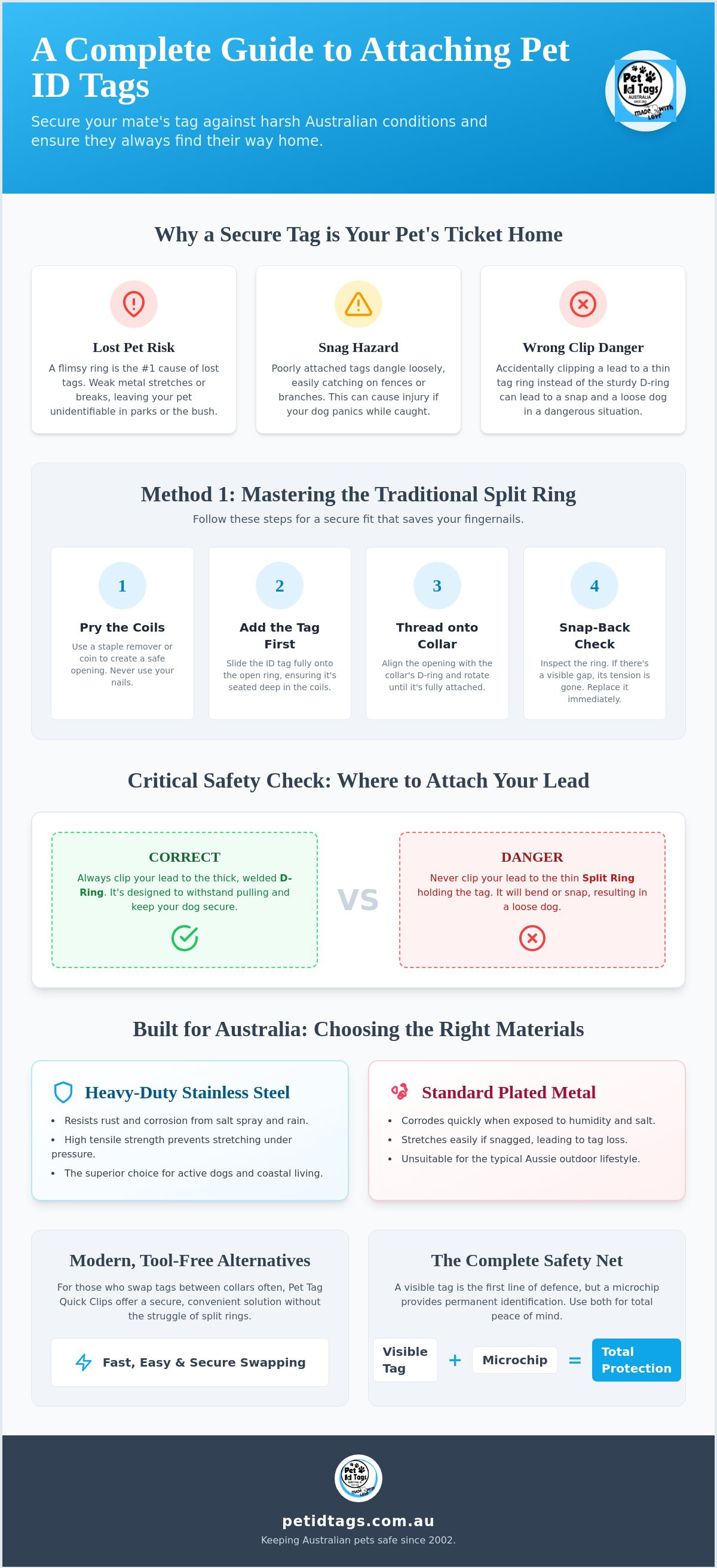
Follow these steps to master how to attach dog tag to collar hardware securely:
- Step 1: Pry the coils. Use a staple remover or a small coin to wedge between the metal layers. This creates a safe opening without risking your fingers or damaging your nails.
- Step 2: Add the tag first. Slide the dog tag onto the ring while you have the tool holding it open. This ensures the tag is seated deep within the coils before you move to the collar.
- Step 3: Thread onto the collar. Align the opening with the collar's D-ring or designated attachment point. Rotate the split ring until it is fully threaded through and clear of the tool.
- Step 4: The snap-back check. Once attached, inspect the ring. It should return to its original, tight shape. If there is a visible gap, the tension is gone and the tag is at risk.
Pro Tips for Split Ring Success
Avoid using your fingernails at all costs. This is the most common cause of painful chips and breaks. Instead, keep a dedicated tool in your dog's lead drawer for quick changes. Never over-stretch the metal. If you force a ring open too wide, you compromise its structural integrity. For those living near the coast, always choose stainless steel split rings. They resist the corrosive effects of salt spray and humidity that often ruin cheaper, plated alternatives. If you are looking for high-grade hardware, you can find durable options at Pet ID Tags Australia.
When to Retire a Split Ring
Metal fatigue is a silent failure point. Inspect your rings every few months for signs of pitting or discolouration. These small marks suggest the metal is becoming brittle and may snap under sudden pressure. If the ring feels soft or loses its spring-like resistance when you press on it, it has reached the end of its life. A visible gap between the coils is an immediate signal for replacement. A secure ring should be difficult to open; if it's easy, it's not safe.
Method 2: Pet Tag Quick Clips and Hooks
For many owners, the traditional split ring is a source of constant frustration. If you manage a multi-dog household or enjoy changing your pet's collar to suit different activities, you need a more efficient system. Pet Tag Quick Clips offer a professional alternative to the standard hardware. These devices function like a high-strength, miniature carabiner. They provide a secure, tool-free experience for anyone looking for how to attach dog tag to collar systems in seconds rather than minutes. This is the premium choice for owners who value both speed and reliability.
Using a quick clip is remarkably simple. You simply depress the spring-loaded gate, hook it onto the collar's D-ring, and release. There is no prying, no broken nails, and no need for pliers. This versatility is perfect for dogs that transition from a standard flat collar at home to a rugged harness for weekend hikes. Instead of owning multiple tags for every piece of gear, you can simply move one high-quality tag between them with a single click.
Comparing Attachment Hardware
Selecting the right hardware requires understanding the trade-offs between security and ease of use. Not all attachment methods are created equal, especially for active Australian dogs.
- Split Rings: These offer high security at a low cost. However, they are notoriously difficult to install and remove. They are best suited for "set and forget" collars.
- Quick Clips: These provide the best balance. They are extremely easy to use and highly secure when manufactured from quality materials like stainless steel. They represent a slightly higher initial investment but save significant time and effort.
- S-Hooks: These are the easiest to physically attach but carry the highest risk. Unless you use heavy-duty pliers to crimp the "S" completely shut, the tag will eventually work its way loose and fall off in the paddock.
The Benefits of a Dedicated Dog Tag Quick Clip
Generic clips found at local hardware stores are rarely suitable for pets. They are often too bulky, have sharp edges, or feature weak springs that fail under the vibration of a running dog. A purpose-built dog tag quick clip australia provides a "no-drama" solution for active dogs because it is engineered specifically for the thickness of pet collars and tag holes. These clips ensure a snug fit that reduces the "tag jingle" often heard with loose split rings. When paired with a durable tag, a quick clip ensures your mate stays identifiable without the mechanical failures common in cheaper, generic hardware. This professional-grade attachment gives you peace of mind that the tag won't be left behind during a sprint through the scrub.
Where to Attach the Tag for Maximum Safety
Choosing the right hardware is only half the battle. Deciding exactly where to place that hardware on your pet's gear is critical for their long-term safety. Many owners default to the largest metal loop available, but this often leads to the "D-ring danger". When you are figuring out how to attach dog tag to collar systems, you must distinguish between the load-bearing point and the identification point. Using the wrong one can have disastrous results during a simple walk.
The D-ring is engineered to handle the full weight and pull of your dog. In contrast, the small split ring or clip used for an ID tag is designed only to hold a few grams of metal. If you attach your tag to the D-ring, you risk a dangerous mistake: clipping your lead to the flimsy tag ring instead of the sturdy collar ring. Under the pressure of a sudden lunge or a possum sighting, that thin wire will snap instantly. This leaves your dog loose, potentially in traffic, and completely unidentified.
For older style collars, the "Buckle Method" is a safer alternative. By threading your attachment ring through the metal frame of the buckle itself, the tag sits flatter against the dog's neck. This positioning is quieter and less likely to snag on external objects. However, modern equipment has evolved significantly. Many personalised dog collars australia now feature a dedicated, smaller loop specifically for ID. This keeps the tag away from the lead attachment point entirely, providing a fail-safe setup for your mate.
The D-Ring vs. Dedicated Tag Loop
A dedicated tag loop is a game-changer for active pets. Because it is smaller and often positioned away from the throat, it reduces the constant "jingle" that occurs when a tag hits the heavy lead clip. It also ensures that the tag remains visible and readable at all times. Always inspect your collar for a hidden plastic or metal loop near the brand label. These are often designed specifically for silent, secure ID attachment and are much safer than using the main lead point.
Reducing Noise and Wear
The placement of your tag directly impacts its lifespan. When a tag hangs too low or is positioned where it constantly rubs against metal buckles, the engraving will degrade faster. If you have multiple tags, such as a council registration disc and a private ID tag, avoid hanging them on the same small ring. This "sandwiching" effect causes the tags to grind against each other, eventually making the text unreadable. For a silent and secure setup, consider using a dedicated clip to keep tags separated and steady. Ready to upgrade your pet's safety? Explore our range of durable stainless steel dog tags to ensure your contact details remain legible for years to come.
Selecting Durable Aluminium Dog Tags for Australian Conditions
The Australian climate is notoriously harsh on pet hardware. From the intense UV rays of the outback to the corrosive salt spray of our coastlines, your pet’s identification faces constant environmental stress. While the previous sections covered the mechanics of how to attach dog tag to collar systems, the longevity of that ID depends entirely on the material you choose. Aluminium is a standout performer for many owners because it is naturally rust-proof and exceptionally lightweight. High-quality aluminium dog tags australia are the ideal solution for smaller breeds and cats, providing clear identification without adding unnecessary bulk to their neck.
For dogs that spend their days crashing through the scrub or swimming in the surf, stainless steel remains the heavy-duty king. It offers a level of physical strength that aluminium cannot match, making it virtually indestructible against rocks, branches, and rough play. Regardless of the material, deep engraving is a non-negotiable requirement. Printed or surface-etched tags will quickly fade or scratch away under the harsh Australian sun, leaving your pet with a blank piece of metal. Once you understand how to attach dog tag to collar hardware securely, selecting a material that won't degrade is the final step in pet safety.
Aluminium vs. Stainless Steel: Which is Better?
Choosing between these two depends on your dog's lifestyle and size. Aluminium is prized for being light, colourful, and affordable. It is 100% rust-proof, making it perfect for coastal living where salt air ruins inferior metals. Stainless steel, on the other hand, provides maximum durability and a heavier feel. It is the best choice for large, active dogs that need gear as tough as they are. For a more detailed breakdown of these materials, see our stainless steel dog tags australia guide.
Ensuring Your Engraving Lasts
The method of engraving is just as important as the attachment hardware you select. You should always look for "Deep Engraving" rather than simple laser marking. Deep engraving carves the information into the metal, ensuring it remains readable even after years of physical wear. At a minimum, include your pet's name and your current mobile number for rapid recovery. For more inspiration on what to include, check out our pet id tag engraving ideas. A tag is only useful if the person who finds your dog can actually read your contact details in an emergency.
Secure Your Mate’s Safety with Professional ID Solutions
Ensuring your pet’s identification stays put is the most basic yet vital step in responsible ownership. Whether you prefer the classic split ring or the modern ease of a quick clip, knowing how to attach dog tag to collar hardware correctly guarantees your contact details are there when they're needed most. By choosing dedicated attachment points and avoiding the common D-ring trap, you eliminate the risk of mechanical failure during your next outdoor adventure.
We combine over 20 years of Australian pet safety expertise with high-grade materials to protect your four-legged family members. Our deep-engraved tags are designed to never fade, even in the harshest outback sun or salty coastal air. With fast national shipping from our local workshop, there's no reason to settle for flimsy, unreliable hardware. Upgrade your pet’s security with our durable Aluminium Dog Tags and Quick Clips today. Take five minutes to check your dog's collar tonight; a small adjustment now provides lasting peace of mind for every walk to come.
Common Questions About Secure Pet ID
Can I use a standard key ring to attach my dog’s tag?
Standard key rings are generally unsuitable because they lack the necessary tension for active pets. While they look similar to pet-specific hardware, they are often made from softer metals that stretch permanently when caught on a fence or branch. For a reliable connection, always choose a hardened stainless steel split ring designed for the rigours of outdoor use.
Where is the best place to put a dog tag on a collar?
The best location is a dedicated ID tag loop or the metal frame of the buckle. Many owners mistakenly use the large D-ring, but this is the lead attachment point and increases the risk of the tag being ripped off during a walk. A smaller, separate loop keeps the tag secure and sits flatter against your dog's neck.
How do I stop my dog’s tags from jingling so much?
Reducing noise starts with a snug attachment. If you are tired of the constant clinking, try moving the tag to a dedicated loop away from the lead clip or using a Pet Tag Quick Clip to limit the range of motion. You can also pair multiple tags on a single, high-quality ring to keep them from swinging independently and hitting one another.
What should I do if the split ring is too hard to open?
Never use your fingernails to pry open a stubborn ring. Instead, use a common household tool like a staple remover or a small coin to wedge between the coils. This allows you to slide the tag on safely without damaging the ring's tension or causing a painful injury to your hands.
Is it better to have the tag on the collar or a harness?
It is generally safer to keep the ID tag on a collar that your dog wears at all times, even inside the house. While harnesses are excellent for walks, they are usually removed once you get home. Maintaining a permanent tag on the collar ensures your pet is identifiable if they ever slip out an open door or gate unexpectedly.
How often should I check the attachment hardware on my pet’s collar?
You should perform a physical check of the attachment hardware at least once a month. Inspect the split ring for any visible gaps or signs of metal fatigue, such as thinning or rust. If you notice the ring has lost its "snap" or feels soft to the touch, replace it immediately to prevent losing the tag.
Why do my dog’s tags keep falling off during walks?
Tags usually fall off because the split ring has been over-stretched or the lead was accidentally clipped to the tag ring instead of the D-ring. This is a common issue when owners are learning how to attach dog tag to collar systems in low light. Switching to a heavy-duty stainless steel ring or a secure clip can solve this problem permanently.
Are quick clips secure enough for active dogs in the bush?
High-quality quick clips are exceptionally secure and are designed to withstand the movement of active dogs in the bush. These clips feature a strong spring-loaded gate that won't open unless manually depressed. They provide a robust alternative to split rings, offering peace of mind during high-energy activities like hiking or beach sprints.