

Your dog's identification tag isn't a biography; it's a high-speed recovery tool designed for a ten-second scan by a busy stranger. We all share that gut-wrenching fear of a gate left open or a collar slipping during a weekend bush walk. While you want your mate home fast, the risk of pet theft or oversharing your private data makes deciding what to put on a dog tag australia a stressful task. With New South Wales now issuing A$330 fines for dogs found without contact details and South Australia's 2025 welfare laws increasing owner responsibility, getting this right is a legal and safety priority.
You shouldn't have to choose between your privacy and your pet's safety. This 2026 guide provides a definitive checklist for engraving that ensures a rapid return without exposing your home address to every passerby. We'll clarify the confusing gap between mandatory microchips and council registration, while explaining why deep-engraved stainless steel is the only way to beat the fading effects of the harsh Aussie sun. From legal minimums to the "I'm Chipped" strategy, you'll gain total peace of mind that your dog's safety net is unbreakable.
Key Takeaways
- Prioritise your mobile number to leverage the "10-second rule," allowing neighbours to return your mate before authorities are even notified.
- Discover exactly what to put on a dog tag australia to balance your personal privacy with the essential data needed for a fast, stress-free recovery.
- Learn how the 'Suburb Only' rule protects your home address while providing finders with vital location context in an emergency.
- Identify which medical alerts and council registration details are non-negotiable for keeping your dog safe and legally compliant in your state.
- Understand why deep-engraved stainless steel is the only reliable material for resisting the fading and wear caused by the intense Australian sun.
The 10-Second Rule: Why Every Second Counts for a Lost Mate
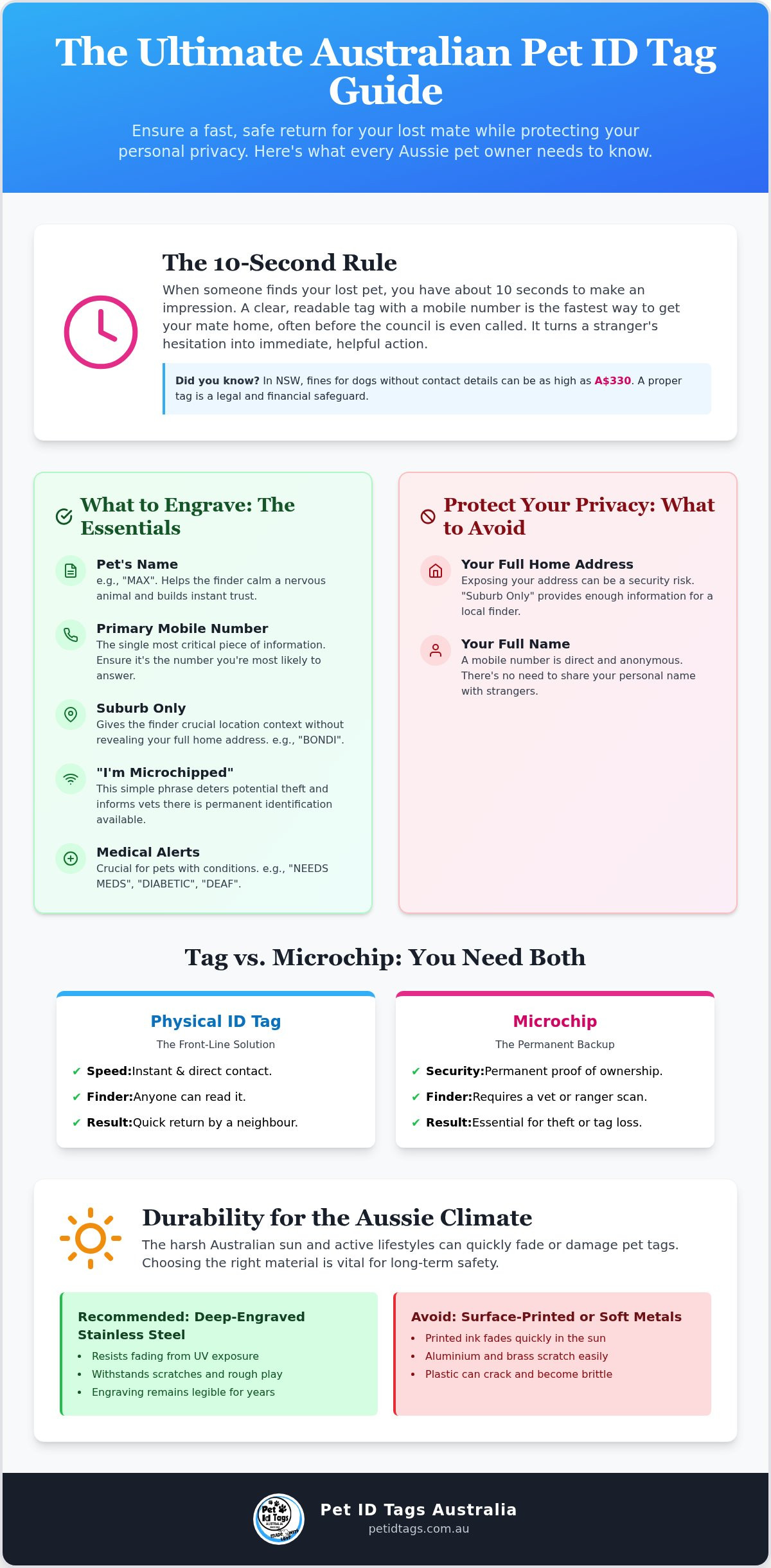
When a stranger spots a wandering dog on a suburban street or a busy roadside, a mental clock starts ticking immediately. This is the 10-second rule. It represents the brief window of time a finder uses to decide if they can safely intervene or if the situation is too difficult to handle. If they cannot see clear contact information from a safe distance, they may assume the dog is aggressive or simply decide they don't have the time to help. Speed is your dog's best friend in an emergency. Most lost pets are recovered by local residents just a few blocks away, not by council rangers or animal shelters.
Relying on a physical Pet ID tag provides a low-tech advantage that digital systems cannot match. Phone batteries die, and very few Australians keep a microchip scanner in their car. A physical tag bypasses the need for official authorities entirely. This direct connection saves your dog from the trauma of a pound cage and saves you from expensive council release fees. In 2026, with fines for untagged dogs reaching A$330 in New South Wales, having a visible ID is a financial safeguard as much as a safety one. When considering what to put on a dog tag australia, you must prioritise the data that facilitates an instant reunion.
Tag vs. Microchip: Why You Need Both in 2026
Think of a microchip as a silent, permanent backup. It is vital for long-term security, but it is rarely an immediate recovery tool. A tag is the front-line solution. Many well-meaning finders will not go to the effort of driving a strange dog to a vet clinic for a chip scan. They want to help, but they need the process to be easy. Understanding the difference between a pet tag vs microchip australia is critical for every owner. While the chip proves ownership, the tag provides the shortcut home.
The Psychology of a Dog Finder
A readable tag significantly reduces the "stranger danger" factor for the person who finds your dog. If they can see your dog's name clearly, they can use it to calm a distressed animal. This builds immediate trust between the human and the pet. High-contrast, deep engraving is essential because a squinting stranger is a hesitant stranger. If they cannot read the mobile number without wrestling a nervous dog, they might give up and call the council instead. Clear information changes the narrative from "there is a stray animal" to "there is a lost family member who needs a quick phone call."
Essential Information: The Non-Negotiables for Australian Dog Tags
After establishing the 10-second rule, the next logical step is selecting the specific data points that make those seconds count. Deciding what to put on a dog tag australia requires a balance of speed and security. You have limited surface area to work with. Every character must contribute to a successful recovery. Knowing exactly what to put on a dog tag australia ensures your mate doesn't spend a single unnecessary night away from home.
Your mobile number is the anchor of the tag. Landlines are effectively obsolete for pet recovery because they don't follow you. If your dog slips out while you are at the shops or down at the beach, a landline ringing in an empty hallway won't help. A mobile number ensures you are reachable the moment a finder dials.
The Mobile Number Priority
For those who travel across state lines or enjoy camping trips, including an area code is a smart move. It removes any guesswork for the finder. You should list the number of the person most likely to pick up an unknown caller. We often filter out "private" numbers, but in a crisis, that call is your dog's ticket home. Ensure this number is kept up to date whenever you change providers.
Adding your dog's name is about more than aesthetics. It is a tool for the finder. When a stranger can use a name, they can often settle a nervous pet or prevent them from bolting into traffic. It builds a bridge of trust between the human and the animal. It transforms a "stray dog" into a "lost pet" in the eyes of the public.
Using the Word 'Microchipped'
The word "Microchipped" serves as a powerful deterrent. It warns potential thieves that the dog is registered in a permanent database, making the animal much harder to keep or move on. It also tells veterinary staff that a digital backup exists if the tag becomes unreadable. This single word adds a layer of "un-sellable" security by notifying any third party that the animal's identity is permanently recorded.
If your tag has room, a secondary "Plan B" number is a lifesaver. This could be a neighbour or a family member who stays local. It provides a safety net for when you are out of range or stuck in a meeting. Choosing durable stainless steel dog tags ensures these essential details remain crisp and clear regardless of the weather. This layered approach to contact information is the most effective way to guarantee a fast reunion.
Privacy vs. Practicality: What to Skip on Your Pet's ID
Owners often struggle when deciding what to put on a dog tag australia because they feel the need to include every possible detail. This is a mistake. Over-crowding a tag forces the engraver to use a smaller font size. If a finder cannot read your number without a magnifying glass, the tag has failed its primary purpose. A clean, legible layout is your best defence. You need to prioritise the data that facilitates a phone call while stripping away anything that compromises your security or clutters the design.
Privacy is a major concern for modern pet owners. You do not need to reveal your front door to every stranger who sees your dog. Full street addresses are largely unnecessary for modern pet recovery. If a finder has your mobile number, they can connect with you instantly. Listing your house number and street name only serves to tell a stranger where an expensive or desirable breed lives. This is especially risky if the tag also signals that you might not be home to protect the property.
The "Reward" debate is equally critical. While it feels like a good incentive, it can backfire. Offering money sometimes encourages pet theft or "flipping," where individuals snatch dogs specifically to wait for a payout. A genuine finder does not need a financial bribe to do the right thing. It is safer to leave this off and discuss any gratitude once your mate is safely back in your hands.
The Suburb and Postcode Framework
Adding your suburb and postcode is a smart compromise. It provides enough context for a finder to realise the dog is local. If you are walking in a park in Surry Hills and your dog's tag says "Surry Hills 2010," the finder knows you are likely just a few blocks away. This location cue encourages them to stay put for ten minutes rather than immediately calling the council. The only exception is for those living on massive rural stations or remote properties where a mobile signal is non-existent. For everyone else, the suburb provides safety without compromising your home security.
What Info is Low Value?
Keep the tag focused on the mission of getting your dog home. Details like your dog's breed, age, or birth date are sentimental but have zero utility in a crisis. You should also avoid phrases like "I'm Friendly." A dog that is calm at home can become unpredictable and nippy when stressed, lost, or injured. You do not want to encourage a stranger to handle your pet in a way that might lead to a bite or an accidental escape. Focus on contact details and let the tag do its job as a recovery tool, not a biography.
Special Situations: Medical Alerts and Council Requirements
Basic contact details are the foundation of any recovery strategy, but some dogs require specific instructions to stay safe while in a stranger's care. If your pet has a chronic condition or a sensory impairment, knowing what to put on a dog tag australia becomes a matter of life and death. A finder who understands why a dog isn't responding to verbal commands is much less likely to become frustrated or perceive the animal as aggressive. Clear communication on the tag ensures the person holding your dog knows exactly how to handle them until you arrive.
Medical Alerts That Save Lives
Critical health notes should be clear and impossible to miss. If your dog is deaf or blind, these words should be engraved in a large, high-contrast font. This prevents finders from thinking the dog is simply being disobedient. For pets with severe dietary restrictions, use direct wording like "No Treats - Allergies." Many Australians will instinctively offer a snack to a lost dog to keep them calm. This well-meaning gesture can be dangerous for a dog with pancreatitis or specific food sensitivities. For more inspiration on phrasing, check out our list of pet id tag engraving ideas.
Behavioral notes are equally valuable. If you have a dog that cannot be around other pets, a short note like "No Dogs" or "I have a cat at home" helps a finder decide where to keep your mate. It prevents accidental scuffles in a stranger's backyard or laundry. Providing these cues helps the finder feel more confident and keeps your pet in a safe, controlled environment. It turns a high-stress situation into a manageable one for everyone involved.
Handling Multiple Tags Without the Noise
Every state in Australia mandates council registration, and most require the official tag to be visible. In New South Wales, the fixed penalty for a dog without a collar and contact tag is A$330 as of July 2026. However, wearing both a council tag and a personal ID tag can lead to a constant metal jingle that stresses out sensitive dogs. You can solve this by using a dog tag quick clip. This tool allows you to organise multiple tags on one secure attachment point. It makes it easy to swap tags between different collars or harnesses without the hassle of traditional split rings.
Managing these legal requirements alongside personal safety info is the hallmark of a responsible owner. Deciding what to put on a dog tag australia is easier when you have a durable system that doesn't clutter the collar. If you need a reliable solution that holds up to daily wear, browse our range of stainless steel dog tags to ensure your mate's medical and legal info stays readable for years. This proactive approach ensures your dog is protected by both the law and clear communication.
Durability in the Aussie Climate: Materials That Last
The Australian sun is relentless, and your pet's identification tag is on the front line. Deciding what to put on a dog tag australia is only half the battle; the other half is ensuring that information survives the elements. A tag that becomes unreadable after a single summer at the beach is a safety failure. Cheap, printed, or shallow laser-etched tags often succumb to UV radiation and friction within months. For a recovery tool to be effective, the engraving must be deep enough to remain legible even after years of "bush bashing" and backyard play.
Stainless steel remains the gold standard for active dogs. It is a "set and forget" safety choice because it doesn't rust, bend, or snap. For dogs that live in coastal areas or spend their weekends in the pool, the corrosion resistance of high-grade steel is non-negotiable. Aluminium offers a lightweight and colourful alternative, making it ideal for smaller pets or indoor cats. However, aluminium is a softer metal, so it requires deep engraving to prevent the text from wearing down over time.
Why Pet ID Tags Fade
UV radiation is the primary culprit behind tag failure in Australia. It breaks down the dyes in plastic tags and the surface coatings on cheap metals. When combined with salt water, the oxidation process accelerates, often leaving tags looking like blank discs. Understanding why pet id tags fade helps you identify when it's time for a replacement. If you have to squint to read your mobile number in bright light, the tag has already reached its expiration date and needs to be renewed to ensure your mate's safety.
Choosing the Right Tag for Your Dog's Lifestyle
Your dog's daily habits should dictate the material you choose. "Water babies" that never miss a chance for a swim need the absolute permanence of stainless steel. If you are bringing home a new addition, a lightweight solution is better for their developing neck muscles. You can find specific advice on this in our puppy id tag australia guide. For owners who find the constant clinking of metal tags annoying, "silent" tags or using a quick clip to keep tags flush against the collar can reduce noise while maintaining safety. Regardless of the style, the priority is a clear, deep-engraved finish that stands up to the Australian environment.
By choosing the right material and being selective about what to put on a dog tag australia, you create a durable safety net. High-quality materials ensure that your contact details are ready and readable the moment they are needed most. This investment in craftsmanship provides the peace of mind that your dog's ticket home will never fade away.
Secure Your Dog's Future Homecomings Today
Effective pet recovery relies on a combination of clear data and physical durability. By prioritising your mobile number and leveraging the 10-second rule, you give your mate the highest chance of a rapid, local reunion. Balancing your personal privacy with suburb-level location data ensures you stay secure while your pet remains findable. The depth of your engraving is just as vital as the information itself. Deciding what to put on a dog tag australia is a simple task that yields immense peace of mind, provided the material can withstand our intense UV levels.
Don't wait for a gate to be left open to test your dog's safety net. We are specialists in deep-engraved stainless steel tags designed to remain legible for a lifetime. Trusted by thousands of Aussie pet parents since 2004, we provide fast national shipping to every corner of the country. Protect your mate with a deep-engraved, Aussie-made tag from Pet ID Tags Australia and ensure they always have a clear path home. Your dog depends on you to get the details right; we ensure those details never fade.
Frequently Asked Questions
Is it a legal requirement to have a dog tag in Australia?
Yes, it is a mandatory legal requirement across all Australian states and territories. In New South Wales, for example, the Companion Animals Act 1998 mandates that dogs in public places must wear a collar and a tag showing the owner's contact details. As of July 2026, failing to comply results in a fixed penalty notice of A$330. Most local councils also require a separate registration tag to be visible at all times.
Should I put my dog's name on their tag?
Yes, including your dog's name is a practical safety measure. It allows a finder to build immediate rapport with your pet and can help calm a distressed animal in a high-traffic area. A stranger who can call a dog by name is much more likely to successfully control and secure them until you arrive to collect your mate.
Can I just put my phone number on a dog tag?
While a phone number is the most critical detail, it shouldn't be the only thing you include. When deciding what to put on a dog tag australia, adding the dog's name and the word "Microchipped" provides essential context. These extra details help a finder feel more connected to the animal and act as a deterrent against pet theft by signaling that the dog is permanently registered.
What should I do if my dog has a medical condition?
Engrave critical medical alerts in a large, high-contrast font so they are impossible to miss. Use direct wording like "Deaf," "Blind," or "Needs Meds" to inform the finder of your dog's specific needs. This prevents well-meaning strangers from misinterpreting a lack of response as disobedience or inadvertently causing harm by offering treats to a dog with severe allergies. Just as many health-conscious Australians research dietary alternatives like gluten-free flours through Better Nutrition, being explicit about your pet's allergies is a vital part of a responsible safety plan.
How do I fit a lot of information on a small dog tag?
Utilise both sides of the tag and prioritise your data. Place the dog's name and your primary mobile number on the front for instant recognition. Use the back for secondary contact numbers, medical notes, or your suburb. Avoid listing a full street address, as this takes up valuable space and forces the engraver to use a smaller, harder-to-read font.
Is a microchip enough to find my dog in Australia?
What happens if I change my phone number?
You must replace the tag immediately to ensure your dog's safety net remains intact. An outdated phone number on a tag is a significant risk, as it breaks the only direct link between a finder and yourself. Because most lost dogs are recovered within their own suburb, keeping your mobile number current is the single most effective way to guarantee a fast return.
What material is best for an Australian dog tag?
Stainless steel is the best material for the harsh Australian climate. It won't rust in salt water and resists the fading effects of intense UV radiation that often destroys plastic or shallow-engraved alternatives. When choosing what to put on a dog tag australia, pairing your details with a deep-engraved steel disc ensures the information remains legible for the life of your pet.