

Your new mate bolts toward the park gate before they've even mastered the 'sit' command. In that frantic moment, a microchip is invisible to a helpful neighbour, but a high-quality puppy id tag australia provides an immediate link back to your front door. It is the most vital piece of equipment you'll buy, yet many owners find the conflicting council laws and jingling metal more confusing than crate training.
We understand the anxiety of those first walks and the frustration of tags that become unreadable after a month of puppy play. You want a solution that is durable, silent, and legally sound. This guide simplifies the process by explaining exactly what your local council requires and which materials actually survive the chewing phase.
We'll show you how to balance deep, permanent engraving with the latest safety standards for 2026. From avoiding Melbourne's $523 animal-related fines to choosing a tag that won't distract your pup during training, you'll gain the peace of mind needed to enjoy every adventure with your new best friend.
Key Takeaways
- Understand why a visible tag is the most efficient way for a neighbour to return your pup without needing a vet to scan a microchip.
- Identify the best materials to withstand the 'chew-factor' and why stainless steel is the gold standard for a puppy id tag australia.
- Follow our engraving checklist to prioritise the right information on small tags while ensuring the text remains legible for years.
- Learn the 'two-finger' rule for safe fitting to ensure your growing puppy stays comfortable and secure during their first walks.
- Ensure your new mate is fully compliant with local council laws to avoid the significant fines scheduled for the 2026-27 period.
Why Your New Puppy Needs a Dedicated ID Tag in Australia
Bringing a new puppy home is a significant responsibility that comes with a steep learning curve. Between toilet training and mastering basic commands, your biggest concern is likely their safety during those first outings. Recalling a puppy is a skill that takes months to master; a tag bridges the gap between training and reliability. Securing a durable puppy id tag australia ensures that if your mate slips their lead or bolts through an open gate, the recovery process starts in seconds, not hours.
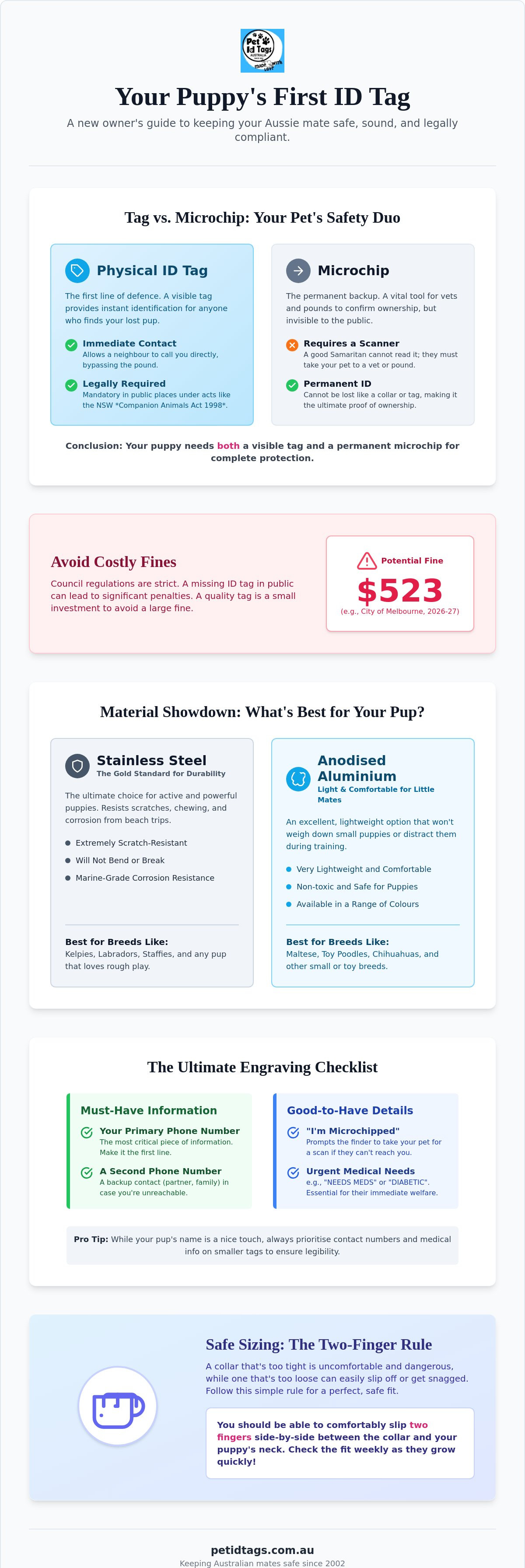
A physical tag provides immediate peace of mind that a microchip simply cannot offer. While a chip is a vital permanent record, it is invisible to the general public. If a neighbour finds your wandering pup, they won't have a scanner in their pocket. Before choosing a design, it is helpful to understand what a pet ID tag is in a functional sense: a physical record that provides instant identification without technical barriers. It allows a helpful stranger to call you instantly, keeping your puppy in the safety of the neighbourhood rather than in a cold pound environment.
Understanding Australian Pet Identification Requirements
Australian law regarding pet ownership is strict and varies by state, but the core requirement remains consistent. In New South Wales, for instance, the Companion Animals Act 1998 mandates that dogs wear a tag with owner contact details whenever they are in a public place. Many new owners mistakenly believe that "microchipped" means they can skip the collar tag. In reality, you need both. You can read more about the specific differences in our guide on pet tag vs microchip australia to ensure you are fully compliant with 2026 regulations.
The First Line of Defence vs. The Permanent Backup
Think of the tag as your puppy's voice when you aren't there. When a pet is found, the "workflow" for a member of the public is predictable: they check the collar first. A readable puppy id tag australia saves time and reduces stress for everyone involved. It also protects your bank account. If your puppy is taken to a council facility because they lack identification, you will likely face release fees and fines. In the City of Melbourne, animal-related fines for the 2026-27 financial year can reach up to $523. A high-quality tag is a simple, cost-effective way to avoid these penalties and ensure your pup is identified immediately during emergency vet visits or unexpected escapes.
Selecting the Best Material for a Rowdy Australian Puppy
Picking the right material for a puppy id tag australia involves more than just choosing a favourite colour. Puppies explore their environment with their mouths; anything hanging from their collar will eventually be chewed, mouthed, or dragged through the mud. High-quality, non-toxic materials are essential to ensure the engraving remains legible despite this "chew-factor". You need a tag that can survive the transition from a clumsy pup to a confident adult dog without fading or snapping.
Weight is a critical factor that many new owners overlook. A heavy, bulky tag on a small breed puppy, such as a Maltese or a Toy Poodle, can be uncomfortable and may even cause neck strain. For these smaller mates, lightweight aluminium provides a comfortable solution that won't weigh them down during their first leash training sessions. Conversely, larger, more boisterous breeds like Kelpies or Labradors benefit from the sheer density and scratch resistance of stainless steel. It stays polished and readable even after years of rough play.
Our coastal lifestyle also demands high corrosion resistance. Whether it is salt spray at the local dog beach or a backyard sprinkler session, cheap base metals will rust and pit within weeks. Investing in marine-grade materials ensures the tag stays bright and the text remains clear. This is particularly important because, as highlighted in RSPCA Australia advice, a visible tag is the fastest way to reunite a lost pet with its family. It acts as the immediate, visible partner to their permanent microchip.
Stainless Steel vs Aluminium: Which Suits Your Breed?
Stainless steel is the gold standard for longevity. It resists deep scratches and won't bend if your puppy treats it like a chew toy. If you have an active breed that loves the bush or the beach, investigating stainless steel dog tags australia is the best way to ensure their ID survives the "puppy years". Aluminium tags offer a lighter alternative and come in various vibrant colours, making them ideal for sensitive pups. Both materials are non-toxic, ensuring your puppy stays safe even if they mouth their tag during a nap.
Smart Tags and Next-Gen Puppy Safety
Traditional engraving is essential, but smart tags are becoming the gold standard for Australian owners in 2026. These tags feature QR codes that, when scanned, provide a comprehensive digital profile of your pet. This is incredibly useful for puppies who are still growing or if your contact details change as you move house. You can update your phone number or medical alerts instantly without needing to order a new physical tag. Combining a traditional engraved tag with a smart tag provides a dual-layer safety net. If you want to ensure your pup has the best protection, you can explore our full range of identification options today.
What to Engrave: The Ultimate Puppy ID Checklist
Deciding what to engrave on your new mate's tag is a balance between utility and safety. Space is a premium, especially on small tags designed for toy breeds like Cavoodles or Frenchies. A puppy id tag australia needs to be legible from a distance. High-powered laser engraving is the only way to ensure the text doesn't fade under the harsh Australian sun or after a dip in the salt spray. Surface etching often fails within months; deep mechanical or fiber laser engraving is the only solution that lasts a lifetime.
The primary goal is rapid recovery. If a neighbour finds your pup, they need to reach you immediately. One mobile number is essential, but two are better. Avoid using a landline number that nobody answers when you're out searching for your lost pet. There is also the "Reward" debate. While some owners believe offering a reward encourages theft, most find it motivates a quick return. If you have the space, a simple "Reward for Return" can be a powerful incentive for a stranger to make that phone call.
Essential Contact Details for Rapid Recovery
Your hierarchy of information should start with your primary mobile number. This must be the phone you keep with you at all times. A second number for a partner or friend provides a vital backup if you are out of range or your battery dies. Including the phrase "I am microchipped" is a smart move. It alerts the finder that the pup has a permanent record, which often deters people from keeping a "found" dog. For more inspiration on layouts, check out our pet id tag engraving ideas to see what works best for different tag shapes.
Privacy vs Safety: What Not to Include
Privacy is a growing concern for many Australian pet owners. Some experts suggest leaving the puppy's name off the front of the tag. This prevents a stranger from calling your dog by name, which can make it easier for someone to lead them away or claim ownership. You might choose to put the name on the back or omit it entirely. Your full home address is also generally unnecessary in the digital age. A mobile number is faster and safer. However, medical alerts are non-negotiable. If your pup is deaf, blind, or requires daily medication, this information must be prominent. It ensures that whoever finds them understands the urgency of their care and return.
Sizing and Safety: Fitting a Tag to a Growing Puppy
Puppies grow at an incredible pace, often changing size from week to week. This rapid development makes regular gear checks a vital part of your routine. A puppy id tag australia must stay secure without becoming a hazard. The "two-finger" rule is the industry standard for collar fitting: you should be able to slide two fingers comfortably between the collar and your pup's neck. If it's tighter, it’s time to adjust; if it's looser, the tag risks snagging on objects.
Safety extends beyond the fit of the collar. Young dogs are inquisitive and frequently find themselves under bushes or wedged into corners. A tag that hangs too low can easily catch on a branch or the wire of a training crate. This is why many owners prefer a smaller "mini" tag during the first few months. You should also inspect the attachment ring every week. Growth spurts often lead to more vigorous play, which can stress the metal split ring or the collar's D-ring.
Many new owners start their training journey with a harness. While excellent for control, harnesses aren't always worn 24/7. Transitioning to a lightweight collar-and-tag setup for home use ensures your pup is always identifiable. This "always-on" approach is the best way to prevent a tragedy if a door is accidentally left ajar or a gate is unlatched during a delivery.
Managing the Jingle and Puppy Distractions
Some puppies are surprisingly sensitive to the metallic "clink" of a tag against a buckle. This sound can be a major distraction during early training sessions or even spook a timid pup. If your mate seems bothered by the noise, consider using a tag silencer or a specialized clip to keep the ID stationary. You can learn more about alternative mounting methods in our guide on how to attach a dog tag without a split ring.
When to Upgrade Your Puppy’s Gear
The teething phase is notorious for destruction. It's common for puppies to mouth their tags or the ends of their collars, leading to frayed edges and scratched surfaces. Once your dog has their adult teeth, evaluate the condition of their ID. If the engraving is becoming obscured by deep scratches or the tag has been bent out of shape, it's time for an upgrade. Moving to a heavy-duty stainless steel option ensures the ID survives the high-energy demands of an adult dog. To find the perfect fit for your growing mate, shop our range of durable puppy tags and collars today.
Why Pet ID Tags Australia is the Top Choice for New Owners
Choosing a reliable provider for your first puppy id tag australia shouldn't be a guessing game. Established in 2002 and based in Adelaide, Pet ID Tags Australia has spent over two decades refining the science of pet identification. We understand that a tag isn't just an accessory; it is a critical safety tool. Our commitment to high-grade materials ensures that every tag we produce can withstand the rigours of a growing pup and the harsh Australian environment.
We prioritise speed and variety to meet the immediate needs of new owners. When you bring a puppy home, you need protection right away. Our fast national shipping means your pup won't be without ID for long. We offer a diverse range of styles to suit every puppy personality. Whether you prefer the sparkle of our Crystal Bling Pet Tags or the no-nonsense utility of our Stainless Steel Dog Tags, each piece is crafted with the same focus on permanence and precision.
Deep Engraving That Won’t Fade in the Aussie Sun
The biggest failure of cheap tags is surface-level etching. Light laser marks or printed text quickly become unreadable due to friction and UV exposure. We utilise high-powered fiber laser technology for deep engraving that physically bites into the metal. This process ensures the text remains crisp and legible for the life of the pet. Our stainless steel range is truly beach-ready. It resists pitting and rust even if your puppy spends every weekend in the salt spray and sand. You won't need to replace these tags every few months; they are built for long-term durability.
Complete Puppy Safety Solutions
Safety is most effective when it is integrated. Beyond tags, we provide a full suite of identification solutions, including Personalised Dog Collars and Custom Dog Harnesses. Ordering your puppy id tag australia alongside a matching collar or harness ensures a perfect fit and consistent styling. As a long-standing Australian business, we take pride in our local expertise. Our customer support team understands the nuances of local council regulations and the specific challenges faced by Australian pet owners. We don't just sell products; we provide the peace of mind that comes from knowing your new best mate is protected by the best in the business.
Securing Your Puppy's Future with Professional Identification
Investing in a high-quality puppy id tag australia is a small step that provides permanent security for your new mate. You now understand that selecting the right material, such as marine-grade steel, prevents corrosion from the local surf and backyard sprinklers. Deep engraving remains the only reliable way to ensure your contact details stay legible throughout your pup's rowdiest growth phases. This isn't just about complying with council regulations; it's about providing an immediate, visible link back to your home.
Quality and durability are the foundations of effective pet safety. We specialise in high-grade 316 Stainless Steel options that are deeply engraved for lifetime readability. Our team provides fast, reliable shipping across Australia to ensure your pup is protected from their very first walk. Browse our durable Puppy ID Tag range and protect your new mate today!
Take the lead on your puppy's safety now so you can focus on the joy of training and bonding. With the right identification in place, you can explore the great Australian outdoors with total confidence.
Frequently Asked Questions
Do puppies need an ID tag if they are already microchipped in Australia?
Yes, a physical tag is a legal requirement in most Australian states even if your pet is microchipped. A microchip is a permanent backup that only a vet or shelter can read with a specialised scanner. A puppy id tag australia allows a neighbour to contact you immediately, preventing an unnecessary trip to the pound and avoiding potential fines like those in Melbourne which reach $523.
What is the best size ID tag for a 12-week-old puppy?
A small or "mini" tag, usually around 20mm to 25mm in diameter, is the most practical choice for a 12-week-old puppy. This size ensures the tag isn't too heavy for their developing neck muscles and reduces the risk of it getting caught in training crates or garden bushes. As your mate grows into an adult dog, you can easily transition to a larger, more heavy-duty option.
How do I stop my puppy from chewing their ID tag?
Proper collar fit is the most effective way to prevent your pup from reaching their tag with their mouth. Use the "two-finger" rule to ensure the collar isn't hanging too loose. If the tag still sits too low, use a tag quick clip to secure it higher up on the collar's D-ring, keeping it out of the "chew zone" during the teething phase.
Should I put my puppy’s name on their ID tag?
Including your puppy's name is a personal choice rather than a legal requirement. Some owners prefer to leave the name off for privacy reasons, preventing strangers from easily calling the dog away. Prioritise two mobile phone numbers and the word "microchipped" instead. This hierarchy ensures the most critical recovery information is visible to anyone who finds your pup.
How often should I check the fit of my puppy’s collar and tag?
You should check the fit of the collar and the condition of the tag every week during the first six months. Puppies undergo rapid growth spurts that can make a collar dangerously tight in just a few days. Inspect the split ring for signs of wear or stretching to ensure the puppy id tag australia doesn't fall off during vigorous play sessions.
What is the most durable material for a puppy that loves to swim?
Marine-grade 316 stainless steel is the gold standard for puppies that love the beach or backyard sprinklers. It resists corrosion from salt spray and chlorine, ensuring the deep engraving remains readable for years. Unlike cheap plated metals, stainless steel won't rust or pit when exposed to the damp, active conditions of an Australian lifestyle.
Can I use a smart tag for my puppy instead of a traditional engraved one?
We recommend using a smart tag as a supplement to a traditional engraved tag rather than a total replacement. A traditional tag provides an instant phone number for someone who might not have a smartphone or internet access. Combining both offers a dual-layer safety net, allowing you to update digital contact details while maintaining a permanent physical record on the collar.
Is it a legal requirement to have a phone number on a dog tag in Australia?
Yes, owner contact details are legally mandated by most local councils across Australia for dogs in public spaces. For instance, the NSW Companion Animals Act requires a tag with the owner's contact information. Failing to provide this can lead to significant penalties, such as the $345 fine for unregistered or unidentifiable dogs currently enforced in Cairns.