

Your dog’s safety shouldn't depend on a piece of hardware that requires a screwdriver and a prayer to open. If you’ve ever broken a fingernail prying a metal ring apart or found your pet’s ID tag lying in the grass because the wire stretched out, you know the struggle. Mastering how to attach a dog tag without a split ring is no longer just about convenience; it’s about ensuring your pet remains identifiable in a country where over 200,000 pets go missing every year.
We agree that the constant jingle of metal on metal is as grating as the frustration of swapping tags between collars. This guide reveals the best alternatives to traditional rings, from heavy-duty quick clips to silent slide-on designs built for the rugged Australian outdoors. You will discover how to create a secure, jingle-free setup that takes seconds to manage without risking your nails or your pet's security. We will examine the most durable hardware options to help you choose a solution that survives every bushwalk and beach run.
Key Takeaways
- Transition from frustrating coiled wire to modern, nail-friendly hardware that simplifies pet identification.
- Compare mechanical closures like spring gates and screw locks to ensure your dog’s ID stays secure during every bushwalk.
- Master how to attach a dog tag without a split ring using specialised quick clips for tool-free, rapid tag swaps.
- Explore silent, slide-on alternatives that provide a jingle-free experience and eliminate the risk of tags snagging on fencing.
- Choose high-grade materials specifically tested to withstand salt, sand, and the harsh Australian environment.
Why Ditch the Split Ring? The Struggle of Traditional Pet Tag Attachments
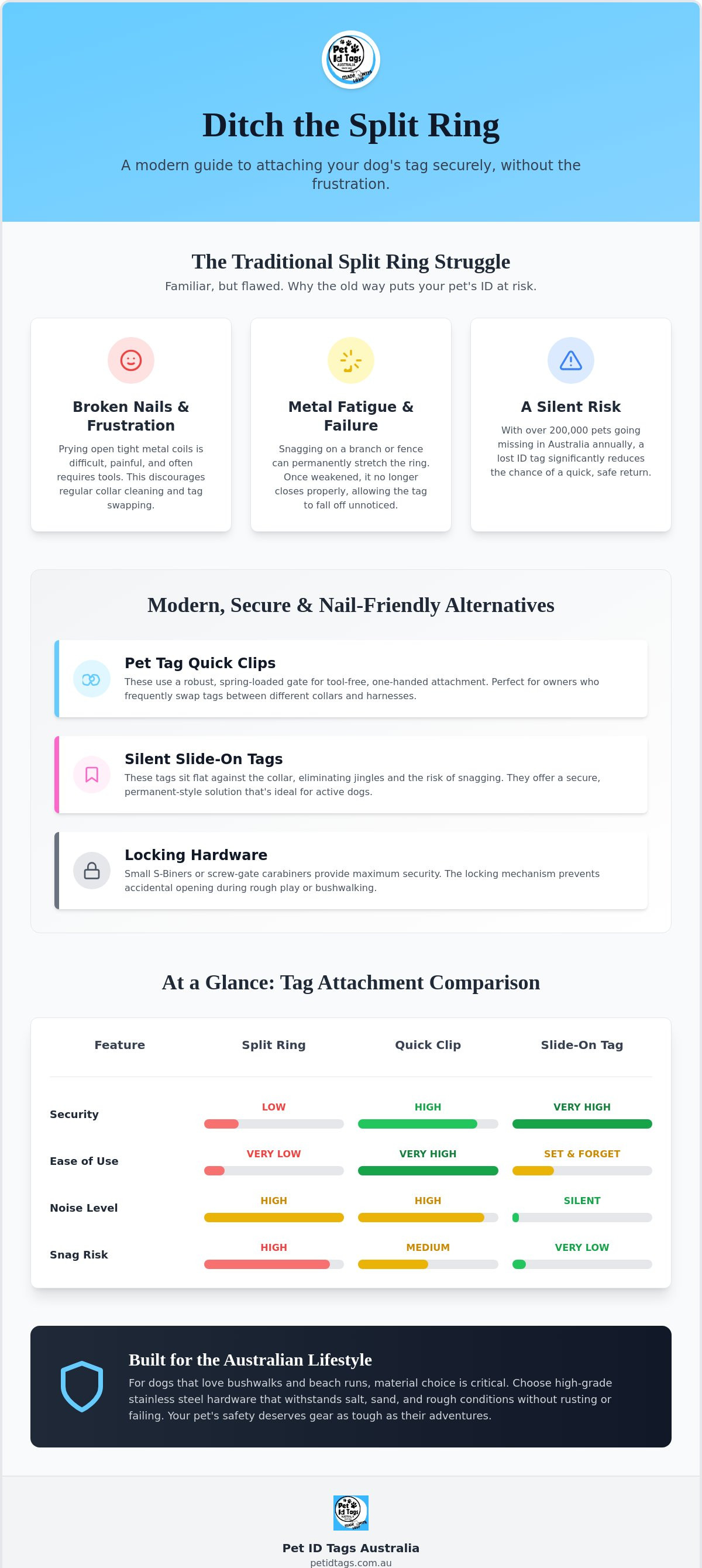
The split ring is that familiar double-coiled wire loop that comes standard with almost every pet ID. Most people use them because they are cheap to manufacture and ubiquitous, but they are rarely the best tool for the job. They rely on the tension of the wire to keep the tag in place; however, that tension is easily compromised. Many owners find themselves searching for how to attach a dog tag without a split ring after experiencing the classic broken nail moment. Trying to pry those tight coils apart with your thumb is a recipe for pain and frustration. It is a legacy solution that hasn't kept pace with the needs of active Australian dogs or the people who care for them.
Beyond the physical struggle, split rings are prone to failure in ways that owners often don't notice until it's too late. They are designed for keys that stay in pockets, not for animals that run through scrub or wrestle at the park. If your dog is an adventurer, the hardware connecting their ID needs to be as tough as they are. Modern alternatives focus on security and ease of use, ensuring that your contact details stay where they belong without requiring a toolbox to manage. Swapping tags shouldn't be a chore that you put off because it's too difficult to manage with your bare hands.
The Problem with Metal Fatigue and Lost Tags
Active dogs in the Australian bush put their gear through significant stress. A split ring can easily snag on a low-hanging branch or a wire fence, causing it to stretch. Metal fatigue in pet hardware is the permanent weakening and deformation of a metal ring that occurs after it has been stretched or pulled beyond its elastic limit. Once that ring is bent, it stays open, and the tag can slide off during the next walk. With over 200,000 pets going missing in Australia every year, a compromised ring is a risk you don't need to take. For those looking for a more permanent attachment, Collar-mount tags provide a way to bypass hanging hardware entirely, offering a more secure alternative for high-energy pets.
Fingernail Safety and User Convenience
Standard rings are notoriously difficult to manipulate without needle-nose pliers. For pet owners with arthritis or limited dexterity, this hardware is a physical barrier to keeping their pet safe. Modern hardware should be tool-free. If you want to swap a tag from a daily walk collar to a custom dog harness, you shouldn't have to struggle. High-quality alternatives allow for a quick-swap experience that protects your hands and your manicure. This convenience also encourages better hygiene; it makes it effortless to remove tags and wash the collar properly after a muddy trip to the park. Learning how to attach a dog tag without a split ring simply makes life easier for the owner while keeping the pet identifiable and safe.
The Best Alternatives for Attaching Dog Tags Without Split Rings
If you’re tired of the struggle, moving to pet-specific hardware is the most reliable way to secure your dog’s ID. While some pet owners look for generic clips at a local hardware shop, these often use low-grade zinc alloys that corrode quickly in the Australian salt air. Professional hardware is designed to handle the specific pull and friction of a dog on the move. When considering how to attach a dog tag without a split ring, you must choose between different mechanical closures like spring gates or screw locks. The right choice depends on your dog's activity level and the density of the scrub they run through.
Because visible identification is the fastest way to get a lost pet home, veterinary experts recommend maintaining a legible and securely attached tag at all times. Microchips are essential, but they require a scanner; a secure clip ensures anyone who finds your dog can call you instantly. This layer of protection is your pet's best ticket home if they ever slip out of the yard or wander off during a bushwalk.
Pet Tag Quick Clips and S-Biners
Specialised pet tag clips use a spring-loaded gate that allows for one-handed attachment. These are perfect for owners who frequently wash collars or move tags between a daily collar and a harness. S-biners take this a step further with dual gates, keeping the tag on one side and the collar D-ring on the other. For maximum longevity, always opt for stainless steel over aluminium or plastic. Stainless steel resists the pitting and rust common in coastal environments. If you want a reliable, local option, Pet Tag Quick Clips are engineered specifically for this purpose and offer a secure, tool-free experience.
Small Carabiners and Locking Links
For dogs that spend their time in heavy scrub or participate in agility sports, a locking link or a miniature screw-gate carabiner provides the highest level of security. These require a few turns of a threaded sleeve to lock the gate, making it virtually impossible for the tag to snag and fall off. However, keep the bulk in mind. A heavy carabiner can be uncomfortable for smaller breeds like Jack Russells or Pugs. Always match the clip size to your dog’s weight and the thickness of the collar’s D-ring to ensure a snug, rattle-free fit. Knowing how to attach a dog tag without a split ring means balancing security with your dog's comfort and the specific demands of your lifestyle.
Silent and Secure: Slide-on Tags and Riveted Solutions
Hanging tags are the traditional choice, but they aren't the only way to keep your dog identifiable. For owners seeking a silent, streamlined alternative, slide-on tags offer a sophisticated resolution. They eliminate the constant metallic jingle that can disturb light sleepers or irritate noise-sensitive pets. By sitting flush against the collar, these tags also remove the risk of snagging on crates, fences, or furniture. This is the ultimate answer for anyone researching how to attach a dog tag without a split ring while prioritising a low-profile fit.
Reliability is the foundation of pet safety. According to a study by the ASPCA, visible ID remains one of the most effective ways to ensure a lost pet returns home. While hanging tags are prone to being lost if a ring stretches, slide-on and riveted solutions stay put. They are physically impossible to drop unless the collar itself fails. This level of permanence provides peace of mind for owners of dogs that love to charge through the scrub or dive into the surf.
Slide-on Collar Tags
Slide-on tags feature two slots that allow the collar strap to thread directly through the metal plate. They are compatible with most flat collars, whether they are made of durable nylon or heavy-duty leather. Because there is no hanging hardware, the tag cannot get caught or pulled off. This design is a perfect match for personalised dog collars australia. It creates a sleek, professional look that ensures your contact details are always visible and secure. If you are looking for how to attach a dog tag without a split ring to achieve a minimalist setup, this is your best option.
Riveted Nameplates for Permanent ID
Riveted nameplates take security to the maximum level. These tags are curved to match the collar's shape and are permanently fixed using metal rivets. This method is common for high-end leather collars and working dog gear. It is the most durable attachment method available, as it requires no moving parts or clips. No rings. No clips. While this setup usually requires a specific collar type or DIY tools like a leather punch and anvil, the result is a tag that will likely outlast the collar itself. It is a no-nonsense choice for owners who want a "set and forget" identification system.
Choosing the Right Attachment for the Australian Lifestyle
Australia’s environment is notoriously harsh on pet gear. From the humid tropics of Queensland to the salt-drenched coastlines of New South Wales, your choice of hardware determines whether your dog’s ID survives the season. Many owners search for how to attach a dog tag without a split ring because they’ve seen traditional wire loops rust through or snap after a few months of beach trips. Selecting the right attachment requires more than just looking at aesthetics. You must consider the specific physical demands of your dog’s daily routine and the local climate.
Weight is a critical factor that often goes overlooked. A heavy locking carabiner might be appropriate for a large working breed like a Kelpie or a Maremma, but it can be cumbersome for a smaller Australian Terrier. If the hardware is too heavy, it can cause the collar to rotate, leaving the tag hanging awkwardly under the dog’s chin. This increases the risk of the tag dipping into water bowls or getting caught on furniture. Precision-engineered clips provide the necessary security without adding unnecessary bulk to your pet's neck.
Saltwater and Sand: The Corrosion Factor
If your dog loves the ocean, generic hardware is a liability. Cheap zinc-alloy clips often found in discount shops will pit and seize up within weeks of exposure to salt air. High-quality stainless steel dog tags australia require matching 316-grade stainless steel hardware to ensure the entire setup remains rust-proof. Sand is another silent killer of pet ID. It acts as an abrasive that can jam the internal spring mechanisms of low-quality clips, leaving the gate stuck open. Solid brass and stainless steel are superior to plated steel because they are corrosion-resistant through to the core rather than relying on a thin surface coating. To maintain your gear, simply rinse the clip with fresh water after every beach visit to flush out salt crystals and grit.
High-Activity Dogs: Preventing Snags
For dogs that spend their time charging through long grass or thick scrub, a low-profile attachment is essential. The "drop length"—how far the tag hangs below the collar—should be kept to a minimum. A long drop increases the leverage if the tag snags on a branch, making it more likely that the hardware will fail. When you are deciding how to attach a dog tag without a split ring, ensure the clip does not interfere with your lead connection. A clip that is too large can accidentally get caught in the lead’s snap hook, potentially causing the collar to come undone during a walk. Secure your pet’s safety by choosing a Pet Tag Quick Clip designed specifically to handle the rigours of an active Australian lifestyle.
Simplify Your Setup with Pet ID Tags Australia Quick Clips
Professional pet ownership requires gear that works as hard as you do. While we have explored various methods for how to attach a dog tag without a split ring, our specialised Pet Tag Quick Clip range is the definitive solution for the modern Australian home. These clips are not just accessories; they are precision-engineered tools designed to eliminate the frustration of traditional hardware. We have tested our clips in the most demanding conditions, from the abrasive sands of Bondi to the thick scrub of the Victorian high country. The result is a secure, tool-free attachment that keeps your pet’s ID exactly where it belongs.
Versatility is a core benefit of this setup. Many owners prefer to use a custom dog harness australia for weekend adventures while sticking to a standard collar for quick garden breaks. Our Quick Clips allow you to move your pet’s identification between different gear in under five seconds. There is no need for pliers, and you will never have to worry about a broken fingernail again. You can also pair these clips with bling pet tags australia to achieve a look that is both highly secure and visually striking. It is a practical upgrade that enhances both safety and style without compromise.
Our Stainless Steel Quick Clip Solution
Our clips feature a high-tension spring-gate mechanism that ensures the gate stays closed under pressure. This design prevents the tag from accidentally detaching during vigorous play or when your dog is shaking off water. We use marine-grade 316 stainless steel to provide maximum resistance against pitting and rust. Our sizing is designed to be inclusive, offering small, lightweight options for cats and toy breeds, alongside heavy-duty versions for large, powerful dogs. Each clip is built for longevity, ensuring that once you learn how to attach a dog tag without a split ring using our hardware, you will never go back to the old way.
Complete Your Pet Safety Profile
A secure attachment is only one part of a comprehensive safety strategy. While visible ID is the fastest way to facilitate a reunion, it works best alongside a correctly registered microchip. We recommend reading our guide on pet tag vs microchip australia to understand why your pet needs both layers of protection in 2026. Before you finalise your setup, take a moment to review our pet id tag engraving ideas to ensure your contact details are as clear and effective as possible. Upgrade your pet’s hardware to a professional, tool-free Quick Clip today and enjoy the peace of mind that comes with superior Australian craftsmanship.
Secure Your Pet with Modern ID Hardware
Transitioning to a modern ID setup is the most reliable way to protect your pet in the long term. We have explored the limitations of legacy hardware and the benefits of choosing marine-grade materials that withstand the harsh Australian elements. Whether you prefer a silent slide-on solution or a high-security carabiner, the right choice ensures your contact details are always present when they are needed most. This simple change eliminates the physical struggle of traditional attachments while significantly reducing the risk of a tag falling off during play.
Mastering how to attach a dog tag without a split ring allows you to maintain your gear effortlessly while protecting your hands from the frustration of prying metal loops. With over 20 years of Australian pet safety expertise, we provide hardware that is tested for real-world durability. Our range includes marine-grade stainless steel options that resist corrosion and sand, all backed by fast national shipping from our Australian centre. You can trust that your pet's identification is secured by hardware designed for the rugged life of an active dog.
Shop our durable Pet Tag Quick Clips and end the split-ring struggle today!
Give your dog the security they deserve and enjoy the convenience of a professional, tool-free setup. Your pet's safety is worth the upgrade.
Frequently Asked Questions
Are tag clips as secure as traditional split rings?
High-quality clips are significantly more secure than standard split rings because they do not suffer from the same metal fatigue. A split ring can stretch and stay open permanently if it snags on a branch or fence, whereas a spring-gate clip snaps shut and maintains its tension. This reliability is a primary reason many owners look for how to attach a dog tag without a split ring to ensure their pet's ID remains in place during heavy play.
Can I use a regular hardware store carabiner for my dog tag?
Regular hardware store carabiners are generally unsuitable for pet ID because they are often made from low-grade zinc alloys that rust quickly. These clips are also typically too bulky and heavy for most dogs, which can cause the collar to rotate or the tag to snag. It is better to use dedicated pet hardware made from marine-grade stainless steel that is specifically sized to fit a collar's D-ring without adding unnecessary weight.
How do I attach a tag to a collar that doesn’t have a D-ring?
If a collar lacks a D-ring, slide-on tags or riveted nameplates are the most effective solutions. Slide-on tags thread directly onto the collar strap, while nameplates are permanently fixed to the material with rivets. Both methods provide a secure, low-profile way to display identification without needing any hanging hardware. These options are particularly useful for keeping a pet safe when using specialised training collars that may not have traditional attachment points.
What is the best way to attach multiple tags without them jingling?
The most effective way to silence multiple tags is to use rubber tag silencers or transition to a single slide-on ID plate. If you prefer hanging tags, using a single Quick Clip can hold several tags, but they will still make noise unless you use rubber gaskets between them. Slide-on tags eliminate the jingle entirely by sitting flush against the collar, which is ideal for noise-sensitive dogs or owners who value a quiet house.
Will a stainless steel clip rust if my dog swims in the ocean?
A high-quality 316-grade stainless steel clip will not rust, even with regular saltwater exposure. This specific grade of steel is chosen for its superior resistance to corrosion in harsh coastal environments. To keep the internal spring mechanism moving smoothly, you should rinse the clip with fresh water after every beach trip. This simple step flushes out salt crystals and sand that could otherwise cause the gate to stick over time.
Are there specific clips recommended for very small dogs or cats?
Yes, there are lightweight clips designed specifically for cats and toy breeds to prevent discomfort. These smaller versions provide the same security as larger hardware without the weight that could cause a small pet's collar to sag. When you are deciding how to attach a dog tag without a split ring for a smaller animal, always check the weight of the hardware to ensure it doesn't interfere with their natural movement.
How often should I inspect my dog tag attachment hardware?
You should inspect your pet's attachment hardware at least once a month to ensure everything is functioning correctly. Check the spring tension of the gate and look for any signs of wear or debris build-up in the mechanism. Regular inspections are especially important for active dogs that spend time in the bush, as sand or grit can occasionally get trapped inside the moving parts of the clip.
Can I use these clips on a harness instead of a collar?
You can absolutely use these clips on a harness. In fact, many owners find it much easier to use a Quick Clip to swap identification between a daily collar and a Custom Dog Harness. This flexibility ensures your dog is always identifiable, regardless of which gear they are wearing for their walk. It is a practical solution for owners who use different equipment for training, hiking, and everyday exercise.