

Would you trust a piece of thin, scratched metal to bring your best mate home if they wandered off during a weekend camping trip? It is a sobering thought, but the choice between stainless steel vs aluminium dog tags often determines whether your contact details remain readable when they are needed most. While aluminium is popular for its bright colours and lightweight feel, the harsh Australian sun and salty coastal air can quickly turn these softer metals into unreadable scrap.
We know you want an ID tag that stays silent, looks great, and remains perfectly legible regardless of your dog's adventures. You are about to discover which material offers the best balance of safety, longevity, and comfort for your pet in our demanding climate. We will break down the latest 2026 durability standards for both materials, helping you invest in a solution that survives the surf and the scrub without wearing thin. From salt-resistant Grade 316 steel to budget-friendly alloys, we provide the facts you need for total peace of mind.
Key Takeaways
- Understand the core differences in stainless steel vs aluminium dog tags to ensure your pet's ID remains legible for years, not just months.
- Learn why Grade 316 stainless steel is the superior choice for coastal living, resisting the pitting and corrosion caused by harsh Australian salt air.
- Discover the truth about tag weight and why high-grade steel provides maximum security without compromising your dog's daily comfort.
- Identify why aluminium tags often fail at the attachment point and how to prevent your pet's ID from simply snapping off during exercise.
- Gain expert advice on matching tag materials to your dog's specific lifestyle, whether they are a rugged bush explorer or a suburban stroller.
Stainless Steel vs Aluminium: The Great Dog Tag Debate
Choosing a pet tag feels like a simple style choice. It is actually a critical safety decision. In Australia, where dogs roam from sandy beaches to rugged bush trails, the material must withstand more than just a bit of rough and tumble. The primary conflict in the stainless steel vs aluminium dog tags debate centres on the trade-off between vibrant aesthetics and indestructible utility. While one material offers a rainbow of colours, the other provides a permanent record of your contact details that won't fade or wear away. An unreadable tag is the same as no tag at all if your pet ever goes missing.
We provide a direct comparison to help you decide which material suits your dog's lifestyle. The fundamental differences lie in hardness and chemical composition. Steel is a dense, hard-wearing alloy designed for longevity. Aluminium is a lightweight metal that relies on a surface treatment for its durability and colour. Making the right choice ensures your peace of mind and your pet's security for years to come.
| Feature | Stainless Steel | Anodised Aluminium |
|---|---|---|
| Weight | Heavier (Solid feel) | Ultra-lightweight |
| Durability | Exceptional (Life-long) | Moderate (Subject to wear) |
| Price Range | Premium | Budget-friendly |
| Colour Options | Polished or Matte Silver | Wide range of vibrant colours |
What is Stainless Steel?
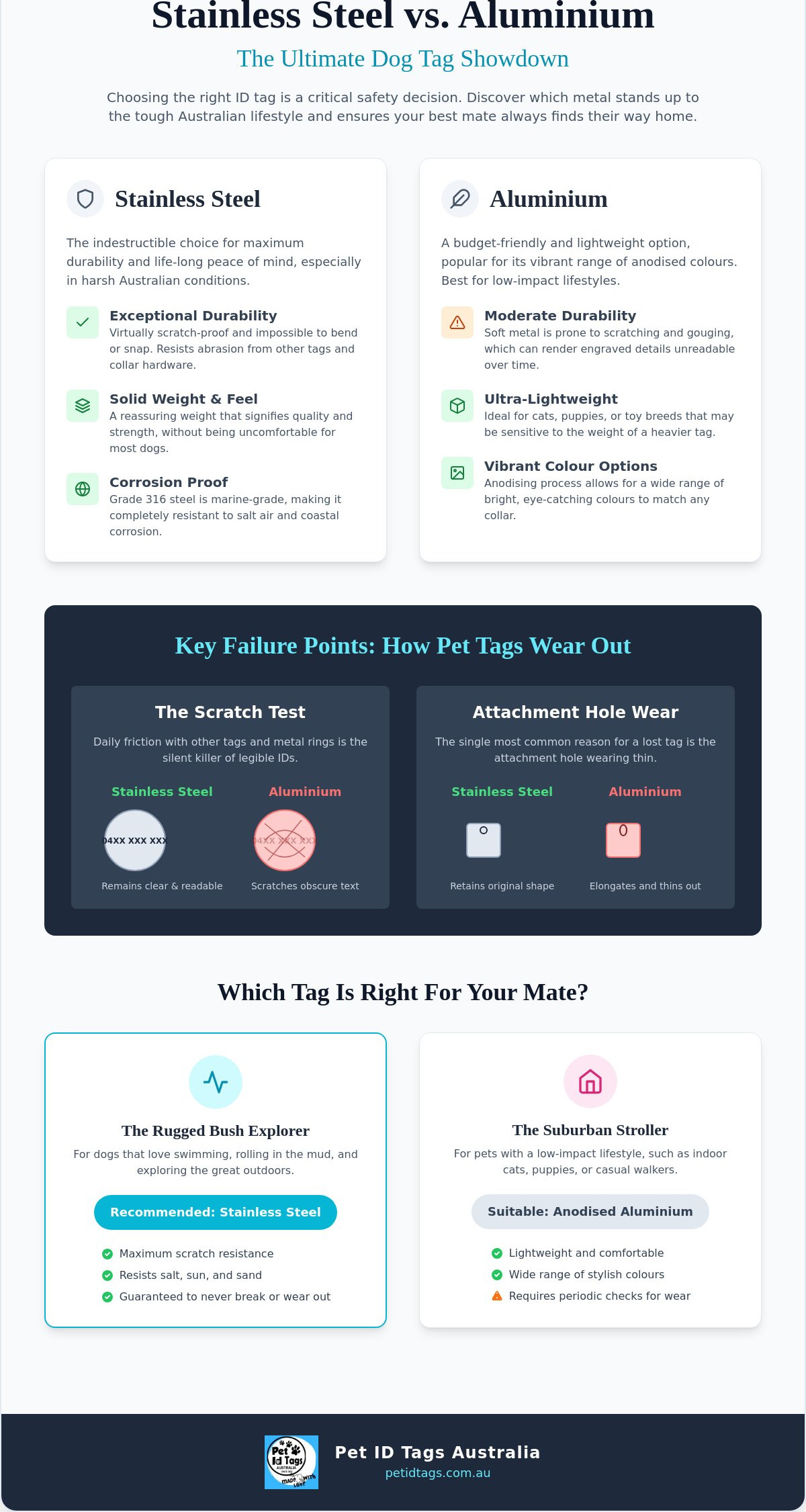
Stainless steel is an iron-based alloy containing at least 10.5% chromium. This chemical composition creates a microscopic, self-healing oxide layer that prevents rust and staining. For active pets, this means the tag stays clean and the text remains sharp. We recommend Grade 316 for anyone living near the coast. Unlike standard 304 steel, Grade 316 contains molybdenum, which specifically fights the galvanic corrosion process triggered by salt spray and humidity. It is the gold standard for permanent ID because it is nearly impossible to bend or snap. When combined with deep-mechanical engraving, the information becomes a permanent part of the metal rather than just a surface etch.
What is Anodised Aluminium?
Aluminium tags are popular because they are incredibly light. This makes them a top choice for cats or toy dog breeds that might be sensitive to the weight of a heavier tag. The colour isn't painted on; it is created through an electrochemical process called anodising. This process thickens the natural oxide layer and traps dyes within the metal's surface. However, there is a significant hardness gap to consider. Aluminium is a soft metal. Over time, the constant friction against a metal D-ring or another tag will cause the attachment hole to elongate or thin out. While the colours are striking, the physical structure is less resilient than its steel counterpart in the stainless steel vs aluminium dog tags comparison. It is an excellent budget-friendly option for low-impact lifestyles.
Durability and Longevity: Which Material Wins the Long Game?
Daily friction is the silent killer of pet identification. When comparing stainless steel vs aluminium dog tags, the "Scratch Test" reveals a significant performance gap. Aluminium is a relatively soft metal, making it prone to deep gouges from contact with other tags or the metal D-ring on a collar. Over time, these scratches overlap, turning your vital phone number into an illegible mess. Stainless steel is incredibly dense and resists surface abrasions. This ensures the information remains as clear as the day it was first engraved, even after years of active use.
Consider the attachment hole, which is the most common point of failure for any pet ID. Aluminium tags eventually "thin out" as the metal loop wears down from constant movement. This mechanical erosion often leads to the tag loop snapping during a run through the bush or a vigorous shake. Steel tags maintain their structural integrity indefinitely. While an aluminium tag might be cheaper at the checkout, the life-cycle cost tells a different story. Replacing four worn-out aluminium tags over a dog's lifetime is far more expensive than investing in a single, high-quality steel piece once.
Resistance to Wear and Tear
The constant "tag jingle" isn't just a noise issue; it's a constant abrasive force. Stainless steel handles this friction without losing its shape or thickness. Aluminium loops are at higher risk of snapping during high-intensity play or when snagged on a branch. If you want to know more about selecting gear that lasts, check out our guide on how to choose long lasting pet id tags. For owners of energetic working dogs, this structural strength is non-negotiable.
The Permanence of Engraving
Text on aluminium often "smears" as the metal wears down. This makes the engraving shallow and eventually invisible. Hardened steel allows for deep-mechanical engraving that bites deep into the metal. This ensures the stainless steel vs aluminium dog tags debate ends with a clear winner for long-term safety. Because steel offers superior corrosion resistance, the engraved grooves don't fill with rust or oxidation. For the best local options, read our detailed look at engraved dog tags australia. Choosing the right engraving method is just as important as the metal itself. If you're looking for a tag that truly lasts, our range of Stainless Steel Dog Tags is built to endure the toughest conditions.
Weight, Comfort, and Aesthetics: Matching the Tag to Your Pet
Many owners hesitate to choose steel because they believe it will be too heavy for their pet's neck. This is a common misconception. While the physical density of steel is roughly three times that of aluminium, the actual difference in a standard 30mm tag is usually less than 10 grams. For a medium to large dog, this weight is completely unnoticeable. The choice between stainless steel vs aluminium dog tags should be based on the pet's activity level rather than a fear of weighing them down with a "heavy" metal.
Aesthetics play a significant role in the selection process. If you want a tag that matches a specific neon harness or a patterned collar, anodised aluminium is the clear winner. The electrochemical process allows for a vibrant spectrum of colours that steel simply cannot replicate. However, keep in mind that this colour is a surface treatment. In the stainless steel vs aluminium dog tags comparison, steel offers a classic, polished look that never chips, peels, or fades. It maintains a professional, high-end appearance for the life of the pet.
Sound is another practical consideration. All metal tags will "clink" against a D-ring or a second tag. Because steel is denser, it tends to produce a higher-pitched, sharper sound. Aluminium has a softer, duller thud. For pets with sensitive skin, stainless steel is often the superior choice. High-grade steel is naturally hypoallergenic and less likely to cause the "grey neck" rub marks sometimes seen with lower-quality metal alloys. This makes it a safer long-term option for dogs with thin fur or known skin sensitivities.
Small Pets and Cats: The Case for Aluminium
For kittens, toy breeds, and small cats, every gram counts. A bulky tag can interfere with their movement or make it difficult for them to eat and drink comfortably. Aluminium's ultra-lightweight profile is perfect for these smaller companions. It also serves as an excellent temporary solution for rapidly growing puppies. If you have just brought home a new addition, our puppy id tag australia guide explains how to manage their identification needs during those first few months of growth.
Large and Active Breeds: The Case for Steel
Working dogs and "rough players" need the uncompromising density of steel. A solid steel tag feels like a piece of high-value gear because it is built to survive the bush. If your dog spends their days crashing through undergrowth or wrestling at the park, the structural integrity of steel is essential. You can manage tag noise for sensitive dogs by using a small plastic silencer or a quick-clip attachment, ensuring they stay safe without the constant jingling.
The Australian Factor: Salt Air, UV, and Coastal Corrosion
Australia's coastline is iconic, but for pet accessories, it is a brutal testing ground. Salt air isn't just a smell; it is a corrosive mist that eats through inferior metals with alarming speed. When debating stainless steel vs aluminium dog tags, owners often overlook how quickly oxidation occurs in our humid, salty environment. Aluminium reacts with salt and moisture to form aluminium oxide. This often appears as a white, powdery crust or deep "pitting" that eats into the metal's surface. Once pitting begins, the tag becomes brittle and the engraved details vanish into the corroded texture.
Marine-grade 316 stainless steel is the only reliable answer for dogs who love the surf. It contains molybdenum, an element specifically added to resist chloride corrosion. While many retailers sell "stainless" tags, they are often lower-grade 304 steel which can still suffer in coastal postcodes. Choosing the right alloy is the difference between a tag that lasts a lifetime and one that needs replacing after a single summer at the beach. We prioritize this material because it provides the security your pet deserves in the harshest conditions.
Living Near the Water
Lower-grade metals often develop "tea-staining", a brown surface discolouration that resembles rust. While it is mostly cosmetic initially, it signals that the metal's protective layer is failing. Grade 316 stainless steel remains bright and shiny even after a daily swim in the ocean. It requires zero maintenance beyond a quick rinse with fresh water. If your dog is a dedicated beach-goer, you should look at our heavy duty dog tags australia roundup to see which designs handle the salt best.
Sun Exposure and Colour Longevity
The Australian sun is famously harsh. Its UV levels are high enough to degrade more than just skin. Anodised aluminium tags rely on organic dyes to achieve those bright blues, reds, and pinks. Over time, constant UV exposure breaks down these chemical bonds. This causes the vibrant colour to fade into a dull, washed-out grey. In extreme cases, the coloured layer can flake off entirely. Steel has no dyes to lose. Its natural silver finish is the only truly "fade-proof" option available. For owners in high-heat regions like Queensland or the Northern Territory, steel offers a level of permanence that aluminium cannot match.
Ensure your pet's identification survives the elements by choosing our marine-grade stainless steel dog tags for ultimate coastal durability.
The Final Verdict: Selecting the Ultimate ID Solution
Deciding between stainless steel vs aluminium dog tags ultimately comes down to your pet's daily environment and your tolerance for risk. While both materials serve the basic function of holding contact details, their performance over a decade of use varies wildly. For the vast majority of Australian dog owners, we recommend a safety-first approach. This means prioritising a material that cannot be bent, snapped, or scratched into oblivion. A tag is only useful if it is readable during an emergency, and steel offers the highest statistical chance of that readability remaining intact.
We lean toward stainless steel because it represents a permanent solution. It is a "set and forget" investment. While aluminium attracts those looking for a quick, colourful, or budget-friendly fix, the hidden cost lies in the need for frequent checks and replacements. If you choose aluminium, you are committing to a maintenance schedule. If you choose steel, you are committing to a lifetime of security.
The Case for Stainless Steel
This is the definitive choice for beach-goers, large breeds, and any dog that spends significant time outdoors. The density of the metal ensures the attachment loop won't wear thin, even with the most active "rough players." You gain the peace of mind that comes with indestructible identification that survives everything from bush scrub to ocean swims. For a deeper dive into the specific grades available locally, read our stainless steel dog tags australia guide. It is the ultimate insurance policy for your best mate's safety.
The Case for Aluminium
Aluminium remains a valid choice for cats, indoor-only pets, or toy breeds where every gram of weight is a concern. It also suits owners who enjoy changing their pet's look frequently to match new collar trends. However, you must understand that these require more frequent replacement for safety. We suggest checking an aluminium tag every month for signs of critical failure, such as an elongated attachment hole or fading text. If the colour starts to flake or the edges look sharp, it is time to retire the tag before it fails completely.
Your Final Purchase Checklist:
- Does your pet spend time near the ocean or in high-humidity areas?
- Is the tag likely to rub against other metal objects like second tags or D-rings?
- Is your pet a large, active breed that enjoys vigorous play?
- Are you looking for a permanent "lifetime" solution rather than a temporary one?
- Does your pet have sensitive skin that requires a hypoallergenic material?
If you answered "yes" to more than two of these, the stainless steel vs aluminium dog tags debate has a clear winner for your household. Invest in quality once, and you will never have to worry about your pet's ID wearing off when they need it most.
Equip Your Pet with Permanent Protection
Your dog's safety shouldn't have an expiry date. We have explored how material science directly impacts pet recovery, from the structural integrity of the attachment loop to the legibility of the engraved text. Stainless steel remains the superior choice for durability, particularly with our marine-grade 316 options that defy the corrosive effects of Australian salt air. While aluminium offers a vibrant splash of colour, it requires consistent monitoring to ensure the softer metal hasn't reached a point of critical failure.
When weighing up stainless steel vs aluminium dog tags, the decision rests on whether you want a temporary accessory or a lifelong safety tool. We have spent over 20 years protecting Australian pets with deep-engraving technology that never wears off. This expertise ensures your contact details remain sharp and readable regardless of your pet's adventures in the scrub or the surf. It is about more than just a metal disc; it is about the peace of mind that comes from dependable craftsmanship and proven results.
Ready to upgrade your pet's security? Shop our range of durable Australian pet ID tags today. Your best mate deserves identification that is as resilient as they are.
Frequently Asked Questions
Will an aluminium dog tag eventually fade?
Yes, the vibrant colour on an aluminium tag will eventually fade due to UV exposure and surface friction. While the metal itself remains, the organic dyes used in the anodising process break down under the harsh Australian sun. This can lead to a dull or silver appearance over several years. Regular replacement is necessary if you want to maintain a specific look or ensure the high-contrast readability of the surface etching.
Is stainless steel too heavy for a cat or small puppy?
No, stainless steel is not too heavy for most small pets if you select a size appropriate for their frame. A small 20mm or 25mm steel tag typically weighs only a few grams more than its aluminium counterpart. This negligible difference won't affect a cat's movement or a puppy's comfort. For very young kittens or toy breeds under two kilograms, aluminium is a suitable ultra-lightweight alternative until they grow into a larger size.
Which material is better for dogs that love swimming in the ocean?
Marine-grade 316 stainless steel is the only material that reliably withstands regular saltwater exposure. Unlike aluminium or lower-grade steels, it contains molybdenum to prevent pitting and corrosion from salt spray. When comparing stainless steel vs aluminium dog tags for beach-goers, steel wins every time. It remains shiny and structural after years of surf sessions, whereas aluminium can become brittle and chalky when exposed to constant salt air and moisture.
Can stainless steel dog tags rust over time?
High-grade stainless steel is highly resistant to rust, but it can develop surface staining if exposed to harsh chemicals or industrial pollutants. This is usually "tea-staining," which is a surface discolouration rather than structural rot. Using Grade 316 steel significantly reduces this risk in coastal environments. If you notice a brownish tint, it usually wipes away with a quick clean, leaving the underlying metal perfectly intact and as strong as the day you bought it.
Why is there such a price difference between the two materials?
The price gap exists because stainless steel is a harder, more expensive alloy to source and engrave. It requires specialised tools and more time to achieve a deep-mechanical finish that won't wear off. Aluminium is a softer, more abundant metal that is easier to process in high volumes. While the initial cost of steel is higher, its indefinite lifespan makes it the more economical choice for long-term pet safety since you won't need frequent replacements.
What is the best way to clean a stainless steel pet tag?
A simple wash with warm, soapy water is the most effective way to keep a stainless steel tag looking new. For stubborn grime or mineral build-up, a soft-bristled toothbrush helps clear out the deep-engraved grooves without scratching the polished surface. Avoid using harsh abrasive pads or bleach, as these can dull the finish. A quick dry with a microfibre cloth will restore the tag's original shine and ensure the contact details remain perfectly clear.
Do aluminium tags make more noise than stainless steel ones?
Aluminium tags generally produce a softer, duller sound compared to the sharper "clink" of steel. Because aluminium is less dense, it creates a quieter, lower-pitched sound when it hits a collar D-ring. Stainless steel is a denser material, which results in a sharper and more noticeable jingle. If you are comparing stainless steel vs aluminium dog tags and noise is your primary concern, aluminium is slightly quieter, though a plastic silencer can mute any metal tag effectively.