

Most pet owners believe a metal tag is a permanent safety net, yet research confirms that 14% of lost dogs are only reunited with their families because of a legible collar tag. If your dog enjoys a scrub bash or a salty swim at the beach, you have likely noticed that standard tags often fail within months. It is frustrating to watch vital contact details vanish under deep scratches or find a snapped attachment ring where the tag once hung. Finding genuine long lasting pet id tags is not a matter of luck; it requires understanding the specific materials and engraving techniques that can withstand the harsh Australian climate.
We agree that your pet's safety should not depend on a flimsy piece of metal that fades or falls off. This 2026 guide provides the exact blueprint for selecting and maintaining hardware that remains legible for your pet's entire life. You will learn why marine-grade stainless steel is the superior choice for durability and how deep-set engraving prevents your phone number from wearing away. We also look at the latest trends in silent tags and secure attachment methods that ensure your peace of mind during every outdoor adventure.
Key Takeaways
- Identify why 316-grade stainless steel is the benchmark for resisting corrosion and pitting in harsh Australian coastal conditions.
- Learn the technical difference between surface marking and deep mechanical engraving to ensure your contact details remain legible for life.
- Discover why standard split rings often fail and how to properly secure long lasting pet id tags for active outdoor adventures.
- Master a simple six-month safety check and cleaning routine to prevent hardware fatigue and extend the lifespan of your pet's gear.
What Makes a Pet ID Tag Truly Long Lasting?
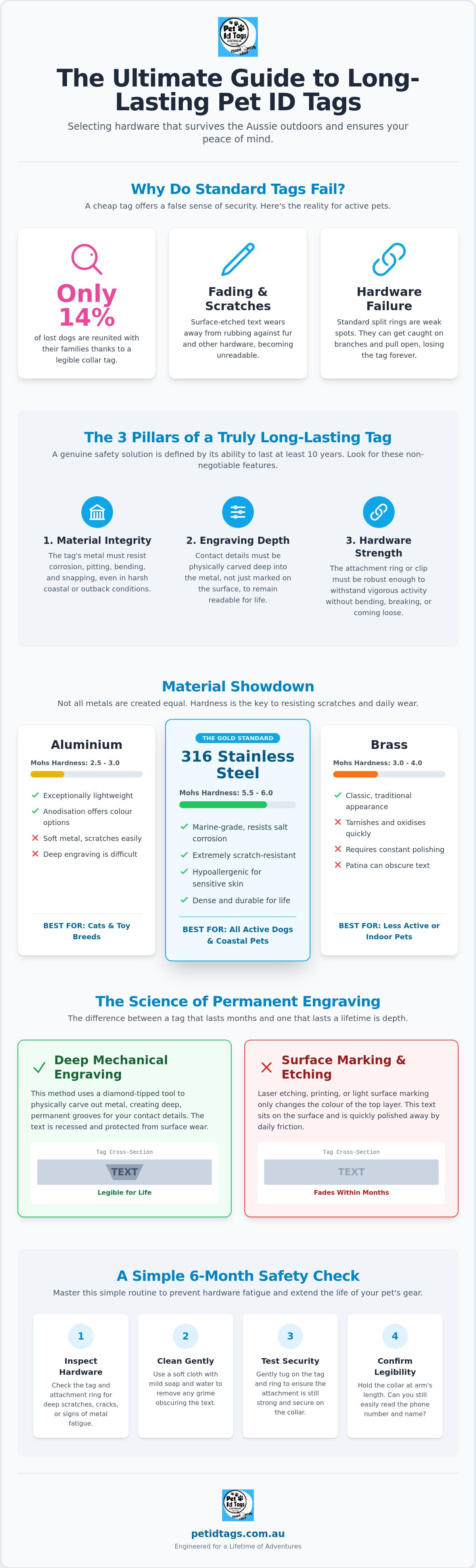
A long lasting pet id tags solution is defined by one specific metric: the ability to remain legible and securely attached for at least 10 years. It is a piece of safety equipment, not a fashion accessory. Many pet owners mistakenly believe that all metal tags offer the same level of protection. This is a dangerous assumption. A tag that looks sturdy in a shop window might fail within weeks when exposed to the reality of an active dog's life. Finding genuine long lasting pet id tags requires looking past the shiny finish to the engineering underneath.
True longevity is built on three essential pillars. Material integrity ensures the tag does not corrode or snap. Engraving depth guarantees the contact information remains readable even after years of friction. Hardware strength keeps the tag on the collar during vigorous activity. These requirements are non-negotiable in the Australian climate. From the corrosive salt spray of our coastal towns to the intense UV levels in the outback, our environment is a proving ground where only the highest quality materials survive.
The Cost of Cheap Tags: Why Fading is a Safety Risk
Choosing a budget tag often leads to a false sense of security. Many mass-produced options use "surface-etched" or printed lettering. This text sits on the surface and is vulnerable to daily wear. As your pet moves, the tag rubs against their fur and other hardware, effectively polishing the information away. If your dog gets lost in the bush, an unreadable tag is a catastrophic failure. Investing in quality once is far more economical than the recurring cost of replacing failed tags that put your pet at risk.
Identifying Quality Before You Buy
You can often spot inferior products by their weight and finish. "Mystery metals" are frequently lightweight alloys covered in a thin, decorative coating that eventually flakes off. Perform a simple weight test; density is a reliable indicator of material grade. When researching common materials for pet tags, you will notice that heavier metals like stainless steel offer significantly better resistance to scratching and bending. For local owners, stainless steel dog tags australia represent the pinnacle of durability. They provide a permanent identification solution that withstands the most demanding conditions without losing its form or function.
Comparing Materials: Stainless Steel vs. Aluminium vs. Brass
Choosing the right metal is the foundation of long lasting pet id tags. Metals are ranked on the Mohs scale of mineral hardness, which dictates how well a surface resists scratching and abrasion. Stainless steel sits significantly higher on this scale, usually between 5.5 and 6, while brass and aluminium lag behind at approximately 2.5 to 3. This gap in hardness is the primary reason why some tags remain legible for a decade while others become a blurred mess of scratches within two years of park play and bushwalks.
Australia's geography puts unique pressure on these materials. Coastal salt spray is a relentless corrosive agent that can cause lower-grade metals to pit and weaken. While brass offers a classic look, it is prone to heavy tarnishing and oxidation. This chemical reaction creates a dark patina that rapidly obscures engraved text, requiring constant polishing to maintain safety standards. If you are looking for a fit-and-forget solution, understanding these metallurgical differences is essential before making a purchase.
Why Marine-Grade Stainless Steel Rules the Roost
Marine-grade 316 stainless steel is the gold standard for durability. Unlike standard steel, the 316 grade contains molybdenum, an alloy that specifically protects against chloride corrosion. This makes it impervious to the "tag jingle" wear that occurs when multiple pieces of hardware rub together on a collar. It is a dense, heavy-duty material that maintains its structural integrity regardless of how many times your dog dives into the surf. For pets with skin sensitivities, stainless steel is also hypoallergenic, ensuring the tag doesn't cause irritation or discolour the fur. You can view our range of high-grade metal tags to see the difference in finish and build quality.
When to Choose Lightweight Aluminium
While steel provides maximum endurance, aluminium serves a specific purpose for smaller animals. It is exceptionally lightweight, making it a comfortable choice for personalised cat tags or toy breeds where every gram matters. However, aluminium is a softer metal. To compensate for this, quality aluminium tags undergo an anodisation process. This electrochemical treatment creates a hardened, colourful layer on the surface. While this provides a vibrant look, the colour will eventually wear down at high-friction points. It remains an excellent choice for indoor pets or those who lead a less rugged lifestyle, provided you accept the trade-off in absolute lifespan compared to steel.
The Science of Permanent Engraving: Deep vs. Surface
The method used to mark your pet's details is just as critical as the metal itself. Many owners are disappointed when their long lasting pet id tags become blank discs within a year. This failure usually happens because the information was merely marked on the surface rather than physically carved into the material. Understanding the difference between "adding" a mark and "removing" metal is the key to permanent identification that survives a decade of use.
Surface marking, often called laser etching or laser bonding, relies on a chemical reaction to create dark text. While it looks sharp when new, this layer sits on top of the metal. Constant friction against a collar or another tag acts like sandpaper, slowly polishing the text away until it is unreadable. In contrast, mechanical engraving uses a physical tool to cut into the metal. This creates a deep groove that remains readable even if the surrounding surface becomes heavily scratched during a dog's daily adventures through scrub and sand.
Mechanical Diamond-Tip vs. Laser Etching
Diamond-tip engraving tools work by carving a physical "trench" into the tag. This process ensures that the contact details are an integral part of the tag's structure, not just a decoration. We strongly advise against "laser-only" black marking for active pets. While the high contrast looks appealing, it lacks the depth required to survive years of wear and tear. A physical groove can be felt with a fingernail. If the tag is smooth to the touch, the engraving is likely surface-level and prone to fading under the pressure of an active lifestyle.
Optimising Your Engraving for Lifelong Legibility
Legibility is also a result of smart design. Overcrowding a small space with too much text forces the engraver to use smaller, thinner fonts that wear down faster. A "less is more" approach is always safer for long term safety. Stick to bold, simple sans-serif fonts that maintain their clarity even as the metal ages. For the best Australian recovery results, prioritise your mobile number, the pet's name, and a clear "Microchipped" notification. For more layout inspiration, check our pet id tag engraving ideas to ensure your tag remains functional for the long haul. Bolder engraving on high-grade materials ensures that even if the tag is found years later, the information is still clear enough to bring your pet home.
Securing the Tag: Preventing Attachment Failure
Even the most durable long lasting pet id tags are useless if they are lying in the dirt five kilometres back on a bush trail. Many owners focus entirely on the tag itself while ignoring the hardware that keeps it attached. The standard split ring is the single most common point of failure for lost identification. These rings are often made of soft alloys that "memory stretch" when snagged. If your pet catches their tag on a branch or during a rough play session at the park, a cheap ring will deform and stay open. This allows the tag to slide off unnoticed, leaving your pet without identification when they need it most.
Reliability is only as strong as the weakest link in the chain. When a tag is lost, it is rarely because the metal snapped. It is almost always because the attachment hardware failed under tension. Addressing this risk is just as important as choosing the right material or engraving depth. You need hardware that can withstand sudden jolts and consistent vibration without losing its shape or grip on the collar.
Split Rings vs. Pet Tag Quick Clips
Traditional stainless steel split rings are reliable only if they are heavy-duty and properly closed. However, they are notoriously difficult to move between gear and often weaken every time they are pried open. A dog tag quick clip is a superior alternative for active Australian dogs. These clips use a secure, spring-loaded gate that provides a much higher tensile strength than a simple wire loop. They allow for instant transfers between harnesses and collars without compromising the integrity of the attachment. Always ensure you thread the ring through the thickest part of the collar's D-ring to minimise leverage during a snag.
Reducing 'Tag Rub' and Jingle
When multiple metal tags hang together, they create a constant "filing effect." Every step your pet takes causes the council tag to rub against the ID tag. This friction acts like a slow-motion grinder, eventually wearing down the edges of the metal and even the attachment hole itself. Using silicone silencers or "hushtags" provides a protective buffer that absorbs this kinetic energy. This simple addition preserves the metal and keeps the engraving crisp for years longer. For those who prefer a completely silent and snag-free solution, a personalised dog collar with ID details built directly into the webbing is an excellent alternative. It eliminates the need for hanging hardware entirely while maintaining high visibility. Secure your pet's safety today by upgrading to our heavy-duty attachment hardware designed for the toughest conditions.
Maintenance: How to Make Your Tags Last a Lifetime
Securing a set of long lasting pet id tags is the first step, but ensuring they reach their ten-year potential requires a proactive approach. Hardware is subject to constant mechanical stress and environmental attack. In Australia, the combination of fine red dust and airborne salt creates a potent abrasive paste. Without regular care, this grime accumulates in the engraving and around attachment points, leading to premature pitting and wear. A simple maintenance schedule ensures your pet's identification remains as reliable on year ten as it was on day one.
Durability is a partnership between quality manufacturing and consistent upkeep. Even the most resilient marine-grade steel can suffer if neglected in harsh conditions. Establishing a six-month "Safety Check" for all your pet gear, including harnesses and collars, allows you to spot tiny issues before they become safety risks. It's much easier to clean a tag today than it is to search for a lost pet tomorrow because a weakened attachment finally gave way.
Cleaning and Polishing Your Tags
Routine cleaning prevents environmental contaminants from bonding to the metal surface. For pets that frequent the beach or go bush, a weekly rinse with mild dish soap and warm water is essential. This removes salt crust and grit that can act like sandpaper against the collar. If you use anodised aluminium tags, never use harsh chemical cleaners or steel wool. These will strip the protective oxide layer and expose the soft metal underneath. Stainless steel is more resilient, but a quick buff with a microfibre cloth will keep the surface reflective, making the deep-set engraving easier to read in low-light conditions.
The 30-Second Monthly Safety Inspection
You don't need a workshop to verify your gear's integrity. A quick monthly check can prevent a lost tag before it happens. Focus on these three critical areas:
- Legibility: Hold the tag at arm's length under direct light. If you struggle to read the mobile number, a stranger will too. Deep engraving should be clear of dirt and debris.
- Ring Tension: Inspect the split ring for "gapping." If the wire loops don't sit flush against each other, the ring has been stretched and is likely to fail.
- Hole Wear: Look at the hole where the tag meets the ring. Metal-on-metal friction can slowly "egg out" this opening. If the metal is becoming dangerously thin at the top, it's time to retire the tag.
Identifying critical wear early is the hallmark of a responsible owner. If the hardware shows signs of thinning or the attachment ring feels soft, replace it immediately. For those planning extended camping trips or beach holidays, carrying a back-up tag is a sensible safety measure. It provides an immediate solution if a tag is lost in a remote area where replacements aren't available. By following these practical steps, you ensure your long lasting pet id tags remain a dependable lifeline for your pet's entire life.
Invest in Your Pet's Lifetime Safety Today
Selecting a tag is more than a simple purchase; it's a commitment to your pet's long-term security. We've covered how the combination of 316-grade stainless steel and deep mechanical engraving creates long lasting pet id tags that survive the toughest Australian conditions. By prioritising material density and secure attachment hardware, you eliminate the risk of fading text or snapped rings during your next weekend adventure. Reliability is about choosing hardware that works as hard as your dog does in the scrub or the surf.
With over 20 years of expertise in Australian pet safety, we specialise in marine-grade stainless steel options and deep-engraving technology that simply won't wear off. Don't leave your pet's safety to chance with flimsy alternatives that polish away under daily friction. Shop our range of Deeply Engraved Stainless Steel Tags, built for the Aussie lifestyle. Take the guesswork out of pet identification and enjoy the peace of mind that comes with professional-grade protection. Your pet is worth the investment.
Frequently Asked Questions
What is the most durable material for a dog tag in Australia?
Marine-grade 316 stainless steel is the most durable material available for Australian conditions. It is engineered to resist corrosion from salt spray and humidity, which are common in coastal regions. While other metals might tarnish or pit, this specific grade maintains its structural integrity and polished finish for over a decade. It provides the physical strength required for dogs that enjoy active, outdoor lifestyles.
How do I stop my dog's ID tags from wearing off?
To prevent contact details from wearing off, you must prioritise deep mechanical engraving over surface-level laser marking. Deep engraving carves a physical groove into the metal that remains readable even after years of friction. Adding a silicone silencer or "hushtag" also helps by reducing the abrasive rubbing between multiple tags. This combination ensures your long lasting pet id tags stay legible for the pet's entire life.
Are plastic or metal pet tags better for long-term use?
Metal tags, particularly stainless steel, are significantly better for long-term use than plastic alternatives. Plastic tags often become brittle and crack when exposed to intense Australian UV levels. They also scratch easily, which can quickly obscure the text. A high-quality metal tag offers superior impact resistance and won't snap if it gets snagged on a branch during a bushwalk.
Can saltwater damage my pet's stainless steel ID tag?
Saltwater won't damage a marine-grade 316 stainless steel tag. This material is specifically alloyed with molybdenum to prevent chloride corrosion, making it perfect for beach-loving dogs. Lower grades of steel or "mystery metals" may develop rust spots or pitting after a single swim. It is still good practice to rinse any tag with fresh water after a beach trip to remove abrasive sand crystals.
How often should I replace my pet's identification tag?
You should only need to replace a high-quality tag if your contact information changes or if you notice critical wear during a safety check. Inspect the attachment hole for thinning and the split ring for any signs of stretching every six months. If the metal has worn down significantly at the connection point, replace the tag immediately to prevent it from snapping off during exercise.
Is deep engraving better than laser etching for longevity?
Deep mechanical engraving is far superior to laser etching for long-term durability. Laser etching creates a dark mark on the surface that friction eventually polishes away. Deep engraving removes material to create a permanent trench. This ensures the information remains readable even if the surface of the tag becomes heavily scratched or scuffed over several years of rugged use.
What size tag should I get to ensure it doesn't get damaged?
Select a tag size that is proportional to your pet's frame and collar width. A tag that is too large for a small breed increases the risk of snagging on furniture or undergrowth. Conversely, a tag that is too small for a large dog can be difficult for a stranger to locate and read quickly. Aim for a size that sits comfortably against the chest without excessive dangling or catching.
How can I prevent my dog from losing their ID tag during exercise?
Prevent tag loss by using high-quality attachment hardware like a stainless steel split ring or a heavy-duty quick clip. Avoid the thin, soft wire rings often included with budget tags, as these easily deform if the tag gets caught. Periodically check that the attachment ring hasn't memory stretched or developed a gap. A secure, spring-loaded clip provides the best protection for dogs that engage in vigorous play.