

Table of Contents
- Why Pet Tags With Replaceable Contact Info Matter
- What to Engrave on Pet Tags
- Smart Pet Tags vs Traditional Tags
- Legal Requirements for Pet Registration Tags
- Signs Your Pet Tag Needs Replacement
- How to Order a Replacement Pet Tag
- Keeping Your Pet's Contact Information Current
- Conclusion
Last Updated: August 30, 2026
Why Pet Tags With Replaceable Contact Info Matter
Pet identification is one of the simplest yet most effective ways to ensure your dog or cat comes home safely. Pet tags with replaceable contact info solve a critical problem: when your phone number changes, your address updates, or you move house, your pet's tag becomes outdated. A lost pet with outdated contact information has almost no chance of being reunited with you, even if someone finds them and wants to help.
At Pet ID Tags Australia, we've worked with thousands of pet owners over more than 20 years. The pattern is consistent: owners buy a tag, engrave it with their details, then life happens, a job change, a house move, a new phone number. The tag stays the same while their contact information drifts into irrelevance. When a pet goes missing months or years later, the finder calls a disconnected number or reaches a stranger.
Pet tags with replaceable contact info eliminate this gap. Whether you choose a traditional tag with a slide-on contact panel or upgrade to a smart QR code tag, your pet's identification stays current without replacing the entire tag. A readable, accurate phone number is often the difference between a lost pet and a reunion.
What to Engrave on Pet Tags
Your name and phone number are non-negotiable. If someone finds your pet, they need to contact you directly and quickly. A single, current phone number is far more valuable than multiple outdated ones.
Your address is optional but useful if your pet is found nearby. Many owners prefer to include suburb and postcode only, or skip the address entirely and rely on the phone number for privacy reasons.
Pet name and your name together create a personal touch that makes finders more inclined to help. "Bella, Sarah's dog" feels more like a reunion mission than a generic ID number.
Microchip number is valuable secondary information if your pet is also microchipped. Include it if space allows, but never at the expense of your phone number.
Medical alerts, allergies, or aggression warnings should be noted only if space permits and critical. "Anxious" or "Fearful" can help a finder handle your pet more carefully. Severe allergies worth emergency treatment are worth including.
Registration details vary by location. In many areas, your council registration number might be worth including as a backup identifier, but your phone number always comes first.
Smart Pet Tags vs Traditional Tags
The choice between smart pet tags and traditional engraved tags depends on your pet, lifestyle, and comfort with technology.
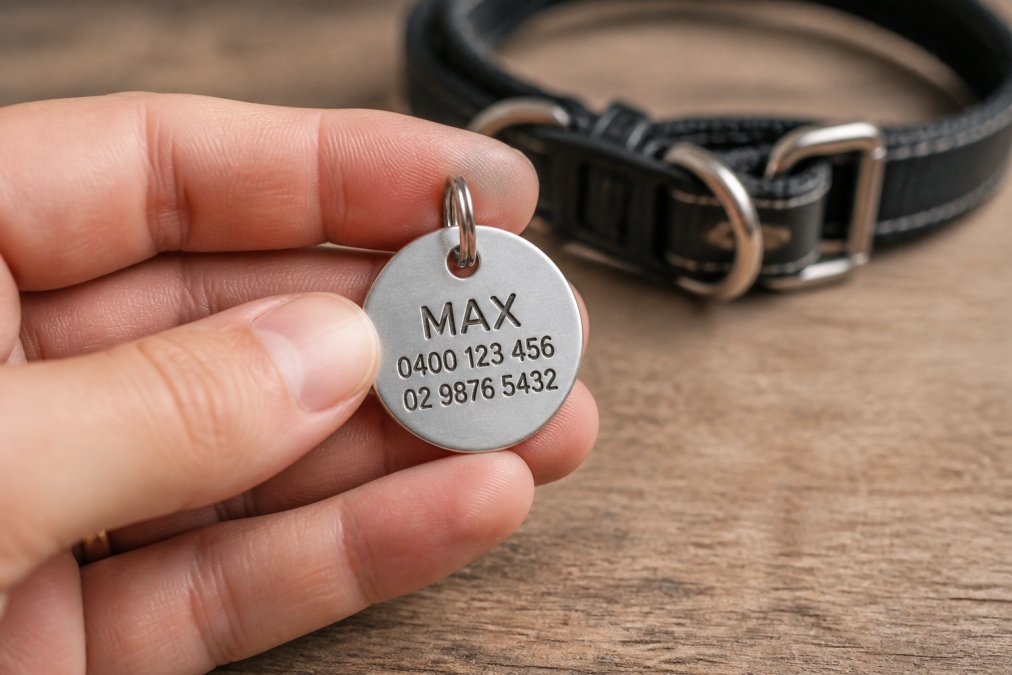
Traditional engraved tags with replaceable contact info are the reliable foundation. Stainless steel or aluminium tags with deep laser engraving resist fading and scratching far better than cheaper alternatives. Silicone slide-on panels let you swap contact information without buying a new tag. These tags work immediately, require no batteries or app, and last for years. They're also significantly cheaper upfront.
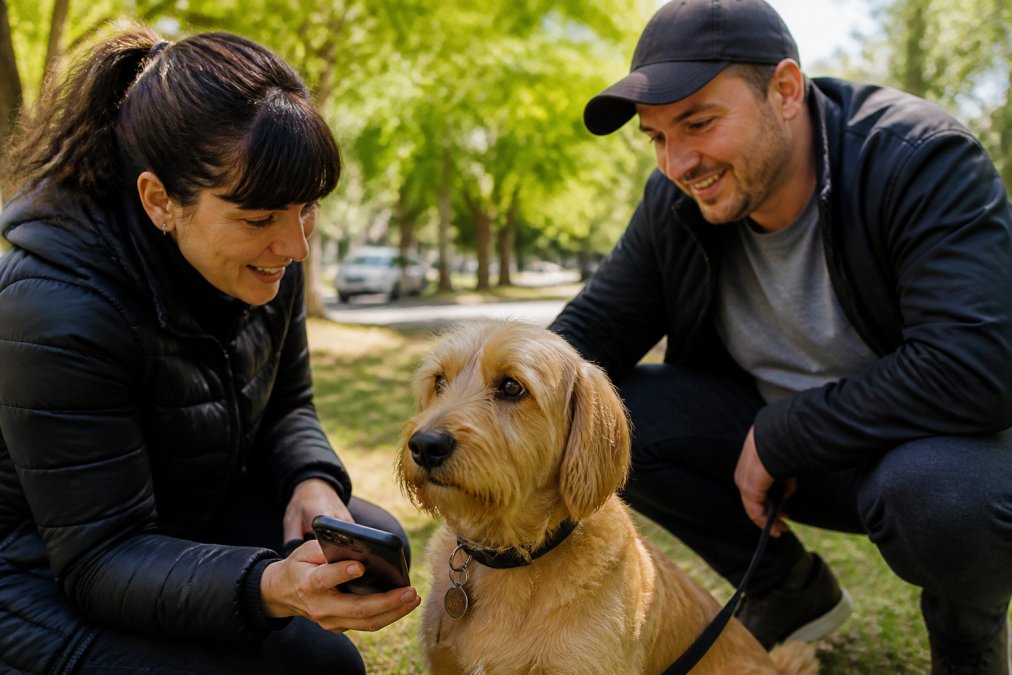
Smart pet tags add a digital layer. A QR code on the tag links to your pet's digital profile when scanned with a smartphone. Someone who finds your pet can instantly access your contact information, medical history, and a recent photo without reading small engraved text. Smart tags work even if engraving becomes worn. They also allow you to update your contact information instantly across all instances of the tag, change your phone number once in the app, and every tag reflects it immediately.
How Smart Tags Work
A smart pet tag contains a QR code unique to your pet's digital profile. When someone finds your pet and scans the code with any smartphone camera, they're directed to a web page with your contact information, your pet's name, photo, medical alerts, and emergency contacts. You control what information displays and can update it in real time through an app or web dashboard.
The Pawzee Smart Pet ID Tag operates on this principle. At $34.90, it combines durability with digital accessibility. The tag is designed to survive daily wear, and the QR code remains scannable even if the physical tag shows age. Your pet's profile lives online, updated instantly whenever you change your details. Smart tags don't require GPS tracking or subscription services, they're purely identification tools that link physical identification to a digital profile.
When to Choose Smart Over Traditional
Smart tags make sense if you move frequently, change your phone number regularly, or want the reassurance of a digital backup to physical engraving. They're also ideal for owners uncomfortable putting their home address on a physical tag.
Traditional tags with replaceable contact info are better if you prefer simplicity, want zero ongoing maintenance, or need identification that works without internet access. They're also more affordable upfront and suitable for pets whose owners' details are stable.
Many owners use both: a traditional tag as the primary identifier and a smart tag as a backup. This layered approach maximises the chances of reunion.
Legal Requirements for Pet Registration Tags
Registration requirements vary by local council, but most areas in Australia require dogs to be registered and to wear identification at all times. Cats are less commonly subject to mandatory registration, though many councils encourage it.
Your council registration tag is separate from your personal ID tag, though both serve identification purposes. The registration tag proves your pet is registered with the local authority and often includes a registration number and council contact details. Your personal tag includes your contact information. Both should be worn together on the collar.

Check your specific council's requirements, as some require registration tags to be visible at all times. Microchipping is increasingly required or strongly recommended alongside registration. A microchip provides permanent identification that can't be lost or removed, whereas tags can fall off. Many councils now require microchipping as a condition of registration. Your microchip number should be recorded with your council and with the microchip registry.
Signs Your Pet Tag Needs Replacement
A tag that's unreadable is worse than no tag at all. It creates false confidence that your pet is identified when a finder has no way to contact you.
Fading or worn engraving is the most common issue. Cheap tags with shallow engraving become illegible within months. Deep laser engraving resists this far better, but even quality tags eventually show wear. If you can't read the engraving clearly in good light, your pet's tag has become a liability.
Corrosion or discolouration indicates the tag material is breaking down. Rust spots, oxidation, or tarnishing all suggest the tag is nearing the end of its lifespan.
Physical damage, dents, cracks, or bent edges, compromises both durability and readability. A cracked tag can break completely during normal play.
Loose or missing contact information on slide-on panels is a clear sign to replace the panel. If the panel has shifted or faded, your pet's tag is incomplete.
Attachment mechanism failure, a bent split ring, worn D-ring, or clasp that no longer holds securely, means your tag could fall off. This requires immediate replacement.
If your contact information has changed and your tag has permanent engraving, you face a choice: continue wearing an outdated tag or replace it. This is precisely why pet tags with replaceable contact info matter.
How to Order a Replacement Pet Tag
Ordering a replacement pet tag is straightforward, whether you're replacing a worn traditional tag or upgrading to a smart option.
For traditional tags with replaceable contact info, measure your current tag to ensure sizing consistency. Order the same material and style, then choose your engraving. Pet ID Tags Australia offers deep laser engraving that resists fading far better than standard methods. Provide your preferred contact information and confirm the engraving is correct before finalising your order. Turnaround time from order to dispatch is typically fast, with delivery across Australia.
For smart tags like the Pawzee Smart Pet ID Tag at $34.90, you'll order the physical tag, then set up a digital profile through the accompanying app or website. Enter your contact information, pet details, and any medical alerts. The QR code on the tag links directly to this profile. If you need to update your information later, simply edit your digital profile, no new tag required.
Consider ordering multiple tags at once if you have several pets or want a backup. Pet ID Tags Australia offers fast dispatch from their Adelaide workshop, with 30-day satisfaction guarantee.
Keeping Your Pet's Contact Information Current
This is where pet tags with replaceable contact info prove their value. A tag is only useful if the information on it is current.
Set a reminder when you change your phone number, move house, or update your emergency contact. For traditional tags with slide-on panels, simply order a replacement panel with your new details. For smart tags, update your digital profile immediately through the app.
Review your pet's tag every few months. Check that the engraving or panel information is still legible. If your details have changed but your tag hasn't been updated, do it now rather than waiting for a crisis.
If you're unsure whether your tag is still readable, ask a friend to read it without context. If they struggle, it's time to replace or refresh it.
Keep a digital copy of your pet's tag information somewhere accessible, a note on your phone, a photo of the tag, or a record in your pet's microchip registry. For smart tags, ensure your digital profile is complete and current with a recent photo and emergency contacts.
Conclusion
Pet tags with replaceable contact info solve a problem that every pet owner faces eventually: keeping your pet's identification current without replacing the entire tag. Whether you choose a traditional tag with a slide-on contact panel or upgrade to a smart QR code tag, your pet's ID should reflect your current contact details without friction.
Pet ID Tags Australia has spent over 20 years crafting durable, deeply engraved identification tags designed to survive years of wear while remaining readable. Our commitment to Australian-made quality and fast local dispatch means your pet's safety is never delayed. With a 30-day satisfaction guarantee and a 4.91-star rating from thousands of verified reviews, you can order with confidence. Shop Dog Tags and ensure your pet's identification is always current and always readable.
Frequently Asked Questions
How often should I check if my pet's tag information is still current?
Check every three months, or immediately after any change to your contact details. A tag with outdated information is worse than no tag at all.
Can I update a smart pet tag's information without buying a new tag?
Yes. Smart tags like the Pawzee Smart Pet ID Tag link to a digital profile you control through an app. Update your contact information once, and all instances of your pet's tag reflect the change instantly.
What's the difference between a pet registration tag and a personal ID tag?
A registration tag proves your pet is registered with the local council and includes the council's contact details. A personal ID tag includes your contact information. Both should be worn together. Your personal tag is usually the faster way for a finder to reach you.
Is a microchip enough, or do I still need a physical tag?
A microchip is permanent and can't be lost, but it only works if a vet or shelter scans it. A physical tag is your fastest path to reunion because any person who finds your pet can read it and call you immediately. Use both for maximum protection.
How long does a traditional engraved pet tag typically last?
Deep laser-engraved tags can last 5-10 years or longer if the material is durable (stainless steel or quality aluminium). Cheap tags with shallow engraving fade within months. Material quality and engraving depth matter far more than time alone.
Frequently Asked Questions
Should you put your phone number on a dog tag?
Yes, your phone number is the most critical piece of information on a pet tag. A finder can call you immediately, which is faster than any other recovery method. Include a landline as backup if possible, but mobile is essential. Update tags promptly to ensure lost pet recovery works.
What should you not put on your pet's ID tag?
Avoid your full address, it creates security risks and is unnecessary since finders can call your number. Don't include your pet's full name alone; add your contact details first. Skip microchip numbers (they're tracked separately by vets). Avoid social media handles or email as primary contact. Your phone number and pet's name are sufficient for rapid reunions.
What is legally required on a pet ID tag in Australia?
Most councils require your name, phone number, and address on your pet's tag. Some councils also mandate the pet's name and your council registration number. Requirements vary by local authority, so check your council's specific regulations.
How often should you update your pet's contact information?
Update your tag immediately if you change your phone number or address. With replaceable contact info tags or smart tags with digital profiles, updates are simple and cost-effective. Traditional engraved tags require replacement, but smart alternatives let you update details instantly without buying a new tag. Check your tag's legibility every 6-12 months for signs of fading or wear.
This article was written using GrandRanker