

Table of Contents
- Why Escape Artists Need Durable Dog Tags
- Indestructible Dog Tags: Materials That Actually Last
- How to Secure Dog Tags to Collar Without Losing Them
- Pet Identification Requirements in Australia
- What to Engrave on Durable Dog Tags for Escape Artists
- Redundant Identification: Tags, Microchips, and GPS Trackers
- Our Recommended Tags for High-Energy and Escape-Prone Dogs
- Conclusion
Last Updated: August 26, 2026
Why Escape Artists Need Durable Dog Tags
Every dog owner with a Houdini on their hands knows the dread of a gate left open for three seconds. For high-energy breeds and determined escape artists, a lost pet isn't hypothetical, it's a recurring reality. That's why durable dog tags aren't optional; they're the last line of defence between your pet and a stranger's front porch.
At Pet ID Tags Australia, we've spent over 20 years engraving identification tags for pets of every temperament. The pattern we see most often? Owners of escape-prone dogs return for replacements because the first tag failed, faded printing, snapped rings, or text worn to nothing after months of rough use.

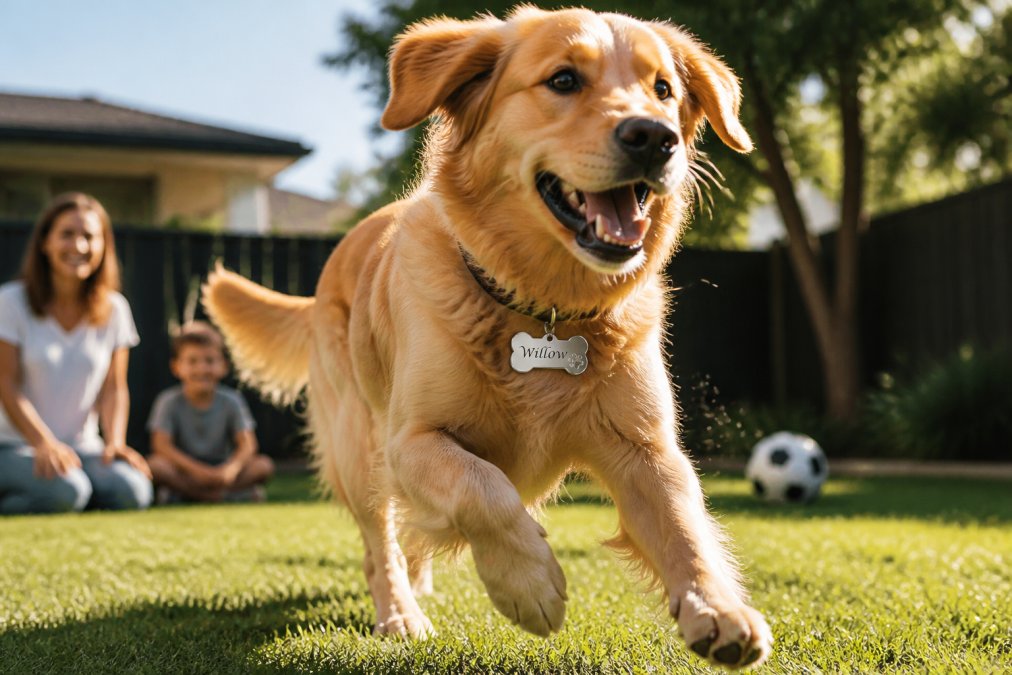
Escape artists run hard, swim, dig, and squeeze through fences, treating their gear as an obstacle course. A tag that holds up on a calm lap dog fails within weeks on a working kelpie or restless husky. Pet identification for these animals demands materials and attachment methods built for punishment.
The Real Cost of a Lost or Unreadable Tag
A worn or illegible tag isn't a minor inconvenience, it's a serious problem. If your dog escapes and the tag can't be read, whoever finds them has no way to contact you directly. That means a trip to the pound, a waiting period, and a stressful reunion, if it happens at all.
Lost pet recovery rates improve significantly when contact information is immediately visible. A microchip helps, but it requires a scanner. A clear, readable tag works for anyone who picks up your dog. Cheap tags stamped from thin aluminium show visible wear within months of active use. For escape artists, that timeline compresses further. Investing in a durable tag ensures the information is still readable when it actually matters.
Indestructible Dog Tags: Materials That Actually Last
The material your tag is made from determines how long the engraving stays readable, how well it resists water and corrosion, and whether it survives daily abuse.
Stainless Steel vs Brass vs Aluminium
Stainless steel is the gold standard for indestructible dog tags. It's rust-resistant, highly durable, and holds engraving exceptionally well over years of daily wear. For escape artists who swim or spend time in wet conditions, stainless steel's corrosion resistance is non-negotiable.
Solid brass is another strong option. It's dense, weather-resistant, and carries engraving well. Brass develops a patina over time and is slightly softer than stainless steel, but still far outperforms aluminium in long-term durability.
Aluminium is where most cheap tags are made. It's lightweight but soft, making it easy to scratch and wear. Aluminium corrodes faster in wet conditions, and printed or shallow-stamped text becomes unreadable within a year of active use. For escape-prone dogs, aluminium is a false economy.
| Material | Rust Resistance | Engraving Longevity | Weight | Best For |
|---|---|---|---|---|
| Stainless Steel | Excellent | Excellent | Medium | Active, escape-prone dogs |
| Solid Brass | Very Good | Good | Medium-Heavy | All-weather durability |
| Aluminium | Poor | Poor | Light | Low-activity pets only |
Engraving vs UV-Cured Printing: Which Stays Readable Longer
UV-cured printing looks sharp when new but sits on the tag's surface. On an active dog, surface coatings get scratched, chipped, and worn away entirely.
Deep laser engraving removes material from the tag itself. There's no coating to peel and no ink to fade. For escape artists, this distinction is critical: a laser-engraved stainless steel tag remains readable after years of hard use, while a printed tag becomes illegible within months.
Always choose deep laser engraving over printing for active dogs. The initial appearance may be less decorative, but long-term readability is incomparable.
How to Secure Dog Tags to Collar Without Losing Them
The best tag is useless if it falls off during your dog's escape. Knowing how to secure dog tags properly is half the battle.
Attachment Hardware Failure: What Breaks First
Most people focus on the tag itself and overlook the attachment point, which is where failure typically occurs.
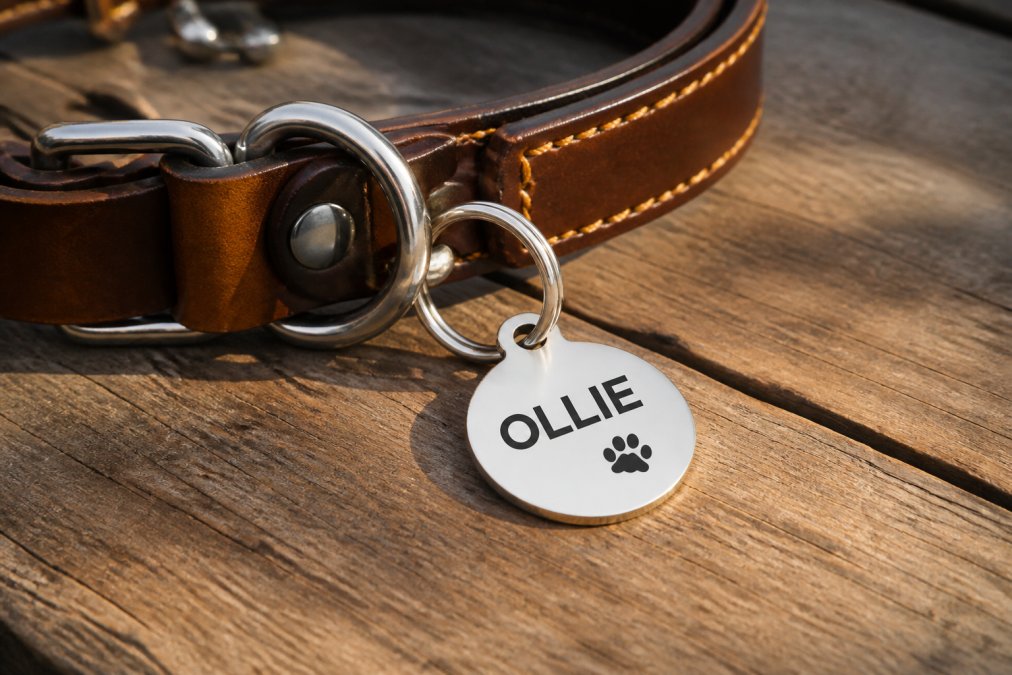
The standard split ring is the weakest link. It opens under lateral stress, exactly what happens when an energetic dog catches a tag on a fence or bush. Over time, the gap widens and the tag works free.
Better options include:
- Welded D-rings: A solid welded ring has no gap to open. Attach the tag directly to it rather than using a split ring.
- S-hooks: Properly closed S-hooks are more secure than split rings but must be fully crimped shut.
- Tag silencers: Rubber or silicone sleeves that wrap around the tag and ring, reducing movement and wear while quieting the jingle.
- Rivet attachment: Some collar designs allow a tag to be riveted directly to the collar. This is the most secure option but makes updating information difficult.
For escape artists, check the attachment hardware every two to three weeks. The ring is cheap to replace; a lost tag is not.
Noise Reduction and Tag Visibility in Low Light
Active dogs with multiple tags create constant jingling that can stress noise-sensitive dogs. Tag silencers solve this by holding the tag snug against the collar, eliminating clinking while keeping it accessible.
Tag visibility in low light is a genuine safety concern for dogs that escape at dusk or night. Polished stainless steel and gold-finish tags reflect ambient light better than matte options. Some owners add a small LED collar clip alongside the tag for high-risk dogs.
Pet Identification Requirements in Australia
Pet identification requirements vary by state and territory. Most local councils mandate that dogs wear an identification tag whenever they're in a public space. According to RSPCA Australia's pet identification guidance, microchipping is compulsory for dogs and cats across all states and territories, but a physical tag remains the fastest way for a member of the public to reunite a found dog with its owner.
Under most state companion animal legislation, such as the Companion Animals Act 1998 (NSW), dogs must wear a collar with a tag showing the owner's name and address or phone number when in a public place. Council registration tags are also typically required.
Your dog needs at minimum two tags: a council registration tag and a personal contact tag. For escape artists, this makes secure attachment even more critical. Check your specific local council requirements, as fines for untagged dogs in public spaces apply in most jurisdictions. The Australian Veterinary Association's pet microchipping information provides a useful overview of microchipping obligations by state.
What to Engrave on Durable Dog Tags for Escape Artists
The information on a tag is only as useful as its readability. For escape artists, getting this right matters.
Emergency Contact Optimisation
The biggest mistake is engraving too much information in too small a font. A crammed tag becomes unreadable quickly. Prioritise ruthlessly.
What to include:
- Your dog's name (helps the finder build rapport immediately)
- One mobile number, the one you answer
- A second mobile number if space allows
- "Microchipped" if applicable
What to leave off:
- Your home address (a security risk)
- Multiple phone numbers in tiny text
- Lengthy messages
Request the largest font that fits your chosen information. Readability at arm's length, in poor light, by a stranger without reading glasses, that's the standard to aim for.
Redundant Identification: Tags, Microchips, and GPS Trackers
Redundant identification is the professional standard for escape-prone dogs. No single method is foolproof.
Physical ID tag: Immediate, readable by anyone, but fails if lost or unreadable.
Microchip: Permanent and cannot be lost, but requires a scanner. Useless to a member of the public without access to a vet or council ranger. Compulsory in all Australian states and territories.
GPS tracker: Real-time location tracking for serial escapers. Requires charging and a subscription service. Best used as a complement to a tag and microchip, not a replacement.
For escape artists: start with a high-quality, deeply engraved stainless steel tag and a current microchip registration. Add a GPS tracker if your dog escapes frequently or lives in a rural area.

Our Recommended Tags for High-Energy and Escape-Prone Dogs
Stainless Steel Bone Pet ID Tag - Personalised Engraved ($19.90) is a solid starting point. The bone shape distributes stress differently than a round tag, and premium stainless steel resists rust through wet conditions. Deeply laser engraved for years of readable use.
Silver Stainless Steel Round Dog ID Tag - Personalised & Engraved ($19.00) suits owners wanting a clean, classic look with serious durability. The round profile has no corners to catch or bend. Polished finish reflects light well in low-visibility conditions.
Gold Stainless Steel Round Dog ID Tag - Personalised & Engraved ($19.00) offers the same durability with a gold finish for maximum visibility. The contrast against a dark collar makes it easier for strangers to spot and read quickly.

Round Dog Tag - Stainless Steel ($10.90) is the value option for keeping a spare. A backup tag on a secondary collar ensures your dog is never unidentified if the primary tag is lost.
| Tag | Price | Shape | Best For |
|---|---|---|---|
| Stainless Steel Bone | $19.90 | Bone | All-round escape artists |
| Silver Round | $19.00 | Round | Clean profile, low-snag |
| Gold Round | $19.00 | Round | High visibility, gold finish |
| Round Stainless (Wholesale) | $10.90 | Round | Backup tag, multiple dogs |
Pet ID Tags Australia backs every tag with a 30-day satisfaction guarantee and ships from a local workshop in Adelaide. With over 100,000 pets identified and a 4.91-star rating from more than 4,800 verified reviews, the track record speaks clearly.
Frequently Asked Questions
Are stainless steel tags better than aluminium for active dogs?
Yes, stainless steel is the better choice for active or escape-prone dogs. It resists corrosion, scratching, and bending far better than aluminium, which can warp and become unreadable after sustained outdoor use. Deep laser engraving on stainless steel stays legible for years, even with regular swimming or rough terrain. Aluminium tags are lighter and cheaper, but the engraving wears away faster, which defeats the purpose of pet identification for a dog that regularly bolts.
What should I include on a dog tag for an escape artist?
Include your dog's name, your mobile number, and a second contact number if space allows. A note like 'Microchipped' or 'Needs medication' can help a finder act quickly. Skip your home address if security is a concern. For dogs that escape frequently, some owners add a short phrase like 'I bolt, please call immediately' to prompt urgent action. Keep the text concise so every line is easy to read at a glance.
How do I stop my dog's tags from falling off the collar?
The most common failure point is a cheap split ring that opens under pressure. Replace standard split rings with welded O-rings or screw-lock connectors, which are far harder to force open. Riveted tag attachments are another reliable option for very active dogs. Check the ring and collar D-ring monthly for wear, especially if your dog is a regular escape artist. Pairing a secure attachment with a durable stainless steel tag gives you the best chance of the tag staying on.
Do dogs in Australia legally need to wear an ID tag?
Microchipping is mandatory for dogs across most Australian states and territories, and registration with your local council is required. While the specific rules around wearing a physical ID tag vary by state, councils strongly recommend dogs wear a tag with current contact details at all times when outside the home. A physical tag remains the fastest way for someone to return your dog without involving a vet or shelter, making it essential for escape-prone pets regardless of microchip status.
For escape artists, the question isn't whether your dog will get out, it's whether they'll be home by dinner. A cheap or unreadable tag makes that reunion harder than it needs to be. Pet ID Tags Australia's deeply engraved, rust-resistant stainless steel tags are built for exactly this kind of dog: active, determined, and worth every effort to bring home safely. Shop Dog Tags today and make sure your pet's identification is as tough as they are.
This article was written using GrandRanker