
Table of Contents
- How Smart Pet Tags Work: QR Codes and NFC Technology Explained
- QR Code Pet Tag Benefits Every Owner Should Know
- Smart Pet Tag vs GPS Tracker: Which Does Your Pet Actually Need?
- How to Set Up a Digital Pet Profile on Your Smart Tag
- Durability, Waterproofing, and What to Look for in Smart Pet Tags
- Data Privacy, Security, and Troubleshooting Scan Issues
- Smart Tags, Microchips, and Shelter Integration
- Conclusion
Last Updated: August 25, 2026
How Smart Pet Tags Work: QR Codes and NFC Technology Explained
Smart pet tags are identification devices that store your pet's contact information and medical details digitally, allowing anyone with a smartphone to access that data instantly by scanning the tag. Unlike traditional engraved tags, smart tags connect to a cloud-based profile that can be updated at any time without replacing the physical tag. At Pet ID Tags Australia, we've helped over 100,000 pet owners find the right identification solution for their animals, and smart tags represent one of the most significant shifts in pet safety technology in recent years.
If your dog bolts or your cat squeezes through a gap in the fence, whoever finds them can pull up your contact information and your pet's medical history within seconds, no app required, just a smartphone and a scan.
How QR Code Scanning Works
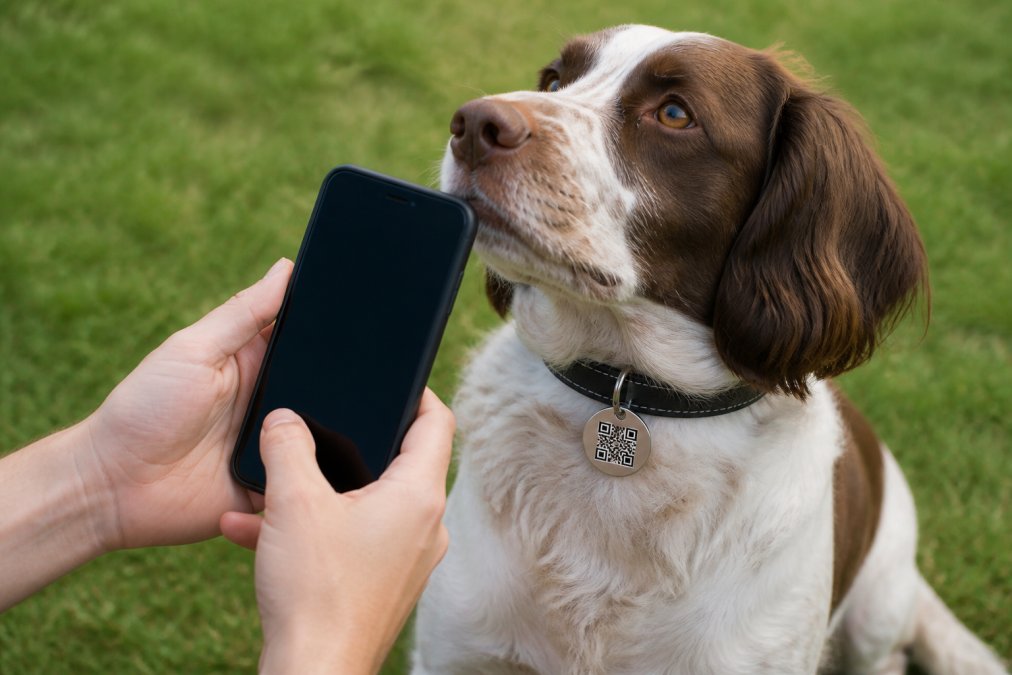
A QR code pet tag encodes a unique web address into a printed or laser-etched pattern of black and white squares. When a finder points their smartphone camera at the tag, the camera app reads the pattern and opens a browser link directly to your pet's digital profile. No app download is needed, and the process takes under five seconds on any modern smartphone.
The profile lives on a cloud-based server, so the physical tag never needs to change when your phone number, address, or emergency contact does. You update the profile online, and the next scan reflects those changes immediately. This solves the frustration with traditional engraved tags: the moment your details change, the tag becomes partially useless.
QR code tags have one practical limitation: the code must be legible. Deep scratches, heavy mud, or significant wear can obscure the pattern enough to prevent a successful scan. This is why tag material and coating quality matter enormously.
How NFC Technology Works
NFC technology uses a different mechanism. NFC stands for Near Field Communication, a passive radio-frequency standard that allows two devices to exchange data when held within a few centimetres of each other. An NFC-enabled pet tag contains a tiny embedded chip that stores a URL or contact data. When a finder taps an NFC-capable smartphone to the tag, the phone reads the chip and opens the linked profile automatically.
Crucially, NFC chips require no battery. They draw power from the electromagnetic field generated by the scanning device itself, which means there is no battery to replace, no charging, and no maintenance. According to NFC Forum's technical documentation on passive NFC tags, passive NFC tags like those used in pet identification have an operational lifespan measured in decades under normal conditions.
NFC works even when the tag is dirty or partially obscured, because it relies on proximity rather than optical reading. QR codes are more universally compatible, since older phones without NFC support can still use their cameras. Many smart tags now combine both technologies on a single tag, covering all bases.
QR Code Pet Tag Benefits Every Owner Should Know
The biggest mistake people make when evaluating QR code pet tags is treating them as a novelty rather than a serious safety tool.
First, there is the updatable profile. A standard engraved tag is a snapshot of your details at one point in time. A QR code tag links to a living document. Change your number, add a new vet, update your pet's medication list: it all flows through to the next scan without touching the tag.
Second, a digital profile can carry vastly more information than any engraved tag. A typical tag face holds a name and two phone numbers. A digital pet profile can include full owner contact details, emergency contacts, medical history, vaccination records, allergies, microchip number, feeding instructions, behavioural notes, and a photo of the pet.
Third, many platforms offer instant alert notifications. When someone scans your tag, you receive a real-time notification showing the approximate scan location. This is not GPS tracking, but it is a meaningful signal that your pet has been found.
Finally, QR code pet tags are subscription-free on many platforms, meaning you pay once for the tag and maintain the profile at no ongoing cost. Always confirm the terms with your provider before purchasing.
Smart Pet Tag vs GPS Tracker: Which Does Your Pet Actually Need?
GPS trackers and smart pet tags solve different problems and are complementary, not competing.
A GPS tracker is an active tracking device that uses satellite positioning to report your pet's real-time location to your phone. It requires a battery (typically recharged every 24-72 hours), a SIM card, and a monthly subscription to a mobile data plan. GPS trackers are excellent for owners of escape-prone dogs in large properties or rural areas.
A smart pet tag is a passive tag with no battery that activates only when someone scans it. Its purpose is to make identification instant and information-rich the moment a finder interacts with your pet.
| Feature | Smart Pet Tag | GPS Tracker |
|---|---|---|
| Battery required | No | Yes (daily/weekly charging) |
| Ongoing subscription | None (varies by platform) | Monthly data plan required |
| Real-time location | No | Yes |
| Medical info storage | Yes | No |
| Works without mobile signal | QR yes, NFC yes | No |
| Tag weight | Very light | Heavier (adds bulk to collar) |
| Best for | All pets, everyday use | High-risk escape-artist dogs |
Most pets need a smart tag. A subset of dogs, particularly those with a history of escaping or living in areas with low foot traffic, benefit from a GPS tracker as well.
A microchip provides a third layer. It is a permanent form of pet identification implanted under the skin, readable by shelter scanners. Microchipping is compulsory for dogs and cats in most Australian states and territories. Check your state's requirements through your state or territory's companion animal registration authority for current obligations.
How to Set Up a Digital Pet Profile on Your Smart Tag
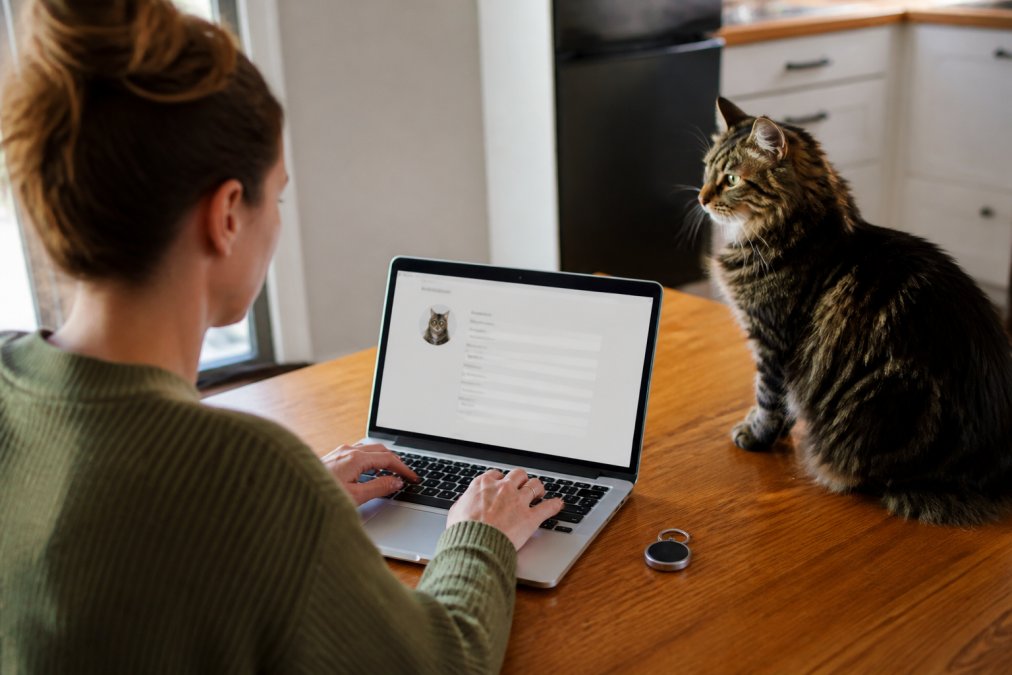
Setting up a digital pet profile takes most owners under ten minutes.
Step 1: Activate the tag. Visit the URL printed on the packaging or inside the box to begin tag activation.
Step 2: Create your account. Register with an email address and password to access your pet owner dashboard.
Step 3: Enter your pet's details. Include pet's name, species, breed, your full name, at least two contact numbers, your suburb and postcode, and microchip number if applicable.
Step 4: Add medical information. Include any conditions, medications, allergies, or dietary requirements. This information is crucial in an emergency.
Step 5: Upload a photo. A clear, recent photo helps finders confirm they have the right animal.
Step 6: Test the tag. Scan the QR code or tap the NFC chip with your own phone to confirm the profile loads correctly.
Step 7: Attach the tag securely. Attach the tag to a well-fitted collar or harness alongside your traditional engraved tag.
Durability, Waterproofing, and What to Look for in Smart Pet Tags
A smart tag that fails in the field creates false confidence. Durability is the primary consideration.
What to look for:
- Waterproof rating: Look for tags rated to at least IP67, which means they can withstand immersion in water to one metre for thirty minutes.
- Scratch-resistant surface: The QR code surface must resist scratching. Epoxy resin coatings and hardened acrylic covers offer better protection than printed paper or thin plastic.
- NFC chip encapsulation: The NFC chip should be fully encapsulated within the tag body, not surface-mounted, to prevent damage from impacts.
- Tag material: Stainless steel and anodised aluminium outperform plastic for longevity. Silicone sleeves can add additional protection for active dogs.
- Attachment mechanism: A welded ring or carabiner-style clip is more secure for dogs that are rough on their gear.
The ACCC's product safety guidelines on pet accessories note that pet product durability claims should be verifiable. Ask providers for specific material and rating information rather than accepting general terms like "durable" or "weatherproof."
Pet ID Tags Australia's tags are produced using deep laser engraving, which means the identification detail is part of the metal itself, not a surface coating that wears away. For smart tags, the QR code or NFC chip must be integrated into the tag construction, not applied as an afterthought.
Data Privacy, Security, and Troubleshooting Scan Issues
How Your Pet's Data Is Protected
When you store your pet's medical history, your home suburb, and your contact details on a cloud-based platform, that data becomes subject to the provider's privacy policy and the legal framework governing data storage. Under the Australian Privacy Act 1988 and the Australian Privacy Principles, organisations that handle personal information must take reasonable steps to protect it from misuse, interference, loss, and unauthorised access.
Before committing to a smart tag platform, ask: Where is the data stored? What information is publicly visible when someone scans the tag? Does the platform use data encryption? What happens to your data if the company ceases trading?
Most reputable platforms display only your contact number and pet name when scanned, keeping your home address and medical records behind a login. Review the privacy policy before enabling scan history features, which track when and where your tag was scanned.
Fixing Common Scanning Problems
The QR code is dirty or wet. Wipe the tag clean with a dry cloth. Most QR readers struggle with reflective water droplets.
The QR code is scratched. Minor scratches in the border area rarely affect scanning. Scratches through the data modules can cause failures. Contact your provider about a replacement if significantly damaged.
The phone camera cannot focus at close range. Try moving the phone back slightly (10-15 cm) and allowing the camera to autofocus.
NFC is not enabled on the phone. Check NFC settings in your device's connectivity menu. NFC is enabled by default on most modern phones.
The NFC tag is not responding. NFC chips can be demagnetised by prolonged exposure to strong magnetic fields, though this is rare in normal use. NFC chips require no maintenance or battery replacement.
Smart Tags, Microchips, and Shelter Integration
Smart tags and microchips serve overlapping but distinct purposes in pet recovery. A microchip is a passive RFID chip implanted under the skin that stores a unique identification number linking to your contact details in a national pet registry. Shelters and veterinary practices scan for microchips as standard intake procedure. In most Australian states and territories, microchipping is a legal requirement for dogs and cats.
A smart tag extends what a microchip can do: it is readable by any member of the public without specialist equipment. A finder who picks up a lost dog does not have a microchip scanner. They have a smartphone. A smart tag bridges that gap immediately, enabling contact before the animal reaches a shelter.
The ideal integration: the microchip provides permanent, tamper-proof identity accessible to shelters and vets. The smart tag provides instant, public-facing contact information and medical details. A traditional engraved tag provides a final fallback when technology fails.
Many local councils and animal shelters now encourage owners to include their microchip number in their smart tag profile. This allows a finder to relay the microchip number to a vet or shelter for cross-referencing, even before the animal is scanned.
Pet ID Tags Australia offers both traditional deep-engraved tags and smart tag options, giving owners the ability to run both systems from a single, trusted supplier with over 20 years of experience in pet identification. With a 4.91 rating from more than 4,800 verified reviews, the range is trusted by pet owners who need identification that works the first time, every time.
Frequently Asked Questions
What does a smart pet tag do?
A smart pet tag stores your contact information and your pet's details on a digital profile linked to a QR code or NFC chip embedded in the tag. When someone finds your lost pet, they scan the tag with any smartphone. The scan instantly displays your emergency contact details, your pet's name, medical history, and any special needs, without the finder needing an app. Some tags also send you a real-time notification with the scan location.
How do QR code pet tags differ from NFC tags?
QR code tags display a printed code that any smartphone camera can read, no special hardware required, which makes them compatible with virtually every phone. NFC tags use a passive chip that transmits data when a compatible phone is tapped against it, requiring no camera but needing NFC-enabled hardware. QR codes are generally more universally scannable; NFC offers a faster tap-and-go experience. Many smart pet tags now include both technologies on a single tag for maximum reliability.
Do smart pet tags require a monthly subscription?
Not always. Many QR code smart pet tags are subscription-free, you pay once, activate the tag, and the digital profile stays live indefinitely. Some platforms charge a small annual or monthly fee for premium features like real-time scan notifications, scan history, or cloud-based storage of pet medical records. GPS trackers, by contrast, almost always require an ongoing subscription because they use mobile data networks for active location tracking. Check the provider's terms before purchasing.
Are smart pet tags waterproof and durable enough for active dogs?
Quality smart pet tags are built to handle outdoor conditions. Look for tags rated as waterproof or water-resistant, with scratch-resistant surfaces that protect the QR code from fading. The QR code or NFC chip must remain scannable after exposure to water, mud, and general wear. Tags made from stainless steel or hard-coated aluminium tend to outlast cheaper plastic alternatives. Always check that the printed or etched QR code is protected under a sealed coating, since a damaged code cannot be scanned.
Losing a pet is one of the most stressful experiences an owner can face, and the difference between a quick reunion and a prolonged search often comes down to the quality of the identification on the collar. Pet ID Tags Australia combines deep laser-engraved traditional tags with smart tag options, backed by 20 years of local craftsmanship and a 30-day satisfaction guarantee. Shop Dog Tags today and give your pet the identification they deserve.
This article was written using GrandRanker