

Table of Contents
- What to Do in the First Hours When a Pet Goes Missing
- Lost Pet Search Tips: How to Cover More Ground Faster
- How to Report a Lost Dog to Council and Animal Shelters
- How Long Do Shelters Keep Stray Animals Before Rehoming
- Using Social Media and Online Noticeboards to Find Lost Pets
- Lost Pet Poster Template: What to Include and Where to Place Them
- Pet Identification: The Best Defence Against a Lost Pet
- Coping With the Stress of a Missing Pet
Last Updated: August 28, 2026
What to Do in the First Hours When a Pet Goes Missing
The first few hours after a pet disappears are the most critical window for recovery. A calm, methodical approach covers more ground faster than panic.
Check Your Property and Immediate Surroundings First
Conduct a thorough search of your own property first. Pets, particularly cats, hide in plain sight when stressed or injured. Check wardrobes, under beds, behind appliances, garden sheds, beneath decks, and inside vehicles. Call your pet's name in a calm voice, frightened animals are less likely to respond to distress signals. Then extend your search to the immediate block and speak to neighbours face to face; many found pets are being cared for by someone nearby who simply doesn't know who to contact.
Gather a Recent Photo and Key Identification Details
Before contacting shelters or printing flyers, gather everything you'll need in one place. A clear, recent photo showing your pet's face and distinctive markings is essential. Note down:
- Microchip number
- Council registration number
- Breed, age, sex, and desexed status
- Distinguishing features (scars, unusual colouring, missing teeth)
- Last known location and time last seen
- Whether your pet was wearing a collar and tag
Having this information ready saves time when making multiple calls to shelters and vet clinics.
Lost Pet Search Tips: How to Cover More Ground Faster
Most people search in a straight line from where they last saw their pet, which is usually wrong. Dogs tend to travel further and faster than owners expect, often following fence lines, waterways, or roads. Cats typically stay within a few hundred metres of home but hide rather than roam. Understanding your pet's likely behaviour changes your search strategy significantly.
Neighbourhood Search Strategies That Actually Work
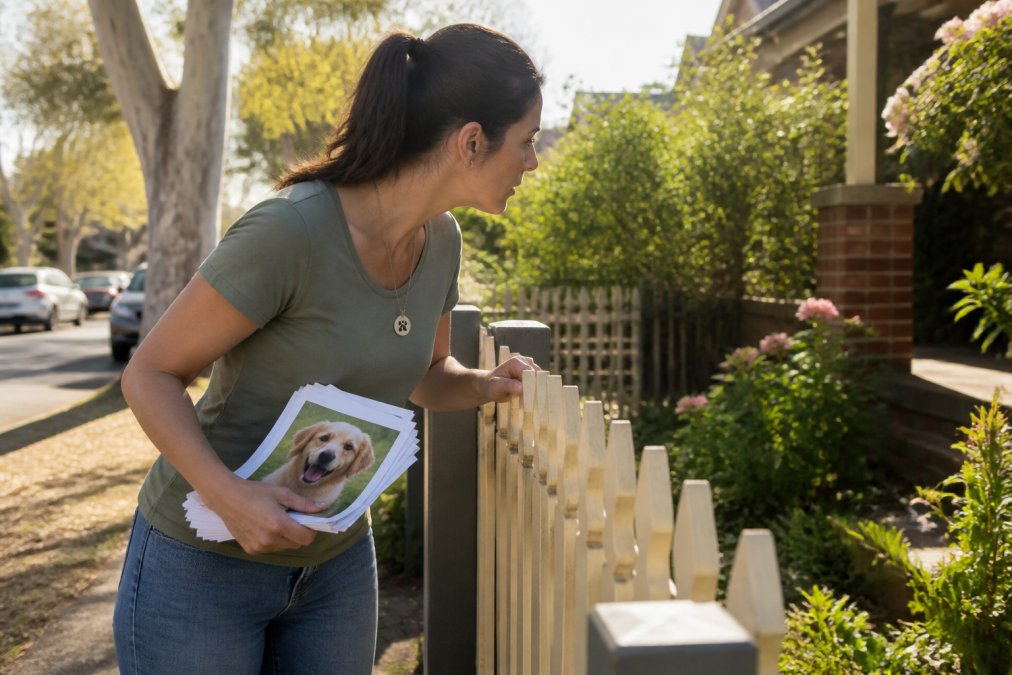
Expand your search radius in stages rather than all at once. Start with a 500-metre radius on foot, then extend to a 2-kilometre radius by car. Knock on doors rather than just dropping flyers in letterboxes; personal conversations are far more memorable. Search at dawn and dusk when pets are more active, bring an item with your scent, leave your pet's food bowl and bedding outside, and ask delivery drivers and council workers if they've seen anything.
Contacting Vet Clinics and Animal Rescue Organisations
Ring every vet clinic within a 10-kilometre radius. Injured or distressed animals are often brought to the nearest clinic by a well-meaning member of the public. Provide your pet's description, microchip number, and contact number, then follow up in person with a printed photo. Contact local animal rescue organisations as well; many operate independently of council pounds and run their own lost and found networks. According to RSPCA Australia's pet care guidance, microchipping significantly improves the chances of reuniting lost pets with their owners.
How to Report a Lost Dog to Council and Animal Shelters
Contact your local council's animal management team as soon as possible. Provide your pet's microchip number, registration number, breed, and description. Ask specifically about the impoundment process: how long animals are held, what reclaim fees involve, and whether they send notifications when a matching animal comes in.
Registering Your Pet as Lost on National Databases
Registering your missing animal on national lost and found databases extends your reach far beyond your local area. Key databases include Pet Address, Animal Welfare League, Lost Pet Finders, and PetRescue. When you register, include your microchip number, council registration number, a clear photo, and your contact details. Update the listing immediately if your pet is found, and check listings daily for sightings reported by others. According to Australian Veterinary Association's pet identification resources, maintaining current registration and microchip records is the single most reliable way to ensure a lost pet can be traced back to its owner.
How Long Do Shelters Keep Stray Animals Before Rehoming
The holding period for impounded animals varies by council and state. Generally, a stray animal without identification is held for a minimum of eight days before becoming available for rehoming or transfer to a rescue organisation. Animals with a microchip or registration tag are typically held longer while attempts are made to contact the owner. Do not wait to contact your local pound; visit in person if possible, as shelter staff see dozens of animals per week and a photo in hand makes a stronger impression than a phone call. Reclaiming an impounded pet typically involves paying an impoundment fee, daily holding fee, and potentially a registration or microchipping fee. moving house with pets.
Using Social Media and Online Noticeboards to Find Lost Pets
Social media has changed pet recovery significantly. Community Facebook groups, Nextdoor, and dedicated lost pet groups now function as the fastest-moving lost and found networks available. Post on every relevant platform within the first hour of your pet going missing. Your post should include a clear photo, your pet's name, the suburb and street where they were last seen, a contact number, and a request for shares. Avoid posting your home address publicly.
Specific platforms to use include local suburb Facebook groups, Lost Pets of [your state] Facebook groups, Nextdoor, and Gumtree's Found Pets section. Update your posts with new sightings and respond to every comment promptly.
Lost Pet Poster Template: What to Include and Where to Place Them
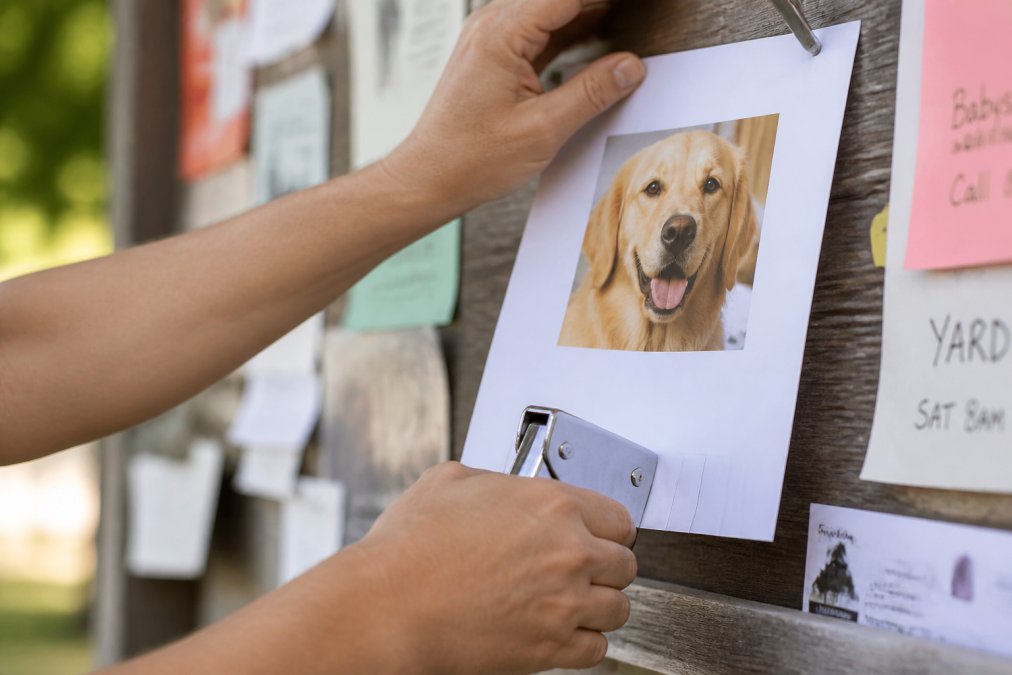
A well-designed lost pet flyer gets results. The difference comes down to clarity, contrast, and placement.
Essential elements for your lost pet poster:
| Element | What to Include | Why It Matters |
|---|---|---|
| Photo | Clear, recent, shows face and markings | First thing people notice |
| "LOST" heading | Large, bold, high contrast | Readable from a distance |
| Pet's name | First name only | Easier for public to call out |
| Breed and colour | Specific (e.g., "tan kelpie cross") | Reduces misidentification |
| Last seen location | Street name and suburb | Focuses search area |
| Contact number | One mobile number | Reduces confusion |
| Reward (optional) | "Reward offered" without amount | Increases engagement |
Print in colour, A4 size at minimum, and laminate if possible. Place flyers in letterboxes within a 2-kilometre radius, vet clinic noticeboards, pet supply store windows, supermarket community boards, school gates, community centres, and busy intersections at eye level on power poles.
Pet Identification: The Best Defence Against a Lost Pet
Prevention is more reliable than recovery. Most successful reunions happen because a pet was wearing identification that made them immediately traceable. A microchip alone is not enough; it requires a scanner and database lookup. A collar and tag gives anyone who finds your pet your phone number within seconds. The two work together, not as alternatives.
Microchips, Tags, and Personalised Collars Compared
| Method | How It Works | Requires Equipment | Visible to Public | Can Be Lost |
|---|---|---|---|---|
| Microchip | Scanned at vet or shelter | Yes (scanner) | No | No |
| ID tag | Read directly from collar | No | Yes | Yes (if collar removed) |
| Personalised collar | Name and number on collar | No | Yes | No (if collar stays on) |
| QR smart tag | Scanned via smartphone | Yes (smartphone) | Partial | Yes (if collar removed) |
Microchipping satisfies legal requirements in every state and territory, as outlined in state government pet registration requirements. Pet ID Tags Australia's Smart Pet ID Tag with QR Code bridges the gap between traditional tags and digital records. Anyone who finds your pet can scan the QR code with a standard smartphone and access your contact details instantly. Our Personalised Reflective Dog Collars have your dog's name and phone number engraved directly into the collar, so there's no tag to fall off and no battery to run out. With over 20 years of engraving experience and deep laser engraving that resists fading, our tags remain readable long after cheaper alternatives have worn blank.


Coping With the Stress of a Missing Pet
The emotional weight of a missing pet is real and significant. Many owners describe the experience as one of the most stressful they've faced. Set structured search times rather than searching continuously; exhaustion leads to mistakes. Delegate tasks to friends or family, keep a log of every contact and sighting, stay in contact with shelters every 48 hours, and prepare for a longer search, many pets are reunited weeks or months after going missing. Be kind to yourself; the guilt that comes with a pet escaping is almost universal and rarely reflects negligence.
The hardest part of losing a pet is the helplessness. The steps above give you real, structured actions to take, but the most effective thing you can do after a reunion is make sure it never happens again. A quality ID tag and personalised collar are the simplest, most reliable safeguard available. Pet ID Tags Australia offers deeply engraved tags and personalised reflective collars that stay readable for years, backed by a 30-day satisfaction guarantee and fast shipping from our Adelaide workshop. Shop Dog Tags and give your pet the identification they deserve.
===
[1] Q: What is the first step to take when a pet goes missing? A: Search your property thoroughly first, including sheds, under decks, and inside cars, as pets often hide close to home when frightened. Once you have confirmed they are not on your property, collect a clear recent photo and note key details such as breed, colour, weight, microchip number, and collar description. Then contact your local council, nearest animal pound, and register the loss on a national lost pet database within the first few hours. Speed matters most in the early stages of pet recovery.
[2] Q: Should I contact my local council if my pet is lost? A: Yes. Reporting a lost dog to your local council is one of the most important steps you can take. Councils operate or contract animal pounds where stray animals are held after being picked up by rangers. When you report the loss, provide your contact details, a description, and your pet's microchip number. Council rangers actively patrol for stray animals, so registering your pet as missing means staff can cross-reference your report the moment a matching animal is brought in.
[3] Q: How long do shelters keep stray animals before rehoming them? A: Hold periods for stray animals vary by council and state, but most pounds keep impounded animals for a minimum of eight days before making them available for rehoming or transfer to a rescue organisation. Some councils hold animals longer if the pet is microchipped and owner contact has been attempted. Visiting the pound in person every two to three days is strongly recommended, as descriptions can be mismatched and a visual check is far more reliable than a phone enquiry alone.
[4] Q: Are microchips effective for finding lost pets? A: Microchipping significantly improves the chances of a reunion, but only if your contact details are current in the national database. A microchip cannot track your pet's location; it stores a unique ID number that is read by a scanner at a vet clinic, pound, or shelter. If your address or phone number has changed since the chip was registered, update your records immediately. Combining a microchip with a visible ID tag or personalised collar gives rescuers two ways to reach you without needing a scanner.
[5] Q: How can I use social media effectively to find a lost pet? A: Post a clear photo, your suburb, the date your pet went missing, and your contact details to local community Facebook groups, Nextdoor, and dedicated lost and found pet groups for your area. Pin the post so it stays visible, and ask followers to share it. Update the post with any confirmed sightings so the search radius stays accurate. Avoid posting your full home address publicly; a mobile number is sufficient. Check these groups daily for sightings reported by others, even if no one has tagged you directly.
[6] Q: What should a lost pet poster include? A: A good lost pet poster needs a large, clear photo of your pet, the word LOST in bold at the top, your pet's name, breed, colour, distinguishing features, the suburb where they went missing, the date, and your phone number in large print. Include whether the pet is microchipped and whether a reward is offered. Print in colour if possible and laminate copies for outdoor placement. Distribute within a 2-kilometre radius of where your pet was last seen, focusing on vet clinics, supermarkets, schools, and community noticeboards.
Frequently Asked Questions
What is the first step to take when a pet goes missing?
Search your property thoroughly first, including sheds, under decks, and inside cars, as pets often hide close to home when frightened. Once you have confirmed they are not on your property, collect a clear recent photo and note key details such as breed, colour, weight, microchip number, and collar description. Then contact your local council, nearest animal pound, and register the loss on a national lost pet database within the first few hours. Speed matters most in the early stages of pet recovery.
Should I contact my local council if my pet is lost?
Yes. Reporting a lost dog to your local council is one of the most important steps you can take. Councils operate or contract animal pounds where stray animals are held after being picked up by rangers. When you report the loss, provide your contact details, a description, and your pet's microchip number. Council rangers actively patrol for stray animals, so registering your pet as missing means staff can cross-reference your report the moment a matching animal is brought in.
How long do shelters keep stray animals before rehoming them?
Hold periods for stray animals vary by council and state, but most pounds keep impounded animals for a minimum of eight days before making them available for rehoming or transfer to a rescue organisation. Some councils hold animals longer if the pet is microchipped and owner contact has been attempted. Visiting the pound in person every two to three days is strongly recommended, as descriptions can be mismatched and a visual check is far more reliable than a phone enquiry alone.
Are microchips effective for finding lost pets?
Microchipping significantly improves the chances of a reunion, but only if your contact details are current in the national database. A microchip cannot track your pet's location; it stores a unique ID number that is read by a scanner at a vet clinic, pound, or shelter. If your address or phone number has changed since the chip was registered, update your records immediately. Combining a microchip with a visible ID tag or personalised collar gives rescuers two ways to reach you without needing a scanner.
How can I use social media effectively to find a lost pet?
Post a clear photo, your suburb, the date your pet went missing, and your contact details to local community Facebook groups, Nextdoor, and dedicated lost and found pet groups for your area. Pin the post so it stays visible, and ask followers to share it. Update the post with any confirmed sightings so the search radius stays accurate. Avoid posting your full home address publicly; a mobile number is sufficient. Check these groups daily for sightings reported by others, even if no one has tagged you directly.
What should a lost pet poster include?
A good lost pet poster needs a large, clear photo of your pet, the word LOST in bold at the top, your pet's name, breed, colour, distinguishing features, the suburb where they went missing, the date, and your phone number in large print. Include whether the pet is microchipped and whether a reward is offered. Print in colour if possible and laminate copies for outdoor placement. Distribute within a 2-kilometre radius of where your pet was last seen, focusing on vet clinics, supermarkets, schools, and community noticeboards.
This article was written using GrandRanker