

You've just clicked 'buy' on a stunning new collar, only to find it's either choking your kelpie or sliding right over their ears the moment they spot a scrub turkey. It's a common frustration for many of the 6.3 million dog owners across the country. We understand the anxiety of watching a dog nearly slip their lead during a walk because the size chart didn't match the reality of the product. You need a solution that prioritises safety over guesswork.
Security starts with a precise fit, and this dog collar sizing guide australia is designed to provide exactly that. We promise to help you master the art of measuring your pooch for a collar that is secure, comfortable, and stylish. You'll gain the confidence to shop online knowing the gear you choose will perform under pressure. We'll walk you through professional measurement techniques, explain how different materials like leather or webbing affect the final fit, and ensure you remain compliant with Australian identification regulations. This guide provides the technical knowledge required to keep your dog safe and comfortable on every outing.
Key Takeaways
- Learn the "Safe-Fit" ratio to balance your dog's comfort with escape prevention.
- Follow our step-by-step instructions to measure your dog's neck circumference while they're standing squarely.
- Use this dog collar sizing guide australia to distinguish between a dog's actual neck size and total collar length to avoid ordering errors.
- Understand how leather stretches with use. This knowledge helps you choose a size that stays dependable for years.
- See why a personalised collar with an integrated name and phone number acts as the ultimate safety net for active Australian dogs.
Understanding the "Safe-Fit" Ratio for Australian Dogs
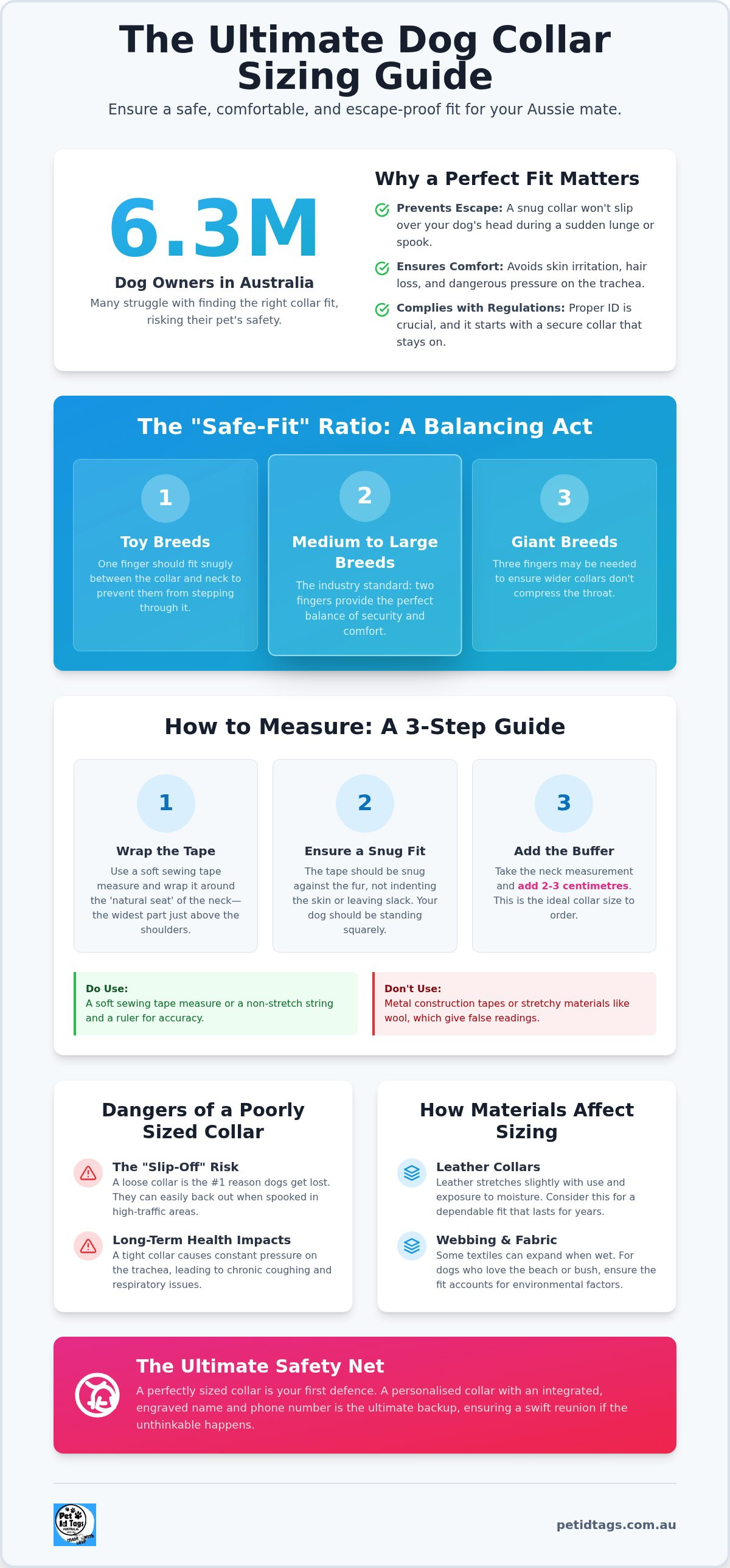
The "Safe-Fit" ratio is the critical equilibrium between your dog's neck comfort and reliable escape prevention. Achieving this balance ensures the collar is snug enough to stay on during a sudden lunge but loose enough to prevent physical distress. In Australia, a collar that is too loose is a primary contributor to lost pets. When a dog gets spooked by a car or another animal, they can easily back out of a loose collar, leaving the owner holding an empty lead. Conversely, a collar that is too tight causes skin irritation, hair loss, and can restrict breathing during exercise.
For dogs that frequent the beach or the Australian bush, we recommend an "Active Fit." These environments involve moisture and debris, which can cause materials to shift or chafe. Understanding different dog collar materials and types is essential here, as some textiles expand when wet while others remain rigid. Using a comprehensive dog collar sizing guide australia ensures you don't compromise on safety regardless of your dog's lifestyle.
The Two-Finger Rule Explained
To test the fit, insert two fingers between the collar and your dog's neck. You should be able to slide them in comfortably without forcing the material against the skin. This dog collar sizing guide australia highlights that while two fingers are standard for medium to large breeds, this rule requires adjustment for outliers. For toy breeds, a single finger's width is often safer to prevent the dog from stepping through the collar. Giant breeds may require three fingers to ensure the wider bands don't compress the throat. The two-finger rule is the industry standard for canine comfort in 2026.
Safety Risks of Poorly Sized Collars
The "Slip-Off" risk is the most immediate danger of a poorly sized collar. Dogs are experts at tucking their ears and backing away when they feel pressured. This often happens in high-traffic areas or unfamiliar parks. Beyond immediate loss, restrictive sizing causes long-term health impacts on the trachea. Constant pressure on the windpipe can lead to chronic coughing or more severe respiratory issues over time. A perfectly sized collar is your first line of defence, but it shouldn't be the only one. You can read more about why your pet needs both a pet tag vs microchip australia to ensure they have redundant safety layers if the unthinkable happens.
How to Measure Your Dog for a Collar: Step-by-Step
Accuracy starts with the right equipment. You don't need a professional workshop, but you do need precision. Grab a soft sewing tape measure, a piece of non-stretch string, or a long ruler. Recording measurements in centimetres is the standard for any dog collar sizing guide australia. It allows for the most granular precision when comparing different brand charts. Avoid using metal construction tapes; they are too rigid and won't contour to your dog's neck, which often leads to dangerous sizing errors.
Position your dog correctly before you begin. They must be standing squarely on all four paws on a level surface. If they sit or lie down, the skin and muscle around the neck bunch up, which leads to an inflated measurement. Focus on the "natural seat." This is the widest part of the neck where a collar typically rests, usually just above the shoulders. Measuring too high, near the ears, results in a collar that's too small for the base of the neck.
The Professional Tape Measure Method
This is the most reliable way to ensure a perfect fit for your pet. Follow these three steps for a professional result:
- Step 1: Wrap the soft tape around the base of the neck at the natural seat.
- Step 2: Keep the tape snug against the fur. Don't pull it so tight that it indents the skin, but don't leave it slack.
- Step 3: Read the measurement carefully. Add 2 to 3 centimetres to this number to create the necessary buffer.
This extra room ensures the collar doesn't pinch during heavy panting or vigorous movement. Following these steps and RSPCA fitting guidelines helps maintain welfare standards while keeping your dog secure in public spaces.
The DIY String and Ruler Hack
Use a piece of non-stretch string if you lack a flexible tape. Ensure the material is stable; baker's twine or a heavy cord works best. Avoid wool or elastic as they stretch under tension and will give you a false reading. Wrap the string around the neck, mark the exact point where the end meets the rest of the cord with a permanent marker, and then lay it perfectly flat against a standard ruler. Measure twice to ensure the mark hasn't shifted during the process.
Avoid common pitfalls like measuring an old collar instead of the dog's physical neck. Collars wear down, lose their shape, or stretch over time. Different buckle styles also change the internal circumference of the gear. Always measure the dog directly for the most current and accurate data. Once you've secured your final centimetre count, you can confidently browse personalised dog collars that match your dog's specific dimensions.
Dog Collar Size Chart by Breed and Life Stage
Breed charts are helpful starting points. They are never a substitute for direct measurement. A dog collar sizing guide australia must account for the fact that a "standard" Labrador can vary significantly based on activity levels, age, and diet. Always prioritise your specific measurements over breed generalisations to ensure the safe-fit ratio discussed earlier. Relying solely on a breed name often leads to returns and, more importantly, safety risks in the field.
Owners often confuse "neck size" with "collar length." Neck size is the physical circumference of your dog's neck. Collar length is the end-to-end measurement of the strap, which includes the buckle and the excess material. If you buy a 40cm collar for a 40cm neck, it will be too tight once buckled. Always look for a collar where your dog's neck measurement sits comfortably in the middle of the adjustable range. This provides the flexibility needed for seasonal coat changes or weight fluctuations.
Sighthounds like Greyhounds and Whippets present a unique challenge. Their tapered necks are often wider than their heads. A standard collar can slip off easily if they back away or lower their snout during a walk. These breeds require specialised wide-band collars or martingale styles that tighten slightly under tension to prevent escape. If you own a sighthound, never rely on a standard buckle collar for high-distraction environments where the risk of slipping is elevated.
Common Australian Breeds and Typical Sizes
While individual variation is the rule, most adult dogs in Australia fall into these general sizing categories:
- Extra Small to Small (15-30cm): Maltese, Pomeranian, and Toy Poodles.
- Medium (30-45cm): Kelpies, Border Collies, and Staffies.
- Large to Extra Large (45-70cm): Labradors, German Shepherds, and Ridgebacks.
Puppy Sizing: Planning for the First Six Months
The "Puppy Growth Gap" is the period where your pet outgrows gear faster than you can replace it. High-quality adjustable collars are essential during this phase to avoid constant repurchasing. We recommend re-measuring your puppy every 2 weeks. A collar that fit perfectly on Monday can become restrictive by the following weekend. Choose a size where the current neck measurement is at the smallest end of the adjustment range. This gives your pup maximum room to grow without needing an immediate replacement. For comprehensive safety during these early months, consult our puppy id tag australia guide to ensure your new best mate is fully protected as they explore.
Material Matters: How Fabric Choice Affects Sizing
Material choice directly influences the accuracy of your dog collar sizing guide australia. Leather is a premium, organic material that naturally stretches over time with regular use. This "give" means a leather collar that fits perfectly on day one may require tightening by several millimetres after a few months of wear. In contrast, nylon and synthetic webbing provide exceptional stability. These materials have virtually zero stretch. If you measure a synthetic collar to a specific circumference, it will maintain that exact dimension for the life of the product. This makes synthetics a dependable choice for owners who want a set-and-forget solution.
Environmental factors play a significant role for active Australian dogs. If your pooch frequently swims in the ocean or local creeks, synthetic options are superior. Some low-grade fabrics can shrink or stiffen after repeated soaking and drying in the harsh Aussie sun. This changes the internal diameter and can lead to painful chafing or skin irritation. Understanding why pet id tags fade and how materials degrade in our climate helps you choose gear that remains both legible and properly sized for years to come.
Leather vs. Synthetic Fit
Leather requires a dedicated "break-in" period. During the first few weeks, the fibres soften and mould to the unique shape of your dog's neck. You should check the fit weekly during this phase to ensure the collar hasn't become too loose. Synthetic collars are ready for immediate action. They are the logical choice for dogs that are constantly in and out of the water because they don't absorb moisture or odours like untreated leather can. For the most reliable long-term fit in any environment, browse our range of personalised dog collars designed for durability.
Choosing the Right Collar Width
Width is just as important as circumference for a secure fit. Narrow collars (1cm to 1.5cm) are essential for small dogs to prevent weight-related neck strain. A wide, heavy collar on a tiny neck causes unnecessary discomfort and can lead to fatigue. Larger dogs or heavy pullers require wider collars of 2.5cm or more. This extra width distributes pressure across a larger surface area, protecting the delicate structures of the throat during a sudden lunge. It ensures the "Safe-Fit" ratio remains effective even under tension.
Width also dictates the visibility of your contact details. A wider band allows for larger, clearer personalised text. This makes it significantly easier for a stranger to read your phone number from a distance if your dog ever wanders off. A wider strap also accommodates more robust hardware, ensuring the buckle doesn't fail when your dog spots a kangaroo or another distraction in the bush.
Top Personalised Dog Collars for Australian Pooches
Pet ID Tags Australia has specialised in durable pet identification since 2004. We understand that a collar is more than just a place to clip a lead; it's a lifeline. Every item in our collection is designed to withstand the harsh Australian climate, from the intense UV rays of the outback to the salty air of our coastal towns. While this dog collar sizing guide australia helps you achieve a perfect fit, the true value lies in the personalisation. Having your dog's name and your current phone number permanently marked on the collar provides an immediate safety net that doesn't require a microchip scanner.
Our personalised collars are designed to work in tandem with our stainless steel dog tags australia. This dual-layer approach to safety is the most reliable way to protect your pet. If a tag is lost during a run through thick scrub, the details on the collar ensure your dog can still be identified by anyone who finds them. This redundancy is essential for active dogs that spend significant time outdoors.
Standout Products in Our 2026 Collection
We've refined our range to meet the specific needs of different Australian lifestyles. Our "Classic Personalised Leather" range offers a timeless look, featuring deep-engraved nameplates that won't fade or wear down over time. For high-energy pets, the "Active-Duty Nylon" series provides exceptional durability. These collars feature high-visibility colours and bold, embroidered contact details that are easy to read from a distance. If your dog is a frequent swimmer, our "Waterproof Series" is the ideal choice. These collars are made from advanced materials that resist odours, are easy to wipe clean after a beach trip, and won't shrink or stretch when wet.
Ready to Secure Your Mate?
Before you finalise your order, run through this final checklist to guarantee the perfect result. Accuracy is the best way to avoid the frustration of a return. Re-measure your dog's neck one last time using the standing method we described earlier. Ensure you've added the 2 to 3 centimetre comfort buffer to your final figure. Check that the width you've chosen is appropriate for your dog's breed and weight. Finally, double-check the spelling of your dog's name and the accuracy of your phone number.
Choosing the right gear is a significant responsibility for any pet owner. Our commitment to Australian pet safety is reflected in our quality craftsmanship and the longevity of our materials. You can Browse our full range of Personalised Dog Collars in Australia and find the perfect fit today. Investing in a correctly sized, personalised collar is the most practical step you can take to ensure your dog stays safe, secure, and always finds their way home.
Secure Your Dog's Safety with a Precision Fit
Achieving a balanced fit is the most significant step you can take to protect your dog in public spaces. By following this dog collar sizing guide australia, you've moved beyond general breed estimates to a precision-based approach that considers your dog's unique anatomy. You now understand how material choice and environment impact the longevity of that fit, ensuring your gear remains dependable whether you're at the beach or in the bush. Precision measurement is the foundation of canine safety, and you're now equipped to make an informed decision for your pet.
Pet ID Tags Australia has served as a trusted specialist since 2004, providing durable solutions specifically tested for our local conditions. Our range prioritises direct personalisation as the ultimate safety net, ensuring your contact details are always visible and legible. Don't leave your pet's security to guesswork or outdated charts. Shop Personalised Dog Collars in Australia today and enjoy the peace of mind that comes from professional-grade equipment. Your best mate deserves a collar that is as reliable as they are.
Frequently Asked Questions
How tight should a dog collar be?
A dog collar should be snug enough that it won't slip over the head but loose enough to fit two fingers between the material and the neck. This balance ensures the dog remains comfortable while preventing accidental escape during walks. For smaller breeds, a single finger's width is often sufficient. If the collar leaves an indentation in the fur or skin, it's too tight and needs immediate adjustment to prevent irritation or breathing issues.
What is the best way to measure a dog’s neck without a tape measure?
Use a piece of non-stretch string or even a long phone charging cable to wrap around the base of the neck. Mark the point where the end meets the length with a pen or your thumbnail. Once marked, lay the string flat against a standard 30cm ruler to determine the circumference in centimetres. This method is a reliable alternative when a flexible sewing tape isn't available in your household toolkit for measuring your pet.
Should I measure my dog’s neck or an old collar for sizing?
Always measure your dog’s physical neck rather than an old collar. Existing collars often stretch, warp, or lose their shape after months of use in the Australian sun. Different buckle designs also change how a collar sits, meaning a "medium" in one brand might not align with another. Direct measurement is the only way to ensure accuracy when using a dog collar sizing guide australia to purchase new equipment online.
What size collar does a 10kg dog need?
A 10kg dog typically requires a collar with a circumference between 30cm and 40cm, usually categorised as a small or medium. However, weight alone is a poor indicator of neck size. A muscular 10kg French Bulldog will have a much thicker neck than a lean 10kg Whippet. Using a dog collar sizing guide australia to find the physical centimetre measurement is more reliable than relying on weight to ensure a secure fit.
Is it better to size up or down if my dog is between sizes?
It's generally safer to size up if your dog's measurement falls between two sizes. A collar that is slightly too large can usually be adjusted to the tightest setting, whereas a collar that is too small will be restrictive and unsafe. Ensure that the chosen size allows the neck measurement to sit in the middle of the adjustment range. This provides flexibility for weight fluctuations or seasonal changes in coat thickness throughout the year.
How often should I check the fit of my dog’s collar?
Check the fit of an adult dog's collar at least once a month. For puppies or young dogs in a growth phase, you should perform this check every two weeks. Factors like weight loss, weight gain, or professional grooming can significantly alter how a collar sits. Regular inspections also allow you to check the hardware for signs of wear or corrosion, which is vital for maintaining pet safety during outdoor activities in Australia.
Do different breeds require different types of collars for the same neck size?
Yes, breed anatomy often dictates the style of collar required regardless of neck circumference. Sighthounds like Greyhounds have heads narrower than their necks, requiring specialised collars to prevent them from backing out. Brachycephalic breeds with thick necks and heavy coats might benefit from wider collars that distribute pressure more evenly. While the centimetre measurement stays the same, the collar's width and fastening mechanism should be tailored to the specific breed's physical build for maximum security.
Will a leather collar stretch over time?
High-quality leather is an organic material that will naturally stretch and soften with regular use. This "break-in" period means the collar will eventually mould to the specific shape of your dog's neck, providing superior comfort. Because of this natural give, you should re-check the fit after the first month of wear. If the leather becomes significantly loose, simply move the buckle to the next hole to maintain a secure and safe fit for your pet.