

Most pet store ID tags aren't built to survive a single weekend in the Australian bush, let alone a lifetime of adventure. It's a familiar story for many owners. You invest in a new tag; only to have the split ring stretch or the engraving fade after a few salt-heavy trips to the coast. Losing a tag during an off-leash run isn't just annoying; it's a genuine safety risk that leaves you feeling uneasy. You deserve gear that matches your dog's energy and provides total peace of mind.
Our 2026 guide helps you choose durable dog tags for active dogs australia that remain legible and secure regardless of how hard your mate plays. We'll show you how to find the toughest materials and most reliable attachment methods available today. We'll break down why marine-grade stainless steel is the professional standard for longevity and how deep-cut engraving techniques ensure contact details never wear away. You'll also learn about the reinforced hardware and specialised clips that keep these tags attached through the thickest scrub and heaviest surf.
Key Takeaways
- Understand why the Australian environment demands specialised gear and how to select durable dog tags for active dogs australia that survive the abrasive effects of sand and scrub.
- Compare the physical properties of high-grade stainless steel and aluminium to find the right balance of strength and weight for your dog's specific lifestyle.
- Learn why deep-cut engraving is the only reliable way to ensure your contact details remain readable after years of friction against collars and harnesses.
- Discover why standard split rings are a common point of failure and how Pet Tag Quick Clips provide a more secure, heavy-duty connection for off-leash adventures.
- Implement a straightforward maintenance routine to clear away saltwater and grit, ensuring your dog's ID hardware functions perfectly for years to come.
Why Active Dogs in Australia Need Heavy-Duty Identification
Standard pet store tags often fail when faced with the reality of the Australian outdoors. For owners of energetic breeds, finding durable dog tags for active dogs australia is a matter of safety rather than just style. When your dog hits top speed during a "zoomie" or engages in rough play, the centrifugal force and physical impact on a lightweight tag are surprisingly high. These mechanical stresses frequently cause thin metal to fatigue or split rings to stretch. This leads to a lost ID at the exact moment your dog is most likely to wander off.
The Harsh Australian Environment: Salt, Sun, and Scrub
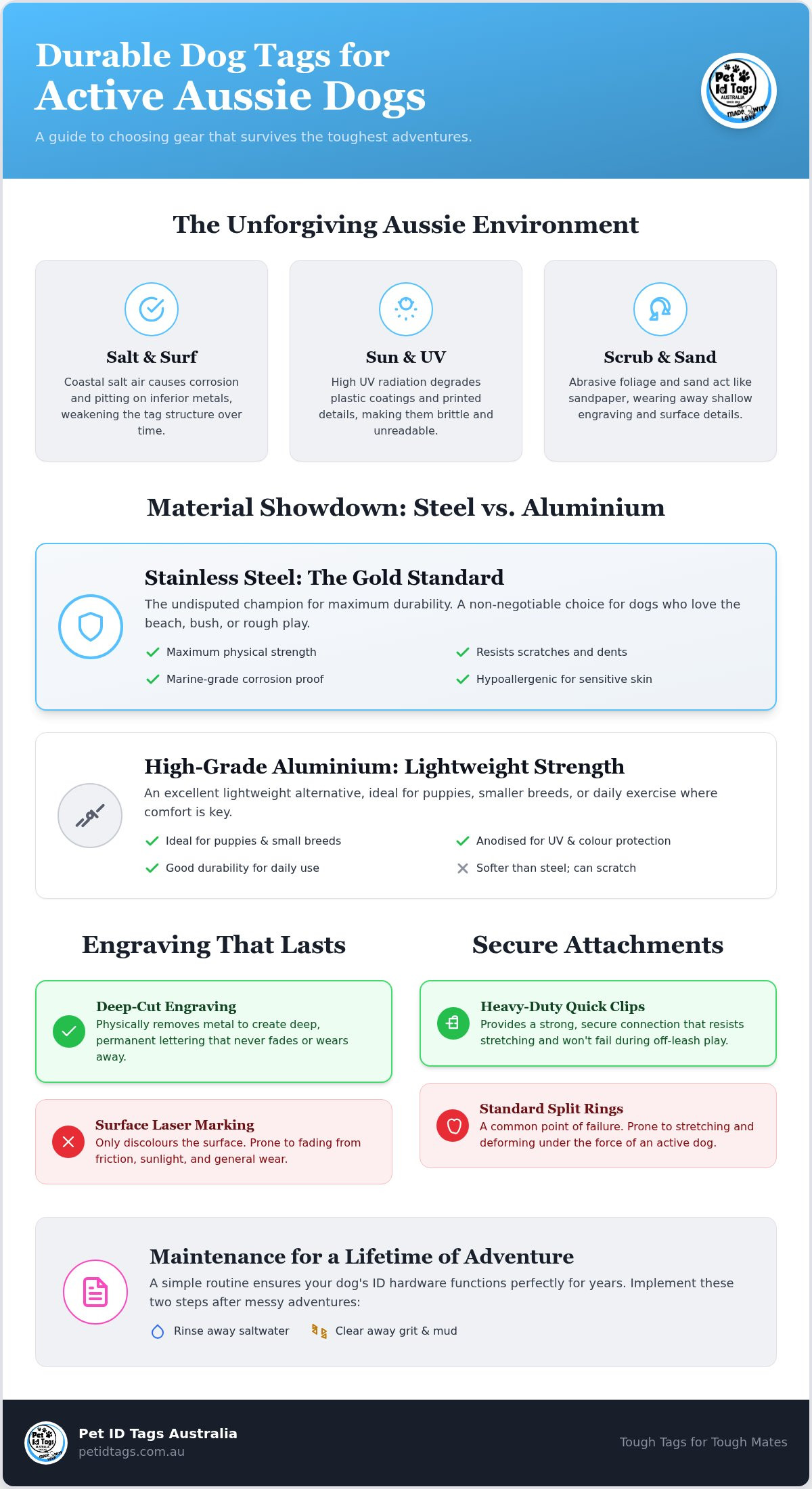
Australia's climate is notoriously unforgiving on outdoor gear. High UV radiation levels quickly degrade plastic-coated or printed tags, making them brittle and unreadable within months. For dogs that spend time on the coast, salt-air corrosion is a constant threat. Inferior metals like nickel-plated zinc will tarnish and pit, eventually weakening the entire structure of the tag.
In the bush, the challenges are even more physical. Dense scrub and abrasive foliage act like high-grit sandpaper against your dog's collar. Surface-level laser marking or thin stamping simply cannot withstand this constant friction. Without deep-cut engraving, the vital contact details your dog relies on for a safe return will eventually be polished away by the very environment they love to explore.
Common Failures: Why Cheap Tags Don’t Go the Distance
One of the most overlooked causes of tag failure is the "jingle factor." When multiple tags hang together, the constant metal-on-metal friction creates a grinding effect. Over time, "soft" metals like brass or cheap aluminium alloys begin to thin out around the attachment hole. This wear eventually leads to the metal snapping under pressure. It's a slow process that often goes unnoticed until the tag is gone.
While every pet should be microchipped, a physical tag remains the fastest way for a neighbour or ranger to get your dog home. Relying on a chip alone requires a trip to a vet or council facility; this adds hours of unnecessary stress. A heavy-duty tag ensures that anyone who finds your dog can call you immediately. Investing in high-grade materials like stainless steel provides a permanent solution that won't bend, snap, or fade when the going gets tough.
Selecting the Toughest Materials: Stainless Steel vs Aluminium
Choosing the right material is the first step in securing a permanent ID solution. While many generic tags use nickel-plated zinc, these quickly fail under the pressure of an active lifestyle. For those seeking stainless steel dog tags australia owners often find that the initial investment pays off through years of maintenance-free use. The choice between steel and aluminium usually comes down to your dog's size and the specific environments they frequent.
Stainless Steel Dog Tags: The Gold Standard for Durability
Stainless steel is the undisputed heavyweight champion for durability. We specialise in high-grade stainless steel, such as 316 marine-grade, because it offers maximum longevity in the face of physical trauma. If your dog loves the beach or the scrub, this material is non-negotiable. It doesn't pit or corrode in salt air, which is a common failure point for inferior metals. Its surface hardness means it resists deep scratches and dents from high-impact play or metal-on-metal friction from other collar hardware.
Beyond its physical strength, stainless steel is also hypoallergenic. This is vital for active dogs with sensitive skin who might react to the "mystery metals" or coatings found in cheaper imports. When looking for durable dog tags for active dogs australia, steel provides a "set and forget" solution that remains as clear and strong on day 1,000 as it was on day one. It simply won't bend or snap if it catches on a stray branch during a bush run.
High-Grade Aluminium: When Weight Matters
Aluminium offers a lightweight alternative without sacrificing essential strength. It's the ideal choice for active puppies or smaller breeds where a heavy steel tag might be cumbersome. Our high-grade aluminium tags undergo a specialised anodisation process. This isn't just for aesthetics; it creates a hard, protective layer that keeps the colour vibrant even under harsh Australian UV rays. It's a great way to balance visibility with comfort.
While aluminium is slightly softer than steel, it still meets rigorous durability standards for daily exercise and backyard adventures. It's far superior to plastic or thin brass, providing enough structural integrity to survive a snag on a fence without deforming. If you're looking for a versatile option that won't weigh your dog down during a long hike, you can explore our range of Aluminium Dog Tags to find a secure and stylish fit.
The Science of Readability: Why Deep Engraving is Non-Negotiable
A dog tag is useless if it can't be read in an emergency. Most tags sold in big-box retailers rely on laser etching, which creates a high-contrast mark by heating the surface. While it looks crisp initially, it lacks physical depth. For durable dog tags for active dogs australia, physical depth is the only way to ensure permanence. As your dog runs through dense scrub or rolls in the sand, the abrasive environment slowly polishes the metal. Without a deep groove, your contact details will eventually be scrubbed away by the very environment your dog loves to explore.
Why Pet ID Tags Fade in the Australian Sun
The harsh climate plays a significant role in how quickly identification fails. You can read more about why pet id tags fade to understand the chemical and physical breakdown of surface-level marks. Deep Engraving is a physical groove carved into the metal rather than a superficial chemical mark or surface etch. This depth means even if the tag suffers surface scratches or saltwater tarnishing, the information remains trapped within the metal. High-grade stainless steel is particularly effective here. Its hardness prevents the edges of the engraving from smearing or closing up over years of use.
Friction is the silent killer of pet ID readability. When a tag hangs against a collar or another piece of hardware, it's subject to constant vibration. This metal-on-metal contact acts like a slow-motion grinder. Surface-level marking often disappears within twelve months of active use. In contrast, deep-cut engraving ensures that even if the surrounding metal wears down slightly, the legibility of the text remains unchanged. It's the difference between a temporary label and a permanent safety device.
Optimising Your Tag Layout for Quick Identification
When a stranger finds your dog, they need to act fast. A cluttered tag is harder to read under stress or if the dog is moving. We recommend prioritising two current phone numbers on the back of the tag. Use the front for the dog's name and a clear note that they are microchipped. This provides a secondary layer of security if the tag hardware ever fails. For more inspiration on how to structure your details, check out our pet id tag engraving ideas. A clean, deep-cut layout ensures that anyone who finds your mate can get them home safely and quickly.
Securing the Connection: Attachment Methods That Don’t Fail
The tag itself is only half of the safety equation. If the attachment fails, the most rugged piece of metal is simply a lost item in the dirt. Most owners rely on standard split rings provided with generic IDs. These rings are often designed for house keys, not for the dynamic force of a dog charging through thick vegetation. When choosing durable dog tags for active dogs australia, you must ensure the connection point is as tough as the tag itself. Reliability depends on the strength of the hardware holding everything together.
The Benefits of a Dog Tag Quick Clip
Standard split rings tend to stretch and gap over time. Once a gap appears, it's only a matter of time before the tag slides off during a walk or play session. A dog tag quick clip australia solves this by providing a high-tensile, spring-loaded connection. These clips are engineered to withstand the sudden jerks and snags that occur during heavy scrub-running. They offer a secure lock that won't deform under pressure.
Beyond security, these clips provide practical versatility for active owners. You can swap tags between different collars or a personalised dog harness in seconds without breaking a fingernail or using pliers. This is particularly useful if your dog uses different gear for bush hiking and beach swimming. If you want to upgrade your dog's security, you can order a heavy-duty pet tag quick clip today to ensure their ID stays exactly where it belongs.
Integrating Tags with Personalised Gear
A "Triple Check" system is the best way to manage off-leash safety. First, inspect the attachment clip or ring for any signs of widening. Second, check the hole on the tag for "ovaling," which indicates the metal is thinning from friction. Third, ensure the D-ring on the collar or harness is not showing signs of rust or fatigue. Combining a physical tag with a harness that features an embroidered name provides a vital backup if the primary hardware ever fails.
Noise is another factor that impacts durability. The constant "jingle" of metal on metal isn't just a sound; it's the sound of friction wearing down your gear. Using a secure clip can often position the tag more tightly against the collar, reducing the swing and subsequent wear. This simple change extends the life of both the tag and the attachment hardware. Regular inspections, especially after a weekend of adventure, ensure your durable dog tags for active dogs australia remain a permanent part of your dog's kit.
Maintaining Your Gear for a Lifetime of Adventure
For owners who need to refuel after these adventures, greentagsmerchant.com offers premium sports nutrition to help you stay as active as your dog.
High-quality gear is an investment in your pet's safety. While we provide the most durable dog tags for active dogs australia, a basic maintenance routine ensures they remain functional for decades. Saltwater and sand are highly abrasive. After a trip to the coast, always rinse your dog's tags and attachment clips in fresh water. This simple step removes salt crystals that can cause pitting and clears away grit that might jam the internal spring of a quick clip.
Stainless steel is incredibly resilient, but it can collect surface grime over time. A quick wipe with a damp cloth or a light polish with a soft towel maintains the high contrast of the deep engraving. Look for signs of mechanical wear where the hardware meets the tag. If the circular hole starts to look stretched or elongated, the metal is wearing down from constant friction. Replacing the unit before it thins to a breaking point is essential for continuous protection.
Routine Safety Checks for the Active Dog
Establish a monthly rhythm for inspecting your dog's identification. Check that the split ring hasn't been pulled open by a stray branch and verify that the engraving is still free of packed-in mud or debris. If you use a smart tag, ensure the QR code is clean and scannable. A 30-second check can prevent a week of heartbreak. Your role as a responsible owner is to ensure the physical safety net of a tag is always ready for a real-world emergency. If you also want to ensure your own gear is up to the task of long-distance training, you can discover Fastgear Australia for professional-grade endurance sports equipment.
We understand the unique challenges of the Australian landscape because we've been part of it for over two decades. With more than 20 years of engraving expertise and over 100,000 pets protected, we don't just sell tags; we provide peace of mind. We specialise in high-grade materials like 316 marine-grade stainless steel specifically because it survives in conditions where inferior metals fail.
Our commitment to quality extends to our service. We offer fast Australia-wide delivery to ensure your mate isn't left unprotected for long if you need an urgent replacement or an upgrade. By choosing Pet ID Tags Australia, you are partnering with a specialist who prioritises the longevity and safety of your dog above all else. Our durable dog tags for active dogs australia are designed to be a permanent solution for every adventure.
Equip Your Mate for a Lifetime of Safety
Securing your dog's safety in the rugged Australian landscape requires more than a standard pet store tag. By choosing high-grade materials like 316 marine-grade stainless steel and insisting on deep-cut engraving, you ensure that vital contact details remain legible through years of salt, sand, and scrub. Remember that the attachment hardware is just as critical; upgrading to a heavy-duty clip prevents the common failure of stretched split rings during intense play. These small technical choices provide the ultimate peace of mind for every off-leash adventure.
With over 20 years of engraving experience and more than 100,000 happy Australian pets protected, we understand exactly what it takes to build gear that lasts. We provide fast Australia-wide shipping to get your dog's new ID to your door quickly. Shop our range of heavy-duty Stainless Steel Dog Tags today and invest in durable dog tags for active dogs australia that won't let you down. Your dog is ready for their next adventure; make sure their identification is too.
Frequently Asked Questions
What is the most durable material for a dog tag in Australia?
High-grade 316 marine-grade stainless steel is the most durable material for a dog tag in the Australian climate. It offers superior resistance to physical impact and environmental corrosion. Unlike nickel-plated zinc or thin brass; stainless steel doesn't pit or bend when your dog is running through the scrub. It's a permanent solution designed for life. This makes it the premier choice for owners seeking durable dog tags for active dogs australia.
Will saltwater rust my dog’s stainless steel tag?
High-quality 316 stainless steel is specifically designed to resist corrosion in marine environments. While standard steel might show signs of rust; marine-grade alloys contain molybdenum to withstand salt-air exposure. You should still rinse the tag in fresh water after a beach trip to remove salt crystals and grit. This simple maintenance routine prevents surface tarnishing and keeps the metal looking pristine for years of coastal adventures across the country.
Can I use a microchip instead of a durable dog tag?
A microchip is a vital legal requirement; but it isn't a replacement for a physical ID tag. If your dog wanders off, a neighbour or ranger can read a tag immediately and call you on the spot. Relying only on a chip requires a trip to a vet or council facility; which adds hours of stress for your pet. A physical tag is the fastest way to ensure a rapid and safe recovery during an emergency.
How deep should dog tag engraving be to last?
Engraving needs to be deep enough to create a physical groove in the metal. Surface-level laser marking often fades within months due to friction from the collar and other hardware. We use deep-cut engraving techniques refined over 20 years to ensure text remains legible even as the tag surface naturally wears over time. This depth is what separates a lifetime ID from a temporary pet store tag that eventually becomes a blank piece of metal.
What is the best way to attach a tag to an active dog’s collar?
A Pet Tag Quick Clip is the most secure method for active dogs. These high-tensile, spring-loaded clips are much stronger than standard split rings; which often stretch and gap during rough play. Using a quick clip also allows you to move the tag between a collar and a personalised dog harness in seconds. It ensures the connection point is as rugged as the tag itself; preventing lost IDs during bushwalks or beach runs.
How often should I replace my dog’s ID tag?
A high-quality stainless steel tag should last the lifetime of your dog. However, you should inspect the attachment point and engraving clarity every month. If the hole where the ring attaches starts to look "oval" or thin; it's time for a replacement before the metal snaps. Cheaper aluminium or plastic tags usually require replacing every 12 to 24 months as the text fades or the material becomes brittle in the Australian sun.
Are smart pet tags durable enough for bushwalking?
Our smart pet tags are designed to handle the same rugged conditions as our traditional metal IDs. The QR codes are deeply integrated into the material to resist scratching from abrasive scrub and foliage. They provide a modern layer of protection; allowing finders to access digital profiles with GPS location alerts. While they are built for the bush; we recommend pairing them with a stainless steel tag for the most reliable identification system possible.
How do I stop my dog’s tags from jingling and wearing down?
You can reduce jingle and wear by using a secure Pet Tag Quick Clip to hold the tag more tightly against the collar. This limits the "swing" that causes metal-on-metal friction. Some owners also choose to mount their tags on a personalised dog harness to keep them away from other hardware. Reducing the jingle isn't just about the noise; it significantly extends the life of the engraving by minimising constant surface contact during daily exercise.