

Clinical veterinary studies show that over 50% of dogs react fearfully to sharp metallic clatter, yet dinner is often the loudest moment of their day. Dealing with a dog tag scratching stainless steel dog bowl at every meal is enough to fray anyone's nerves. It is frustrating to watch a polished dish get ruined by circular scuffs, particularly when the sudden clinking makes a sound-sensitive furry mate back away from their food.
The good news is that you do not have to choose between a quiet dinner and your dog's visual identification. Discover why your dog tag scratches stainless steel dog bowls and how to stop mealtime clatter without risking pet safety. We will explore the friction behind bowl wear, the hidden bacterial risks that develop inside surface grooves, and the practical everyday tag solutions that protect your bowls while restoring peaceful mealtimes.
Key Takeaways
- Understand why a dog tag scratching stainless steel dog bowl happens, from excessive drop lengths to friction against softer polished steel dishes.
- Discover the hidden hygiene risks of bowl damage, including how micro-scratches harbour stubborn bacterial biofilms that resist normal washing.
- Learn four straightforward adjustments to stop dinner clatter instantly, starting with the two-finger collar fit and streamlining connecting rings.
- Protect your furry mate by maintaining uninterrupted visual identification using smart solutions like quick clips or flush-mounted personalised dog collars.
Why Does a Dog Tag Scratch a Stainless Steel Dog Bowl?
Every time your dog lowers their head to eat, gravity takes over. Traditional collar attachments suspend identification discs directly below the neck. When your dog bends into their dish, that suspension slack drops the tag straight into the feeding zone. What follows is a recurring cycle of metal grinding on metal, turning dinner into a noisy chore.
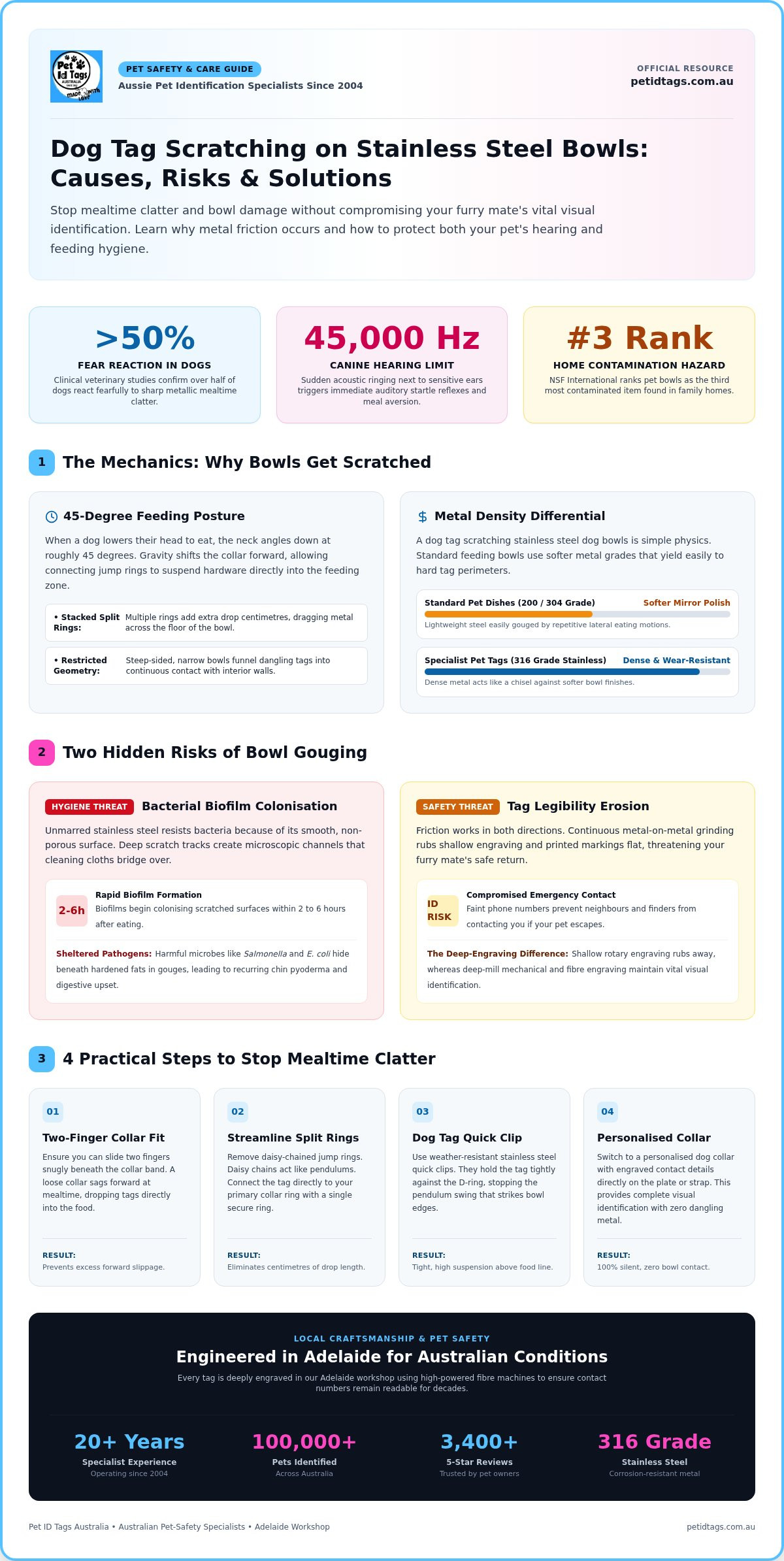
A dog tag scratching stainless steel dog bowl is rarely an accident; it is simple physics. Standard pet dishes use lightweight 200- or 304-grade stainless steel. While this material resists rust, it is softer than the dense metals used in premium tags. As your dog pushes food around, the hard edges of dangling pet identification tags act like small chisels across the mirror polish, leaving unsightly circular gouges.
The Mechanics of Metal-on-Metal Friction at Mealtime
Feeding posture dictates how collar hardware behaves. When a dog stands over a dish, the neck angles down at roughly forty-five degrees. This posture shifts the collar forward, allowing multiple connecting split rings to dangle freely. Narrow, deep bowls compound the issue because the steep walls funnel tags directly against the metal rim and floor with every bite.
Excess drop length is the primary culprit behind severe surface gouging. Consider the mechanical factors at play:
- Stacked split rings: Multiple jump rings add unnecessary centimetres of drop, dragging metal across the dish floor.
- Sharp tag perimeters: Stamped metal edges bite into polished steel bowls during repetitive lateral feeding movements.
- Restricted dish geometry: Steep-sided bowls force hanging tags to scrape the interior perimeter continuously.
Mealtime Anxiety and Auditory Startle Reflexes
The issue goes beyond damaged bowls. Dogs hear acoustic frequencies up to 45,000 Hertz, far exceeding human hearing range. When heavy metal tags strike thin-walled stainless steel, the impact creates high-frequency acoustic reverberation right next to your dog's ears. This sudden metallic pinging can trigger an immediate auditory startle reflex.
For a nervous pup, that sharp acoustic ring turns dinner into a stressful ordeal. You might spot your furry mate flinching, taking a mouthful of kibble to eat on the rug, or abandoning their dish entirely. Over time, recurring clatter builds learned feeding aversion. Resolving a dog tag scratching stainless steel dog bowl eliminates acoustic reverberation, restoring calm and confidence to your companion's daily mealtime routine.
The Hidden Risks of Scratched Stainless Steel Dog Bowls
Most pet owners view a dog tag scratching stainless steel dog bowl as merely an annoying sound. The reality is that physical damage creates genuine hygiene and pet identification hazards. Smooth stainless steel earns its reputation as a gold standard in pet feeding dishes because its non-porous finish prevents microbes from anchoring to the metal. Once that protective finish gets scored by metallic hardware, the dish loses its primary defensive advantage.
A study by NSF International ranked pet feeding and water dishes as the third most contaminated item found in family homes. Canine saliva naturally introduces organic enzymes and bacteria directly into the bowl. When a dog tag gouges the interior base, it transforms an easy-to-clean feeding surface into a network of jagged micro-crevices that harbour stubborn organic matter.
Surface Abrasion and Bacterial Biofilm Buildup
Microscopic biofilms begin colonising pet bowls in as little as 2 to 6 hours after eating. On unmarred steel, washing dishes with hot soapy water after meals sweeps this slick film away cleanly. Deep scratch tracks tell a different story.
Tag scrapes create tiny sheltered channels that everyday dishcloths and sponges simply bridge over without cleaning. Harmful pathogens such as Salmonella and Escherichia coli settle into these gouges, shielding themselves beneath hardened fat residues. Over time, recurring bacterial exposure can cause digestive upset or recurrent chin pyoderma. Checking dishes against official FDA safe handling guidelines for pet food bowls helps you spot when heavy scratching demands an immediate bowl replacement.
Wear and Tear on Your Pet ID Tag Engraving
Friction works both ways. While the hanging hardware carves tracks into the steel dish, the abrasive contact simultaneously grinds down the lettering on your dog's identification disc. Shallow rotary diamond engraving and printed text quickly buff flat against the continuous friction of bowl bottoms and rims.
This erosion poses a dangerous pet safety risk. If your companion slips past an open gate, faint markings prevent neighbours from reading your contact number. Reviewing the realities behind why pet ID tags fade highlights how abrasive friction compromises everyday legibility. To safeguard your furry mate, inspect both their dish and tags monthly, or upgrade to heavy-duty stainless steel dog tags engineered with deep fibre engraving that withstands daily mealtime knocks.
Comparing Solutions to Prevent Tag and Bowl Damage
Solving mealtime racket comes down to managing the physical connection between collar and tag. Pet parents often try temporary workarounds, but lasting peace requires hardware that eliminates friction without compromising security. When addressing a dog tag scratching stainless steel dog bowl, four main options stand out:
- Elevated bowl stands: Raising the feeding dish changes your dog's neck angle, keeping hanging tags positioned above the bowl rim.
- Silicone tag silencers: Rubber bumpers stretch around metal tags to soften clatter, though they degrade over time.
- Pet Tag Quick Clips: Weather-resistant quick clips shorten hardware drop and let you unclip tags before dinner in two seconds flat.
- Personalised dog collars: Collars with contact details engraved directly onto the buckle eliminate dangling discs entirely.
Rubber Tag Silencers vs Low-Profile Attachment Hardware
Silicone bumpers wrap around tag edges to cushion impacts. While they soften sharp ringing, they introduce hygiene drawbacks. Slobber, moisture, and kibble dust accumulate behind the rubber edge, creating a damp environment that breeds bacteria against the metal surface. Streamlined hardware offers a cleaner fix. Swapping out loose jump rings for a compact Pet Tag Quick Clip cuts dangling drop length by half. This prevents the tag from reaching the bottom of the dish while allowing instant unhooking before meals.
Hanging Tags vs Personalised Collar Visual Identification
If you want a permanent fix that stops a dog tag scratching stainless steel dog bowl forever, switch to flush-mounted identification. A personalised dog collar integrates contact details directly onto the webbing or buckle plate. Because no metal hangs from the collar, bowl gouging becomes impossible.
This zero-dangle setup keeps feeding dishes unmarred and easy to clean, supporting hygiene standards aligned with FDA pet food and bowl handling guidelines. Many Aussie pet owners embrace a hybrid routine. They use a personalised collar for silent, continuous visual identification at home, and clip on a traditional tag when heading past the front gate for weekend adventures.
How to Stop Your Dog Tag Scratching the Bowl: 4 Practical Steps
Ending mealtime noise does not require guesswork. By targeting the mechanical causes of bowl friction, you can eliminate clatter while keeping your dog secure. Follow these four straightforward steps to silence mealtime and protect your feeding gear:
- Check collar snugness: Apply the two-finger fit test to eliminate excess collar sag.
- Minimise attachment drop: Remove redundant jump rings and decorative charms that add length.
- Upgrade your hardware: Fit a specialised quick-release connector for rapid detachment.
- Opt for wider bowls: Introduce shallow or raised dishes to create wider feeding clearance.
Adjusting Collar Fit and Hardware Drop Length
A sagging collar allows tags to droop straight into the feeding zone. Check the fit by slipping two fingers flat between your dog's neck and the strap. If you can fit three or four fingers, the collar sits too loosely, swinging forward whenever your dog dips their head. Tighten the strap until it passes the two-finger test comfortably.
Next, strip away unnecessary hardware. Layering multiple split rings creates a long pendulum that strikes the bowl bottom. Consult this guide on how to attach a dog tag without a split ring to connect your tag directly to the collar D-ring, lifting it several critical centimetres away from feeding dishes.
Using Quick Clips for Effortless Mealtime Swapping
For pet parents who prefer dangling tags outdoors, attachment clips provide an easy solution. Using a dog tag quick clip Australia lets you unhook your furry mate's tag pack in two seconds before filling their dish. Once breakfast finishes, snap the clip back on with one hand.
Build a simple routine: store the unclipped tag right beside the food container. When dinner wraps up, clipping the identification back onto the collar becomes an automatic second habit that keeps your pet safe.
Selecting Shallow or Ergonomic Elevated Bowls
Dish geometry makes a massive difference to clearance. Deep, steep-sided bowls force tags to collide with metal rims on every bite. Switching to a wide, shallow dish gives your dog room to eat without forcing hardware against the sides. Ergonomic raised feeders also keep your dog's neck level, preventing a dog tag scratching stainless steel dog bowl by keeping suspended discs elevated above the food surface.
Ready to upgrade your dog's mealtime setup? Explore durable clips and streamlined hardware at Pet ID Tags Australia to protect your bowls and enjoy peaceful mealtimes today.
Maintaining Pet Safety Without Mealtime Clatter and Scratches
When dinner clatter becomes unbearable, stripping off your dog's collar might feel like an easy shortcut. It is not worth the risk. Resolving a dog tag scratching stainless steel dog bowl should never leave your pet unprotected. Collars carry essential visual identification, and leaving your companion bare-necked creates a dangerous blind spot in household security.
Why Removing Collars at Dinnertime Carries Escape Risks
Evening meals coincide with the busiest time in any Aussie household. Food deliveries arrive at the front porch, family members return home from work, and children leave side gates unlatched while wheeling out the rubbish bins. In that evening commotion, an open door is all it takes for an opportunistic dart outside.
If your furry mate slips out without a collar, neighbours who spot them cannot ring you immediately. Clear visual identification provides the fastest route home. A well-designed collar setup keeps emergency contact information visible around the clock, removing mealtime clink without stripping away daily safety.
Why Deep Engraving and 316 Stainless Steel Endure
Even with adjusted hardware, accidental dish knocks still happen occasionally. Investing in proven hardware makes all the difference. High-grade stainless steel dog tags Australia wide are crafted from marine-grade 316-grade stainless steel. This dense alloy resists blunt impact and abrasive wear far better than cheap nickel or soft stamped aluminium blanks.
Engraving technique matters just as much as metal selection. Surface printing buffs away under everyday friction, but mechanical deep-mill engraving and high-powered fibre engraving cut deep into the metal core. Operating locally since 2004, our Australian workshop has refined these methods across more than two decades, ensuring contact details stay crisp and legible through daily wear. You gain reliable peace of mind, knowing your dog remains safely identified while dinner stays calm and quiet.
Enjoy Peaceful Mealtimes Without Compromising Pet Safety
You do not have to put up with the irritating clatter of a dog tag scratching stainless steel dog bowl every evening. Simple mechanical adjustments, from tightening loose collar straps to eliminating bulky jump rings, immediately silence dinner noise. More importantly, keeping your feeding dishes smooth and unmarred protects your dog from the hidden digestive bacteria that thrive inside scratched micro-crevices.
Peaceful mealtimes should never come at the cost of leaving your dog unidentified. Whether you switch to a Pet Tag Quick Clip or choose a flush-mounted personalised collar, dependable visual identification belongs on your dog around the clock. Trusted by over 100,000 pet owners across Australia and backed by over 20 years of engraving experience, our local workshop crafts tags and hardware from premium 316-grade stainless steel built for real-world life. Find durable, quiet tag solutions for your furry mate and look forward to calm, quiet dinners together tonight.
Frequently Asked Questions
Why does my dog get startled when their tag hits their metal bowl?
Dogs hear acoustic frequencies up to 45,000 Hertz, meaning sudden metal-on-metal impacts sound dramatically louder and harsher to them than to us. When dangling hardware strikes hollow stainless steel, the high-frequency vibration rings centimetres from their ears. This unexpected sharp noise activates their natural startle reflex, causing nervous dogs to jerk backward, drop food, or develop an anxious hesitation around their feeding dish.
Can scratches on a stainless steel dog bowl make my pet sick?
Yes, deep surface abrasions can compromise your pet's digestive health. Smooth stainless steel naturally repels bacteria, but deep channels caused by a dog tag scratching stainless steel dog bowl trap microscopic food particles, saliva, and fats. These crevices create shielded environments where bacterial biofilms like Salmonella thrive, resisting normal sponge cleaning and potentially causing recurrent bacterial chin infections or stomach distress.
Should I remove my dog’s collar while they are eating dinner?
Taking off your dog's collar during meals is not recommended because dinner hour is a peak escape window in busy households. Delivery drivers arriving and family members moving through garden gates create accidental dash opportunities. Rather than leaving your furry mate without visual identification, use a specialised attachment clip to detach hanging tags temporarily or transition to a personalised dog collar with an engraved buckle plate.
Do rubber dog tag silencers stop bowl scratching completely?
Rubber bumpers muffle acoustic clatter and reduce direct edge impacts, but they do not eliminate scratching completely. The metal attachment ring can still drag against the bowl rim, and the silicone guards tend to stretch, tear, or slip off over time. Additionally, silencers trap moisture, saliva, and grease against the tag face, creating hygiene issues that require regular cleaning and frequent replacement.
Will ceramic or silicone bowls prevent tag scratching and noise?
Switching bowl materials changes the feeding dynamic significantly. Food-grade silicone bowls completely eliminate metallic clink and cannot be scratched by metal tags. Ceramic dishes dampen acoustic reverberation, but heavy metallic tags can chip or crack the fired glaze over time. Once ceramic glaze cracks, it introduces the same bacterial biofilm traps as a scratched steel bowl, making silicone or raised feeders safer alternatives.
How can I shorten the dangle length of my dog’s ID tag?
Shorten dangling clearance by eliminating stacked jump rings and decorative connectors. Thread your identification tag directly onto the collar D-ring with a single small ring, or swap standard split rings for a low-profile attachment clip. Ensure the collar strap itself sits snugly, allowing only two fingers between the webbing and your dog's neck, which prevents the collar from sagging forward into the dish.
Does repetitive bowl banging wear down engraved contact phone numbers?
Constant friction will wear down superficial engraving over time. When a tag strikes a dish daily, soft aluminium blanks or light surface laser printing rub away, leaving critical contact numbers unreadable. To ensure emergency contact information stays legible, choose marine-grade 316-grade stainless steel tags treated with deep-mill engraving or high-powered fibre engraving that resist abrasion from daily knocks against bowls and household surfaces.