

Is your dog truly secure on their morning walk, or are you one sudden lunge away from a gear failure? Many owners view the dog collar vs harness australia debate as an "either-or" choice, yet the most effective setup often involves using both in tandem. You want your dog to enjoy their time outdoors without the stress of gagging, choking, or the constant fear they might slip their lead.
It's frustrating to watch a Greyhound back out of a standard collar or a Pug struggle for breath on a hot afternoon. We understand that your dog's safety is non-negotiable. This 2026 guide promises to clear the confusion by showing you exactly which gear suits your dog's unique anatomy and walking style. You'll discover how to balance 24/7 comfort with the tactical control needed for busy Australian footpaths.
We'll examine the specific benefits of harnesses for pullers, the legal necessity of collars for ID tags, and how to ensure your gear stands up to the harsh Australian sun and salt. By the end, you'll have the confidence to choose a setup that guarantees a stress-free experience for both ends of the lead.
Key Takeaways
- Learn why the dog collar vs harness australia debate is best resolved by a dual-gear approach that prioritises both legal identification and walking control.
- Discover how a custom dog harness provides superior pressure distribution to prevent choking and stops "escape artists" from backing out of their gear.
- Understand the essential role of the personalised collar as a permanent safety feature that ensures your dog remains compliant with Australian ID laws.
- Identify how to match gear to your dog’s specific breed and temperament, whether you are navigating rugged bush trails or busy urban footpaths.
- Recognise the importance of post-walk decompression and how a dedicated rest area supports your dog’s long-term health and comfort.
Collar vs Harness: Understanding the Basics for Aussie Dogs
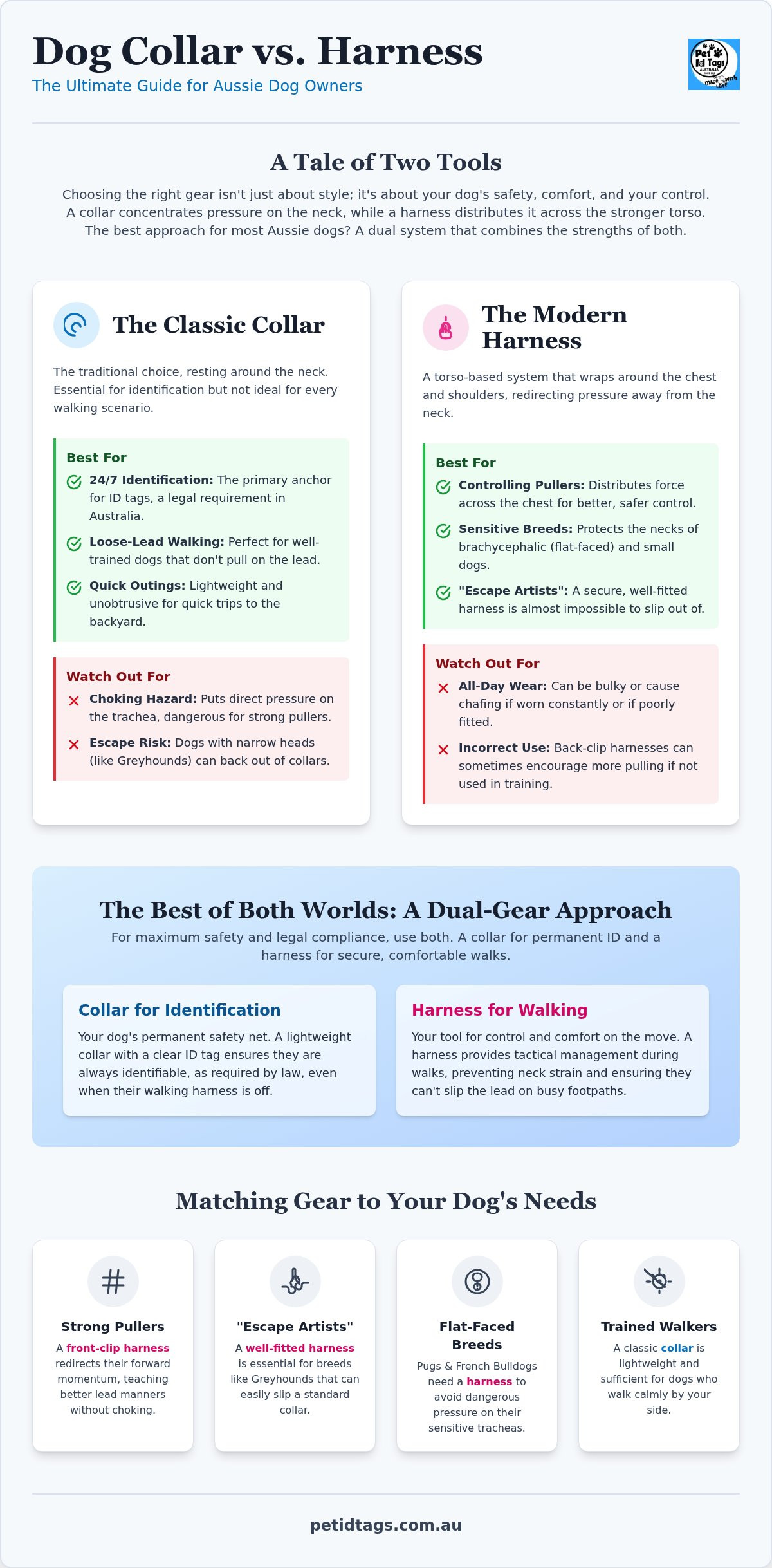
Choosing the right gear for your dog isn't just about style. It's a functional decision that impacts their physical health and your level of control. A dog collar is the classic choice, resting around the neck to provide a mounting point for identification and a connection for light lead work. For a deeper dive into the history and safety of these tools, Understanding Dog Collars provides a solid foundation for any owner. In contrast, a dog harness is a torso-based system. It wraps securely around the chest and shoulders, shifting the point of contact from the throat to the dog's skeletal frame.
The fundamental difference lies in pressure distribution. A collar concentrates all force on the neck, a sensitive area containing the trachea and thyroid. A harness redirects that energy to the sternum and ribs, which are much better equipped to handle sudden tension. For the modern pet owner, the dog collar vs harness australia debate isn't about picking a winner. It's about deploying the right tool for the specific task at hand. Many owners find that a dual-system approach offers the best security for the Australian lifestyle.
When the Collar is the Traditional Choice
A collar is the ideal daily companion for dogs that have mastered loose-lead walking. It's lightweight and unobtrusive, making it perfect for 24/7 wear inside the home or during quick toilet breaks in the backyard. Most importantly, it serves as the primary anchor for stainless steel dog tags australia. Since Australian regulations require dogs to be identifiable in public spaces, a durable collar ensures your contact details are always present. It stays on when the walking harness comes off, providing a permanent safety belt for your dog.
When the Harness Takes the Lead
Harnesses excel in high-energy environments or during long weekend hikes. By distributing force across the strongest parts of the body, they prevent the gagging and choking often seen with enthusiastic pullers. This is particularly vital for small breeds or brachycephalic dogs like Pugs and French Bulldogs. These breeds are prone to tracheal collapse under neck pressure, making a harness the safer medical choice. Additionally, many harnesses feature a built-in handle. This gives you immediate physical management over large or reactive dogs during close encounters on narrow city paths. It's a tactical advantage that a simple neck attachment cannot provide.
Why a Custom Dog Harness Might Be Your Best Mate’s Pick
Managing a high-energy dog on a standard lead can quickly turn a relaxing stroll into a physical struggle. This is where the dog collar vs harness australia debate shifts toward mechanical advantage. A custom dog harness australia offers superior control by securing the dog's centre of gravity rather than just their neck. It provides a stable anchor point that allows you to guide your dog without causing discomfort or panic. This level of security is essential when navigating busy parks or shared footpaths where distractions are constant.
For owners of "escape artists," a harness is often the only way to ensure peace of mind. Breeds with narrow heads, such as Greyhounds or Whippets, can easily back out of a traditional collar when spooked. A well-fitted harness wraps securely behind the front legs, making it physically impossible for the dog to slip free. Puppies also benefit immensely from this setup. As they learn lead manners, their erratic movements often lead to sudden lunges. Using a harness ensures these teaching moments don't result in painful neck strain or long-term structural damage during their developmental stages.
Given our local conditions, material choice is critical for long-term comfort. Heavy leather or thick padding can cause overheating during a typical Aussie summer. High-quality harnesses utilise breathable mesh or lightweight, durable webbing to keep your mate cool while maintaining maximum strength. If you are looking for gear that balances durability with a perfect fit, you might want to explore custom options designed specifically for active dogs.
Front-Clip vs Back-Clip Harnesses
The position of the lead attachment significantly changes how your dog moves. Front-clip harnesses are the primary "no-pull" solution. When a dog tries to surge forward, the front attachment redirects their momentum back toward you, naturally discouraging pulling. Back-clip harnesses are better suited for dogs that already walk well or for activities like jogging, where you want the lead away from their legs. For the ultimate in versatility, dual-clip options allow you to switch between training mode and casual walking depending on the environment. To get the most out of your training sessions, you can check out K9Elite for professional advice on perfecting your dog's walking manners.
Veterinary professionals often highlight the hidden risks of neck-based control. Citing expert veterinary advice on collars and harnesses, it is clear that protecting the thyroid gland and delicate throat structures is a priority. Constant pressure from a collar can also increase intraocular pressure, which is a major concern for breeds prone to glaucoma or eye proptosis. A harness effectively prevents "leash-induced" coughing in older dogs by removing all restrictive pressure from the windpipe entirely.
The Classic Dog Collar: Essential for ID and Daily Wear
A dog collar is more than just a place to clip a lead; it acts as your dog's permanent safety belt. While you might swap a harness for different activities, a collar should remain a constant fixture. This is a critical point in the dog collar vs harness australia comparison. In Australia, state-based regulations generally require dogs to wear identification in public spaces. A collar ensures that even if your dog slips their walking gear, they are still carrying your contact details. It is the one piece of equipment your pet should wear almost 24/7 for total security.
High-quality personalised dog collars australia offer a reliable "set and forget" safety feature. You don't want to worry about tags falling off or engraving fading over time. Choosing materials that resist the harsh Australian sun is vital. UV rays and salt water can rot inferior fabrics within months. Look for UV-stabilised nylon or high-grade leather that maintains its integrity under extreme conditions. A durable collar is an investment in your dog's long-term safety, providing a permanent home for their most important information.
Identification: The Collar’s Primary Job
Every dog needs a puppy id tag australia from the moment they join your family. Microchips are essential, but a physical tag is the fastest way for a neighbour to return your pet. When considering pet id tag engraving ideas, always prioritise your current phone number and your dog's name. A clear, legible tag on a sturdy collar is the most reliable recovery tool available. This setup provides immediate peace of mind, ensuring your dog is never "anonymous" if they manage to wander through an open gate.
Comfort and Fit Standards
A collar must be secure without being restrictive. Use the "two-finger rule" by ensuring you can fit two fingers between the collar and your dog's neck. This prevents the collar from slipping over the ears while allowing for natural movement. Flat collars are standard for most breeds, while martingale collars provide extra security for sighthounds. Always check the neck area weekly for signs of chafing or hair loss. If you notice irritation, adjust the fit or switch to a more breathable material immediately to maintain your dog's skin health.
How to Choose: Matching Gear to Your Dog’s Breed and Temperament
Selecting the right equipment requires an understanding of your dog's physical build and energy levels. The dog collar vs harness australia decision often comes down to how your dog carries their weight and how they react to external stimuli. A deep-chested dog has different mechanical needs than a toy breed with a fragile neck. Your walking environment also plays a massive role. If you are navigating salt-sprayed coastal tracks or sun-drenched bush trails, your gear must be resilient. UV-resistant materials and rust-proof hardware are non-negotiable for the Australian climate, as inferior plastics and metals will degrade rapidly under intense sun exposure.
Many owners struggle with dogs that are "head-shy" and resist having gear pulled over their ears. If your dog freezes or retreats when they see a harness, a step-in model is the logical solution. This design allows the dog to simply stand into the loops, eliminating the stress of overhead fitting. For most households, the most effective approach is the "Harness for the Walk, Collar for the Home" strategy. This ensures your dog is comfortable and identifiable at rest, while remaining safely secured during high-energy outings. If you need gear that survives the elements, shop our range of durable Australian walking gear today.
Breed-Specific Recommendations
Physical anatomy dictates safety requirements. Deep-chested breeds like Greyhounds and Whippets often require specialised martingale collars or wide-bodied harnesses to prevent them from slipping out due to their narrow heads. Conversely, small breeds such as Chihuahuas face a high risk of tracheal collapse if they pull against a standard collar. For these dogs, a harness is a medical necessity rather than a preference. Strong pullers, particularly Staffies and Bulldogs, benefit most from front-attach harnesses. These tools provide the leverage needed to manage their significant power without causing neck trauma.
The Training Phase
Gear needs often evolve as a dog matures. During early training, a harness provides a safety net while you work on lead manners. As your dog learns to respond to refined cues, you might transition to a collar for off-lead reliability and subtle communication. Throughout this process, safety remains the priority. Using smart pet tags australia provides a vital digital backup. If your dog manages to slip their gear during a training session, these tags offer an extra layer of protection beyond the traditional engraved plate, ensuring they can be tracked and returned quickly.
Beyond the Walk: Creating a Total Comfort Zone
The outdoor journey is only one part of your dog's daily routine. While the dog collar vs harness australia debate focuses on the mechanics of the walk, the transition back to the home is just as vital for your dog's long-term health. A walk is a high-stimulus activity that requires both physical effort and mental focus. Once you cross the threshold of your front door, your dog needs to decompress. Creating a dedicated space for rest ensures they can recover from the sensory input of the Australian environment, whether you've been navigating city pavements or dusty bush tracks.
Comfort gear doesn't stop at the harness. In fact, the final piece of the "happy dog" puzzle is a high-quality resting area that supports their skeletal system. Just as you carefully selected a harness for its pressure distribution, you must choose a bed that offers the same level of anatomical support. A dog that has spent an hour working against lead tension or running through a park needs a place where their joints can fully relax without pressure points.
Post-Walk Recovery
The first step in a successful recovery routine is removing the walking gear. We recommend taking off the harness as soon as you return home to allow the skin and coat to breathe. Leaving a harness on 24/7 can lead to matting or skin irritation, particularly in the humid Australian climate. While the collar stays on for ID purposes, your dog should be free to move without the restriction of a torso-based system. This is the perfect time to guide them to a supportive dog bed from our Australian collection. Providing a "safe spot" where they can relax undisturbed helps lower their cortisol levels after a high-energy outing.
Choosing the Right Bed for Your Mate
Selecting a bed requires the same precision as fitting a harness. You need to match the bed size and density to your dog's specific sleeping style. "Curlers" often prefer beds with raised edges that provide a sense of security, while "sprawlers" need a large, flat surface to fully extend their limbs. For active dogs or those reaching their senior years, orthopaedic foam is a game-changer. It provides consistent support that doesn't bottom out, which is essential for joint health after a long hike. A quality bed is an investment in your dog's mobility and daily comfort. Browse our range of premium Dog Beds Australia to complete your pet's comfort setup and ensure they wake up ready for their next adventure.
Securing Your Dog’s Safety and Comfort for 2026
Navigating the dog collar vs harness australia choice comes down to balancing tactical control with permanent identification. You've seen how a harness protects the neck and trachea during high-energy walks, while a personalised collar ensures your mate is always legally compliant and identifiable. It's about using the right tool for the specific moment. By selecting gear made from durable materials designed for Australian conditions, you're investing in your pet's long-term health and your own peace of mind.
Safety doesn't end when the lead comes off. Proper recovery is the final step in a responsible pet ownership routine. Once you've secured the best walking gear, ensure your dog has a supportive place to decompress and rest their joints. Trusted by thousands of Aussie pet owners, our solutions are built with durable materials for long-lasting comfort. Every dog deserves a dedicated space to recharge after a day of adventuring in the sun.
Upgrade your dog’s rest with our premium Dog Beds Australia collection and give your mate the comfort they deserve. Whether you're training a new puppy or supporting a senior dog, the right gear makes all the difference for a happy, healthy life together.
Frequently Asked Questions
Is a harness better than a collar for a dog that pulls?
Yes, a harness is significantly more effective for managing a dog that pulls. It redirects the force of the pull across the dog's chest and shoulders rather than concentrating it on the sensitive neck area. This prevents choking and reduces the risk of long-term tracheal damage. A harness also gives you better physical leverage to guide your dog's momentum without causing them pain or distress during high-energy walks.
Can my dog wear a harness and a collar at the same time?
Using both simultaneously is the most secure method for Australian pet owners. The collar acts as a permanent safety feature for carrying essential identification tags, while the harness serves as the tactical tool for lead control. This dual-system approach ensures that your dog remains identifiable even if they manage to slip out of their walking harness. It provides a redundant safety layer that protects your pet in every environment.
Is it cruel to use a collar on a small dog breed?
It isn't cruel to use a collar for identification, but walking a small breed on a collar can be dangerous. Breeds with delicate necks, such as Chihuahuas or Toy Poodles, are highly susceptible to tracheal collapse from sudden lead tension. For these dogs, a harness is the only safe way to attach a lead. Collars should be reserved for holding ID tags and should never be used to pull or restrain a small dog.
How do I know if my dog’s harness is too tight?
The most reliable test is the two-finger rule. You should be able to fit two fingers comfortably between the harness straps and your dog's skin. If you see the skin bulging around the straps or notice any restricted movement in their shoulders, the fit is too tight. Conversely, if the harness gaps or shifts significantly when your dog moves, it's too loose and could allow them to slip out and escape.
Should I take my dog’s collar off at night?
Removing the collar at night allows the skin to breathe and prevents fur matting, but it depends on your home's security. If your dog has any chance of slipping out through a gate or door, keeping the collar on with its ID tag is a vital precaution. If you choose to remove it, ensure the collar is placed right next to their lead so it's the first thing you put on in the morning.
What is the safest way to walk a dog in Australia?
The safest method involves a front-attach harness for control and a collar with a durable ID tag for identification. This combination addresses the dog collar vs harness australia safety balance perfectly. Using high-quality, sun-resistant materials is also essential to prevent gear failure in our harsh climate. Always keep your dog on a lead in public spaces to comply with local council regulations and ensure total safety for everyone on the path.
Do Australian laws require a collar or a harness?
Most Australian state and local council laws require dogs to wear a collar and an identification tag in public spaces. While harnesses are excellent for walking, they don't replace the legal necessity of a collar. The dog collar vs harness australia debate often misses this legal nuance. Owners must ensure their contact details are clearly visible on a tag to avoid potential fines and ensure a lost pet can be returned quickly.
What should I do if my dog hates wearing a harness?
Switching to a step-in harness design is often the best solution for dogs that are "head-shy." Many pets find the process of gear being pulled over their ears intimidating or stressful. Use positive reinforcement by offering high-value treats whenever the harness is visible. Gradually increasing the time they wear it indoors will help them build a positive association. This patience ensures they feel comfortable and secure before you head out for a walk.