
A split-second dash towards a scrub turkey shouldn't end in a snapped strap or a dog slipping their gear. You want your mate to be safe and easily identified, but many off-the-shelf versions of a custom dog harness with name aren't built for the harsh Australian sun or a salty morning at the beach. It's frustrating when name patches peel off after three walks or when a harness causes painful chafing during a humid summer. We know that high-quality gear should be a reliable safety tool, not a constant source of worry.
This 2026 guide will help you choose a durable harness that provides a secure, no-escape fit and remains readable despite heavy UV exposure. You'll learn how to prioritise ergonomic comfort while ensuring bystanders can identify your dog from a distance. We'll break down the latest durable materials, compare the best local options, and explain why pairing your harness with a stainless steel backup is the only way to ensure total peace of mind on every adventure across the country.
Key Takeaways
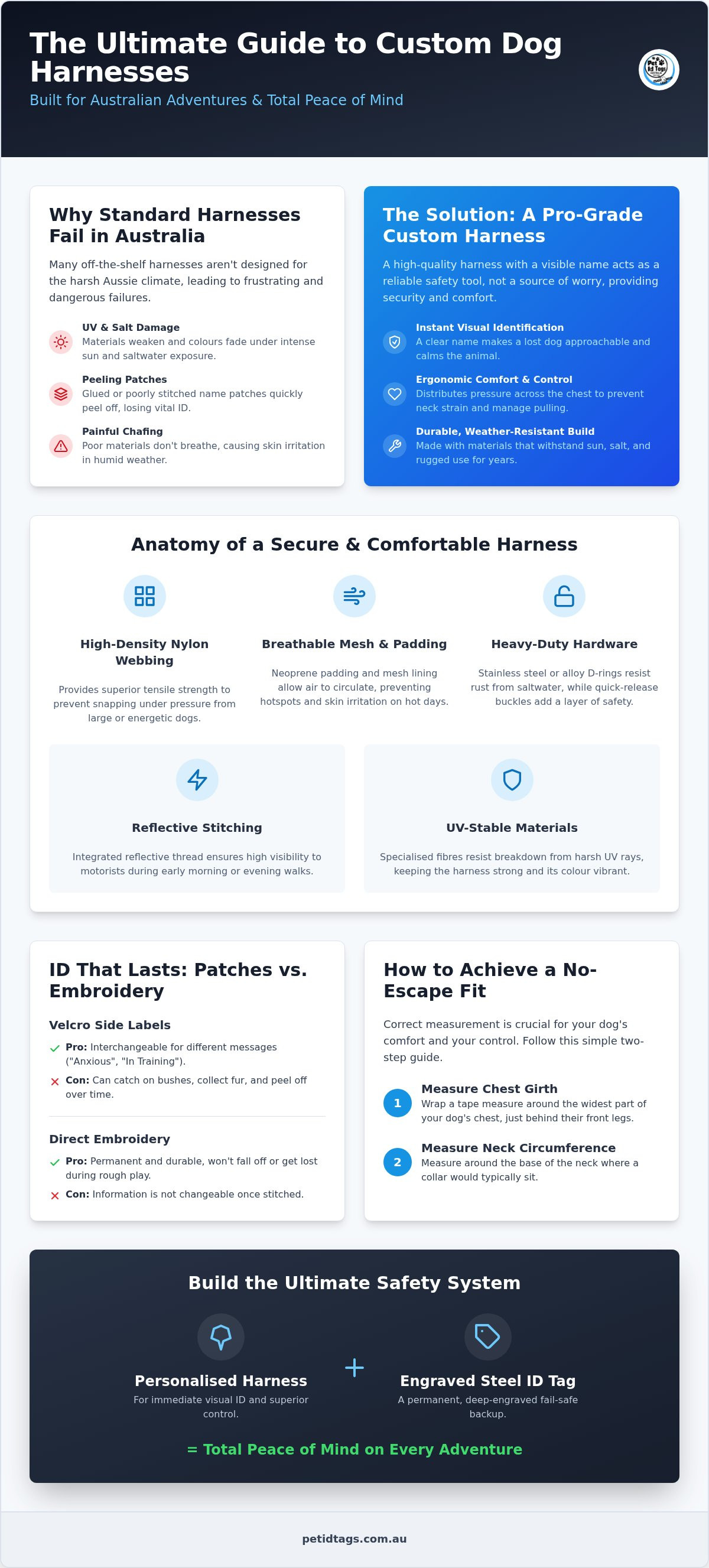
- Learn why a custom dog harness with name improves safety by making lost dogs more approachable to bystanders who can call them by name.
- Identify the specific materials, such as high-density nylon and breathable mesh, needed to survive the Australian sun while preventing painful skin chafing.
- Evaluate the pros and cons of Velcro side labels versus direct embroidery to ensure your dog's identification remains readable over years of use.
- Follow a simple two-step measurement guide to achieve a professional, no-escape fit that provides maximum control over large or energetic dogs.
- Discover how to build a complete safety kit by pairing your personalised harness with a permanent, deep-engraved stainless steel ID tag as a fail-safe backup.
Beyond the Jingle: Why Your Aussie Dog Needs a Custom Name Harness
A standard collar and tag are the bare minimum for pet safety. However, a custom dog harness with name takes protection to a professional level. It's more than just a fashion statement; it's a technical tool that combines a robust walking system with high-visibility identification. This setup ensures your dog isn't just another stray if they happen to wander off. They become a recognisable individual with a name that can be called out from a distance.
The psychology of pet recovery is simple. People are often hesitant to approach an unknown dog. They worry about temperament or potential aggression. Seeing a clear, large-print name patch changes that interaction. It allows a bystander to call the dog by name, which often calms the animal and builds immediate trust. This instant identification works far faster than waiting for a ranger to scan a microchip or trying to read a small, jingling tag on a nervous dog's neck.
Instant ID for Public Spaces
Large-print patches are essential in crowded Australian off-lead areas. Whether you're at a local dog beach or a busy urban park, being able to identify a dog from across the grass is a massive advantage. These harnesses also allow for functional messaging. Labels such as "Working Dog" or "Anxious" provide clear instructions to the public. This protects your pet from unwanted interactions and helps manage their environment effectively. Visual identification is the first line of defence in pet recovery because it works before anyone even touches the dog.
Reducing Lead Pulling and Neck Strain
Comfort is just as vital as safety. Traditional collars put immense pressure on the thyroid and windpipe, which can lead to long-term health issues in dogs that pull on the lead. A well-designed harness distributes this force across the chest and shoulders instead. There are different types of dog harnesses available, including front-clip models that help manage pulling by redirecting the dog's momentum. This is essential for high-energy Aussie favourites like Border Collies or Labradors. By using a custom dog harness with name, you're investing in a system that protects their physical health while ensuring they remain identifiable in any environment.
Anatomy of a Secure Personalised Harness: Materials and Construction
A reliable custom dog harness with name relies on its technical specifications. The backbone of any professional-grade harness is high-density nylon webbing. This material offers superior tensile strength, ensuring it won't snap under the sudden pressure of a 40kg dog lunging after a bird. While standard nylon is common, high-density variants provide the longevity required for daily use in rugged environments. Safety also depends on visibility. Integrated reflective stitching is a standard requirement for anyone walking their dog during low-light hours. This simple addition ensures your dog is visible to motorists from multiple angles. When considering how a dog harness should fit, the structural integrity of the materials is the primary concern.
Weather-Resistant Hardware
Coastal living is part of the Australian lifestyle. Saltwater is incredibly destructive to pet gear. Cheap plastic clips can become brittle and snap; low-grade metal buckles will rust within weeks. High-grade stainless steel or heavy-duty alloy D-rings are non-negotiable. They remain structurally sound despite repeated exposure to sand and sea. Quick-release buckles are equally important. They allow you to remove the harness instantly if it becomes snagged on a bush or submerged in water. This hardware must be easy to operate even when wet or covered in grit.
Comfort Padding for Active Aussie Breeds
Active breeds like Kelpies or Cattle Dogs need gear that moves with them. Breathable mesh lining and neoprene padding are essential to prevent hotspots and hair breakage. These materials allow air to circulate. This is critical during a 35-degree summer day when heat can quickly lead to skin irritation. The Aussie sun is notoriously harsh on synthetic fibres. It's a similar process to why pet id tags fade when exposed to high UV levels. Investing in UV-stable materials ensures your custom dog harness with name stays vibrant and the text remains legible for years. You can browse our range of custom dog harnesses to find a durable solution for your pet.
Custom Side Labels vs. Direct Embroidery: Which Lasts Longer?
Choosing how to display your dog's details on a custom dog harness with name involves more than just aesthetics. You need to decide between removable side labels and direct embroidery. Both methods offer distinct advantages, but durability in our harsh climate is the deciding factor for most owners. While embroidery is often perceived as a permanent solution, industrial-strength patches have become the preferred choice for those who value versatility and long-distance legibility.
The Versatility of Interchangeable Patches
Velcro patches allow you to communicate vital information that changes over time. You might start with a "Puppy in Training" label and later swap it for a standard name patch or a "Deaf Dog" warning. This flexibility is invaluable for rescue dogs or pets with specific medical needs. However, the quality of the attachment is critical. To survive a run through thick coastal scrub or the Australian bush, the velcro backing must be industrial-grade. Low-quality adhesives will peel under the heat, leading to lost identification. Cleaning these patches is straightforward; a quick wipe with a damp cloth removes salt and grit without damaging the text or the reflective backing.
Long-Term Visibility in the Aussie Sun
The Australian sun is a relentless force that bleaches cheap fabrics and inks within months. Direct embroidery can look sharp initially, but threads often fray when caught on branches or become obscured by a dog's fur. This makes the name difficult to read from a distance. In contrast, high-quality printed patches use UV-stable inks designed to resist fading. Legibility is the primary goal of any identification system. For maximum safety, we recommend high-contrast colour combinations. White text on a black background remains the gold standard because it stays readable even in the harsh midday glare.
A faded name is a failed safety feature. If a bystander cannot read your dog's name from five metres away, the harness isn't doing its job. Experts at the Texas A&M College of Veterinary Medicine highlight the importance of identification tags and visible markers in ensuring a lost pet is returned quickly. While your custom dog harness with name provides immediate visual ID, the text must remain crisp and clear to be effective. Choosing materials that are specifically rated for high UV exposure ensures your dog stays identifiable for years rather than weeks.
How to Size and Fit Your Custom Harness for Maximum Comfort
A custom dog harness with name is only a safety asset if it remains securely on your dog during a walk. Getting the sizing right is a technical process that dictates both the security of the animal and their long-term physical health. A harness that is too loose is a flight risk. One that is too tight can lead to chafing or even structural issues over time. Follow these four steps to ensure a professional fit for your pet.
- Step 1: Measure the neck circumference at the base where a collar would naturally sit.
- Step 2: Measure the girth. This is the widest part of the chest, usually located two to three finger-widths behind the front legs.
- Step 3: Verify your dog's weight against the manufacturer's specific recommendations. Weight is a critical indicator of the structural capacity of the harness; using a small harness on a heavy dog puts undue stress on the buckles and stitching.
- Step 4: Adjust all points of contact until the harness is snug but allows for the "two-finger rule".
The Two-Finger Rule for Safety
This rule ensures the harness is tight enough to prevent escape but loose enough to avoid skin irritation. If you can slide more than two fingers under the strap, your dog may be able to back out of the gear if they become startled. This is a common way dogs are lost in busy urban areas or near heavy traffic. You must check the fit in multiple positions. A harness that feels perfect while a dog is standing may become too tight when they sit and their chest expands. Always test the tension while your dog is in both positions to ensure they remain comfortable during a long stroll or a run at the park.
Breed-Specific Fitting Challenges
Standard size charts often fail deep-chested breeds like Greyhounds, Whippets, or some larger GSP crosses. These dogs have narrow necks and deep ribcages, which often requires extra-long chest straps to prevent the harness from rubbing behind the front legs. Broad-chested breeds like Staffies or Bulldogs require a different approach. Their harnesses must sit low on the sternum to avoid the windpipe while allowing a full range of motion for their heavy shoulders. If you're currently raising a young dog, their sizing will change monthly. Our essential puppy id tag guide provides more detail on managing gear for growing pets. Once you have confirmed your dog's current dimensions, you can browse our custom dog harness collection to find the perfect match for their build.
A custom dog harness with name provides excellent visual identification from a distance. However, it shouldn't be the only layer of protection your pet wears. Think of the harness as a primary control tool and a secondary ID source. If your dog manages to back out of their harness during a sudden scare, all that identification goes with the gear. This is why a full kit approach, combining a secure harness, a durable collar, and a deep-engraved tag, is the professional standard for Aussie pet safety.
The Dual-Layer Identification Strategy
This strategy uses the harness for immediate recognition and the tag for detailed recovery information. While a name patch tells a bystander who your dog is, a tag provides your phone number and address. It is also a legal requirement in most Australian states for dogs to wear an ID tag in public places. Relying solely on a microchip is risky; it requires a scanner and a trip to a vet or ranger. You can read more about the pet tag vs microchip australia debate to understand why physical tags remain the fastest way to get your mate home.
Choosing the Right Attachment
When selecting a tag to hang from your harness D-ring or collar, material choice dictates longevity. Stainless steel is the gold standard for durability. It won't rust in saltwater and resists the deep scratches that make aluminium tags unreadable over time. If you frequently switch between different sets of gear, using a dog tag quick clip allows you to move identification in seconds. This ensures your dog is never without their contact details, regardless of whether they are on a long bush walk or a quick lead stroll around the block. For dogs that are sensitive to noise, positioning the tag securely against the harness webbing can prevent the constant jingle that some pets find distracting. A silent, secure setup gives you peace of mind without compromising on safety.
Organise your dog’s complete safety kit at Pet ID Tags Australia today.
Ready for Every Australian Adventure
Investing in a custom dog harness with name is a proactive step toward professional pet safety. By prioritising high-density nylon and UV-stable patches, you ensure your dog's identification remains legible despite the harsh sun and salt. Remember that a perfect fit is non-negotiable; always use the two-finger rule to prevent escapes while maintaining full mobility for your mate. A secure harness shouldn't be a standalone solution, so ensure it's paired with a deep-engraved stainless steel tag for permanent contact details.
As trusted Australian pet safety experts since 2004, we specialise in gear designed for the toughest local conditions. We focus on high-grade materials and offer fast national shipping to get your pet protected as soon as possible. Shop our range of durable custom gear at Pet ID Tags Australia and step out for your next walk with total confidence that your dog is secure and identifiable.
Frequently Asked Questions
Is a custom dog harness better than a standard collar?
A custom dog harness with name provides superior control and safety compared to a standard collar, especially for dogs that pull on the lead. It distributes pressure across the chest and shoulders rather than the sensitive windpipe. This reduces the risk of long-term neck injuries. The harness also adds an immediate visual identification layer that a collar tag alone cannot provide from a distance.
Can I wash a personalised dog harness with name patches?
You can wash most personalised harnesses, but you should remove any velcro name patches first to preserve the text. Hand washing in cold water with a mild detergent is the safest method to prevent the nylon webbing from degrading. If using a machine, place the harness in a laundry bag on a gentle cycle. Always air dry your gear in the shade to avoid heat damage from a dryer.
What is the best way to measure my dog for a custom harness?
Use a flexible tape measure to find the circumference of the neck base and the widest part of the ribcage. The girth measurement is the most critical for a secure fit. Ensure the dog is standing squarely while you measure to get an accurate reading. Always check these dimensions against the specific manufacturer's size chart to ensure the hardware is rated for your dog's weight.
Will the name on the harness fade in the sun?
High-quality harnesses use UV-stable materials and specialised inks designed to withstand the intense Australian sun. While cheaper alternatives may bleach or become unreadable within months, professional-grade side labels are built to remain crisp. To extend the life of the identification, don't leave the harness outdoors when it isn't in use. Choosing high-contrast colours like white text on a black background also ensures the name remains legible.
Do I still need a pet ID tag if my dog’s name is on their harness?
A traditional pet ID tag is still a legal requirement in most Australian states and serves as a vital safety backup. If your dog slips out of their gear, the collar and tag remain the only way for a rescuer to contact you instantly. While your custom dog harness with name provides excellent visual ID from a distance, the tag contains your specific contact details. A complete safety kit includes all three layers.
Are custom harnesses suitable for puppies?
Custom harnesses are suitable for puppies, provided you choose a model with multiple adjustment points to accommodate their rapid growth. You'll need to check the fit weekly to ensure the straps aren't becoming too tight or causing chafing. It's often better to buy a harness that fits their current size rather than one they will grow into, as an oversized harness is easy for a puppy to escape from during a walk.
How do I attach a lead to a personalised harness?
Most personalised harnesses feature a heavy-duty D-ring on the back for standard walking. Some models also include a front-clip attachment point on the chest piece. Using the front clip helps discourage pulling by redirecting the dog's forward momentum back toward you. Always ensure the lead's carabiner is fully closed and securely attached to the metal hardware rather than any plastic adjustment buckles or the name patch area.
Can a dog escape from a custom no-pull harness?
Escape is possible if the harness is fitted too loosely or is the incorrect shape for your dog's breed. Deep-chested dogs like Greyhounds often require specific designs to prevent them from backing out of the gear. Applying the two-finger rule ensures the straps are snug enough to stay in place without restricting movement. If you can fit more than two fingers under the chest strap, the harness needs tightening to remain secure.