

Table of Contents
- What Makes a Harness Escape-Proof
- How to Measure a Cat for a Harness
- Vest-Style vs. H-Style Harnesses: Which Prevents Escape
- Key Safety Features That Stop Backing Out
- How to Train a Cat to Walk on a Leash
- Cat Safety Tips for Outdoor Walking
- Common Mistakes That Lead to Harness Escape
- Conclusion
- Frequently Asked Questions
Last Updated: September 21, 2026
What Makes a Harness Escape-Proof
An escape-proof cat harness combines three critical design elements: a secure fit that prevents backing out, multiple attachment points for redundancy, and materials that resist chewing or slipping. Vest-style construction distributes pressure across the chest and shoulders rather than concentrating it at the neck, which cats instinctively work to slip free from.
Most cats escape traditional harnesses by backing out of the neck opening. Proper escape-proof designs use adjustable straps that create a snug fit without choking, reinforced stitching at stress points, and no loose webbing that a determined cat can grip or manipulate.
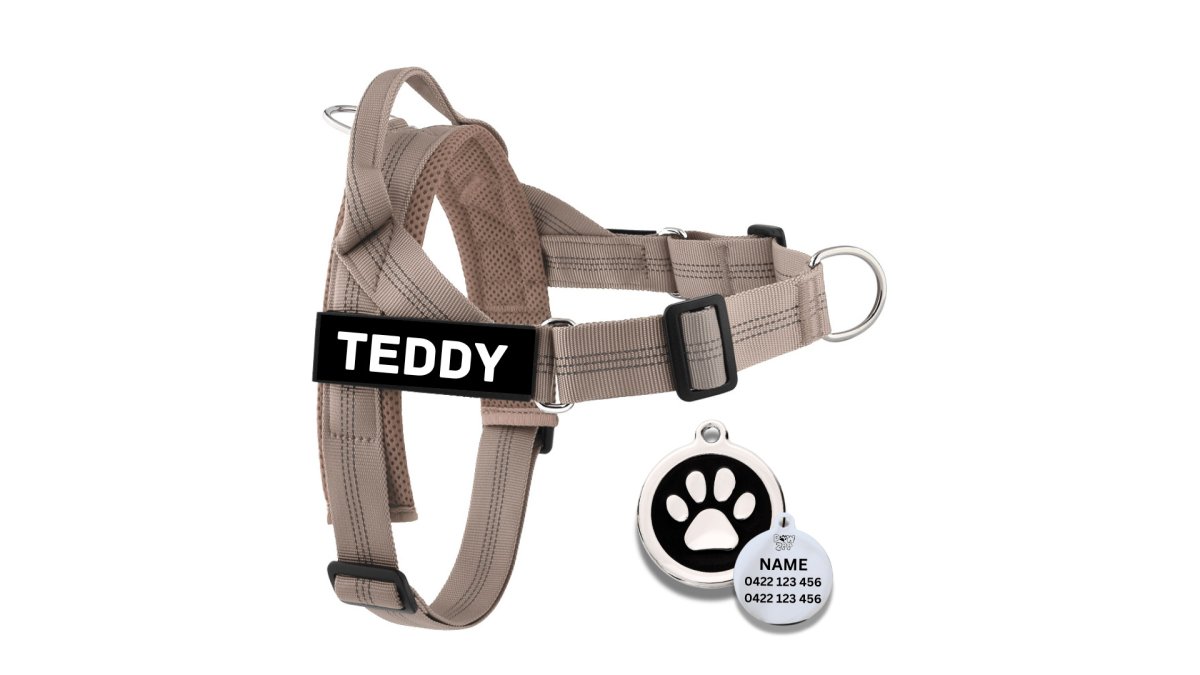
Pet ID Tags Australia's personalised no-pull harnesses feature breathable mesh construction, reflective piping for visibility, and padded design that reduces irritation from prolonged wear, essential since an uncomfortable harness encourages escape attempts.
How to Measure a Cat for a Harness
Correct measurement is non-negotiable for harness security. Measure your cat in three places: neck, chest girth, and belly.

Start with the neck measurement. Using a soft measuring tape, measure loosely around the base of the neck where a collar would sit. The tape should slide easily under one finger when wrapped to prevent choking while preventing the harness from slipping over the head.
Next, measure the chest at the widest point just behind the front legs, where the harness bears most of the load. Have your cat stand naturally and take the measurement at the ribcage, not across the shoulder blades.
For deep-chested breeds like Bengals or Siamese cats, also measure the belly from the lowest point of the ribcage to the back legs. This ensures the belly strap sits flat without pinching or leaving gaps that allow escape.
When sizing, choose the larger option if you fall between sizes. The goal is a snug fit where two fingers slide comfortably underneath the harness at all points, tight enough to prevent backing out, loose enough to allow normal breathing and movement.
Vest-Style vs. H-Style Harnesses: Which Prevents Escape
A vest-style harness wraps around the cat's torso like a jacket, with straps over the shoulders and around the belly. Multiple adjustment points (neck, chest, and belly) create redundancy, if one strap loosens, the others still secure the harness. Vest harnesses excel at preventing escape because the cat cannot easily back out of a garment that encompasses their entire torso.
An H-style harness uses two straps that cross over the back and connect at the chest and belly. This lighter design works well for calm, compliant cats but offers fewer redundancy points, making it riskier for escape artists.
For true escape-proofing, vest-style is superior because the design leaves no gaps for backing out and no single point of failure. Pet ID Tags Australia's personalised no-pull harnesses use a vest construction with padded panels, breathable mesh, and adjustable straps, physically preventing the backing-out manoeuvre that most cats attempt.
| Harness Type | Escape Risk | Comfort Level | Best For | Adjustment Points |
|---|---|---|---|---|
| Vest-style | Low | High (distributed pressure) | Escape artists, long-term wear | 3+ (neck, chest, belly) |
| H-style | Moderate | Medium (lighter weight) | Calm cats, short outings | 2 (chest, belly) |
Key Safety Features That Stop Backing Out
Several specific features distinguish an escape-proof harness from a standard one. Look for these when evaluating any harness for a cat prone to escape.
Reinforced neck opening is the first critical feature. The neck should have a double-stitched seam with no gaps or loose webbing, and ideally a secondary strap that tightens independently of the chest strap, creating a two-point closure at the neck.
Heavy-duty buckles and snap closures matter significantly. Stainless-steel hardware resists corrosion and maintains its grip through hundreds of open-close cycles, while snap buckles are preferable to velcro, which deteriorates with washing and can be torn open by determined cats.
A secure D-ring attachment point is essential. The D-ring should be reinforced with stitching on all four sides and welded or riveted to the harness body rather than glued, preventing shifts during walks that could create escape gaps.
Reflective piping and high-visibility materials serve a safety purpose beyond visibility. Reflective straps are typically stitched more securely than plain webbing, making seams less likely to fail under stress.
How to Train a Cat to Walk on a Leash
Training a cat to accept a harness and leash requires patience and positive reinforcement. Start indoors before attempting outdoor walks.
Begin by introducing the harness without fastening it. Leave it on the floor near your cat's favourite resting spot for several days. This familiarisation phase is critical; rushing it leads to harness aversion that can take months to overcome.
Once your cat shows neutral or curious behaviour toward the harness, drape it loosely over their back without fastening any straps and reward with treats or play. Gradually tighten the straps over multiple sessions, always rewarding calm behaviour.
After your cat tolerates the fitted harness indoors, attach the leash and let them walk around the house with it trailing behind. Do not pull or guide; allow them to move freely while dragging the leash for 1-2 weeks.
Only after your cat walks confidently indoors with the leash trailing should you attempt gentle guidance. Start by holding the leash loosely and following your cat's direction, rewarding forward movement. Gradually introduce light tension, stopping if your cat shows stress signals.
Move outdoors only after your cat demonstrates calm, confident behaviour on the leash indoors. Start in a quiet area like a garden or courtyard and keep initial sessions to 5-10 minutes. Stay calm, reward forward movement, and retreat indoors if stress escalates.
Cat Safety Tips for Outdoor Walking
Outdoor walking exposes cats to hazards that indoor cats never encounter. Proper precautions prevent injury, escape, and loss.
Always use a harness rather than a collar for outdoor walking. A collar can slip off or break under stress, leaving your cat loose and unable to be recaptured. A properly fitted harness distributes force across the torso and is far more difficult to escape. Pair your harness with an ID tag and microchip registration so your cat can be identified if they do escape.
Keep walks short initially, 5-10 minutes for the first few weeks. Cats tire mentally and emotionally faster than physically, and an overstimulated cat is more likely to bolt or panic. Gradually extend walk duration as your cat becomes confident.
Avoid busy streets, areas with off-leash dogs, and locations with dense vegetation where a cat might hide. Parks with secure fencing are ideal for building confidence. Always walk your cat during daylight hours so you can see hazards and your cat can see escape routes clearly.
Watch for stress signals: crouching, excessive meowing, tail tucking, or attempts to back out of the harness. These indicate your cat has reached their limit. Return indoors immediately rather than pushing through resistance.
Common Mistakes That Lead to Harness Escape
Most harness escapes result from preventable mistakes rather than harness failure. Understanding these errors helps you avoid them.
Conclusion
An escape-proof cat harness prevents your cat from slipping free during walks and outdoor adventures. The best escape proof cat harness combines vest-style construction, multiple adjustment points, reinforced stitching, and heavy-duty hardware. Proper measurement, patient training, and correct usage are equally important as the harness design itself.
Frequently Asked Questions
Are any cat harnesses actually escape-proof?
No harness is 100% escape-proof, but vest-style designs with secure buckles and proper fit dramatically reduce the risk. The key is a snug fit across the chest and shoulders that prevents backing out, combined with positive reinforcement training. A well-fitted harness paired with leash tension awareness makes escape highly unlikely during supervised outdoor time.
How do I keep my cat from escaping their harness?
Measure your cat's chest girth and neck accurately before purchasing. Once fitted, ensure two fingers fit snugly underneath the straps. Choose a vest-style harness with a no-choke design and adjustable straps. Introduce the harness gradually indoors using positive reinforcement, and always supervise outdoor walks. Check the fit monthly as your cat grows or seasons change.
What features should I look for in an escape-proof cat harness?
Look for breathable mesh construction, adjustable straps across the chest and belly, reflective piping for visibility, and a secure d-ring attachment point. A padded design reduces discomfort and improves compliance. Durable stitching and nylon material ensure the harness withstands daily wear without weakening at stress points.
How do I properly fit a harness to prevent my cat from backing out?
Measure around your cat's chest just behind the front legs and loosely around the neck. The harness should be snug enough that your cat cannot slip backward, but loose enough to fit two fingers underneath. Adjust all straps evenly and check that the chest panel sits flat without pinching. Test the fit by gently trying to slide the harness backward; it should not move more than 1-2 centimetres.
Outdoor walking offers your cat enrichment and exercise that indoor-only life cannot provide. The right harness, combined with proper training and identification, makes those adventures safe. Get started with Pet ID Tags Australia's personalised escape-proof harness and matching ID tag combo, and give your cat the security and style they deserve.