

Table of Contents
- Why Cats Remove Their Collars
- How to Measure a Cat for a Collar
- Choose the Right Collar Type and Fit
- Getting a Cat Used to a Collar
- Cat Collar Safety Tips and Maintenance
- Troubleshooting Collar Removal
- Managing Elizabethan Collars During Recovery
- Conclusion
Last Updated: August 29, 2026
Why Cats Remove Their Collars
Cats are escape artists by nature. A collar that doesn't fit properly, feels uncomfortable, or catches on something becomes an immediate target for removal. Understanding why your cat is determined to get that collar off is the first step toward keeping it on.
The most common reason is poor fit. A collar that's too loose slides over the head, while one that's too tight restricts movement and creates discomfort. Cats are sensitive to pressure and texture, and they'll scratch and work at an uncomfortable collar until it comes free.
Some cats have sensory sensitivities to certain materials. A rough fabric irritates the skin, a heavy collar throws off their balance, or a bell becomes stressful. Environmental triggers also matter: a collar catching on a branch or furniture creates negative associations and redoubles escape efforts. This is where safety features like breakaway buckles become essential.
Finally, some cats simply haven't been gradually introduced to collar-wearing. Without proper desensitisation, the collar remains a foreign object that triggers stress and escape behaviour.
How to Measure a Cat for a Collar
Proper measurement is non-negotiable. An incorrectly sized collar will either slip off or cause discomfort.
Start by using a soft measuring tape around your cat's neck where a collar would sit, just below the jaw and above the shoulders. Keep the tape loose and comfortable, you should be able to slip one finger underneath easily. Write down this measurement.
Apply the two-finger rule: once the collar is on your cat, you should be able to fit two fingers (index and middle) between the collar and your cat's neck. One finger leaves too little space; three fingers creates too much slack. Two fingers is the sweet spot that balances security with comfort.
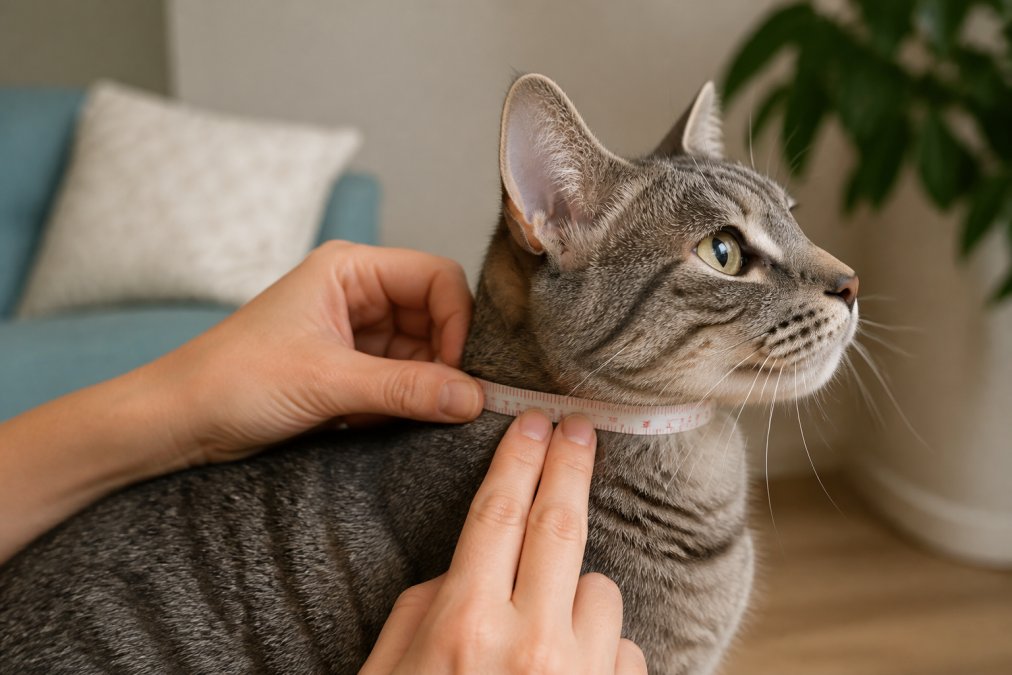
Measure your cat when they're relaxed, not stressed. A tense cat will hold their muscles differently, skewing your measurement. For kittens, choose an adjustable collar with multiple sizing options and check the fit every 2-3 weeks during growth. Measure again after your cat has been wearing the collar for a week to ensure comfort as they settle into wearing it.
Choose the Right Collar Type and Fit
Not all collars are created equal. The type you choose directly impacts whether your cat will tolerate it and whether it will stay on safely.
Breakaway versus Non-Breakaway Collars
A breakaway collar (also called a safety-release collar) has a buckle that opens under pressure. If your cat gets caught on a branch or fence post, the buckle releases and prevents strangulation. A non-breakaway collar is fixed and won't open under pressure, creating a genuine hazard if the collar snags on something.
For indoor cats, non-breakaway collars are generally acceptable. For cats with outdoor access, a breakaway collar is strongly recommended. Many modern breakaway collars use elastic panels that stretch before the buckle releases, offering both security and safety. Pet ID Tags Australia offers adjustable nylon collars with two-part release buckles and elastic inserts, providing both security and safety for cats that venture outside.

The Two-Finger Rule for Proper Fit
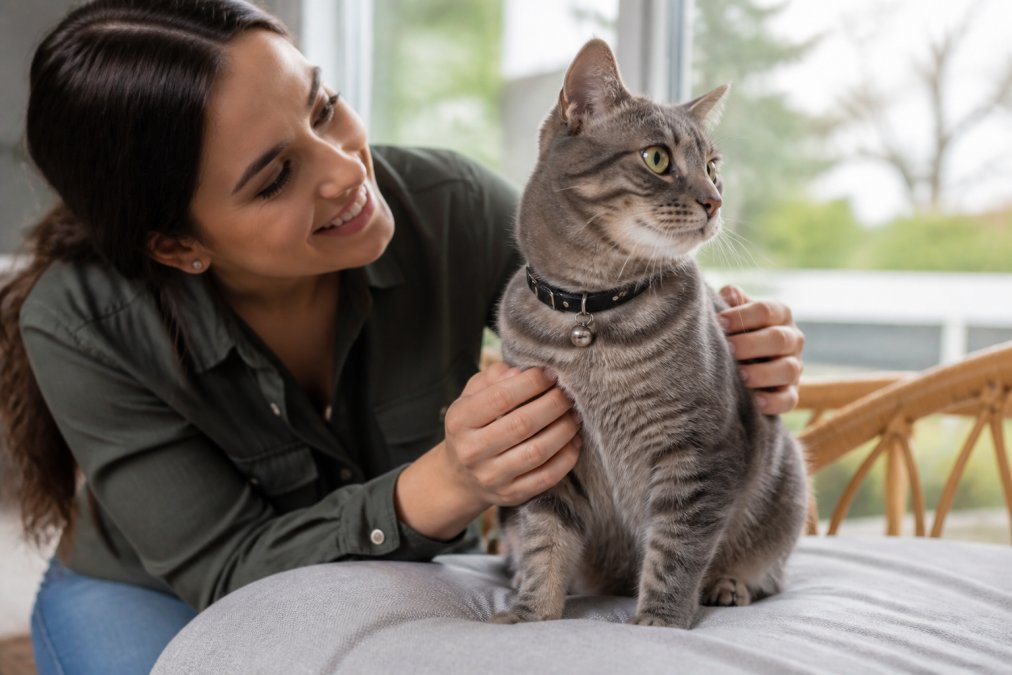
Once the collar is on, test the fit by slipping two fingers under it at the back of the neck. If you can't fit two fingers, the collar is too tight. If you can fit three or more fingers, it's too loose. This rule prevents collars that restrict breathing and collars that slip off.
Adjust the collar as needed. Most quality collars have multiple adjustment points. Check the fit weekly during the first month, as your cat's neck muscles may relax or flex differently as they adjust to wearing the collar.
Getting a Cat Used to a Collar
The biggest mistake pet owners make is putting a collar on a cat and expecting acceptance immediately. Cats need gradual introduction and positive reinforcement.
Gradual Introduction and Desensitisation
Start by letting your cat see and smell the collar before it goes on. Leave it on the floor near their bed. Next, hold the collar near your cat's neck without fastening it during calm moments. Then gently drape the collar around their neck without fastening it for just a few seconds, then remove it. Reward immediately with a treat or praise.
Only after your cat accepts the unfastened collar should you fasten it. Start with very short wearing periods, just a minute or two, and reward heavily. Gradually extend the time: 2 minutes, then 5 minutes, then 10 minutes, then longer. This process typically takes 1-2 weeks, depending on your cat's temperament.
Positive Reinforcement and Training Treats
Cats respond to positive reinforcement far better than punishment or force. Every time your cat tolerates the collar, reward them. Use high-value treats your cat genuinely loves, and reward immediately after they wear the collar. Timing matters, cats connect cause and effect in the moment.
Reward calm behaviour around the collar too. If your cat is wearing the collar and playing normally or sitting peacefully, give them a treat. Avoid rewarding panicked behaviour; instead, wait for a moment of calm, then reward.
Cat Collar Safety Tips and Maintenance
A collar that fits well and stays on is only half the battle. You also need to ensure it's not causing harm and that it's maintained properly.
Watch for Signs of Discomfort or Irritation
Check your cat's neck regularly for hair loss, redness, raw skin, or visible irritation. These are red flags that the collar is too tight, the material is irritating the skin, or the collar isn't being cleaned regularly. If you notice irritation, switch to a softer or hypoallergenic material.
Monitor your cat's behaviour around the collar. Excessive head shaking, rubbing their neck on furniture, or attempting to remove the collar are all signs of discomfort. Take them seriously and investigate the cause. Most fabric collars can be hand-washed or machine-washed on a gentle cycle to prevent buildup of dirt and bacteria.
Prevent Neck Fur Matting and Chafing
The area under the collar is prone to matting, especially in long-haired cats. Brush the area under the collar regularly, ideally daily, at minimum several times a week. For long-haired cats, consider a collar with a wider band that distributes pressure more evenly.
Chafing occurs when the collar edge rubs repeatedly against the skin. Ensure the collar has smooth edges and proper padding. Rotate the collar's position slightly each day to distribute wear and reduce chafing.
Troubleshooting Collar Removal
If your cat is slipping the collar off over their head, the collar is too loose. Tighten it so that only two fingers fit underneath. If your cat is working at the buckle and managing to unfasten it, switch to a collar with a more secure closure mechanism.
Some cats become obsessed with removing the collar because they associate it with a negative experience. This requires restarting the desensitisation process from scratch, moving more slowly and being extra attentive to positive reinforcement.
If your cat is removing the collar during specific times, consider removing it during those periods. A collar worn only during supervised times is better than one that creates constant stress. Engage your cat in play or enrichment activities to redirect their attention from the collar.
Managing Elizabethan Collars During Recovery
An Elizabethan collar (cone) is a different challenge. Cats tolerate them even less well because they restrict vision, movement, and grooming. However, the same desensitisation principles apply, though the timeline is compressed.
Start by putting the cone on for just a few minutes while your cat is calm and supervised. Reward heavily. Be prepared to move faster than you would with a regular collar, as your cat needs to tolerate the cone immediately post-surgery.
Ensure the cone is the correct size, it should extend far enough forward that your cat can't reach their surgical site, but not so far that it restricts eating and drinking. Keep your cat in a safe, calm environment while wearing the cone, as they'll have reduced vision and spatial awareness.
Feed and water your cat carefully during cone recovery. Some cats struggle to eat and drink with the cone on. Provide food and water in shallow dishes and monitor to ensure your cat is eating enough. If your cat refuses to eat, contact your veterinarian immediately.
Keeping a collar on your cat requires patience, the right equipment, and a commitment to your cat's comfort. Start with proper measurement and the two-finger rule. Choose a collar that matches your cat's lifestyle and sensitivities. Introduce it gradually with positive reinforcement. Monitor for discomfort and maintain the collar properly. When you invest this effort upfront, you're investing in your cat's safety and your own peace of mind.
At Pet ID Tags Australia, we understand that a collar is only effective if your cat actually wears it. Our adjustable nylon cat collars with two-part release buckles and elastic inserts are designed specifically for cats that need security without sacrificing safety. The Pet ID Tags Australia cat collar with pet [ID tag(/blogs/pet-articles/custom-engraved-cat-tags-australia) | petidtags.com.au] includes a matching bell and D-ring for attaching an ID tag, giving you both identification and a safety release mechanism. With over 20 years of engraving experience, we create deeply engraved ID tags that remain readable for the life of your pet, ensuring that even if your cat does slip the collar, they can still be identified and returned home. Get started with a collar and tag combination that actually works, and give yourself the confidence that your cat is identifiable no matter what.
Frequently Asked Questions
What is the correct tightness for a cat collar?
Use the two-finger rule: slide two fingers under the collar at the neck. You should be able to fit them snugly without the collar being too loose or too tight. This spacing prevents chafing and skin irritation while allowing your cat to breathe comfortably. Check the fit weekly, as kittens grow quickly and adult cats' neck circumference can change with weight fluctuations. A properly fitted collar sits flat against the neck without pinching or leaving marks.
Are breakaway collars safer for cats than regular ones?
Breakaway collars with quick-release mechanisms are recommended for cats because they reduce strangulation risk if the collar gets caught on branches, fences, or furniture. The safety release buckle opens under pressure, allowing your cat to escape. Non-breakaway collars can pose a hazard during outdoor time or if your cat is a climber. Many cats feel safer knowing they can free themselves, which may reduce stress signals and collar removal attempts. Breakaway designs are particularly important for outdoor or adventurous cats.
How long does it take to get a cat used to wearing a collar?
Most cats adjust to a collar within 5-14 days through gradual desensitisation and positive reinforcement. Start by letting your cat wear the collar for 10-15 minutes daily, then increase duration as they show habituation. Pair collar time with training treats and play to create positive associations. Some cats, particularly kittens, adapt faster than older cats. If your cat shows extreme stress signals (excessive scratching, hiding, or refusal to move), slow the process and consult your veterinarian. Patience and consistency are key to successful collar tolerance.
What should I do if my cat keeps removing the collar?
First, check that the collar fits properly using the two-finger rule and isn't causing skin irritation or neck fur matting. Ensure you're using a breakaway buckle for safety. If the fit is correct, your cat may need more time to adjust. Increase positive reinforcement by offering training treats whenever the collar is on. Avoid leaving the collar on for extended periods initially. If your cat continues struggling, try a lighter elasticated collar or consult your veterinarian to rule out underlying discomfort or behavioural issues.
This article was written using GrandRanker