

If your dog goes missing in the thick Australian bush or at a salt-sprayed beach, a scratched and unreadable name tag is just as useless as no tag at all. Data indicates that a lost pet with a visible identification tag is recovered 2.5 times faster than one without. Despite this, many owners settle for soft metals that fade or corrode within a single season. You shouldn't have to deal with jingling metal that discolours your dog's fur or tags that snap off during a rough session at the park.
We know you want a reliable, permanent solution that keeps your mate safe for ten years or more. This guide settles the 2026 stainless steel vs aluminium dog tags debate by looking at how each material handles the harsh realities of the Aussie backyard and beyond. We will compare weight, deep-engraving longevity, and rust resistance to ensure you make an informed choice for your dog's safety. From avoiding potential non-compliance fines of up to $880 in states like NSW to ensuring total peace of mind, here is the definitive breakdown of what actually works in real-world conditions.
Key Takeaways
- Learn the fundamental differences in the stainless steel vs aluminium dog tags debate to choose a material that won't fail when your dog is exploring the scrub.
- Discover why salt water and coastal environments make certain metals a necessity for preventing rust and corrosion.
- Understand the critical role of engraving depth in keeping your contact details legible for 10 years or more.
- Identify the ideal metal thickness and finishing techniques that ensure a tag is both durable and comfortable for your mate.
- Calculate the long-term value of your investment to see why the most durable option often costs the least over your pet's lifetime.
Stainless Steel vs Aluminium Dog Tags: The Durability Showdown
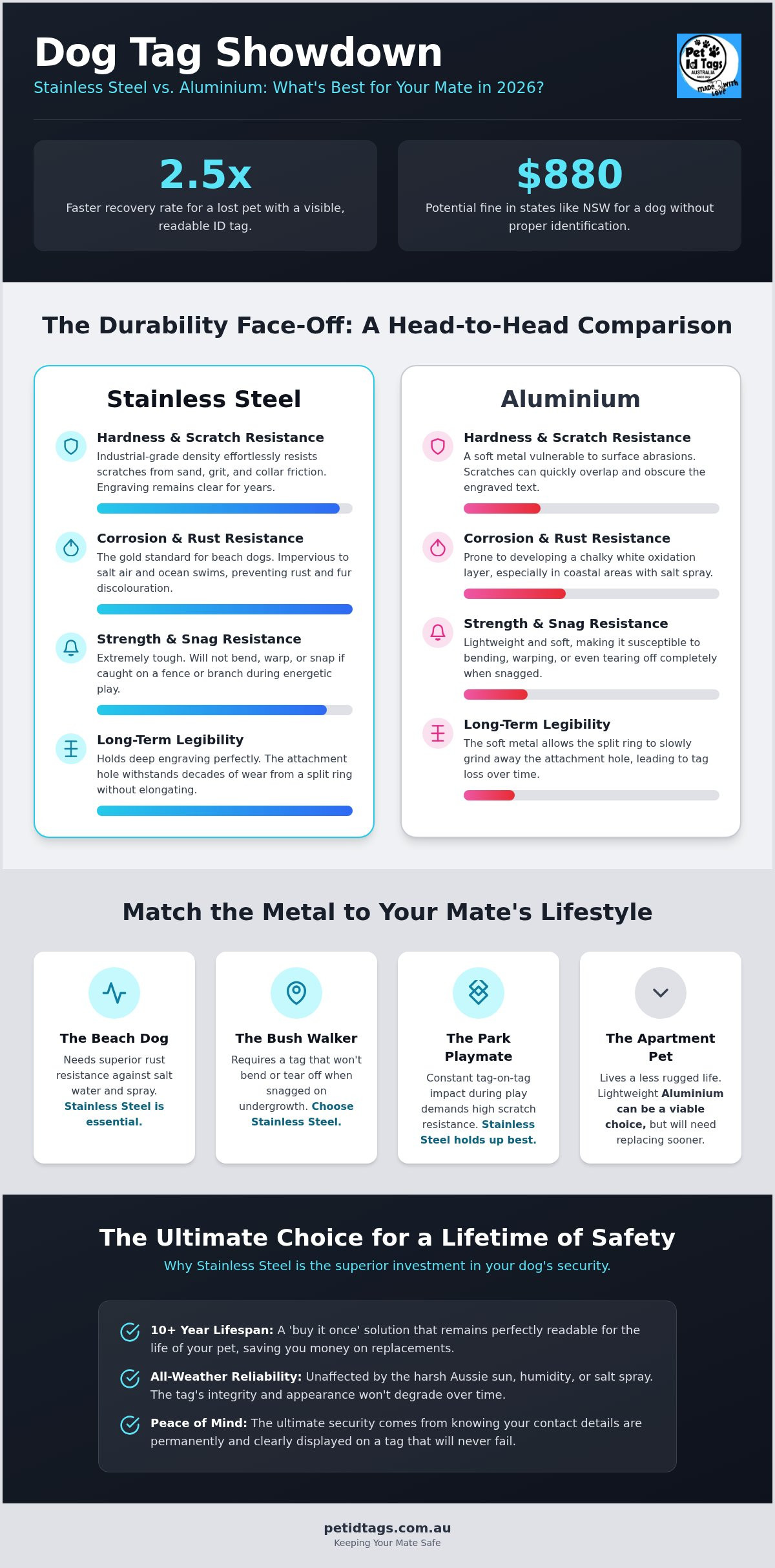
Choosing between stainless steel vs aluminium dog tags comes down to one primary factor: how hard your pet plays. While both materials serve as effective pet identification tags, they behave very differently under the pressure of daily life. Stainless steel is a dense, high-grade alloy designed for industrial-level wear and maximum longevity. Aluminium is a lightweight, softer metal that offers a budget-friendly entry point but lacks the structural integrity required for a lifetime of use.
Hardness and Scratch Resistance
The hardness of your pet's tag determines how long the contact details remain readable. Sand, grit, and the constant friction of a metal collar ring act like sandpaper on a tag's surface. Stainless steel resists this grinding effect effortlessly, maintaining its polished finish. Aluminium is much more vulnerable to surface scratches. Over time, these tiny abrasions can overlap and obscure the text, making the engraving difficult to read in an emergency. Active dogs who spend their days in the backyard or trekking through the bush require the hardness of steel to ensure their ID doesn't fade into a silver blur.
Corrosion and the Aussie Coastal Factor
Australia's coastal lifestyle is notoriously tough on metals. Salt air and frequent ocean swims cause many materials to oxidise or pit. Stainless steel is the gold standard for beach-loving dogs because it's naturally resistant to rust and corrosion. It won't leave unsightly grey marks on your dog's fur or lose its structural strength over time. Aluminium can develop a chalky white oxidation layer when exposed to harsh salt environments. If your mate loves the beach, choosing a material that won't degrade in the salt spray is a non-negotiable safety step.
Owners of smaller breeds often worry that steel is too heavy for their pet. This is a common myth. A standard stainless steel tag usually weighs less than 10 grams, a weight that is negligible for almost any dog. When evaluating stainless steel vs aluminium dog tags for toy breeds, the minor weight difference is far outweighed by the security of a tag that won't bend or snap. Aluminium is prone to warping if it gets snagged on a branch or fence. Steel provides a 'buy it once' solution that keeps your mate safe for a lifetime without sacrificing their comfort.
Matching the Material to Your Pet’s Lifestyle
Your dog's daily routine dictates which metal will survive the distance. Choosing between stainless steel vs aluminium dog tags isn't just about price. It's about matching the material to the specific environmental stressors your pet faces. While a pampered indoor cat has different needs than a farm dog, the goal remains the same: a tag that stays attached and readable for the long haul.
- The Beach Dog: If your mate spends every weekend in the surf, salt water is your biggest enemy. Comparing stainless steel and aluminum shows that steel is far superior in preventing pitting and rust in coastal environments.
- The Bush Walker: Dogs that push through heavy scrub or thick undergrowth need a tag that resists snagging. A soft aluminium tag can easily bend or tear away from its mounting when caught on a branch.
- The Multi-Pet Home: When dogs play, their tags constantly hit each other. This repetitive 'tag-on-tag' impact can dent and scratch softer metals, whereas stainless steel remains pristine despite the roughhousing.
The 'Apartment Pet' who primarily walks on a lead around city blocks might find lightweight aluminium a viable choice. It is easy on the neck and offers a wide variety of colours. However, even for city dogs, the durability of the material determines how often you will be back at the shops for a replacement.
Environmental Stressors to Consider
Australia's high humidity and intense UV levels affect materials differently. Humidity often leads to rapid discolouration in lower-grade metal alloys. While aluminium tags are frequently anodised in bright colours, these pigments are susceptible to UV fading over time. A vibrant red tag can quickly turn into a dull, washed-out pink after a summer in the Aussie sun. Stainless steel maintains its professional, high-polish look regardless of the weather. It doesn't rely on surface coatings that can peel or bleach, ensuring the aesthetic stays as sharp as the day you bought it.
Activity Levels and Mechanical Wear
One often overlooked failure point is the attachment hole. We call this the 'split ring test'. Because aluminium is a soft metal, the constant movement of the split ring gradually grinds away at the hole. Over several years, this hole elongates into an oval shape until the metal becomes thin enough to snap. This is the most common reason tags are lost during exercise. Knowing how to attach dog tag to collar correctly is vital, but starting with a high-strength material is the only way to prevent this mechanical failure. For heavy-duty dogs, the structural integrity of steel is the only reliable choice for permanent safety. For a tag that stands up to the toughest Aussie conditions, explore our range of stainless steel dog tags.
Engraving Longevity: Why Depth Matters for Safety
An unreadable dog tag is the primary reason lost pets aren't returned quickly to their owners. While many retailers offer cheap surface-etched or printed options, these often fail within six months of daily wear. When comparing stainless steel vs aluminium dog tags, the most critical factor is how deep the engraving can actually go. Surface marking merely discolours the top layer of metal. In contrast, deep mechanical engraving carves a physical groove into the material. Because stainless steel is a harder metal, it can hold these deep channels without the edges collapsing or wearing away over time.
Understanding the fundamental properties of aluminum and stainless steel helps explain why steel is the superior choice for safety. Aluminium is soft. If you engrave it too deeply, the tag becomes structurally weak. If you engrave it too shallowly, the text disappears as the soft surface gets scratched by the collar ring. Stainless steel provides the perfect balance of strength and density. It allows for deep, high-contrast engraving that survives years of friction against other tags or the grit found in the Aussie backyard.
The Science of Legibility
Legibility isn't just about the size of the font. It's about contrast and the physical depth of the letters. Over time, friction from the collar and the environment acts like sandpaper. This is why pet id tags fade and become useless in emergency situations. A deep-engraved stainless steel tag maintains its readability because the text sits below the surface of the metal. Even if the face of the tag gets scratched, the recessed letters remain clear and easy to read in low-light conditions.
What Information to Prioritise
Space is limited on a tag, especially for smaller breeds. You must be strategic about what you include to ensure the text remains large enough to read. We recommend a 'Mobile First' rule for all Australian pet owners. Your current mobile number is the fastest way for a finder to contact you. If you need inspiration on how to fit everything from medical alerts to multiple phone numbers, check out these pet id tag engraving ideas. By prioritising the most vital data on a durable stainless steel surface, you create a permanent safety net for your mate.
Key Features to Check Before You Buy
The technical specifications of a tag are just as important as the material itself. When you are weighing up stainless steel vs aluminium dog tags, you must look beyond the surface shine. The sweet spot for a durable tag is a thickness between 1.5mm and 2mm. This provides enough depth for deep engraving without making the tag cumbersome. Thinner aluminium tags often feel like flimsy tokens. They are easily bent by a determined dog or crushed if your pet decides to give them a chew. Steel remains rigid and maintains its shape even after years of being knocked against water bowls and fences.
Comfort and skin safety are the next priorities. High-quality tags undergo a rigorous polishing process to remove sharp burs that can catch on fur or irritate the neck. If your mate has sensitive skin or known allergies, stainless steel is the superior choice. It is naturally hypoallergenic and won't react with the skin or discolour the coat like some lower-grade aluminium alloys. A well-finished steel tag feels smooth to the touch and sits comfortably against the chest, ensuring your pet isn't constantly scratching at their collar.
Size and Weight Considerations
You should match the tag diameter to your breed's size and collar width. A 20mm tag is perfect for toy breeds and cats, while larger dogs usually require 30mm or 35mm options to ensure the contact details remain legible from a distance. Don't let the weight of steel deter you. While steel is denser than aluminium, a standard 30mm tag only weighs about 10 grams. This is a negligible weight for almost any dog. Choosing a slightly larger tag allows for better information density, ensuring your mobile number and address are clear and easy to read in an emergency.
Attachment Security
The hole where the split ring attaches is a common failure point in the stainless steel vs aluminium dog tags comparison. In softer aluminium tags, the constant friction of the ring can slowly 'saw' through the metal until the tag drops off. Stainless steel is much more resistant to this mechanical wear. For owners who frequently swap between different harnesses or collars, we recommend using a dog tag quick clip australia owners trust. These clips provide a secure, reinforced connection that prevents the 'lost tag' scenario during rough play in the backyard or bush.
Invest in your pet's long-term safety by choosing from our range of high-grade stainless steel dog tags designed for the active Australian lifestyle.
Why Stainless Steel is the Ultimate Choice for 2026
When you look at the long-term cost of pet ownership, the stainless steel vs aluminium dog tags debate has a clear financial winner. This is best understood through a 'cost per year' analysis. A budget-friendly aluminium tag might cost less upfront, but it often requires replacement every 12 to 18 months due to fading text or worn attachment holes. Over a dog's 15-year lifespan, you could end up buying ten or more tags. A single high-grade stainless steel tag is a 'buy it once' investment. It remains structurally sound and perfectly readable for the life of your pet, saving you money and the hassle of constant re-ordering.
Aesthetic permanence is another major factor for modern pet owners. Stainless steel doesn't just survive; it thrives. It maintains a bright, polished look that doesn't dull or pit like softer alloys. Unlike aluminium, which can oxidise and leave grey or black marks on a light-coloured coat, steel is clean and non-reactive. Your mate's tag will look just as professional after five years of backyard play as it did on the day it arrived in the post. This permanence ensures that in a high-stress emergency, a stranger can clearly read your contact details without having to squint at a scratched surface.
The final verdict for 2026 is straightforward. Aluminium remains a viable choice for temporary identification or for indoor-only pets where environmental stress is non-existent. However, for the 48% of Australian households that own a dog, stainless steel is the only material that provides total peace of mind. It is the gold standard for anyone who values safety, durability, and long-term value for money.
The Pet ID Tags Australia Advantage
Pet ID Tags Australia specialises in a high-grade stainless steel collection specifically designed for the active Aussie lifestyle. We understand that your dog isn't just sitting on the couch; they are at the beach, in the bush, and running through the scrub. Our commitment to deep, mechanical engraving ensures that your pet's vital information is carved into the metal, not just marked on the surface. With a wide variety of shapes available in our durable steel range, you don't have to sacrifice style for the sake of security.
Ready to Secure Your Mate’s Safety?
Upgrading to a premium material is the simplest way to ensure your dog can always find their way home. By choosing stainless steel, you are prioritising three things:
- Unmatched Durability: A tag that won't bend, snap, or wear through at the hole.
- Permanent Legibility: Deep-engraved text that remains clear for 10 years or more.
- Coastal Resistance: A rust-proof finish that handles salt air and ocean swims with ease.
Don't wait until a tag becomes unreadable or falls off during a walk. Browse our range of durable Stainless Steel Dog Tags here and give your mate the protection they deserve.
Give Your Mate a Permanent Voice
Choosing the right identification for your pet is a small decision with massive safety implications. We've explored the functional differences in the stainless steel vs aluminium dog tags debate, highlighting why material choice determines how quickly a lost pet returns home. While aluminium serves a purpose for indoor pets or temporary needs, it cannot match the structural integrity of high-grade steel in the Aussie bush or at the beach.
Investing in a deep-engraved stainless steel tag ensures your contact details remain legible for a decade or more. These tags are built for strength and long-lasting identification. They are resistant to rust and wear in harsh Aussie conditions, providing a permanent solution that softer metals simply can't offer. It's the most reliable way to ensure your dog is always identifiable, no matter where their adventures take them.
Don't risk an unreadable tag when your mate's safety is on the line. Shop our Engraved & Durable Stainless Steel Dog Tags to provide your dog with a lifetime of security. It's a simple upgrade that offers total peace of mind for every Australian pet owner. Your dog relies on you to make the right choice; make it a durable one.
Frequently Asked Questions
Is stainless steel or aluminium better for a dog tag?
Stainless steel is superior for most active pets due to its hardness and corrosion resistance. While aluminium is lighter and offers more colours, it wears down much faster in real-world conditions. For a reliable, permanent solution, steel is the clear winner in the stainless steel vs aluminium dog tags comparison. It ensures the tag remains readable for the life of your pet, providing a professional and durable safety net that aluminium simply can't match.
Do stainless steel dog tags rust at the beach?
High-grade stainless steel is specifically designed to resist rust and corrosion from salt water. Unlike lower-grade alloys, it won't pit or degrade after a trip to the coast. This makes it the ideal choice for dogs that love ocean swims. You should still rinse the tag with fresh water occasionally to remove salt residue, but the metal itself is built to handle the Aussie beach lifestyle without losing its polished finish or structural strength.
Are stainless steel tags too heavy for small dogs or cats?
The weight difference is negligible for almost any pet. A standard 20mm stainless steel tag for a cat or toy breed usually weighs under 5 grams. This is extremely light and won't cause any discomfort or strain on the neck. The added durability of steel means the tag won't bend or snap off, which is a common problem with very thin aluminium alternatives. Your pet won't even notice the difference, but you'll notice the longevity.
Why does the engraving on my aluminium tag keep fading?
Aluminium is a soft metal, so surface-level engraving or printing wears away quickly through constant friction. Every time the tag rubs against a collar ring or another tag, a tiny layer of metal is removed. Because aluminium lacks the density of steel, these shallow marks disappear within months. Deep mechanical engraving on a harder material like stainless steel is the only way to ensure your contact details stay visible for the next decade of adventures.
Can I get my stainless steel tag engraved on both sides?
Most high-quality stainless steel tags allow for engraving on both sides. This is an excellent way to maximise space for:
- Multiple mobile contact numbers.
- Your home address or suburb.
- Critical medical alerts or microchip numbers.
What is the most durable dog tag for a dog that swims?
A deep-engraved stainless steel tag is the most durable option for dogs that swim frequently. It won't rust in salt water or corrode in chlorinated pools. In the stainless steel vs aluminium dog tags debate for swimmers, steel is the only material that maintains its structural integrity after constant exposure to moisture. It also resists the grinding effect of wet sand that quickly ruins softer metal surfaces, keeping your pet's identification safe and readable.
How often should I replace my pet's ID tag?
You should check the tag's legibility every six months, but a high-quality steel tag can last over a decade. Replace the tag if you notice:
- The phone number is becoming difficult to read.
- The attachment hole has become thin or oval-shaped.
- The metal is bent or showing signs of stress.
Does stainless steel discolour a white dog's fur?
Stainless steel is non-reactive and won't leave grey or green marks on your pet's coat. Some lower-quality aluminium tags or cheap alloys can oxidise, especially when wet, leading to unsightly staining on white or light-coloured fur. Because stainless steel is hypoallergenic and highly resistant to corrosion, it stays clean and polished. It's the safest choice for maintaining your dog's natural coat colour and skin health, even for pets with sensitive skin or allergies.