

If your dog went missing in the middle of the Aussie bush today, would their ID tag actually be readable, or has it worn down to a useless blank disc? It's a question many owners don't consider until it's too late. When comparing stainless steel vs aluminium dog tags, the decision isn't just about aesthetics; it's about ensuring your contact details remain clear after years of salt water, scrub, and backyard wrestling.
We know you want a tag that doesn't jingle constantly or turn your pup's fur grey. You're looking for a reliable solution that won't rust at the beach or snap off during a run. This 2026 buyer's guide promises to help you discover which material survives the toughest conditions to keep your mate safe for a lifetime. We'll break down the technical differences in durability, engraving depth, and value for money. By the end, you'll know exactly which metal provides the peace of mind you need when your dog is out exploring the great outdoors.
Key Takeaways
- Understand the fundamental differences in metal hardness and how they impact the long-term safety of your pet.
- Discover which material survives the harsh Australian salt spray without corroding or discolouring your pet's coat.
- Compare the durability of stainless steel vs aluminium dog tags to find a "buy it once" solution for your active mate.
- Learn why deep mechanical engraving is essential for keeping contact details legible even after years of scratching and wear.
- Identify the ideal thickness and finish required to prevent tags from bending or irritating your dog's skin.
Stainless Steel vs Aluminium Dog Tags: The Durability Showdown
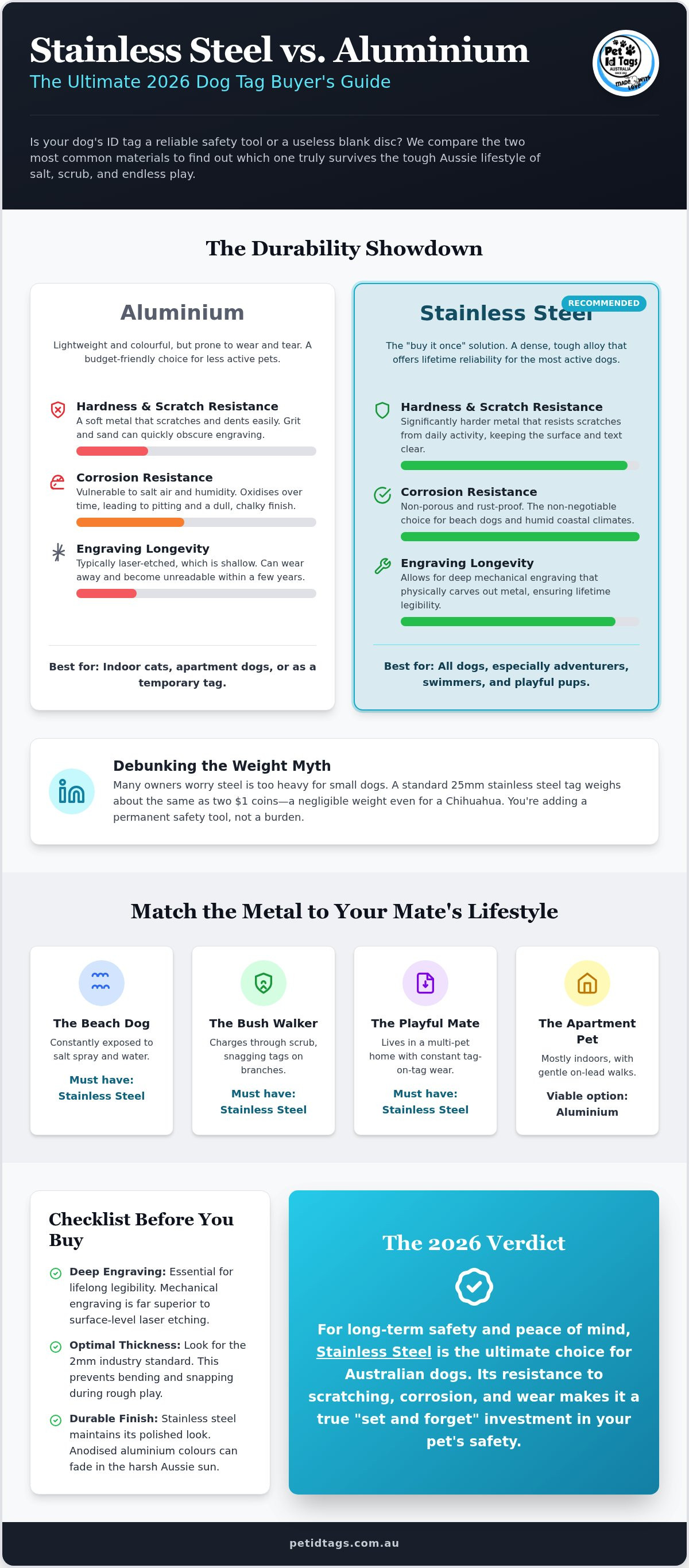
Choosing between stainless steel vs aluminium dog tags comes down to one primary factor: how hard is your dog's life? Aluminium is a soft, lightweight metal that serves as a popular, budget-friendly entry point for many pet owners. However, its low density means it naturally wears down under constant friction. Stainless steel is the heavy-duty alternative. It's a dense alloy engineered for high-impact environments. While aluminium might look great on day one, it often requires replacement every few years as the metal thins and the edges warp.Hardness and Scratch Resistance
Stainless steel is significantly harder than aluminium. This isn't just a technical spec; it's a critical safety feature. When your dog runs through the backyard or rolls in the dirt, grit and sand act like sandpaper against the tag. Stainless steel resists this grinding effect, maintaining a smooth surface. Aluminium is far more vulnerable. It develops surface scratches almost immediately, which can "smear" the metal and eventually obscure the text. If your dog is active, they need the hardness of steel to ensure their ID remains legible for ten years or more.
Corrosion and the Aussie Coastal Factor
Australia's coastal humidity is a nightmare for inferior metals. Salt air accelerates oxidation. You've likely seen old aluminium tags that look dull, pitted, or covered in a white, powdery residue. This oxidation doesn't just look bad; it weakens the metal, often leading to the hole snapping open. Stainless steel is the non-negotiable choice for dogs who love the beach. It's a non-porous material that won't rust or corrode, even if your mate spends every morning swimming in the surf. It keeps its polished finish regardless of salt or sun exposure.
Debunking the Weight Myth
Many owners worry that stainless steel is too heavy for smaller breeds. It's a common misconception. While steel is denser than aluminium, a standard 25mm round tag weighs roughly the same as two $1 coins. This is negligible even for a Toy Poodle or a Chihuahua. Modern manufacturing allows us to create tags at the 2mm industry standard thickness, providing maximum strength without adding bulk. You aren't weighing your pet down; you're giving them a permanent safety tool that won't bend or snap during rough play.
When you look at the long-term utility, the comparison is clear:
- Aluminium: Lightweight and colourful, but prone to bending, scratching, and oxidation.
- Stainless Steel: The "buy it once" investment. It's rust-proof, scratch-resistant, and maintains deep engraving for a lifetime.
Matching the Material to Your Pet’s Lifestyle
Your dog's daily routine is the true deciding factor when choosing between stainless steel vs aluminium dog tags. A material that works for a city-dwelling Pug might fail a Kelpie working on a station within months. Matching the metal to the environment ensures the tag remains a functional safety tool rather than a piece of decorative debris lost in the grass.
For the "Beach Dog" profile, the choice is made for you. Salt water and sea spray are incredibly aggressive. While aluminium can be anodised in bright colours, that protective layer eventually thins. Once the raw aluminium is exposed, it oxidises rapidly in coastal air. Stainless steel is the only reliable option for swimmers. It remains indifferent to salt, maintaining its structural integrity and polished finish even after years of daily dips in the surf.
The "Bush Walker" profile presents a different challenge: mechanical force. If your mate loves charging through heavy scrub or thick lantana, their tag will snag. Aluminium is a soft metal; under enough pressure, the tag can bend or the attachment hole can simply stretch and tear. Stainless steel provides the rigidity needed to resist these snags. It stays flat and secure, ensuring your contact details don't get left behind on a stray branch.
If you live in a multi-pet household, you've likely heard the constant "clink" of tags hitting each other during play. This "tag-on-tag" wear is a silent killer for aluminium. The constant friction acts like a file, slowly erasing the engraving. Steel is hard enough to withstand this daily battering without losing its legibility. However, for an "Apartment Pet" who only leaves the house for lead-walks on pavement, lightweight aluminium is a viable, budget-friendly choice that offers a wider range of colours to match their harness.
Environmental Stressors to Consider
Australia’s climate is uniquely harsh. High humidity in northern regions can cause rapid discolouration in lower-grade metal alloys. Furthermore, our extreme UV levels are notorious for bleaching the vibrant dyes used in anodised aluminium. A bright red tag can fade to a dull pink in a single summer. Stainless steel maintains a professional, high-contrast look regardless of the weather or sun exposure, making it the superior "set and forget" safety investment.
Activity Levels and Mechanical Wear
The most common "hidden failure" of a dog tag occurs at the attachment point. This is the "split ring" test. Over time, the constant swinging of the tag causes the metal at the top hole to wear thin. Because aluminium is soft, this hole can eventually wear through completely, causing the tag to fall off unnoticed. Stainless steel is far more resistant to this type of abrasive wear. To keep your pet's ID secure, you should also learn how to attach dog tag to collar using high-quality connectors that won't fail under pressure.
If you need a tag that survives the backyard and the beach, exploring our range of deep-engraved stainless steel tags is the best way to ensure your mate's safety for years to come.
Engraving Longevity: Why Depth Matters for Safety
An unreadable tag is as good as no tag at all. If your dog wanders off and is found by a neighbour or a ranger, they need to see your contact details instantly without needing a magnifying glass or a microchip scanner. The "unreadable tag" risk is the primary reason lost pets aren't returned quickly. When evaluating stainless steel vs aluminium dog tags, you must look past the initial appearance and consider how the text is actually applied to the metal.
Many budget-friendly aluminium tags rely on laser marking or surface etching. These methods only burn a thin layer of the surface or remove the coloured anodised coating. While they look sharp on day one, they're incredibly vulnerable to friction. Within six months of your dog scratching their neck or the tag rubbing against a D-ring, that surface-level text can simply vanish. Stainless steel is the professional choice because its density allows for deep mechanical engraving. This process carves a physical channel into the metal that survives years of abrasive contact with dirt, sand, and other collar hardware.
The technical advantage of steel is its structural integrity. Because the alloy is so strong, we can cut deep into the surface without making the tag brittle or prone to snapping. Aluminium is a softer metal; if engraved too deeply, the tag can warp or the metal can "smear" back into the grooves, making the letters look muddy. For a permanent safety solution, the deep-cut grooves of a steel tag remain the gold standard for long-term legibility.
The Science of Legibility
Contrast and readability are vital, especially in low-light conditions when a lost pet is most likely to be spotted. Deep engraving creates natural shadows within the letters, making the information pop against the polished metal. Unlike surface-printed tags that fade under our harsh UV levels, deep-engraved steel remains clear for a decade or more. You can learn more about why pet id tags fade and how to choose materials that resist the bleaching effects of the Australian sun.
What Information to Prioritise
When working with the limited real estate of a dog tag, clarity is more important than a long list of details. We recommend the "Mobile First" rule: your current mobile number should be the largest and clearest piece of text. Avoid cluttering the tag with your full home address, as this can force the engraver to use a smaller, less legible font. For more layout inspiration, check out our pet id tag engraving ideas to ensure your mate's tag is as functional as it is durable.
Key Features to Check Before You Buy
While the material debate of stainless steel vs aluminium dog tags is central to your decision, the physical build quality is what prevents a tag from failing in the field. High-quality manufacturing isn't just about the metal; it's about the specifications that ensure the tag remains comfortable and secure. A well-built tag should feel substantial and look finished, rather than like a flimsy piece of scrap metal.
Metal thickness is a critical indicator of quality. You should look for a thickness between 1.5mm and 2mm. Many mass-produced aluminium tags are only 1mm thick, which makes them prone to bending or snapping under the pressure of a snagged branch. A 2mm stainless steel tag provides the structural rigidity required for a lifetime of use. It won't warp, even if your dog is a heavy-duty puller or a rough-and-tumble player.
Edge finishing is often overlooked but essential for your pet's comfort. Cheaply stamped tags often have microscopic burrs or sharp edges that can cause skin irritation or matting of the fur. Professional-grade tags undergo a thorough deburring process to ensure every edge is perfectly smooth. Additionally, consider the hypoallergenic properties of your choice. High-grade stainless steel is an inert metal, making it the safest option for dogs with sensitive skin or allergies. Unlike some aluminium alloys that can leave a greyish discolouration on white fur, steel remains clean and non-reactive.
Size and Weight Considerations
Selecting the right diameter is about balancing visibility with comfort. A 25mm tag is the standard for most medium-to-large breeds, providing enough surface area for legible contact details. For toy breeds, a 20mm tag reduces bulk without sacrificing safety. While steel is denser than aluminium, the weight difference is negligible for the dog. A well-fitted collar distributes the weight of a 2mm steel tag so effectively that most pets don't even realise it's there.
Attachment Security
The best tag in the world is useless if the attachment hardware fails. Standard split rings are the most common choice, but they can stretch over time. For owners who frequently swap tags between harnesses and collars, a dedicated connector is a superior solution. You can find more information in our dog tag quick clip australia guide. Ensuring the attachment hole is reinforced and positioned correctly prevents the "tear-through" effect common in softer metals.
To ensure your mate has the best protection available, view our full range of high-grade stainless steel dog tags today.
Why Stainless Steel is the Ultimate Choice for 2026
When you look at the long-term economics of pet safety, the comparison between stainless steel vs aluminium dog tags becomes a simple "cost per year" calculation. A budget-friendly aluminium tag might save you a few dollars today, but if it requires replacement every 18 months due to fading or a worn attachment hole, it's a false economy. High-grade stainless steel is a one-time investment. A single steel tag can easily remain functional and legible for over a decade, making it the most cost-effective choice for any pet owner who values safety over a low upfront price.
Beyond the financial aspect, there is the matter of aesthetic permanence. Stainless steel doesn't develop the dull, pitted surface or grey oxidation common in older aluminium. It maintains its polished, professional look regardless of how many times your dog charges through the scrub or dives into the surf. This isn't just about vanity; it's about reliability. In an emergency, you need absolute certainty that your contact details are readable by a stranger in low light or stressful conditions. Steel provides that peace of mind.
The final verdict is clear. If your pet lives an active Australian lifestyle, stainless steel is the only material that truly meets the brief. Aluminium remains a viable option for temporary tags or for indoor cats and lead-only city dogs who face zero environmental stress. For everyone else, the durability of steel is the professional standard for 2026.
The Pet ID Tags Australia Advantage
We specialise in a high-grade stainless steel collection specifically engineered for the active Aussie mate. Our manufacturing process focuses on deep, permanent engraving that won't rub off or fade in the sun. We offer a wide variety of shapes in our durable steel range, ensuring you don't have to sacrifice style for structural integrity. Each piece is finished to our exacting standards, providing a smooth, hypoallergenic safety tool that protects your dog without irritating their skin.
Ready to Secure Your Mate’s Safety?
Upgrading to a professional-grade identifier is the simplest way to ensure your dog can always find their way home. If you're tired of replacing bent, scratched, or unreadable tags, it's time to choose a material that works as hard as they do. Remember the three core benefits: unmatched durability in coastal conditions, permanent legibility through deep engraving, and a lifetime of reliable use.
Don't leave your pet's safety to chance with inferior materials. Browse our range of durable Stainless Steel Dog Tags here and give your mate the protection they deserve.
Invest in Permanent Protection for Your Mate
Choosing between stainless steel vs aluminium dog tags is ultimately a choice between temporary convenience and permanent safety. While aluminium offers a lightweight start, it simply cannot match the rugged resilience required for the Aussie bush or beach. A high-quality stainless steel tag is built for strength and long-lasting identification. It remains resistant to rust and wear, ensuring your contact details don't disappear when they're needed most.
We've seen how deep-engraved text provides the only fail-safe way for a stranger to return your dog quickly. By prioritising a 2mm thick steel tag, you're investing in a "buy it once" solution that stays legible for a decade or more. It's the most reliable way to protect your pet in every backyard, beach, and bushland adventure. Don't wait for an old tag to fail or fade before you take action.
Ready to upgrade? Shop our Engraved & Durable Stainless Steel Dog Tags today and enjoy the peace of mind that comes with professional-grade craftsmanship. Your mate deserves a tag that's as tough as they are.
Frequently Asked Questions
Is stainless steel or aluminium better for a dog tag?
Stainless steel is the superior choice for any pet that leads an active lifestyle. While aluminium offers a lightweight and colourful alternative, it lacks the hardness required to resist daily wear and tear. Steel is a dense alloy that survives constant scratches from sand, grit, and rough play. It ensures your contact details remain readable for a lifetime rather than just a few months. For Australian conditions, steel is the professional standard.
Do stainless steel dog tags rust at the beach?
High-grade stainless steel will not rust when exposed to salt water or sea spray. It is a non-porous material specifically chosen for its resistance to corrosion in harsh environments. Unlike cheaper metal alloys or anodised aluminium, steel won't develop pits or a dull, oxidised finish after a trip to the beach. It is the only reliable option for dogs that love swimming in the surf or living in coastal humidity.
Are stainless steel tags too heavy for small dogs or cats?
Weight is rarely an issue for small dogs or cats when using modern manufacturing standards. A 2mm thick stainless steel tag is substantial enough for durability but light enough for a Toy Poodle or a Burmese cat to wear comfortably. A standard 20mm steel tag weighs roughly the same as two $1 coins. Most pets don't notice the tag once it's attached; the safety benefits far outweigh the minor weight difference.
Why does the engraving on my aluminium tag keep fading?
Legibility issues in aluminium often stem from the metal's natural softness. When you compare stainless steel vs aluminium dog tags, the latter is far more prone to surface friction. Every time the tag rubs against a D-ring or your dog scratches their neck, a tiny layer of metal is removed. Shallow laser marking or surface etching is quickly erased by this constant abrasive action. Deep mechanical engraving on steel solves this problem permanently.
Can I get my stainless steel tag engraved on both sides?
Most stainless steel tags can be engraved on both the front and back. Because the metal is so strong and dense, deep engraving on one side doesn't weaken the other. This allows you to organise your information effectively. You might put your pet's name and a primary mobile number on the front; then use the back for secondary contacts, medical alerts, or microchip details. It's a highly efficient use of the available space.
What is the most durable dog tag for a dog that swims?
For dogs that spend time in pools, dams, or the ocean, stainless steel is the most durable option available. It remains indifferent to moisture and chemicals like chlorine. Aluminium can oxidise and become brittle over time when frequently wet, leading to the attachment hole snapping open. A 2mm stainless steel tag maintains its structural integrity and polished look regardless of how often your mate goes for a paddle or a serious swim.
How often should I replace my pet's ID tag?
You should inspect your pet's ID tag at least once a month for signs of wear or fading. If you use aluminium, you'll likely need a replacement every year or two as the text becomes muddy. However, a high-grade stainless steel tag is designed to be a permanent solution. Unless your contact details change, a well-made steel tag shouldn't need replacing for a decade or more. This makes it the best long-term value for money.
Does stainless steel discolour a white dog's fur?
Stainless steel is an inert and hypoallergenic metal that will not discolour your dog's fur. Some lower-quality aluminium tags or cheap alloys can react with skin oils and water, leaving a greyish or black stain on white or light-coloured coats. Steel is non-reactive and remains clean even after heavy exercise. It is a safe and professional choice for breeds like Samoyeds or white Labradors that need to keep their coat looking pristine.