

You head down to the local beach for an off-leash run, but within weeks, your furry mate's new ID tag is covered in rust spots and the engraving is scratched backyard-deep. It is an incredibly common frustration for coastal pet parents who discover that standard metals simply fail under the harsh Australian surf. For true peace of mind during beach play, choosing genuine marine grade stainless steel dog tags saltwater environments cannot destroy is the only way to ensure your pet stays safely identified.
We understand that your dog is a vital member of the family, meaning their safety requires dependable, long-term solutions rather than cheap materials that snap or fade. This guide will reveal why 316-grade marine steel is the only choice for beach-loving Aussie dogs and how to pick a tag that never rusts or degrades. We will examine the exact material science that prevents pitting corrosion, discuss local council identification compliance, and explain how professional fibre engraving keeps your emergency contact information readable for the life of your pet.
Key Takeaways
- Learn why standard 304-grade steel suffers from rapid tea staining and how investing in marine grade stainless steel dog tags saltwater environments cannot degrade protects your furry mate.
- Understand the role of Molybdenum, the crucial alloy element in 316-grade steel that actively prevents chloride pitting and structural damage from sea salt.
- Discover the difference between surface marking and deep-mill fibre engraving, which keeps your emergency contact information readable despite heavy sand abrasion.
- Find out how to choose the ideal tag size, weight, and corner-free shape to ensure maximum comfort and safety during your dog's coastal adventures.
Why Saltwater Is the Ultimate Test for Your Furry Mate’s ID Tag
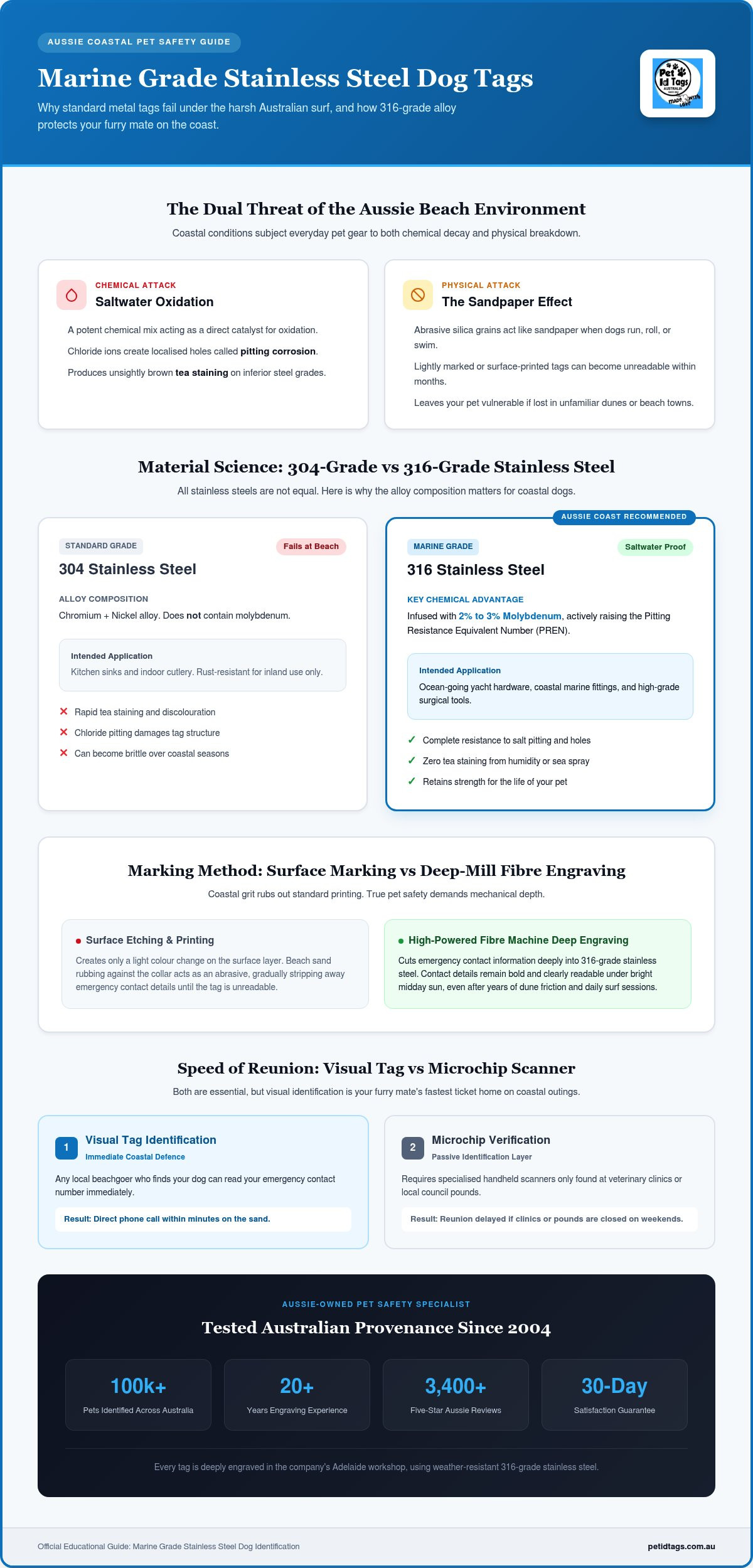
Saltwater isn't just water. It's a potent chemical mix that acts as a catalyst for oxidation. This process is even faster when combined with the humid coastal air found across Australia. Many pet owners assume any tag labelled "stainless steel" will last. The reality of beach life quickly proves otherwise. Inferior metals react almost immediately to chloride ions in the sea. This reaction leads to pitting, which is a form of localised corrosion that creates small holes in the metal. Over time, this compromises the tag's structural integrity.
If you've ever noticed brown, rust-like spots on a supposedly rust-proof tag, you've seen "tea staining". This usually happens on 304-grade steel. While 304 is fine for inland use, it lacks the chemical resistance needed for the coast. According to the classification of SAE steel grades, only specific alloys like 316-grade contain molybdenum. This element is the secret to resisting salt-induced corrosion. Selecting marine grade stainless steel dog tags saltwater won't destroy is the only way to ensure your pet's identification remains intact and professional for years to come.
The 'Sandpaper Effect' of Coastal Life
The Aussie beach environment presents a dual threat to pet gear. While salt attacks the metal chemically, sand provides a constant physical assault. Sand is highly abrasive. When your furry mate runs, rolls, or swims, these tiny grains act like sandpaper against their ID tag. Surface-printed or lightly etched tags often become unreadable within months. This creates a massive safety risk. If your pet wanders off during a holiday in an unfamiliar coastal town, a scratched and faded tag is useless. You need identification that withstands both the chemical bite of the ocean and the physical grind of the dunes.
Visual Identification: Your First Line of Coastal Defence
A readable tag is your fastest ticket to a reunion. While microchips are essential and legally required, they are a passive form of identification. A beachgoer who finds your dog cannot read a microchip without a scanner. This usually involves a trip to a vet or council pound, which can be closed on weekends. Visual identification allows for an immediate phone call. Understanding the balance between a pet tag vs microchip australia is vital for total security. Deep, bold engraving on a high-quality 316-grade stainless steel tag ensures your contact details are clear even in the bright glare of the midday sun. It provides the peace of mind that if your mate disappears over a dune, the person who finds them can bring them home in minutes.
Understanding Marine Grade: 316-Grade vs Standard Stainless Steel
Many people assume that the word "stainless" means a metal is immune to all forms of damage. In reality, stainless steel is a broad category of alloys with wildly different performance levels. For Aussie pet owners living near the coast, understanding these differences is vital for long-term safety. 316-grade stainless steel is the professional standard for marine fittings and high-end surgical tools. It is specifically designed to withstand the harshest environments on earth. This is why choosing marine grade stainless steel dog tags saltwater won't corrode is the only way to ensure your pet's safety remains a priority.
The Chemistry of Corrosion Resistance
316-grade stainless steel is a molybdenum-alloyed steel that resists salt-induced pitting. While standard steel contains chromium and nickel, 316-grade adds 2 to 3 percent molybdenum to the mix. This chemical addition significantly increases the Pitting Resistance Equivalent Number (PREN). It means the metal won't develop those tiny, structural holes that lead to tag failure in high-salinity environments. By choosing this material, you're investing in a product that maintains its strength even after years of daily surf sessions. Ensuring your mate has a permanent, readable tag aligns with the global importance of pet identification for animal welfare.
Why Grade 304 Fails the Aussie Beach Test
You might find cheaper "stainless" tags at large retailers or online marketplaces, but these are typically made from 304-grade steel. This is the same material used for kitchen sinks and indoor cutlery. It works well in your kitchen, but it isn't saltwater-proof. It is merely rust-resistant under normal, non-coastal conditions. When exposed to the Aussie coast, 304-grade steel suffers from rapid tea staining and surface degradation. This leads to a tag that looks dirty and eventually becomes brittle.
Your furry mate deserves a tag made from the same high-specification steel used on ocean-going yachts. If you want a solution that lasts the life of your pet, you can browse our range of stainless steel dog tags crafted right here at Pet ID Tags Australia. We've helped identify over 100,000 pets using these durable materials, providing a level of security that budget alloys simply can't match. It’s about more than just looks; it's about a reliable connection between you and your dog that never snaps or fades. When you choose 316-grade, you're choosing the gold standard for coastal pet safety.
Built for the Coast: Fibre Engraving and Deep-Mill Readability
Choosing the right base material is only half the battle. Your tag requires a marking method that matches the durability of the metal itself. In our Adelaide workshop, our team carries over 20 years of experience engraving identification tags for cats and dogs. We know that standard surface printing cannot survive the beach. Purchasing marine grade stainless steel dog tags saltwater environments cannot destroy means pairing premium 316-grade steel with true deep-mill engraving. Even the toughest metal fails to protect your furry mate if the emergency contact information wears away after a few months of active use.
Fibre Engraving vs. Traditional Methods
Traditional cosmetic lasers merely stain the surface of the metal or burn away a thin top coating. This surface laser marking quickly disappears under real-world coastal conditions. In contrast, our high-powered fibre engraving machines use concentrated light beams to physically vaporise and alter the metal structure. This process creates a permanent, deep-mill mark directly inside the steel. The result is a high-contrast, dark marking that does not rely on temporary inks, chemical pastes, or paints. When your dog's ID tag constantly jingles against council registration tags or lead clips, this deep-mill text remains completely unaffected. It cannot scratch off because the text is embedded deep within the structural matrix of the metal itself.
The Truth About Why Pet ID Tags Fade
Many coastal pet parents blame the harsh Australian sun when their dog's identification becomes unreadable. While UV rays do destroy plastic and printed tags, the real culprit for metal tags is often a combination of salt crusting and sand friction. You can read more about the environmental factors behind why pet id tags fade to understand how durability works in extreme conditions. When sand gets trapped behind a collar tag, it acts as a constant abrasive during exercise.
Deep-mill fibre engraving solves this fading problem permanently. Because the text is cut deeply into the marine grade steel, the outer surface can take a physical beating while your emergency contact details remain perfectly legible. This ensures that your furry mate always carries a clear, readable line of defence, no matter how hard they play in the surf. It provides absolute peace of mind during off-leash beach runs, knowing your contact details are permanently locked into the metal.
Choosing the Best Marine Grade Dog Tag: Selection Guide
Selecting the right identification for your furry mate involves more than just picking a pretty design. You need to consider the physical demands of their lifestyle. High-energy dogs that spend hours at the beach require specific shapes and weights to stay comfortable during play. Round or bone shapes are the most popular choices for active dogs because they lack sharp corners that could snag on fur or coastal scrub. When you invest in marine grade stainless steel dog tags saltwater won't damage, you are ensuring the tag remains a permanent fixture, but it must be sized correctly to avoid dragging in the sand or hindering your pet's natural movement.
Hardware Matters: Beyond the Tag
The most common failure point for pet identification isn't always the tag itself, but the ring that holds it. Standard split rings are often made from inferior nickel-plated steel that rusts through or stretches during vigorous beach play. For a truly secure setup, look for weather-resistant stainless-steel hardware that matches the quality of the tag. A dedicated attachment solution provides security and peace of mind during those off-leash runs. You can read our dog tag quick clip australia guide to find the best way to keep identification firmly attached even when your dog is diving into the surf.
Sizing for Your Breed and Lifestyle
A tag that is too large for a small breed can hit the ground when they sniff, leading to unnecessary wear and discomfort. Conversely, a tiny tag on a large breed like a Golden Retriever can get lost in their thick coat, making it hard for a finder to see. Ensure your tag choice is compatible with your existing gear, such as personalised dog collars australia, for a streamlined and safe setup. If your dog wears multiple tags, such as a local council registration disc, consider a configuration that minimises jingling, which can be distracting for some pets during exercise.
Readability is the ultimate goal. We recommend placing your pet's name in a large, bold font on the front, with one or two clear contact numbers on the back. Avoid cluttering the tag with unnecessary information. Extra details like microchip numbers or long addresses often force the font size down, making it harder for a finder to help in a hurry. A clean, high-contrast layout ensures your mate gets home faster if they ever wander off. Our Adelaide workshop team uses a high-powered fibre machine to ensure these details are etched deep enough to survive years of sand and salt.
Ready to upgrade your furry mate's safety gear for your next beach trip? You can shop our full range of 316-grade tags to find the perfect fit for your coastal lifestyle.
Australia’s Saltwater Specialist: Why 100,000+ Pets Choose Us
We have spent over 20 years dedicated to the safety of Australian pets. In that time, we have helped more than 100,000 pet owners find a durable identification solution that actually works. Our reputation as a local specialist is backed by over 3,400 five-star reviews from families who value reliability and precision. We understand that a dog tag is not just an accessory; it is a vital lifeline. Every single tag is deeply engraved in our Adelaide workshop using high-powered fibre machines to ensure the markings never fade. Choosing marine grade stainless steel dog tags saltwater won't tarnish is a long-term investment in your furry mate's safety and your own peace of mind.
The Local Aussie Advantage
Supporting a local Australian business means you get products tested in our unique environmental conditions. Our Adelaide-based workshop allows for strict quality control that mass-produced imports simply cannot match. We use 316-grade stainless steel because we have seen firsthand how the Aussie sun and surf destroy standard 304-grade tags. Our 'furry family' philosophy drives every decision we make. Every order is packed with care by our small family team, ensuring that every pet gets the love and attention they deserve. We treat your mate's safety with the same level of responsibility as we do our own pets.
Peace of Mind for Your Next Coastal Adventure
Before you pack the car for your next beach trip, take a moment to inspect your dog's current gear. If you see rust spots, tea staining, or faded text, your pet is at risk. Our 316-grade marine grade stainless steel dog tags saltwater resistant construction ensures your contact details remain readable for the life of your pet. We stand behind our craftsmanship with a 30-day satisfaction guarantee, providing you with total confidence in your purchase. With fast national delivery across Australia, you can secure your pet's safety before your next weekend away.
Don't wait for a tag to fail when it matters most. You can Shop the Marine Grade Stainless Steel Collection today and give your furry mate the protection they deserve. Our tags are built to endure the sand, the surf, and the years, keeping your family together no matter where your adventures lead.
Secure Your Furry Mate’s Next Beach Adventure
Protecting your dog during coastal runs requires equipment that matches the harsh realities of the Australian coast. Standard steel tags simply fail under the combined assault of abrasive sand and corrosive ocean spray. By upgrading to marine grade stainless steel dog tags saltwater environments cannot destroy, you ensure your pet always carries readable identification. Our Adelaide workshop team relies on 20+ years of Aussie engraving expertise to cut your emergency contact information deep into genuine 316-grade steel, creating a permanent line of defence that never fades or stains.
We believe that every pet deserves the highest standard of safety and care. Our local family business has already identified over 100,000 pets across the nation, earning over 3,400 five-star reviews from dedicated coastal pet owners. We stand behind our durable craftsmanship with a 30-day satisfaction guarantee, giving you complete confidence before your next trip to the dunes. Take a proactive step for your dog's safety today. You can secure your mate's safety with our Marine Grade Stainless Steel Tags and enjoy absolute peace of mind during every off-leash run.
Frequently Asked Questions
Is 316 stainless steel better than 304 for saltwater?
Yes, 316-grade steel is significantly better for coastal environments because it contains 2 to 3 percent molybdenum. This specific alloy element is completely absent in standard 304-grade steel. Molybdenum provides essential protection against chloride pitting and structural breakdown caused by sea salt. While 304-grade steel works well for indoor appliances, it quickly suffers from tea staining and surface rust when exposed to the ocean breeze.
Can saltwater damage a standard stainless steel dog tag?
Yes, saltwater causes rapid chemical corrosion on standard stainless steel tags that lack marine-grade properties. Most budget tags found in big-box retail stores use lower-grade alloys that pit and tarnish within weeks of beach exposure. This chemical reaction creates tiny holes in the metal, making the surface brittle and causing the engraved text to deteriorate. Over time, the tag becomes completely unreadable, which compromises your furry mate's safety.
How long does a marine grade stainless steel dog tag last?
A genuine 316-grade tag is designed to last the entire life of your pet under normal conditions. Because the metal resists salt-induced oxidation and physical wear, it does not degrade, crack, or snap like plastic or aluminium alternatives. When paired with professional deep-mill engraving, the contact information remains legible for decades. It provides a permanent identification solution that survives thousands of coastal runs and daily ocean swims.
What is the best way to clean a dog tag after a beach trip?
Simply rinse the tag under fresh running tap water to remove dried salt crust and loose sand grains. Wipe the surface with a soft microfibre cloth to restore its original metallic shine. Avoid using abrasive steel wool, harsh chemical solvents, or industrial cleaners, as these can scratch the metal surface over time. Regular rinsing after a surf session ensures that your mate's collar hardware remains free from trapped grit.
Will the engraving on my stainless steel tag rub off in the sand?
No, our specialised fibre engraving process ensures that the markings remain permanent despite heavy sand abrasion. Traditional surface printing or light chemical etching wears away quickly when rubbed against wet sand during beach play. Our Adelaide workshop uses high-powered fibre machines to vaporise the metal, cutting the text deeply into the structural core of the steel. This deep-mill marking ensures your emergency contact details never scratch off.
Can I use a marine grade tag on a puppy's first collar?
Yes, you can absolutely use these durable tags for a growing puppy to establish early identification habits. We recommend choosing our smallest round size to ensure the weight does not pull down on your young pet's neck. Investing in premium marine grade stainless steel dog tags saltwater resistant construction from day one means you won't need to replace rusted or faded tags as your furry mate grows into adulthood.
What is the difference between fibre engraving and laser etching?
Fibre engraving uses a high-powered, concentrated light beam to physically cut deep into the metal matrix, removing material permanently. Laser etching or surface marking merely heats the top layer of the steel to create a dark cosmetic stain. This superficial mark sits on the surface, meaning it quickly grinds away under the abrasive sandpaper effect of beach sand. True fibre engraving creates a permanent, deep-mill mark that remains legible forever.
How do I attach a heavy-duty tag securely for beach play?
The safest method is using a dedicated, weather-resistant stainless-steel clip rather than a standard budget split ring. Inferior split rings easily stretch open or rust through when your dog sprints through heavy surf or coastal brush. Choosing high-quality attachment hardware ensures your marine grade stainless steel dog tags saltwater collection stays firmly locked to the collar. This heavy-duty configuration prevents the tag from snapping off during vigorous off-leash exercise.