
Table of Contents
- Why Dog Tags Jingle and When It Matters
- Quick DIY Dog Tag Silencer Solutions
- Using a Dog Tag Silencer for Noise Reduction
- Dog Collar Tag Holders and Clips
- How to Keep Dog Tags From Falling Off
- Repositioning Tags and Reducing Tag Clutter
- Choosing the Right Solution for Your Dog and Collar Type
- Balancing Identification Safety With Comfort
- Frequently Asked Questions
Last Updated: October 18, 2026
Why Dog Tags Jingle and When It Matters
Dog tags jingle because metal tags collide against each other and your dog's collar hardware as your dog moves. The sound comes from the tags striking the buckle, D-ring, or other metal components.
The jingling itself isn't harmful. But it matters for several reasons. A loud collar can stress anxious dogs. It alerts wildlife when you're trying to keep your pet safe outdoors.
The good news: learning how to prevent dog tags from jingling is straightforward. You have multiple options, from quick DIY fixes to permanent solutions.
Quick DIY Dog Tag Silencer Solutions
DIY fixes work fast and cost almost nothing. They're ideal if you want to test whether reducing tag noise actually helps your dog before investing in purpose-built solutions.
Rubber bands and electrical tape
Rubber bands are the simplest fix. Wrap one tightly around the top of each tag where it attaches to the split ring. The rubber cushions the metal and dampens vibration.
Here's how to do it:
- Gather two or three small rubber bands per tag
- Stretch one rubber band around the tag's attachment hole
- Wrap it tightly so it doesn't slip
- Test by shaking the collar, the tag should make less noise
- Replace the rubber band every few weeks as it degrades
Electrical tape works similarly. Wrap it around the tag's edge and attachment point. It's thicker than rubber bands, so it absorbs more sound. The downside: tape peels off faster, especially on active dogs.
Both methods take under two minutes per tag. Neither affects tag readability, your dog's ID information stays visible.
Nail polish and fabric wrapping
Nail polish hardens into a protective layer that dampens sound. Paint a thin coat around the tag's edges and attachment hole. Use clear polish so the engraving stays visible.
Fabric wrapping is more durable. Wrap a small piece of soft fabric (cotton, felt, or fleece) around the tag using a rubber band or thread to hold it in place. This creates a buffer between the tag and collar hardware.
Both methods last longer than rubber bands alone. They're still temporary fixes, expect to refresh them every month or two depending on your dog's activity level.
Using a Dog Tag Silencer for Noise Reduction
A dog tag silencer is a rubber or silicone sleeve that fits around your metal tag. It absorbs the sound of metal-on-metal contact and protects the tag from wear.
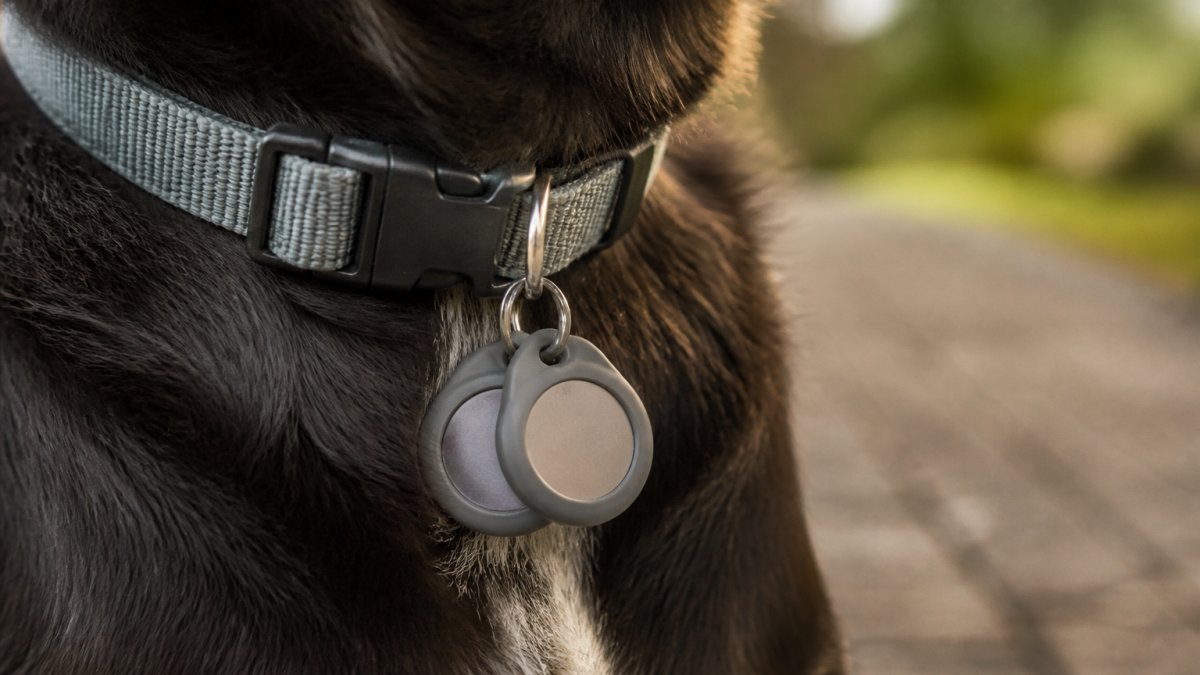
Rubber and silicone silencers
Silencers slide over the tag and stay in place. They come in different thicknesses and materials. Thicker silencers block more noise. Silicone lasts longer than rubber and resists UV damage better.
Installation takes seconds:
- Remove the tag from the collar
- Slide the silencer over the tag
- Reattach the tag to the collar
- Test by shaking, noise should drop significantly
Quality silencers cost between $3 and $8 per tag. They last six to twelve months depending on your dog's activity level. Once they wear out, you simply slide on a new one.
How silencers protect tag readability
The best silencers have a transparent or translucent design. Your dog's name, phone number, and ID information stay fully visible through the silencer material.
Check that any silencer you choose doesn't obscure the engraving. Hold it up to light. If you can't read the text clearly, choose a different product.
At Pet ID Tags Australia, we design our tags with deep laser engraving so the information stays legible. The engraving cuts deep into the metal, making it resistant to fading or wearing away.
Dog Collar Tag Holders and Clips
Tag holders and clips offer a different approach. Instead of silencing the tags on your collar, they consolidate them into one secure location.
Tag clips and quick-release options
A tag clip holds one or more tags in a single unit that attaches to your collar.

Quick-release clips let you remove tags instantly without unhooking your collar. This is useful if you take your dog to places where tags aren't allowed (like certain dog daycare facilities or training classes).
The Pet ID Tags Australia Quick Clip is a stainless steel option that holds tags securely while allowing quick disconnection. At $7.90, it's a practical upgrade from standard split rings.
Benefits of clips:
- Reduces jingling by consolidating tags
- Protects tags from wear and snagging
- Allows quick removal when needed
- Works with most collar types
Collar-mounted and slide-on tags
Collar-mounted tags attach directly to the collar material rather than hanging from a ring. They sit flat against the collar, eliminating the space where tags normally swing and collide.
Slide-on tags fit over your collar strap like a sleeve. They're permanently attached to the collar and move as one unit. Because they don't swing freely, they create almost no noise.
The tradeoff: both styles are harder to change if your contact information updates. You'll need to remove or replace the entire collar if your phone number changes.
How to Keep Dog Tags From Falling Off
A tag that falls off provides no protection. Secure attachment is more important than noise reduction.
Secure attachment methods
Split rings are the standard. They're cheap and reliable, but they can loosen over time. Check them monthly by tugging gently on the tag. If it moves, the ring needs tightening.
Welded rings don't open, so they can't loosen. They cost slightly more but eliminate the risk of accidental separation.
The Pet ID Tags Australia Quick Clip ($5.90) is a spring-gate alternative that holds tags more securely than split rings. The gate mechanism locks the tag in place while remaining easy to open when you need to swap tags.
Other secure options:
- Rivet-on tags that are permanently attached to the collar
- Collar-integrated tags sewn directly into the fabric
- Magnetic closures that hold tags flat against the collar
Preventing snagging and wear
Tags snag on fences, bushes, and rough surfaces. This causes wear on both the tag and the collar.
Position tags on the back or side of the collar, not the front. This keeps them away from your dog's neck and reduces snagging risk.
Use soft collar materials (leather, nylon, or fabric) rather than metal-studded collars. Smooth collars reduce friction and protect tags from scratching.
Check your dog's tags weekly for sharp edges or damage. Replace any tag that's bent, cracked, or has exposed edges.
Repositioning Tags and Reducing Tag Clutter
Where you place tags matters. Strategic positioning cuts noise and improves comfort.
Moving tags to quieter positions
Tags create the most noise when they hang freely from the front of the collar. This is where they swing with every movement and collide with the buckle.
Move tags to the back or side of the collar instead.
Attach tags to a D-ring on the back of the collar rather than the front clip. This alone can reduce noise by 50 percent.
For active dogs, consider attaching tags to a side D-ring. This keeps them out of the way during running and jumping.
Consolidating multiple tags
Many dogs wear multiple tags: ID, vaccination, microchip registration, and council registration. Each additional tag increases noise and weight.
Consolidate where possible:
- Ask your vet if vaccination records can be stored digitally instead of requiring a physical tag
- Check whether your council allows microchip registration to replace a physical tag
- Use a single ID tag with multiple phone numbers if you share dog care with another person
- Combine decorative and ID tags onto one holder
Fewer tags mean less jingling and less strain on your collar hardware.
Choosing the Right Solution for Your Dog and Collar Type
The best approach depends on your specific situation.
Active dogs versus calm dogs
Active dogs jump, run, and play constantly. They generate more tag movement and noise. They also wear out DIY fixes faster.
For active dogs, invest in silencers or a quality clip. They'll last longer and handle rough play better than tape or rubber bands.
Calm dogs that spend most time indoors or on short walks are fine with DIY solutions. Rubber bands and tape cost almost nothing and work well enough for low-activity pets.
Leather, fabric, and metal collars
Leather collars are the best choice for tag noise reduction. Leather is soft and absorbs vibration. Tags on leather collars jingle less than on nylon or metal.
Fabric collars (canvas, cotton) also work well. They're gentle on tags and reduce collision noise.
Metal collars (chain, studded) amplify noise. Metal reflects and transmits sound. If your dog wears a metal collar and noise bothers you, switching to leather or fabric will help more than any silencer.
Durability and maintenance considerations
DIY fixes (rubber bands, tape) need replacing monthly. They're cheap but require regular attention.
Silencers last three to twelve months depending on material and your dog's activity level. Silicone lasts longer than rubber.
Clips and collar-mounted tags are permanent once installed. They don't degrade, but you can't easily change them if your contact information updates.
Leather collars from Pet ID Tags Australia come personalised with your dog's name and your phone number laser engraved directly into the material. At $39.90, a personalised leather collar combines identification, comfort, and noise reduction in one solution.

Balancing Identification Safety With Comfort
The goal is a quiet collar that keeps your dog safe and identifiable.
Never silence tags so completely that they become unreadable.
Never secure tags so tightly that they restrict your dog's movement or cause discomfort.
Test any solution on a short walk first. Watch your dog's behaviour.
The best solution is one you'll actually maintain.
According to Australian animal welfare guidelines, proper identification and secure, comfortable collar fitting are essential for pet safety.
Understanding how to prevent dog tags from jingling doesn't mean sacrificing identification.
If you want a complete solution that handles both noise reduction and secure identification, Pet ID Tags Australia offers personalised leather collars with deep laser engraving. They're durable, comfortable, and built to last. Shop Dog Tags and find the right solution for your dog's needs.
Frequently Asked Questions
How can I stop my dog tags from jingling?
The most effective ways to prevent dog tags from jingling are using rubber or silicone silencers, attaching tags with a quick clip holder, repositioning tags to the back of the collar, or consolidating multiple tags into one. DIY options like wrapping tags with electrical tape or fabric also work. Choose based on your dog's activity level and collar type, active dogs benefit from silencers, while quieter pets may only need repositioning.
What's the best DIY dog tag silencer I can make at home?
Electrical tape and rubber bands are the quickest DIY solutions. Wrap electrical tape around the tag's edges to reduce collision noise, or loop a rubber band through the tag's hole to create a buffer. For a more permanent fix, wrap the tag with fabric tape or apply clear nail polish to the edges. These methods work best on tags that jingle constantly; test each before committing to ensure your dog's ID remains readable.
Will a dog tag silencer make my dog's ID harder to read?
No. Quality silencers are designed to cushion noise without obscuring your contact information. Rubber and silicone silencers sit around the tag's perimeter and leave the engraved surface fully visible. However, wrapping the entire tag with tape can cover text, so avoid that approach if readability is a concern. Deep laser engraving, like Pet ID Tags Australia uses, ensures contact details remain legible.
How do I keep dog tags from falling off the collar?
Use a high-quality quick clip or tag holder with a secure spring gate mechanism to prevent accidental detachment. Stainless steel quick clips, like the Quick Clip for Pet Tags ($7.90), hold tags firmly. Alternatively, rivet tags directly to leather collars, or use collar-mounted ID plates. For escape-prone pets, a personalised leather collar with engraved identification reduces reliance on loose tags entirely.