

Table of Contents
- Why Deeply Engraved Pet Tags Beat Printed Alternatives
- Engraved vs Printed Dog Tags: A Side-by-Side Comparison
- Material Matters: Stainless Steel, Aluminium, and Wear Over Time
- What to Put on a Dog Tag (and What to Leave Off)
- Pet Tag Maintenance Tips for Long-Lasting Legibility
- Legal Requirements for Pet ID and Why Identification Matters
- Choosing the Right Deeply Engraved Tag for Your Pet
- Frequently Asked Questions
Last Updated: September 14, 2026
Why Deeply Engraved Pet Tags Beat Printed Alternatives
Deeply engraved pet tags are identification tags where a diamond-tip or laser cutter removes metal from the surface, cutting the lettering into the tag itself rather than laying ink or a printed layer on top. That difference matters more than most owners realise until a tag fails. This guide from Pet ID Tags Australia explains why deeply engraved pet tags deliver benefits that printed tags simply cannot match.

The problem with printed and cheap tags is straightforward: they rely on a coating, ink layer, or sticker sitting on the surface. Friction against a collar, scratching on concrete, and exposure to sun and water all attack that surface layer first. Once it wears through, the text is gone. You are left with a blank disc and no way to identify your pet.
Deep engraving works differently. The cutter removes material to a measurable depth, creating grooves that sit below the surrounding metal. There is no surface layer to rub off, so the lettering survives the same wear that destroys printed tags. Deeper grooves also catch light and cast shadow effects, which keeps the text readable even after years of use.
Engraved vs Printed Dog Tags: A Side-by-Side Comparison
Engraved vs printed dog tags comes down to one question: which survives daily wear? Engraved tags outlast printed ones because the text is cut into the metal rather than applied to it.
| Feature | Deeply Engraved | Printed / Coated |
|---|---|---|
| How text is applied | Material removed by cutter | Ink or coating on surface |
| Fading risk | None | High with sun and washing |
| Scratch resistance | High, text sits below surface | Low, surface layer scratches |
| Legibility over time | Stays sharp for years | Degrades as layer wears |
| Best for | Active dogs, outdoor cats | Short-term or backup use |
A common mistake is buying on price alone. A cheap tag that lasts six months costs more over three years than one durable tag bought once. The comparison table above explains why: printed tags lose legibility through normal use, while engraved tags keep their readability.
Material Matters: Stainless Steel, Aluminium, and Wear Over Time
Stainless steel and aluminium are the two materials worth considering for metal tags, and they behave differently under wear. Most guides stop at "stainless is strong, aluminium is light" and never explain what actually happens to the metal over years of use. Material-specific wear analysis is the missing layer, and it matters most in coastal and humid conditions.
How each material actually wears
Stainless steel resists corrosion because of a chromium-rich passive oxide layer that re-forms when the surface is scratched. In practice, a stainless tag develops fine surface scuffs and a dulled sheen, but the engraved grooves sit below that scratched zone and stay fully legible. In saltwater environments, the risk is not the tag body but the attachment: a cheap split ring or plated clip will corrode long before the stainless tag does, which is why the ring, not the tag, is usually the failure point.
Aluminium behaves differently. It is softer, so it scratches and dents more readily, and it forms its own oxide layer that protects it in fresh water but is more vulnerable to pitting in prolonged salt exposure. Anodised aluminium adds a harder surface layer that resists scratching, though the anodised colour can fade at the edges where the tag rubs against a collar. The engraving itself remains legible because the grooves are cut through the anodised layer into the metal beneath.
Freshwater versus saltwater
A common pattern in coastal areas is that stainless steel tags outlast aluminium ones by a wide margin, because the salt accelerates pitting on softer metals. Inland, in freshwater and dry conditions, the gap narrows considerably, and aluminium's lighter weight becomes the more practical advantage. If your dog swims in the ocean regularly, stainless steel with a marine-grade stainless ring is the safer combination. If your cat rarely leaves a dry, inland home, aluminium is entirely adequate.
Weight and the pet it suits
Weight is the practical deciding factor. Cats and small breeds often do better with aluminium, while larger dogs carry stainless steel without noticing it. A tag that is too heavy for a small pet can sit awkwardly on the collar, catch on furniture, and add to the noise problem discussed below. Both materials are weather-resistant and suitable for daily wear when the engraving is deep enough to survive the surface wear each one experiences.
What to Put on a Dog Tag (and What to Leave Off)
What to put on a dog tag is your pet's name plus at least one contact number, kept short enough to stay legible at a glance. A phone number is the single most important detail, because it is what a finder uses first.
Include:
- Your pet's name
- A mobile number you answer
- A second contact number if you have one
- "Microchipped" if space allows
Leave off your full street address, your pet's medical history, and any information that would let a stranger identify your home. A first name and number are enough for a fast reunion. Double-sided engraving is the workaround when you have more to say: put the name and primary number on the front, and a backup contact on the back. That keeps the text large enough to read without crowding.
Pet Tag Maintenance Tips for Long-Lasting Legibility
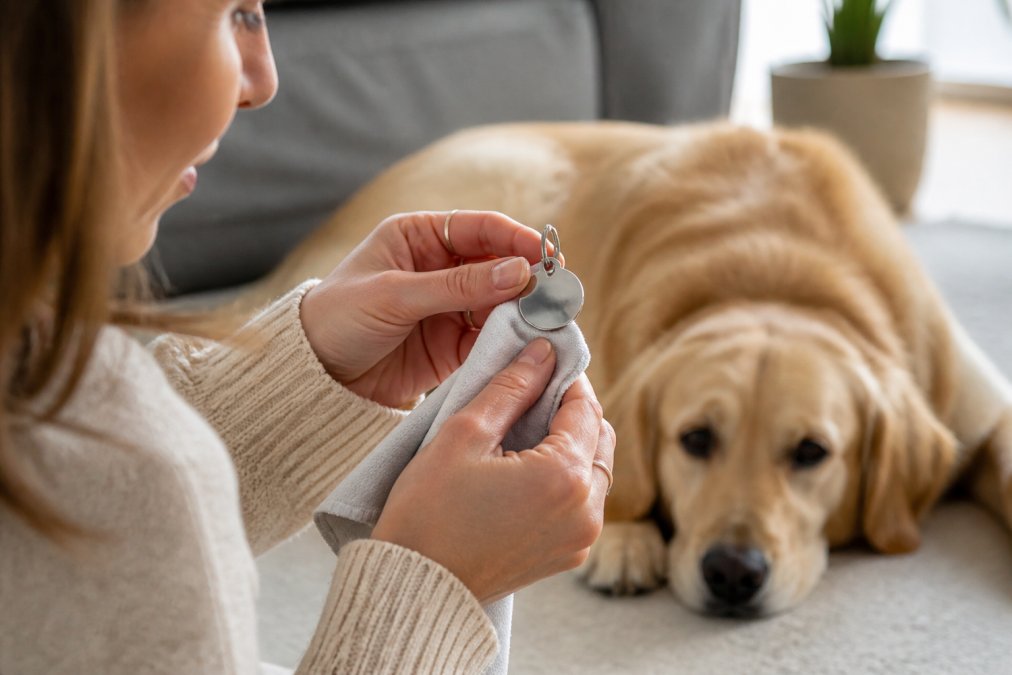
Pet tag maintenance tips are simple, and they add years to a tag's readable life. Wipe the tag with a soft damp cloth every few weeks to clear dirt from the grooves. A soft toothbrush works well for dried mud packed into the lettering.
Check the ring and attachment monthly. Most tags are lost because the split ring fails, not because the tag wears out. Replace a stretched or rusted ring before it lets go. Avoid abrasive polishes, which can round off the edges of the grooves and soften the shadow effects that make text readable.
Legal Requirements for Pet ID and Why Identification Matters
Legal requirements for pet ID vary by state and territory, and every jurisdiction requires dogs to carry identification. The gap in most guides is that they treat "legal requirement" and "practical identification" as the same thing. They are not, and understanding the difference is what keeps a pet recoverable.
What the law actually requires
Across the states and territories, dog registration is mandatory, and registered dogs are issued a council tag that must be worn on the collar. Microchipping is also mandatory for dogs in every jurisdiction, with cats covered in most. The council tag proves registration; the microchip proves ownership. Neither one, on its own, lets a member of the public return your pet directly.
That is the practical gap. A council tag carries a registration number, not your phone number. A microchip can only be read by a vet, pound, or authorised scanner. If your pet is found by a neighbour or a passer-by, neither of those gets a call made on the spot. A personalised tag with a working phone number does.
What to put on the tag to stay compliant and useful
Requirements on tag wording differ between jurisdictions and change over time, so confirm the current rules with your local council or the relevant state or territory authority. As a general pattern, a useful tag carries:
- Your pet's name
- A mobile number you actually answer
- A second contact number if you have one
- "Microchipped" if space allows
Leave off your full street address, your pet's medical history, and anything that would let a stranger identify your home. A first name and a number are enough for a fast reunion, and they satisfy the practical purpose of identification without oversharing.
Why the visible tag does the work the chip cannot
Lost pet recovery is fastest when a visible tag carries a working number, because the finder can call immediately rather than arranging a chip scan during business hours. A chip is the permanent record; a tag is the immediate handshake. The two are complementary, not interchangeable, and a pet with both is far more likely to come home quickly than one with either alone.
Double-sided engraving is the workaround when you have more to say: put the name and primary number on the front, and a backup contact on the back. That keeps the text large enough to read without crowding, and it keeps the most important detail, the phone number, on the side a finder sees first.
Choosing the Right Deeply Engraved Tag for Your Pet
Choosing the right tag starts with the engraving method, then the material, then the size. Look for deep engraving rather than surface marking, since depth is what delivers the long-lasting legibility that pet owners actually want.
For most dogs, a stainless steel tag with double-sided engraving covers everything. For cats and small breeds, lightweight aluminium in a smaller size sits better on the collar. Precision matters at small sizes: deeply engraved pet tags keep their readability even when the tag itself is only a few centimetres across.
At Pet ID Tags Australia, every tag is deeply engraved in our Adelaide workshop, backed by more than 20 years of engraving experience and a 30-day satisfaction guarantee. Options include the Stainless Steel Bone Pet ID Tag at $19.90, the lighter Black Aluminium Bone Pet ID Tag at $17.90, and the Silver Stainless Steel Round Dog ID Tag at $19.00.


Frequently Asked Questions
What are the benefits of deep engraving compared to laser printing?
Deep engraving removes material from the metal surface, creating grooves that stay readable through years of wear, scratching, and weather exposure. Laser printing sits on top of the surface and can rub off, fade, or peel within months, especially on active pets. Deeply engraved pet tags keep your contact details permanently etched, so if your pet goes missing, anyone who finds them can still read your phone number.
What should you have engraved on a dog tag?
At minimum, include your pet's name and a current mobile number. Add a second contact number, your suburb, and note if your pet is microchipped. Keep it short: a tag the size of a 30mm disc fits around 3 to 4 lines of text comfortably. Avoid your full home address for privacy reasons. If your number changes, order a replacement tag rather than trying to squeeze extra details onto an already full tag.
How long do deeply engraved pet tags typically last?
Stainless steel tags with deep engraving routinely last many years, often outliving several collars. The engraving depth is what determines longevity: deeper grooves resist wear longer than shallow marks. Aluminium tags are lighter but softer, so they may show smoothing on the highest points of the lettering after a few years of constant wear. Checking legibility once a year is a sensible habit.
Are deeply engraved tags better for active or outdoor pets?
Yes. Dogs that swim, roll in sand, or push through scrub put constant abrasion on their tags. Deep engraving keeps lettering readable because the information sits below the surface, protected from the rubbing that erases printed text. Stainless steel adds corrosion resistance for beach and pool exposure. For pets that regularly get wet or muddy, a stainless steel deeply engraved tag is the most reliable option.
A tag is only useful if it still works when your pet needs it most, and that means choosing deep engraving over surface printing from the start. Pet ID Tags Australia engraves every tag in-house, uses stainless steel and anodised aluminium that resist fading and scratching, and ships fast from a local workshop with a 30-day satisfaction guarantee. Shop dog tags at Pet ID Tags Australia and give your pet identification that stays readable for years.