

Table of Contents
- Why a Dog Tag Slide On Beats a Hanging Tag
- How a Slide-On Pet ID Tag Attaches to a Collar
- Dog Collar Tag Sizing: Measuring for the Right Fit
- What to Put on a Dog ID Tag (and What to Leave Off)
- Silent Dog Tag Options for Quieter Collars
- Stainless Steel Dog Tag vs Silicone: Which Lasts Longer?
- Cleaning, Inspecting and Replacing Your Slide-On Tag
- Conclusion: Choosing the Right Slide-On Tag for Your Dog
- Frequently Asked Questions
Last Updated: October 6, 2026
Why a Dog Tag Slide On Beats a Hanging Tag
At Pet ID Tags Australia, we've spent over 20 years engraving tags for dogs and cats. This guide answers common questions about noise, fit and fading.
The core problem with a traditional hanging tag is that it swings.
Hanging tags also catch on things. Fence wire, crate bars, long grass, car seatbelts. A tag that snags can bend, snap its ring, or work loose entirely.
A slide-on tag solves both issues at once:
- It sits flat against the collar, so there's nothing to swing
- It has no ring to snag or open
- It stays centred, so it's less likely to be lost
- It's lighter on the neck, which matters for small dogs and cats
The trade-off is real: a slide-on tag only works if the collar width and tag size are right.
How a Slide-On Pet ID Tag Attaches to a Collar
A slide-on pet ID tag attaches by threading the collar through two loops built into the tag itself, no ring, no clip, no tools. Undo the collar, slide the tag on, then fasten it again.
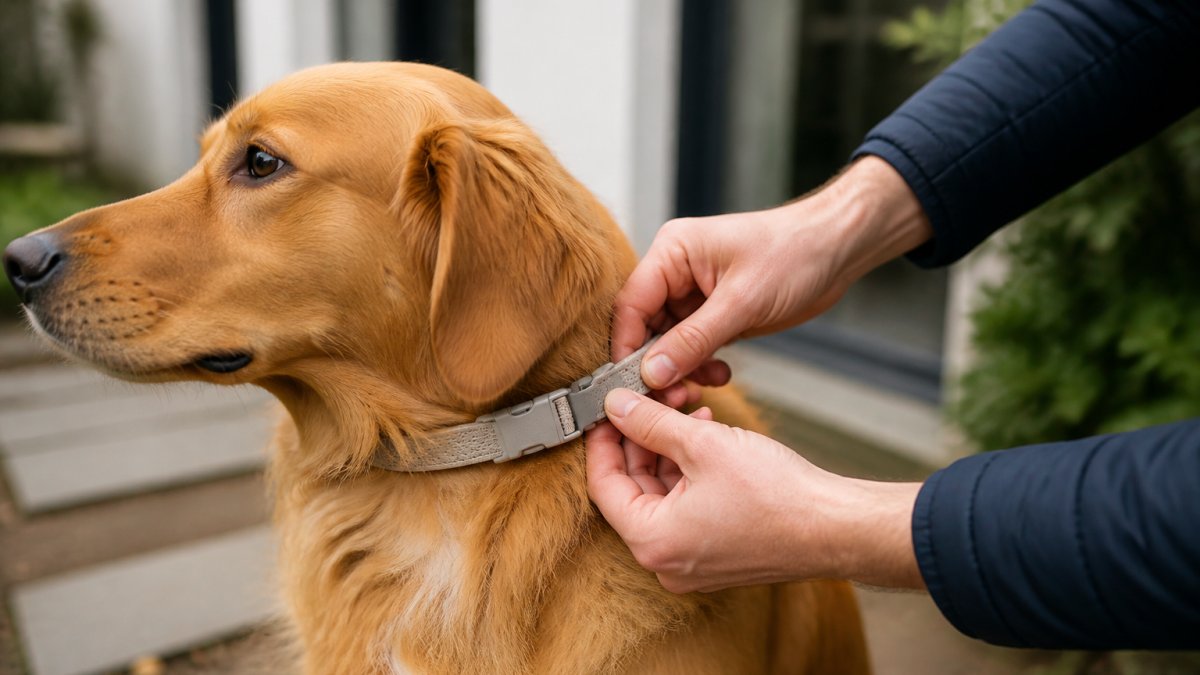
Most slide-on tags use flexible silicone loops or a moulded band the collar passes through, sitting flat with the engraved face outward.
Step-by-Step Fitting Instructions
Fitting takes about a minute:
- Unbuckle the collar and lay it flat on a table
- Check the tag's loop openings against your collar's width
- Thread the collar end through the first loop
- Pull it through the second loop so the tag sits flat
- Slide the tag to the position you want, usually beside the buckle
- Re-buckle the collar and check the tag can't slide past the D-ring
- Give the tag a firm tug to confirm it's seated
Expected result: the tag sits flat, doesn't spin freely, and can't slide off the end of the collar.
A common mistake is threading the tag on before checking width. Too loose and the tag flips, facing the text at your dog's neck; too tight and you stretch the loop and shorten its life.
Which Collars a Slide-On Tag Fits
Slide-on tags are not universal. Before you buy, check three things about your collar:
- Strap width, the loop must match the strap closely. A 20 mm loop on a 15 mm strap will rotate; a 20 mm loop on a 25 mm strap won't thread.
- Strap material, flat nylon, polyester webbing, and leather straps all work. Rope, chain, and rolled leather collars generally don't, because there's no flat surface for the tag to sit against.
- Buckle style, side-release plastic buckles and traditional metal buckles are both fine. What matters is whether the tag can slide past the buckle to reach its resting position. If the buckle is wider than the strap, the tag may not pass it.
A quick check before ordering: thread a short length of collar strap through a keyring or similar-sized loop. Free passage with slight resistance is about right; rattling means the loop is too big, forcing means it's too small.
Troubleshooting Common Fit Problems
| Problem | Likely Cause | Fix |
|---|---|---|
| Tag flips over, text faces the neck | Loop too large for strap | Move to a smaller loop size |
| Tag slides along the collar | No D-ring or buckle to block it | Position beside the buckle, or add a stopper |
| Tag won't thread | Loop too small | Size up, or check strap width again |
| Tag twists to the side | Strap is rounded or rope-style | Switch to a flat webbing collar |
| Tag sits under the chin | Fitted in the wrong position | Slide it to the side of the neck |
Dog Collar Tag Sizing: Measuring for the Right Fit
Dog collar tag sizing comes down to two measurements: your collar's strap width and the tag's loop opening.
Start by measuring your collar.
Then measure your dog's neck for collar length: wrap the tape snugly behind the ears and at the base of the neck, then add room for two fingers.
For a slide-on tag, the loop matters more than overall dimensions. A longer tag gives more engraving space; a shorter one sits more discreetly.
Matching Tag Width to Collar Width
The rule is simple: the tag's loop should match your collar's strap width closely, with minimal slack. Too much and the tag rotates; too little and you can't thread it.
| Collar Strap Width | Typical Loop Fit | What Happens |
|---|---|---|
| 10-15 mm (cats, toy breeds) | Small loop | Sits flat, minimal movement |
| 15-20 mm (small to medium dogs) | Small-medium loop | Common match for everyday collars |
| 20-25 mm (medium to large dogs) | Medium loop | Most common match overall |
| 25-40 mm (large and working dogs) | Large loop | Needs a wider tag body |
| Loop too big | Any collar | Tag flips and twists |
| Loop too small | Any collar | Won't thread, or stretches |
If you're between sizes, choose the loop that matches your collar exactly. A snug tag stays readable longer because it isn't constantly rubbing against the strap.
Measuring for Engraving Space
Once the loop is sorted, choose the tag body length by how much text you need:
- Name only, a short tag body is plenty
- Name plus one phone number, a medium body keeps characters large enough to read at arm's length
- Name plus two numbers or a microchip note, go longer, or accept smaller characters
A useful test: hold the tag at arm's length in dim light. If you can't read the phone number, a finder on a footpath at dusk won't either. Fewer, larger characters beat more, smaller ones.
If your collar has no slide-on option at all, a Quick Clip for Pet Tags solves the same problem differently. It's a stainless steel spring clip that holds a standard tag securely to the collar, so the tag can't work loose the way a split ring can.
What to Put on a Dog ID Tag (and What to Leave Off)
What to put on a dog ID tag should be the shortest set of details that gets your pet home: a name and a phone number. Everything else is optional.
Here's what we'd include:
- Pet's name on the front, large enough to read at arm's length
- One phone number you actually answer
- A second contact only if you have space left
- "Microchipped" if you want to signal that a vet can scan for more detail
And here's what to leave off:
- Your full street address, which anyone holding the tag can read
- Your pet's medical details, which change and can't be updated on metal
- Multiple numbers if they crowd the text into unreadable size
Privacy is the part most guides skip. A tag is a public document anyone who finds your dog can read. A phone number is enough for a genuine finder to reach you without exposing where you live.
If your number changes, you don't strictly need a new tag.
Keep the text short: fewer, larger characters read better in poor light and stay legible longer as the surface wears.
Silent Dog Tag Options for Quieter Collars
A silent dog tag is one that can't rattle against anything. Slide-on designs are the simplest route, because there's no ring and no swinging metal.
Noise comes from three places: the tag hitting the D-ring, the tag hitting the buckle, and the ring jingling. A slide-on tag removes all three by sitting flat against the strap.
Other approaches work too, and each has trade-offs:
- Silicone or rubber tag guards that wrap a standard tag. Cheap, but they add bulk and can trap moisture.
- Fabric sleeves that cover the tag. Quiet, but they hide the engraving.
- Slide-on tags with no ring at all. Quietest option, but they only fit collars of the right width.
For a dog who sleeps in the bedroom the difference is noticeable; for a working dog or nervous rescue it matters even more, since constant noise adds stress.
Stainless Steel Dog Tag vs Silicone: Which Lasts Longer?
A stainless steel dog tag lasts longer than silicone in most conditions. Steel resists scratching, fading and chewing.
Here's how the two compare on the things that matter:
| Feature | Stainless Steel | Silicone |
|---|---|---|
| Weight | Heavier | Very light |
| Noise | Can jingle if hung | Silent when slide-on |
| Scratch resistance | High | Moderate |
| Fade resistance | High | High |
| Waterproof | Yes | Yes |
| Best for | Active dogs, outdoor use | Small dogs, cats, quiet wear |
Steel suits dogs who swim, roll in sand, or spend hours outside, and deep engraving stays readable after years of contact with the strap.
Silicone suits pets who need something light on the neck.
If you want both, a leather collar with the details engraved directly into the strap skips the tag entirely.
The honest limitation: leather shouldn't stay wet for long, and shows scratches over time. For a dog who swims daily, steel is the better call.
Cleaning, Inspecting and Replacing Your Slide-On Tag
Cleaning a slide-on tag takes under a minute: wash it with warm water and mild soap, then dry it fully before putting it back on the collar.
Do this monthly, and check the tag at the same time. Look for:
- Cracks or splits in silicone loops
- Stretched or enlarged loop openings
- Faded or worn engraving
- Sharp edges where the tag has been chewed
- Any movement that wasn't there when you fitted it
Replace the tag when the engraving stops being readable, a loop cracks, or it starts sliding freely along the collar.
For steel tags a soft cloth is enough; avoid abrasive pads that scratch the surface and make text harder to read.
One more check: confirm the collar itself is still in good shape. A worn collar can stretch, and a stretched collar changes how your slide-on tag sits.
Conclusion: Choosing the Right Slide-On Tag for Your Dog
The hardest part of pet identification isn't buying a tag. It's picking one your dog will actually keep on, and that stays readable long enough to matter.
The advice stays the same: measure your collar width first, then choose the tag. A properly fitted slide-on tag is silent, secure and comfortable for years.
Shop dog tags with Pet ID Tags Australia and give your dog identification that stays put, stays quiet, and stays readable.
Frequently Asked Questions
What is a slide-on dog tag?
A slide-on dog tag is a flexible band, usually silicone or rubber, that threads directly onto your dog's collar instead of hanging from a ring. Because it sits flat against the collar, it does not dangle or jingle. They suit most standard collar widths and are a quiet, secure alternative to traditional hanging tags.
How do I measure my dog's collar for a slide-on tag?
Measure your dog's current collar width in millimetres and choose a slide-on tag that matches or is slightly wider than that measurement.
Are slide-on dog tags quieter than hanging tags?
Yes. Because the tag threads onto the collar and sits flat, there is no metal-on-metal contact and no dangling, so it does not jingle or rattle. This makes a silent dog tag a good choice for dogs who are sound-sensitive, for households with light sleepers, or for anyone who wants to reduce collar noise during walks and at home.
Can a slide-on dog tag fit any collar?
Most slide-on tags fit standard flat collars, but the fit depends on collar width and thickness. Measure your collar width in millimetres and check the tag's stated range before ordering. Very wide, very narrow, or unusually thick collars may need a different style.