

A harness that doesn't fit perfectly isn't just an inconvenience; it's a safety failure waiting to happen on your next coastal walk or bush hike. You've likely felt that sharp spike of adrenaline when your dog almost backs out of a loose chest strap, or noticed the frustrated scratching at red, chafed skin after a session at the park. It's a common struggle for Australian owners who find that "standard" sizes rarely account for the unique build of a deep-chested Labrador or a lean, athletic Greyhound.
We understand that navigating different brand charts can feel like guesswork, especially when you want the security of a custom fit. This guide will teach you exactly how to measure a dog for a harness australia to ensure maximum safety and comfort on every adventure. You'll learn the precise points to measure, the "two-finger rule" for reliability, and how to choose a harness that stands up to the rugged Australian climate. We'll provide the technical clarity you need to buy online with total confidence, moving from gear frustration to absolute peace of mind.
Key Takeaways
- Understand why a precise fit is the primary defence against harness escapes and skin chafing during high-energy play.
- Master the exact technique for how to measure a dog for a harness australia using the three-point system of girth, neck, and length.
- Identify whether an over-the-head or step-in harness style better suits your dog's unique anatomy and temperament.
- Learn tailored sizing solutions for popular Australian breeds with challenging builds, including specific advice for Staffies and Sighthounds.
- Discover the most secure way to integrate a durable ID tag with your harness to ensure your dog is protected on every adventure.
Why a Precise Harness Fit is Vital for Australian Dogs
Australian conditions demand durability and precision. When you're out in the bush or at a crowded beach, you need to know your dog's gear won't fail under pressure. A precise fit ensures your dog remains secure while maintaining their natural agility. A properly fitted harness remains centred on the chest without restricting shoulder movement. This balance prevents the dog from "backing out" of the gear during a sudden spook while allowing for a full range of motion. Understanding how to measure a dog for a harness australia is the first step in ensuring your dog stays secure during high-energy play.
For reactive dogs, a well-fitted harness is a vital safety tool. It provides the handler with better leverage and control without causing physical distress. By distributing pressure across the chest and ribcage, you protect the thyroid and trachea from the damaging "choke" effect often seen with traditional collars. Learning how to measure a dog for a harness australia ensures that this pressure distribution works as intended, rather than concentrating force on sensitive soft tissue.
The Risk of an Ill-Fitted Harness
Loose straps are more than just a nuisance. They create constant friction against the skin, leading to painful chafing and "armpit" sores that can take weeks to heal. For owners looking to soothe these minor skin irritations naturally, ruffbar.com offers insights into the healing properties of calendula. This is particularly common in short-haired Australian breeds. There is also the significant danger of "The Great Escape." If the neck opening is too wide, a panicked dog can tuck its head and back straight out of the harness. For active working breeds like Kelpies or Cattle Dogs, a harness that sits too low on the shoulders can restrict their gait. Over time, this restricted movement can lead to compensatory joint issues and reduced mobility.
Harness vs. Collar: The Great Aussie Debate
Choosing between gear types often depends on your dog's specific needs and temperament. While many owners rely on personalised dog collars australia for daily wear and identification, a harness is often the superior choice for walking large, powerful dogs. It offers better "steering" and prevents the dog from lunging with their full weight against their throat. Exploring different dog harness styles allows you to find a design that matches your dog's activity level. We recommend a dual-system approach. Use a custom harness for the physical control required on walks, but always maintain a collar with a deep-engraved ID tag for round-the-clock security. This ensures that even if one piece of gear is removed, your dog still carries essential contact information.
The Three Essential Measurements: Girth, Neck, and Length
Precision is the difference between a secure dog and an empty harness. To get the most accurate reading, you don't need expensive equipment. A soft tailor's tape is the industry standard. If you don't have one, a length of non-stretch string and a metric ruler will suffice. Avoid using metal builder's tapes; they don't contour to a dog's body and often lead to over-estimations that result in a loose, unsafe fit. Understanding how to measure a dog for a harness australia starts with these basic tools and a steady hand.
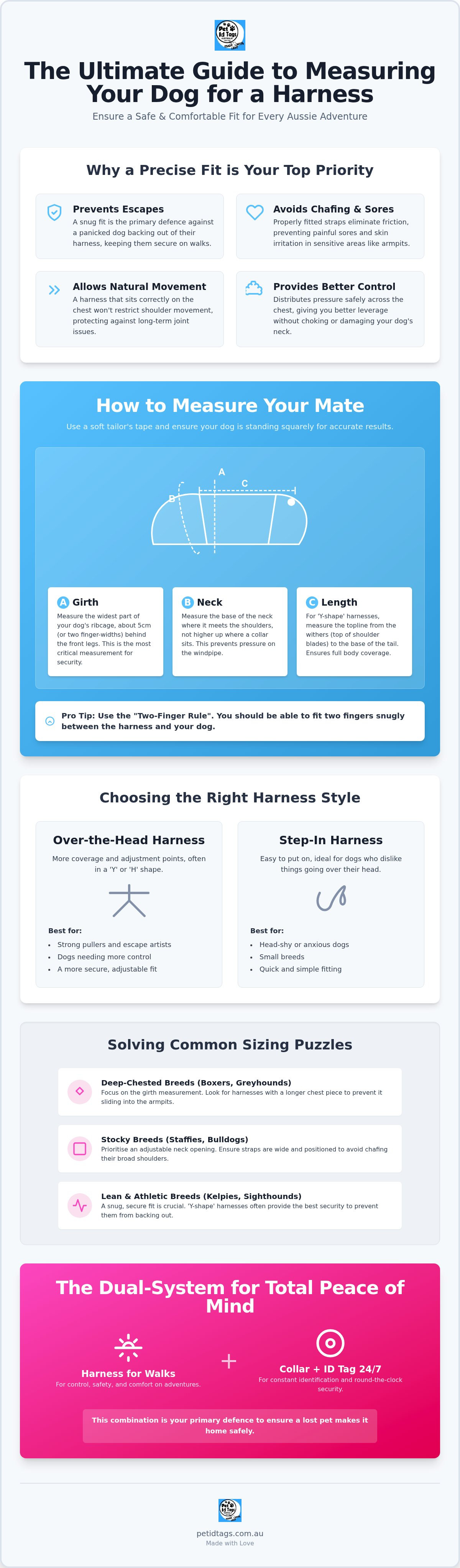
The girth measurement is your primary security metric. This is the circumference of the widest part of your dog's ribcage. You'll typically find this point about five centimetres, or two finger-widths, behind the front legs. This "Golden Rule of Girth" ensures the harness sits on the skeletal frame rather than pressing into the soft tissue of the abdomen. For deep-chested breeds like Boxers or Rhodesian Ridgebacks, this measurement is the most critical factor in preventing the harness from sliding forward.
While the neck measurement might seem familiar, it differs significantly from where a collar sits. You must measure the base of the neck, right where it meets the shoulders. This is the natural "shelf" where a harness should rest to avoid putting pressure on the windpipe. Finally, the topline length is essential for full-body or "Y-shape" harnesses. Measure from the withers, the highest point of the shoulder blades, to the base of the tail. This ensures the gear doesn't interfere with the dog's rear-end mechanics during a gallop.
Step-by-Step: Measuring Your Mate
Accuracy depends on your dog's posture. Ensure they are standing squarely on all four paws on a level surface. If they sit or hunch, your girth and length readings will be distorted. Wrap your tape or string snugly around the body. It should be firm enough to stay in place but not so tight that it depresses the fur or skin. Always record your measurements in centimetres. Most manufacturers of a custom dog harness australia use metric sizing to ensure a higher degree of precision than broad "Small-to-Large" weight categories allow.
The Two-Finger Test for Final Fitting
Once your gear arrives, the two-finger test is your final quality check. You should be able to slide two fingers comfortably under every strap. If you can fit three or more, the harness is too loose and poses an escape risk. If you can't fit two, it's too tight and will cause chafing. Check for "gaping" at the chest plate when the lead is slack; the plate should remain flush against the dog. Remember to re-check these measurements seasonally. Breeds like Border Collies or Huskies can experience significant coat thickness changes that may require you to adjust the straps for a continued safe fit. Once you have the fit sorted, attaching one of our stainless steel dog tags to the harness D-ring provides that final layer of professional security.
Choosing the Right Harness Style for Your Dog’s Lifestyle
Selecting the correct design is just as critical as knowing how to measure a dog for a harness australia. The style you choose dictates how the weight is distributed and how much control you maintain. Over-the-head harnesses are the gold standard for security. Because they encircle the neck and the girth independently, they are much harder for a dog to "back out" of when spooked. Conversely, step-in harnesses are an excellent solution for dogs that are head-shy or sensitive about their ears. These designs allow your dog to simply walk into the loops, making the gearing-up process stress-free for anxious pets.
Your training goals should also influence the clip placement. A front-clip harness is a powerful tool for dogs that pull. By attaching the lead to the chest, you can gently redirect their momentum back toward you. Back-clip harnesses are better suited for well-trained walkers or for use during high-energy activities like jogging. Material choice is another vital consideration for the local climate. Breathable mesh is essential for the 2026 Australian summer to prevent overheating. If your weekends involve heavy scrub or coastal tracks, look for heavy-duty synthetic webbing that resists salt water and abrasion.
Harness Styles Comparison
Modern harnesses offer more than just a connection point for a lead. For suburban owners, reflective stitching is a non-negotiable safety feature for evening walks. If you enjoy hiking, a harness with a heavy-duty back handle allows you to assist your dog over fallen logs or rocky outcrops during a bush bash. Security is also evolving; many high-quality harnesses now include dedicated attachment points for smart pet tags australia. This ensures your dog's digital and physical identification remains visible and secure, even if they manage to slip their collar in the wild. Once you have mastered how to measure a dog for a harness australia, these functional details will ensure your gear performs as well as it fits.
Solving Common Sizing Challenges for Popular Australian Breeds
Sighthounds like Greyhounds and Whippets present a different challenge. Their deep chests and narrow waists make them "escape artists" in traditional gear. They require specialised three-strap harnesses that include a third belly strap sitting behind the ribcage. This prevents the dog from backing out. Similarly, working breeds like Kelpies and Australian Cattle Dogs need total shoulder freedom. A "Y" front design is essential here. It ensures they can reach full stride during a bush run without the harness impeding their movement. For toy breeds like Chihuahuas, the focus shifts to throat safety. You must ensure the neck opening sits low on the breastbone to avoid any pressure on their delicate trachea.
Standard harnesses frequently "slide" or rotate on deep-chested breeds like Dobermans or Boxers. This instability is usually caused by a lack of adjustment points. To achieve a custom feel, look for a harness with at least four points of adjustment: two at the neck and two at the girth. This allows you to tighten the neck independently of the chest. It's also vital to ensure the girth strap sits at least four to five centimetres behind the front legs. If it sits too close, it will cause chronic armpit sores, especially during high-energy play in the Australian heat.
Puppy Sizing: Room to Grow
Investing in a high-end harness for a three-month-old pup can be expensive as they grow rapidly. However, safety shouldn't be compromised. An adjustable webbing harness is the best investment for the first six months. It provides the necessary security while allowing for several centimetres of growth. Most owners start with a puppy id tag australia starter set for basic identification. Once your pup reaches about 75% of their expected adult size, it's time to transition to a more permanent gear setup. Knowing how to measure a dog for a harness australia at this stage ensures their first "adult" harness is a perfect fit. If you're ready to secure your dog's future adventures, view our durable custom dog harnesses built for local conditions.
Final Verdict: Securing Your Custom Harness with Identification
A high-quality harness provides physical control, but it cannot bring a lost dog home. While mastering how to measure a dog for a harness australia ensures a secure fit, an identification tag remains the ultimate safety net. We consider the harness as essential gear and the ID tag as a lifeline. Many modern harnesses now feature a dedicated ID loop. We recommend using this specifically for tags to reduce noise and prevent the tag from interfering with the lead attachment on the main D-ring. If your harness lacks a loop, the D-ring is a secondary option, though it may experience more wear from the lead clip during active walks.
Durability is paramount in the Australian environment. For dogs that spend their weekends at the beach or trekking through the bush, stainless steel dog tags australia are the superior choice. Unlike aluminium or plastic alternatives, stainless steel resists corrosion from salt water and won't snap under the pressure of high-energy play. Before you finalise your order, run through a final checklist. Re-measure the girth and neck one last time to ensure your data is current. A few extra minutes of verification prevents the frustration of a return and ensures your dog is protected from the moment the gear arrives.
The Pet ID Tags Australia Advantage
We have been Australian-owned and operated since 2004. Our focus is on providing durable solutions that withstand the unique demands of our local landscape. We specialise in deep-engraved identification; this ensures your contact details remain legible even after years of heavy wear. To make your life easier, we recommend using a dog tag quick clip australia. This allows you to move your dog's ID between their harness and collar in seconds. It is a simple, professional way to maintain security regardless of which gear you're using for the day's adventure.
Ready to Walk?
Introducing a new harness should always be a positive experience. Use treats and praise to create a good association, especially if your dog is head-shy or sensitive about their ears. Once you're back from a coastal trip, remember to rinse the harness with fresh water. This simple step washes out salt and sand that can jam buckles or degrade the webbing over time. Proper maintenance ensures your gear remains a reliable tool for years to come. If you have mastered how to measure a dog for a harness australia and are ready to upgrade your dog's safety, browse our range of custom pet accessories and tags today to find the perfect fit for your lifestyle.
Ready for the Great Aussie Walk
Securing the right gear is about more than just aesthetics; it's about the safety and long-term health of your best mate. By mastering how to measure a dog for a harness australia, you eliminate the risk of mid-walk escapes and painful skin irritation. You now have the technical knowledge to navigate complex size charts and choose a style that respects your dog’s unique anatomy, whether they are a deep-chested Greyhound or a broad-shouldered Staffy. To ensure your pup gets the exercise they need even when you're busy, visit Rylee's Hut Pet Services for reliable dog walking and pet care.
A perfectly fitted harness is only one part of the safety equation. We've been Australian-owned and operated since 2004, providing durable solutions designed for our rugged bush and beach lifestyle. Our deep-engraved stainless steel tags are trusted by thousands of Australian pet owners for their lifetime legibility and physical strength. Don't leave your dog's security to chance with inferior materials or sizing guesswork. Shop Custom Dog Harnesses and Secure ID Tags today to ensure your next adventure is as safe as it is enjoyable. With the right measurements and professional-grade identification, you can explore the outdoors with absolute confidence.
Frequently Asked Questions
How tight should a dog harness be?
A dog harness should be snug enough to prevent slipping but loose enough to allow full respiratory expansion. You should be able to slide two fingers comfortably between the straps and your dog's body at any point. If you can fit more than two fingers, the harness poses a significant escape risk. If you can't fit two, it will likely cause chafing or restrict movement during a run in the park.
What is the most important measurement for a dog harness?
The girth measurement is the most critical factor when learning how to measure a dog for a harness australia. This is the circumference of the widest part of your dog's chest, usually about five centimetres behind the front legs. While neck and length are important for specific styles, the girth ensures the harness stays securely on the dog's skeletal frame and prevents the gear from sliding forward or rotating during high-energy play.
Can my dog wear a harness and a collar at the same time?
Yes, many Australian owners choose to use both gear types simultaneously for maximum security. A harness provides superior physical control on the lead, while a collar serves as a permanent anchor for your dog's identification. We recommend attaching a deep-engraved stainless steel tag to the collar to ensure your dog carries contact details even if you remove the harness after a walk or during a beach visit.
How do I measure my dog for a harness if I don’t have a tape measure?
If you don't have a flexible tailor's tape, you can use a piece of non-stretch string or even your dog's lead. Wrap the string around the required measurement point, mark the length, and then lay it flat against a standard metric ruler. Precision is essential for how to measure a dog for a harness australia, so ensure the string is pulled taut against the fur without depressing the skin for an accurate centimetre reading.
What should I do if my dog is between two harness sizes?
If your dog's measurements fall between two sizes, we generally recommend choosing the larger size, provided it has multiple adjustment points. A harness that is slightly too small will restrict the shoulders and cause painful sores in the armpits. Check that the larger size can be tightened sufficiently to meet the two-finger rule. For growing puppies, choosing the larger option with room to expand is the most practical and safe investment.
Do certain harness styles help with pulling?
Front-clip harnesses are specifically designed to discourage pulling by redirecting your dog's momentum. When the dog lunges forward, the lead attachment point on the chest gently turns their body back toward you. This provides better leverage than a back-clip design, which can sometimes trigger a dog's "opposition reflex" and encourage them to pull harder. These styles are excellent training aids for powerful breeds like Labradors or Staffies.
Is it safe for my dog to wear a harness all day?
We do not recommend leaving a harness on your dog for twenty-four hours a day. Constant wear can lead to matting of the fur, skin irritation, and painful chafing, especially in the sensitive armpit area. There is also a risk of the harness getting caught on furniture or fencing when the dog is unsupervised. It is best to remove the harness once you return home and rely on a comfortable collar for identification.
How do I know if the harness is rubbing my dog?
You should regularly inspect your dog's "friction points," such as the chest and behind the front legs, for signs of irritation. Look for redness, thinning fur, or broken skin, which are clear indicators that the harness is rubbing. This often happens if the straps are too loose and sliding around, or if the material has become stiff with dried salt and sand. Ensure the gear is clean and the fit is adjusted correctly.