

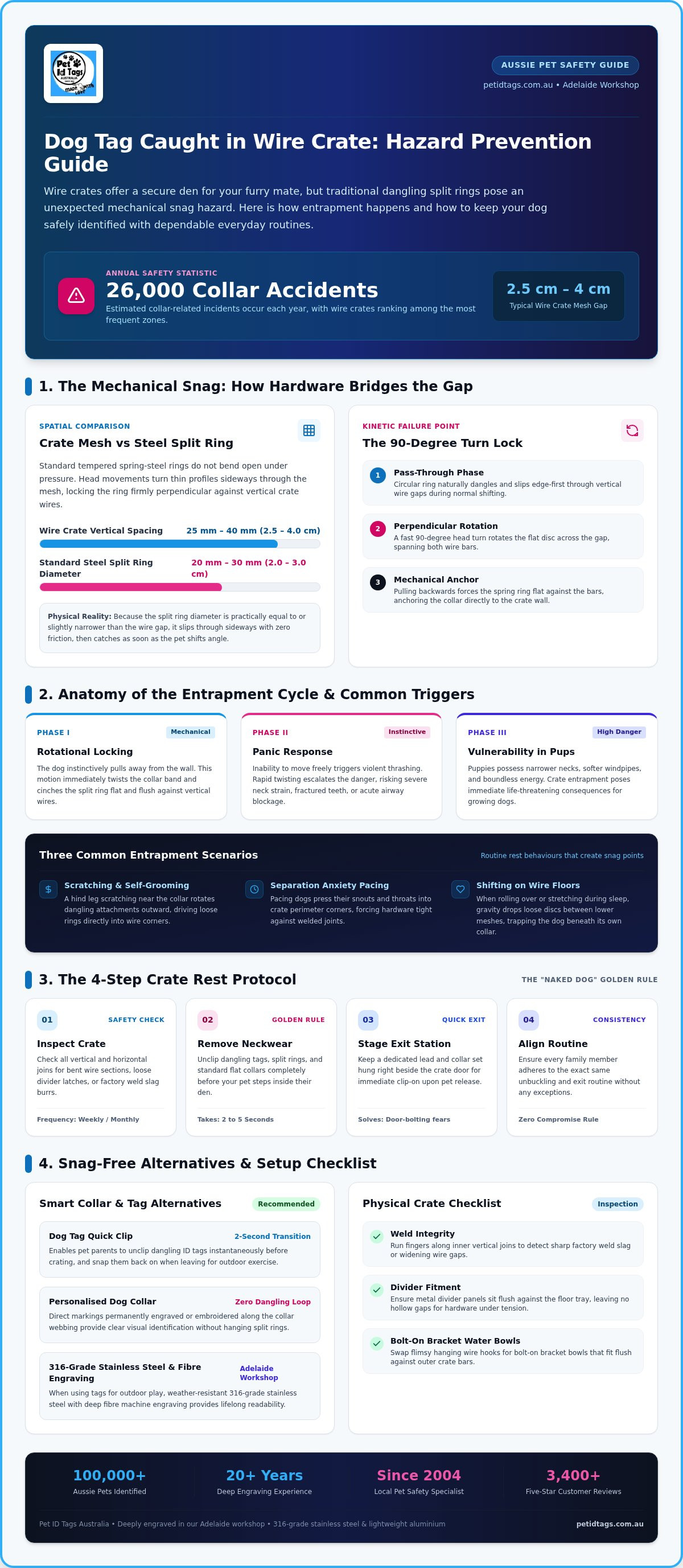
An estimated 26,000 collar-related accidents occur each year, with wire crates standing out as one of the most frequent entrapment zones. Mastering dog tag caught in wire crate hazard prevention shouldn't force you to leave your furry mate completely unidentified whenever they rest.
Like every devoted Aussie dog owner, you want immediate visual identification on your pet in case of an unexpected escape. At the same time, the fear of traditional split rings bending, dangling, and snagging between crate bars while you are away from home is deeply unsettling. You do not have to pick between strangulation risks and lost-pet anxieties. In this guide, you will discover how to eliminate wire crate snag hazards and keep your dog safely identified with dependable, everyday routines. We explore why traditional hardware poses such a threat, how quick-release systems streamline crate rest, and which snag-free identification designs give you total peace of mind.
Key Takeaways
- Understand the mechanical risks of how normal scratching and shifting rotate hanging split rings directly into wire intersections.
- Master practical dog tag caught in wire crate hazard prevention by setting up a consistent, snag-free routine before every rest period.
- Explore flush alternatives like a personalised dog collar with direct markings to eliminate dangling hardware entirely.
- Speed up everyday transitions using a dog tag quick clip so detaching tags before crating takes only two seconds.
- Establish a reliable layered identification habit that keeps your furry mate secure both inside their den and when heading outdoors.
Why Dog Tags Catch on Wire Crates: The Hidden Hazard
Wire enclosures provide a secure retreat for pets, yet standard dangling tags introduce an unseen physical trap. When a metal disc hangs from a circular ring, it dangles precisely at crate mesh level. Effective dog tag caught in wire crate hazard prevention begins with understanding how simple everyday head motions turn this metal loop into a mechanical anchor.
Most pet owners assume split rings simply slide along metal bars. In reality, modern wire crates feature vertical gaps typically between 2.5 and 4 centimetres wide. Standard steel split rings measure between 20 and 30 millimetres in diameter. While dog crate safety features often address latches and ventilation, they rarely eliminate the risk of hanging hardware passing cleanly between the wire bars.
Once trapped, a dog instinctively pulls back. This triggers a dangerous panic cycle:
- Rotational locking: The dog pulls away, which twists the collar and tightens the split ring flat against the vertical wire.
- Panic response: Inability to move sparks immediate thrashing, causing severe neck strain, fractured teeth, or airway cutoffs.
- Vulnerability in young pups: Puppies possess narrower necks, softer windpipes, and boundless energy, making crate entrapment hazards especially critical for growing dogs.
The Mechanical Snag: How Split Rings Twist and Lock
Circular split rings naturally slide through vertical mesh sideways. As your furry mate moves, their collar shifts. A quick ninety-degree head turn rotates the flat ring perpendicular across the wire gap. Standard tempered spring-steel rings do not bend open under pressure; instead, they lock firm, bridging the gap and anchoring your pet directly to the crate wall.
Common Scenarios Leading to Crate Entrapment
Entrapment rarely happens during quiet rest. Routine movements and stress behaviours create the most common snag points:
- Scratching and self-grooming: A hind leg scratching at the neck rotates hanging hardware outward, driving loose tags straight into wire intersections.
- Separation anxiety: Pacing dogs push their snouts into wire corners, pressing dangling tags against welded joints.
- Repositioning on wire floors: When shifting during sleep, gravity drops loose attachments through lower wire meshes, trapping the collar beneath the dog.
Proactive dog tag caught in wire crate hazard prevention means addressing these mechanical failure points before leaving your dog alone for rest.
Step-by-Step Prevention Protocol for Safe Crate Rest
Eliminating snag hazards requires a repeatable household routine. Taking a systematic approach to dog tag caught in wire crate hazard prevention ensures you never leave your furry mate vulnerable to accidental entrapment while resting indoors.
Follow this four-step safety protocol every time your dog enters their crate:
- Step 1: Inspect the crate interior: Check all horizontal and vertical joins for bent wire sections, burrs, or loose divider latches.
- Step 2: Remove all neckwear: Unclip dangling tags, split rings, and standard flat collars before your pet steps inside.
- Step 3: Stage an exit station: Keep a dedicated lead and collar set hung directly beside the crate for immediate use upon release.
- Step 4: Align household routines: Ensure every family member follows the exact same unbuckling sequence without exceptions.
Establishing the 'Naked Dog' Golden Rule
Removing hanging gear remains the established standard in veterinary guidance on collar safety during unsupervised crate rest. A simple five-second release habit eliminates entrapment variables completely. Aussie dog owners often worry about unexpected door bolting if their pet rests bare-necked, but keeping emergency gear within arm's reach beside the crate door solves this concern instantly.
Crate Inspection and Setup Checklist
Physical cage checks take only a few minutes each month. Walk through these critical hardware checkpoints to keep your pet's den secure:
- Weld integrity: Run your fingers along inner vertical joints to identify sharp factory weld slag or widening gaps between wire panels.
- Divider fitment: Ensure metal dividing panels sit flush against the floor tray, leaving no hollow gaps where loose loops could slide under tension.
- Water bowl brackets: Swap flimsy hanging wire hooks for bolt-on bracket bowls that sit flat against outer crate walls.
Once you make this quick routine second nature, dog tag caught in wire crate hazard prevention becomes effortless. For practical daily protection that keeps your dog's visual identification ready right at the crate door, explore reliable setups through Pet ID Tags Australia to protect your companion both indoors and outdoors.
Safe Collar Alternatives That Eliminate Dangling Hazards
Stripping all identification from your dog creates an uncomfortable dilemma. While an Animal Health Foundation warning cautions that collars left inside crates invite dangerous hang-ups, an escaped pet without contact details faces terrible odds. Across Australia, between 60 and 80 percent of dogs entering welfare shelters arrive as lost strays. True dog tag caught in wire crate hazard prevention eliminates snag points without stripping away visual identification.
Replacing traditional hanging tags with low-profile alternatives bridges this safety gap cleanly:
- Slide-on metal plates: Curved tags thread straight onto webbing bands, resting entirely flush against the dog's neck.
- Direct collar marking: Eliminates separate attachments by embedding identification directly into the collar hardware.
- Hardware-free attachment methods: Knowing how to attach a dog tag without a split ring cuts down the drop distance, lowering the risk of hardware reaching crate wire grids.
Breakaway Collars: When and How They Work
Safety collars rely on specialised breakaway buckles calibrated to pop open under sudden lateral force. If a loop catches on a wire weld, your dog's own body weight triggers the release before airway compression occurs. While ideal for quiet indoor containment, these buckles release during pulling, requiring dual D-rings to bridge the breakaway mechanism during outdoor leash walks.
Personalised Dog Collars: Flush, Silent, and Snag-Free
A streamlined personalised dog collar solves the snag issue at the root. By engraving your emergency contact information directly onto the metal buckle or collar strap, there is zero dangling metal to slip between crate wires. The collar sits smooth, silent, and secure. Should your pet slip past an open front door after crating, their vital contact information remains visible to any neighbour who finds them.
Adopting flush identification hardware ensures everyday dog tag caught in wire crate hazard prevention never compromises your furry mate's long-term security.
Streamlining Transitions with Pet Tag Quick Clips
Safe habits fail when daily friction gets in the way. Pet parents know that taking tags off before crate rest keeps dogs safe, but wrestling with stiff metal rings twice a day quickly becomes tedious. A dependable approach to dog tag caught in wire crate hazard prevention relies on hardware that removes this daily resistance.
Swapping out standard rings for a dedicated dog tag quick clip solves this problem immediately. Instead of prying wire coils apart with your fingernails, a precision spring-gate clip detaches from the collar D-ring in two seconds flat. You get instant tag removal before your furry mate enters the crate, plus immediate reattachment when heading out the front door.
The Friction Problem: Why Fiddly Rings Cause Neglect
Split rings require manual leverage, often resulting in chipped nails and pinched fingers. Over time, this small daily frustration encourages corner-cutting, tempting owners to leave tags on "just this once". That single lapse is all it takes for a moving tag to wedge between crate wires. Removing mechanical friction turns crate safety into an effortless, automatic habit for the whole family.
Selecting Secure, High-Grade Tag Clip Hardware
Hardware quality matters when protecting an energetic pet. Flimsy jewellery clasps bend under strain, but weather-resistant stainless-steel clip construction handles rough outdoor runs and sudden lunges without failing. Pairing an engineered clip with deep-engraved stainless steel dog tags ensures your contact details remain legible through years of outdoor play. The internal spring gate resists accidental snags on brush while keeping unlatching smooth for human hands.
Quick-release hardware also allows seamless movement across gear setups. You can unclip your pet's identification from an indoor house collar and transfer it directly to a walking lead or harness ring within moments. This flexible setup keeps your pet fully compliant with local council rules whenever you leave home, without introducing dangerous entrapment risks in their wire crate.
Upgrade your daily walking gear and simplify crate-time transitions by choosing reliable clips from Pet ID Tags Australia today.
Building a Complete, Layered Pet Identification Strategy
Removing dangling tags solves physical crate risks, but indoor safety should never leave your furry mate unidentifiable during an unexpected dash out an open gate. Achieving true dog tag caught in wire crate hazard prevention means establishing a complete, multi-layered identification strategy. When you combine bare-crate rest protocols with durable, easily accessible outdoor gear, you protect your pet against both crate entrapment and the anxiety of separation.
A layered setup gives your household three continuous rings of protection:
- Rest safety: A bare neck or flush collar inside the wire crate to eliminate snag points entirely.
- Instant staging: Walking gear hung at arm's length from the crate door for immediate reattachment upon exit.
- Outdoor durability: Deeply etched metal identification that can be read on sight if your dog ever slips away.
Visual Identification: The First Line of Defence
While microchips serve as an essential permanent backup across Australia, visual identification remains the fastest route home. A neighbour who spots a wandering dog cannot read an internal chip without taking the animal to a vet clinic or council facility. High-definition fibre engraving and deep-mill engraving ensure emergency contact information stays crisp and legible from a safe step back. Choosing corrosion-resistant 316-grade stainless steel guarantees those vital phone numbers will not scratch away or tarnish in harsh weather.
The Crate-to-Walk Equipment Staging Routine
Seamless daily transitions rely on keeping your gear organised right where decisions happen. Mount a dedicated gear hook on the wall beside your dog's crate to hold their lead, walking harness, and clipped identification tag. The moment you open the crate door, snapping their tag back onto their walking collar becomes an automatic three-second habit before anyone opens an exterior door. Inspect your clips, rings, and collar webbing monthly to catch mechanical wear before hardware ever fails.
Consistent habits turn indoor safety into second nature. With a staged setup and clear visual tags ready at the crate door, dog tag caught in wire crate hazard prevention keeps your best mate comfortable during their quiet downtime and thoroughly protected on every adventure.
Protect Your Dog with Smarter Crate Safety Habits
Creating a safe sanctuary for your dog means eliminating preventable entrapment risks before you close the wire door. Successful dog tag caught in wire crate hazard prevention comes down to two simple commitments: keeping crate interiors completely free of dangling hardware and having an instant reattachment system ready at the door. Whether you choose flush personalised collars or pair quick-release clips with staged walking gear, keeping your furry mate protected shouldn't feel like a daily chore.
With over 20 years of engraving experience helping Australian pet owners, Pet ID Tags Australia has helped keep over 100,000 pets across Australia safely identified. From ultra-durable 316-grade stainless steel tags to lightweight aluminium options, you can give your mate permanent visual identification without sacrificing their indoor comfort. Explore safe, durable identification solutions at Pet ID Tags Australia and enjoy absolute peace of mind whenever you crate your pet.
Frequently Asked Questions
Can my dog wear a collar with tags inside a wire crate?
No, veterinary professionals and safety specialists advise against leaving dangling tags or standard collars on a dog inside a wire crate. Hanging metal rings easily slide through vertical bar gaps and twist under routine head movement, creating an immediate entrapment hazard. Effective dog tag caught in wire crate hazard prevention begins with removing all hanging gear prior to crate rest, leaving your pet resting bare-necked or fitted with flush-mounted alternatives.
What should I do if my dog's collar gets caught in their crate?
Stay calm and act quickly to avoid escalating your dog's panic. Don't pull on the collar directly, as this tightens the loop around their windpipe. Support your dog's body weight with one arm to relieve immediate neck tension while using your other hand to release the collar buckle. If the buckle is jammed tight against the wire, use emergency safety shears to cut through the collar webbing immediately.
Are breakaway collars safe to use when crating a dog?
Yes, breakaway collars provide an added layer of safety if you prefer your dog to wear neckwear indoors. These collars feature quick-release buckles engineered to snap open when exposed to sudden, heavy tension. However, they're strictly indoor safety tools. You shouldn't attach a walking lead to a single breakaway ring outdoors, as regular pulling will pop the buckle open and allow your pet to slip away.
How do personalised dog collars reduce crate hazards?
A personalised dog collar eliminates hanging hardware entirely by permanently engraving your dog's name and contact number directly onto the buckle or collar strap. Because there are no loose discs, S-hooks, or split rings hanging down, there's nothing that can slip between crate bars. Your pet maintains continuous visual identification without any mechanical anchor points that could trigger an entrapment accident during quiet rest.
Why do traditional split rings cause so many crate accidents?
Traditional split rings act like tiny open spirals that easily slide flat through standard crate bar gaps. When a resting dog scratches or turns around, the circular ring rotates ninety degrees, locking perpendicular across the wire mesh. Because high-tensile spring steel resists bending under typical body pressure, the ring firmly hooks onto the vertical bars and traps the dog against the crate wall.
What is a pet tag quick clip and how does it help?
A pet tag quick clip is a specialised, spring-loaded fastener that lets you detach dangling tags from a collar in seconds. Standard split rings are notoriously difficult to remove daily, which often leads pet parents to leave tags on inside crates. A secure quick clip removes that daily friction, making thorough dog tag caught in wire crate hazard prevention an effortless two-second routine every time your mate goes to rest.
How do I keep my dog identified if I take their collar off in the crate?
Maintain a complete layered safety strategy. Ensure your pet is microchipped as required across Australia, which provides permanent internal identification if they ever escape. Pair that with an equipment staging hook mounted directly beside the crate. Keeping your dog's personalised collar or clipped walking tags within arm's reach allows you to slip identification back on the moment you open the crate door, keeping them secure outdoors.