

Table of Contents
- What to Put on a Cat ID Tag for Maximum Safety
- Best Breakaway Collars for Cats That Bolt
- Cat Microchip Registration in Australia: A Permanent Safety Layer
- GPS Tracking Technology for Escape-Prone Cats
- Emergency Recovery Protocols When Your Cat Escapes
- Cat-Proofing Your Home to Prevent Escape Attempts
- Frequently Asked Questions
Why Escape Artist Cats Need Extra Identification Security
A cat that bolts through an open door faces the street with no safety net. For escape-prone cats, identification is the only thing standing between them and being lost forever. Your escape artist cat needs multiple layers of identification because no single method is foolproof: a collar can slip off, a microchip requires someone to scan for it, and a tag can become unreadable.
Escape-prone cats often resist wearing anything around their neck, twisting and working at collars until they slip free. Your identification strategy needs to match their determination by choosing collars that won't slip, tags that stay readable, and backup systems that work even if the primary method fails.
What to Put on a Cat ID Tag for Maximum Safety
Your cat's ID tag should contain information that gets them home. The essential information is your phone number, large and clear, the person who finds your cat will call that number before doing anything else. A second phone number (partner, family member, workplace) gives them options if you don't answer immediately.
Your address is optional on a cat tag; some owners include it for safety, others leave it off for privacy. If you include an address, ensure it's current. Your cat's name can go on the tag if space allows, but what matters more is a label like "If found, please call" or "REWARD" that signals this is someone's beloved pet. Some tags include "MICROCHIPPED" to let finders know there's a permanent ID backup.
Pet ID Tags Australia offers customisable cat ID tags with deep laser engraving that resists fading and scratching, ensuring your contact information remains visible long enough for someone to use it.
Best Breakaway Collars for Cats That Bolt
A standard dog collar on a cat is a trap waiting to happen. If your escape artist cat gets caught on a branch or fence, a rigid collar can choke them. A breakaway collar, designed with a safety release mechanism, opens under pressure so your cat can slip free if caught.
The best breakaway collars feature a two-part release buckle with elastic safety components. This design holds firm during normal wear but releases when your cat panics and pulls hard against it. Pet ID Tags Australia's Cat Collar with Pet Tag includes this exact safety feature: an adjustable nylon webbing collar with a two-part release buckle, elastic, a bell, and a metal D-ring for secure tag attachment at $29.00.

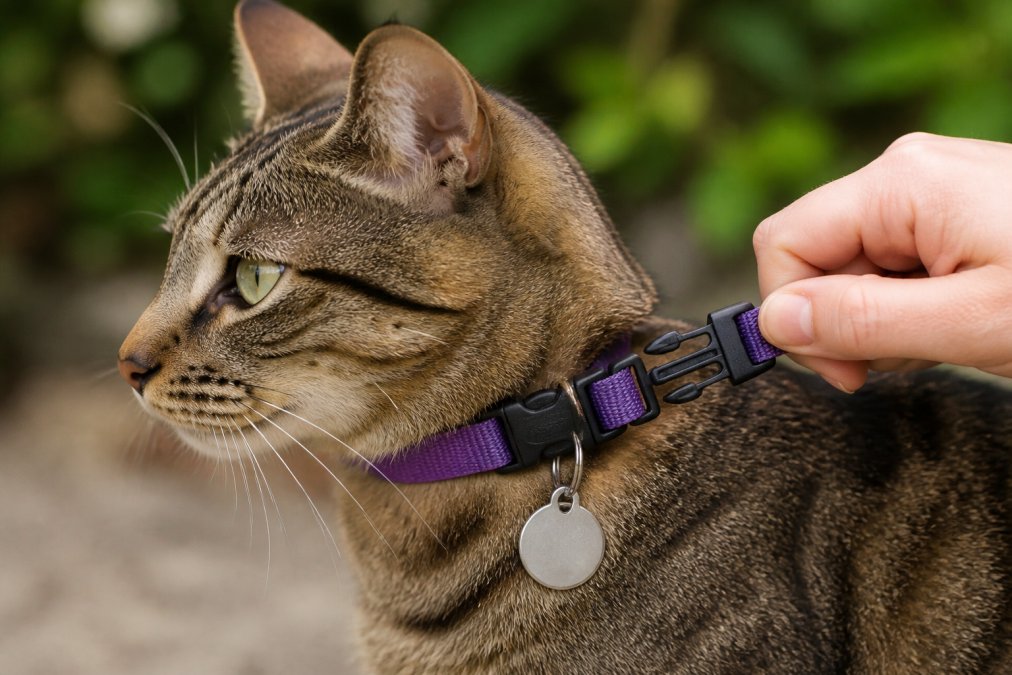
The collar should fit snugly enough that your cat can't slip it off during normal movement, but loose enough that you can fit two fingers underneath. Test this fit regularly as your cat grows or loses weight. Reflective stitching on a breakaway collar adds visibility if your cat escapes at dusk or night.
Cat Microchip Registration in Australia: A Permanent Safety Layer
A microchip is a rice-grain-sized transponder implanted under your cat's skin, usually between the shoulder blades. When a vet or shelter scans it, the microchip displays a unique identification number linked to your contact information in a national registry. Unlike a collar or tag, a microchip can't fall off, fade, or get lost.
In Australia, microchipping is often mandatory for cats in many councils and states, and it's the standard method used by shelters and vets to reunite lost pets with their owners. The microchip registration process involves three steps: your vet implants the microchip during a brief procedure, you receive a unique number and register it with an Australian microchip registry, and you keep your registration current by updating your contact information if you move or change phone numbers.
The critical mistake cat owners make is registering the microchip and then forgetting about it. If you move house and don't update your details in the registry, the microchip is useless. Register your cat's microchip with a major Australian registry such as Microchip Australia or the Australian Companion Animal Registry, and keep your contact information current. If you change your phone number or address, update the registry immediately.
GPS Tracking Technology for Escape-Prone Cats
GPS trackers designed for cats broadcast your cat's location in real time, allowing you to track them on your phone. For an escape artist cat, this transforms recovery from reactive (waiting for someone to find them) to active (you finding them). Modern cat GPS trackers are lightweight and attach to a collar without adding bulk.
The trade-off is battery life and cost. Most cat GPS trackers require charging every 5 to 7 days, and monthly subscription fees vary by model and service provider. A GPS tracker is not a replacement for microchipping; it's an additional layer that gives you active recovery capability. For escape artists with a history of multiple escapes or living in high-risk areas, GPS trackers are worth considering. The technology works best when your cat stays within cellular or GPS range; in urban areas with reliable coverage, GPS trackers have reunited many cats with their owners within hours of escape.
Emergency Recovery Protocols When Your Cat Escapes
The first hour after your cat escapes is critical. Most escaped cats are found within a few blocks of where they escaped, often hiding in bushes, under porches, or in sheds. Start by searching your immediate neighbourhood on foot, calling your cat's name and checking under decks and behind parked cars.
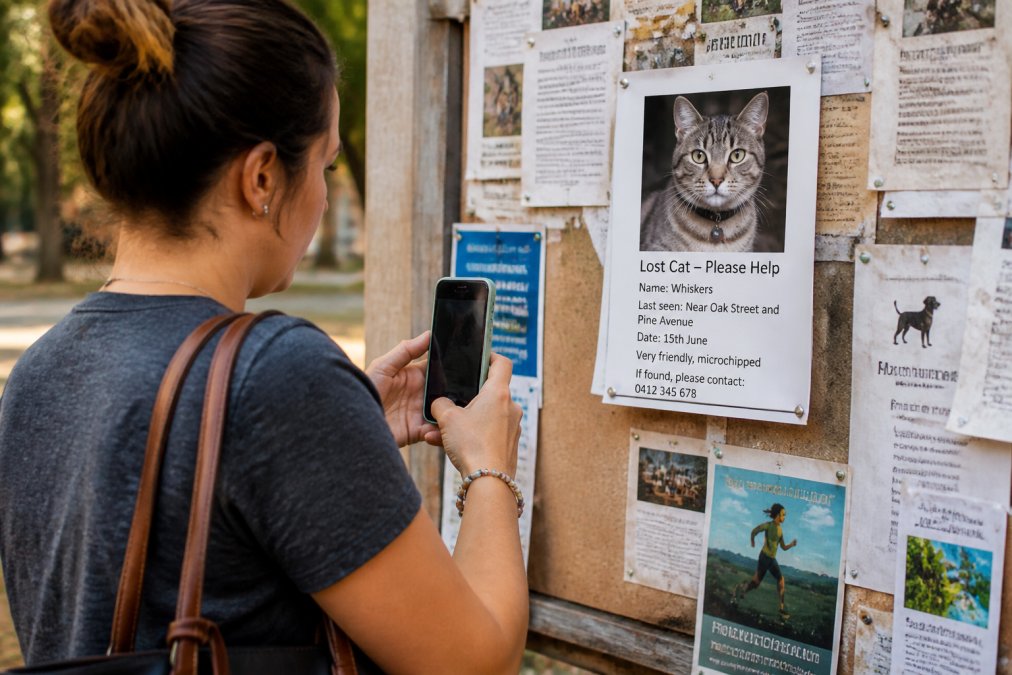
Contact local animal shelters and vets immediately with a description and photo. Ask them to note your cat's microchip number so staff can contact you if someone brings in a matching cat. Post on community social media groups and lost pet networks with a clear photo, description, escape date and location, and multiple contact methods. Ask people to share widely.
Put your cat's litter box outside your door. Cats can smell their own scent from great distances, and the litter box acts as a homing beacon. Leave food and water outside, and consider leaving an item of your clothing that smells like you. Contact local councils and animal control to have an official record of your lost cat.
Cat-Proofing Your Home to Prevent Escape Attempts
Prevention is always easier than recovery. Start with doors and windows: install door sweeps or weather stripping to close gaps, use door stoppers to prevent doors from swinging open, and install secure screens that can't be pushed out from the inside. Create a secure entryway or vestibule where your cat can't dash straight out when the front door opens.
Check for gaps around pipes, vents, and utility penetrations where a determined cat might squeeze through, and seal these with expanding foam or hardware cloth. For cats with outdoor access, consider a catio, an enclosed outdoor space that lets your cat experience the outdoors safely without escape risk.
Environmental enrichment reduces the motivation to escape. Provide climbing spaces, perches, window access for bird watching, and interactive play. A stimulated indoor cat is less likely to be a bolter. The goal is to create a secure space where your cat can't accidentally escape through a moment of opportunity.
Your escape artist cat needs identification that works even when everything else fails. A readable tag with your current phone number, a current microchip registration, and a breakaway collar designed for safety create a three-layer recovery system. For cats with a history of multiple escapes, adding GPS tracking gives you active recovery capability.
Pet ID Tags Australia's cat identification solutions, from durable engraved tags to secure breakaway collars, are built for cats that challenge the limits of their environment. Get started with Pet ID Tags Australia and ensure your escape artist cat has the identification they need to come home, no matter what.
Frequently Asked Questions
Q: What information should be included on a cat ID tag?
A: Your cat's name, your phone number, and a backup contact number are essential. Include your address only if you're comfortable with strangers knowing where you live; many owners prefer a second phone number instead. Avoid listing medical conditions or allergies on the tag itself, these belong in your microchip profile and with your veterinarian. Ensure the engraving is deep and clear so it remains readable after months of wear. Consider adding "Indoor Cat" if your cat is primarily indoors, as finders will know to be extra cautious.
Q: How can I prevent my cat from slipping out of their collar?
A: Use a properly fitted breakaway collar with a two-part release buckle and elastic safety feature. The collar should sit snugly enough that you cannot fit two fingers underneath it, but not so tight that it restricts breathing or movement. Breakaway collars are designed to release if caught on something, reducing strangulation risk while still staying secure during normal wear. Check the fit weekly, especially as your kitten grows. Pair the collar with a microchip for redundancy, if the collar comes off, your cat can still be identified through the microchip registry.
Q: Is microchipping mandatory for cats in Australia?
A: Microchipping requirements vary by state and territory in Australia. Some states require microchipping for all cats, while others mandate it only for cats in certain councils or at the point of sale from breeders. Contact your local council or veterinarian to confirm the rules in your area. Regardless of legal requirements, microchipping is a permanent form of identification that doesn't depend on collars or tags staying attached. It significantly increases the chances of your escape artist cat being returned home if they're found and scanned by a shelter, veterinary clinic, or council ranger.
Q: What should I do if my cat goes missing?
A: Act immediately: search your home thoroughly first, as many cats hide nearby when frightened. Contact local shelters, veterinary clinics, and animal control to report your cat missing and provide a detailed description and photo. Post on community social media groups, local lost-pet websites, and neighbourhood notice boards. If your cat is microchipped, contact the microchip registry to confirm your contact details are current and alert them to the escape. Search the surrounding area during dawn and dusk when cats are more active. Ask neighbours to check sheds, garages, and under decks. Keep searching for at least two weeks, many lost cats are found within this timeframe.
This article was written using GrandRanker