

For a long-haired dog, the collar that looks softest may not be the one that works best for every part of the day. The rolled leather collar vs flat collar for long haired dogs choice often comes down to how each profile sits against the coat, and when and how your dog wears it.
It makes sense to consider rubbing, tangles and matting around the neck. A rolled collar’s rounded shape may reduce the amount of broad, flat material contacting the fur, while a flat collar offers a wider surface and a place to attach identification and, depending on its design, a lead. Neither style is automatically right for every dog. Fit, routine and coat care matter too.
This guide compares the two collar profiles for comfort, everyday use and identification. It also explains what to check for a secure fit and how to keep contact details readable, so you can weigh comfort and safety alongside appearance.
Key Takeaways
- In the rolled leather collar vs flat collar for long haired dogs comparison, consider how each shape contacts your dog’s coat instead of assuming one style suits every dog.
- Friction may contribute to tangles or coat wear, but coat type, fit and care also play a part.
- Match the collar to your dog’s routine, including whether it needs to suit daily wear, walks or both.
- Check fit and comfort regularly, and follow the maker’s care instructions for the collar material.
- Include clear, readable identification in your decision. Pet ID Tags Australia offers personalised dog collars, so check current styles and details before choosing.
Rolled leather collar vs flat collar: what changes for a long-haired dog?
A collar needs to sit comfortably while keeping your dog’s identification secure and easy to read. For long-haired dogs, its shape can affect how the material meets the coat, but it does not tell the whole story. In the rolled leather collar vs flat collar for long haired dogs comparison, consider your dog’s coat, the collar’s fit and your everyday routine together.
A flat collar is a broad strip of material, while a rolled collar has a rounded, tube-like profile. Collars can serve for identification and restraint, among other purposes, as outlined in this general Dog collar overview. Designs and materials vary, so the profile alone cannot predict how a particular collar will feel or perform on your dog.
What is a flat dog collar?
A flat collar is made from a strip of material that lies broad against the neck. This familiar style is often used for daily wear, with a place to attach identification and, depending on its design, a lead. How it contacts the coat depends on its width, material, finish and construction. Stitching, edges and hardware vary, so do not assume every flat collar will tangle or wear the coat.
What is a rolled leather collar?
A rolled leather collar has a rounded profile rather than a broad strip. Some owners consider this shape for long or fine coats because less of the collar lies flat against the fur. That is not a guaranteed coat-care benefit: the collar may still rub or catch, depending on its fit and your dog’s coat. Check the neck regularly for signs of discomfort or tangling.
Coat type can help guide your first choice. Long, silky hair may respond differently to collar contact than curly or dense fur, and individual dogs can vary even when their coats are similar. A collar that suits one dog may not suit another.
Fit matters just as much as shape. A collar that shifts, sits too snugly or catches on fur can be uncomfortable. An unsuitable fit may also affect how securely identification stays in place. Consider whether your dog wears a collar mainly at home, on walks or throughout the day. The useful answer is not that one profile is always best. Choose a collar your dog tolerates comfortably, that suits their routine and keeps identification secure and readable.
How collar shape can affect long hair, tangles and comfort
A collar can move against the coat as your dog walks, turns, scratches or shakes. Repeated rubbing may contribute to tangles or coat wear for some dogs, but friction is not the only possible cause. Coat condition, grooming, fit and how long the collar is worn can all affect what you notice. Judge the rolled leather collar vs flat collar for long haired dogs question on your own dog, not on shape alone.
When might a flat collar catch or rub against the coat?
A flat collar’s broader surface may press on or shift across the fur, depending on its material, finish and fit. If it moves around the neck during walks or daily activity, repeated contact could contribute to knots in some coats. But a flat collar will not automatically damage long hair. Check how it sits while your dog moves, then look for rubbing or caught hairs after wear.
Why might owners consider a rolled profile?
A rolled collar has a narrower, rounded contact profile. Some owners consider it because less of its surface lies flat against long or fine hair. That may suit an individual dog, but it is no guarantee against tangles or coat wear. A rounded shape can still rub if it shifts or does not fit well, so observe your dog’s response over time.
Coat texture can guide what you monitor. Long, silky hair may show knots where it is repeatedly compressed or moved. Curly coats can tangle differently, while dense coats may hide changes close to the skin. For owners maintaining curly coats that are especially prone to matting around the neck, you can discover Royal Oodle for specialised grooming products. Dogs with similar coats can respond differently, so breed labels alone are not a reliable way to choose.
Make a quick neck check part of your usual grooming routine. Feel through the coat where the collar rests and look for new knots, broken-looking hairs, redness or signs that your dog is uncomfortable. Notice whether anything changes after walks or longer periods of wear. If irritation persists, the coat changes noticeably or your dog seems sore, seek advice from a vet or grooming professional who can assess your dog individually.
If you are considering a personalised collar, review personalised dog collars and check the current product details. Whichever style you choose, comfort and clear identification should work together.
Which collar suits walks, everyday wear and your dog’s coat?
There is no one collar style that suits every long-haired dog. A rolled profile may be worth considering if you are concerned about coat contact. A flat collar may be comfortable for everyday wear if it fits well and your dog’s coat stays in good condition. Your dog’s response matters more than a general rule about collar shape.
Use this comparison as a starting point, then check the collar on your own dog during normal wear:
| Collar style | Profile and potential coat contact | Everyday use and checks |
|---|---|---|
| Flat collar | Broad and flat against the neck. Contact varies with its material, finish, fit and movement. | Can suit daily wear if comfortable. Check for shifting, caught fur and readable identification. |
| Rolled leather collar | Rounded and narrower in profile. Some owners consider it to limit broad contact with long fur. | May be an option if you are monitoring coat contact. Check fit, comfort, condition and identification. |
When could a flat collar be the practical choice?
A flat collar can be a sensible everyday option if it sits securely without irritating your dog or leaving the coat tangled. Check that identification stays attached and its details remain easy to read. For walks, do not assume a collar is automatically the right way to manage lead pressure. Choose walking equipment for that purpose based on your dog’s needs.
When could a rolled leather collar be worth considering?
If repeated contact with a broader collar seems to affect your dog’s coat, you could consider a rolled profile and observe the result. Check that it does not shift, rub or cause discomfort during ordinary activity. Do not assume a retailer stocks this style. Verify current product details before choosing a collar.
Keep identification and lead use in mind as separate needs. A collar may carry your dog’s name and contact details, while the equipment used for walks should suit your dog and how lead pressure is managed. Check the fit and attachment points regularly, and make sure identification remains secure and readable. In the rolled leather collar vs flat collar for long haired dogs decision, choose the style that keeps your dog comfortable and identifiable in their actual routine, not the one that looks best on paper.
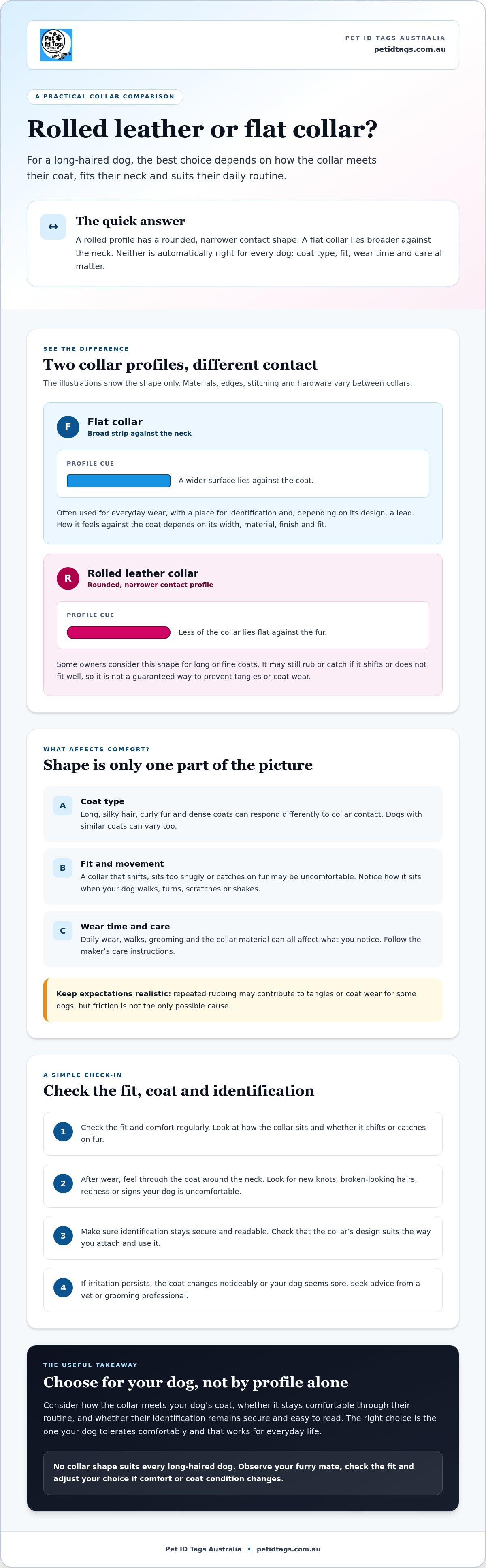
How to choose and check a collar for a long-haired dog
Use this checklist to weigh coat comfort, daily routine and clear identification together. The right choice in the rolled leather collar vs flat collar for long haired dogs question is the one that suits your individual dog and continues to fit comfortably as their coat or body changes.
- 1. Assess the coat. Note whether the neck fur is long, silky, curly or dense, and check where it sits beneath the collar. Look for existing tangles or sensitive areas that may need extra attention.
- 2. Consider the routine. Think about when your dog wears a collar and whether it stays on for long periods. The longer it is worn, the more important it is to check the neck and collar regularly.
- 3. Check the fit. The collar should sit securely without obvious discomfort or excessive movement. Check it while your dog is standing and moving, and make sure fur is not caught in the fastening.
- 4. Plan for identification. Confirm that a tag or other identification can be attached securely without making the collar sit awkwardly. Keep contact details readable and check that the attachment does not interfere with the fit.
- 5. Monitor comfort and condition. Inspect the neck for knots, rubbing, redness or changes in how your dog responds to wearing the collar. Check fastenings and material for wear too.
Keep checking after the initial fit. A collar that was comfortable may need adjusting if your dog’s coat is groomed, grows or changes, or if their body changes. During ordinary use, notice whether it shifts, catches hair or leaves marks. If your dog seems uncomfortable or you spot persistent irritation, pause and seek individual advice from a vet or grooming professional.
Care matters as well. Follow the manufacturer’s instructions for cleaning and storage, especially for leather. Do not assume every material can be cleaned or dried the same way. Unsuitable care may affect its condition and how it sits against the coat. After cleaning, check that the collar is in good condition and comfortable before putting it back on.
Check the tag’s attachment separately to make sure identification stays secure. Read this practical guide on how to attach a dog tag to a collar. If you are considering a personalised option, explore personalised dog collars and confirm current styles and details before choosing.
Make collar comfort and clear identification work together
There is no single collar profile that suits every long-haired dog. Consider how the material sits against your dog’s coat, whether the fit stays secure during daily activity and how easily you can keep their identification readable. The best choice in the rolled leather collar vs flat collar for long haired dogs comparison balances these needs rather than prioritising appearance or coat type alone.
How does a personalised dog collar support everyday identification?
A personalised dog collar can carry identification details on the collar itself, depending on its design. Visible details can help someone identify your dog without needing to scan a tag or access an online profile. Pet ID Tags Australia offers personalised dog collars, but check current product details before choosing. Do not assume a particular profile, material or configuration is available. Make sure the details are clear and the collar remains comfortable for your dog.
Collar fit and identification work together. A tag or other identification should be attached securely without making the collar sit awkwardly or interfering with its fastening. Check that details are readable, and make sure the collar does not shift excessively or catch the coat during ordinary wear. These simple checks help keep identification useful while keeping your dog’s comfort in view.
What is a sensible next step if you are still unsure?
Compare how each option fits your dog and observe the coat where the collar rests. Check for tangles, rubbing or changes in comfort during your usual routine. Review the maker’s care instructions, especially for leather, and confirm current product details before selecting a style. If you are unsure about persistent coat or skin concerns, seek individual advice from a vet or grooming professional.
For more help weighing identification and everyday wear, read the personalised dog collars guide. A little observation can make the decision clearer. Choose the collar that suits your dog’s comfort and routine while keeping their contact details easy to read.
Explore personalised pet identification options.
Choose a collar that works for your dog every day
The rolled leather collar vs flat collar for long haired dogs decision is not a one-style-fits-all choice. A rounded profile may suit some coats, while a flat collar may work comfortably for others. Check how the collar sits, watch for rubbing or tangles, and consider your dog’s routine. Above all, keep identification secure and easy to read.
Pet ID Tags Australia is an online retailer specialising in personalised pet identification for dogs and cats. Its range includes personalised dog collars and custom-engraved identification tags, along with other pet accessories. Clear contact details are useful, but your dog’s comfort and the collar’s fit still deserve careful attention.
Compare current product details and care guidance before choosing. A comfortable fit and readable identification can help you feel more prepared when your dog is out and about. Explore personalised pet identification options and choose an option that suits your dog’s everyday needs.
Frequently Asked Questions
Is a rolled leather collar better for long-haired dogs?
A rolled leather collar may suit some long-haired dogs, but it is not automatically the better choice. In the rolled leather collar vs flat collar for long haired dogs decision, its rounded shape may mean less broad contact with fur, though that does not guarantee fewer tangles or greater comfort. Fit, coat texture, wear time and your dog’s response all matter. Check the neck regularly and reassess if you spot rubbing or discomfort.
Can a flat collar cause matting in a long-haired dog?
A flat collar does not automatically cause matting, though repeated rubbing from a poorly fitting or frequently shifting collar may contribute to tangles for some dogs. Coat texture, grooming habits, fit and how long the collar is worn can all affect the result. Check the fur beneath it during regular grooming. If tangles keep returning, reassess the collar’s fit and your dog’s wearing routine.
Is a rolled collar safe for everyday wear?
A rolled collar may suit everyday wear if it fits securely, stays comfortable and remains in good condition. Check that its fastenings work as intended and any identification is attached securely. No collar style suits every dog or situation, so monitor your dog during ordinary wear. Follow the product’s care instructions, and seek tailored advice if your dog shows ongoing discomfort.
How should a collar fit on a long-haired dog?
A collar should sit securely without obvious discomfort or excessive movement. Do not judge fit by coat volume alone. Check how it rests against your dog and follow the maker’s sizing and fitting instructions, as designs differ. Recheck after grooming, coat changes or growth. Look beneath the collar for trapped fur, tangles or rubbing, and adjust or reassess the fit if you notice a problem.
Can a long-haired dog wear a collar all day?
Whether your dog can wear a collar all day depends on their comfort, the collar’s fit and condition, and the product guidance. If it is worn for extended periods, regularly check the neck for tangles, rubbing or signs of discomfort. Remove or adjust the collar when needed, following the maker’s instructions. Ask a veterinary professional about persistent skin concerns or ongoing discomfort.
Should I choose a collar by breed or coat type?
Coat texture and your dog’s individual response are more useful guides than breed alone. Dogs with long, silky, curly or dense coats may respond differently to the same collar, so observe how it sits and whether the fur beneath it tangles. Also consider how often your dog wears it. Monitor the coat and fit over time, and change your approach if you notice recurring problems.