
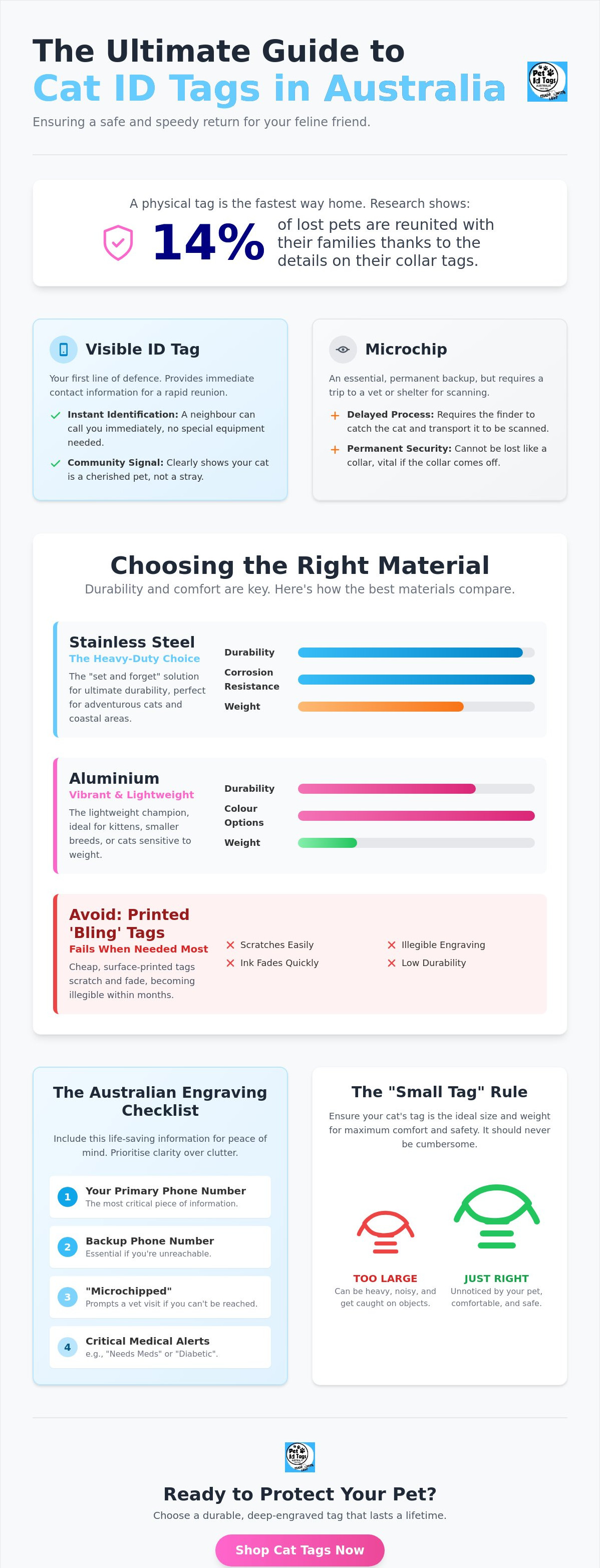
A microchip is a vital safety net, but research shows that 14% of lost pets are reunited with their families specifically through the details on their collar tags. In an environment where roaming cats face veterinary bills up to 400% higher than those kept safely at home, immediate identification is your first line of defence. Finding the right pet tags for cats is about more than just aesthetics; it is about ensuring a rapid return if your feline friend ever wanders too far.
You likely know the frustration of a noisy tag that jingles against the food bowl or an engraving that scratches into an illegible mess within months. It is common to worry that a tag might be too heavy or bothersome for a cat to wear comfortably. This guide ensures you do not have to compromise. You will learn how to choose a feather-light, deep-engraved ID tag that remains permanently legible and unnoticed by your pet.
We will break down the best materials for the Australian climate, navigate the impact of the 2026 Victorian registration levy increases, and show you how to balance essential safety with a style that matches your cat's personality.
Key Takeaways
- Understand why a visible ID tag provides a faster reunion than a microchip scan alone, especially for indoor cats that accidentally escape.
- Compare the durability of stainless steel against the lightweight benefits of aluminium to select the best pet tags for cats.
- Learn the "Small Tag" rule to ensure your feline's identification is the ideal size and weight for maximum comfort and safety.
- Follow the Australian engraving checklist to include life-saving information like contact numbers and critical medical alerts.
- Discover how deep-engraved, high-quality materials prevent the common issue of faded or scratched identification that fails when it is needed most.
Why Every Australian Cat Needs a Personalised ID Tag
In the high-stakes moments following a pet's disappearance, every second counts. While microchipping is a legal requirement across most Australian states, it serves as a silent backup rather than an immediate solution. High-quality pet tags for cats act as a visible signal to your local community that an animal is cared for and has a home to return to. A visible tag transforms a lost cat from a "stray" into a "neighbour's pet" in the eyes of a passerby. This distinction is critical for a rapid recovery.
During Australia's unpredictable bushfire seasons or severe summer storms, pets can become disoriented and flee. If a neighbour finds your cat huddled under their deck after a lightning strike, they can call you immediately. Without a tag, that same cat might be ignored or, worse, handed over to an already overstretched animal shelter. Even if your cat stays indoors, identification is non-negotiable. Many cats entering shelters are indoor pets that escaped through an open window or a door left ajar. These cats are often the most vulnerable because they lack the "street smarts" of outdoor roamers.
The Tag vs. Microchip Debate
Microchips are essential for permanent identification, but they aren't a complete safety strategy. To read a chip, a finder must capture the cat and transport it to a vet for scanning. This process relies on the finder's time and transport. A phone number engraved on one of the common materials for pet tags allows for an instant reunion. A tag is the fastest way for a neighbour to contact you.
Feline Safety Standards in Australia
Using identification ensures you remain compliant with local council regulations. Many Australian jurisdictions require cats to wear registration tags when off their owner's property. Beyond legalities, a tag helps reduce the burden on our shelter system. When a cat is returned directly to its owner by a resident, it avoids the stress of a shelter stay and keeps resources available for truly stray animals.
The "Good Neighbour" factor plays a significant role in suburban feline safety. When locals can identify your cat, it builds a sense of community responsibility. If your cat is spotted in a place it shouldn't be, such as a busy road or a construction site, a quick phone call from a concerned resident can prevent a tragedy. Investing in durable pet tags for cats provides the necessary peace of mind that your pet is always identifiable, regardless of the circumstances. It's a simple, cost-effective tool that offers a layer of protection that a microchip alone cannot provide.
Comparing Materials: Stainless Steel vs. Aluminium vs. Bling
Selecting the right material is the first step in ensuring long-term feline safety. Many generic retailers offer cheap, printed tags that look good on the shelf but fail in the field. High-quality pet tags for cats must utilise deep laser engraving rather than surface printing or light stamping. Laser engraving physically removes metal from the tag surface. This creates a permanent, high-contrast mark that remains legible even after years of friction against a collar. This level of clarity is vital for staying compliant with Australian cat identification laws, which mandate that contact information must be clear and up to date.
Stainless Steel: The Heavy-Duty Choice
Stainless steel is the industry standard for sheer durability. It is naturally rust-proof and exceptionally resistant to scratching. For adventurous cats that enjoy supervised outdoor time or those living in salty coastal environments, this material is the "set and forget" solution. It does not corrode or bend. The metal maintains its polished finish despite the daily wear of a cat's grooming and movement. You can find a deeper analysis of this material's strength in our guide to stainless steel dog tags australia. It is the most reliable option for a lifetime of use.
Aluminium: Vibrant Colours and Light Weight
Aluminium is the lightweight champion of pet identification. It is approximately one-third the weight of stainless steel. This makes it the preferred choice for kittens or smaller breeds that may be sensitive to heavy items around their necks. Quality aluminium tags undergo an anodising process. This electrochemical treatment hardens the surface and locks in vibrant colours. It ensures the tag remains a visible safety feature without weighing down the collar. If your cat is particularly small or fussy about its gear, aluminium provides the necessary protection without the bulk.
Crystal Bling Pet Tags
Style should never compromise functional safety. Many decorative tags lose their crystals quickly, which can leave sharp edges or an unsightly finish. When choosing a "bling" option, look for designs where the crystals are deeply recessed into the metal frame. This prevents them from being knocked out during play. The engraving area must always remain the priority. A tag can sparkle, but the text must be deep and clear to be effective. These tags are an excellent choice for "indoor royalty" that requires a mix of elegance and identification.
The method of engraving is just as important as the metal itself. Traditional stamping can be shallow, and printing eventually rubs away. Deep laser engraving ensures that your contact details survive the life of the tag. If you are looking for a solution that balances comfort with permanent legibility, you can explore our range of durable cat tags to find the perfect fit for your pet's lifestyle. Whether you choose the ruggedness of steel or the lightness of aluminium, a high-quality finish is what brings your cat home safely.
Finding the Perfect Fit: Size, Shape, and Weight for Felines
A cat's comfort is the most critical factor in ensuring they keep their collar on. Even the most durable material is useless if the tag is so bulky that your pet constantly tries to remove it. Choosing the right dimensions for pet tags for cats requires a balance between legibility and physical footprint. If a tag is too large, it can catch on household objects or interfere with a cat's natural agility. It's about finding a "silent guardian" that sits comfortably against their chest without causing distraction.
The 25mm Standard for Cats
Large tags are designed for dogs and often prove problematic for felines. A tag with too much drop can dip into the water bowl, causing unnecessary mess and potentially startling the cat. It can also clatter against the floor when they jump from high surfaces. For maximum comfort, the ideal cat tag diameter is 20-25mm. This specific size range ensures there is enough room for your mobile number while keeping the tag high enough on the chest to avoid snagging.
Shapes that Suit Feline Movement
Round tags remain the gold standard for safety because they lack sharp points. They glide easily over fur and don't catch on the loops of a knitted jumper or a scratching post. While heart, star, or fish shapes offer a touch of personality, they must have rounded edges to prevent skin irritation. Following RSPCA recommendations for cat safety, you should always pair your tag with a quick-release collar. For cats that are particularly sensitive to dangling items, slide-on tags are a superior alternative. These sit flush against the collar strap, eliminating the "jingle" and reducing the risk of the tag getting caught during a climb.
Weight is a subtle but significant issue for smaller breeds. A tag that feels light to a human can still cause neck fatigue for a cat weighing only a few kilograms. You can test the weight by observing your cat's behaviour after fitting a new tag. If they paw at their collar or show signs of discomfort when jumping, you may need to switch to a lighter material like aluminium. The goal is a tag that your cat doesn't even notice they're wearing.
The attachment method also affects the final weight and hang. Using a small, high-quality split ring is usually sufficient, but some owners prefer a pet tag quick clip for easy transfer between collars. Ensure the ring is tight and doesn't add unnecessary length to the "dangle." A compact setup is less likely to get snagged in the garden or caught in the gaps of a floor vent. By prioritising a small, lightweight profile, you ensure your cat's safety remains a comfort, not a burden.
The Australian Engraving Checklist: What to Put on the Tag
Engraving is the most critical functional element of pet tags for cats. While a stylish design is a bonus, the primary purpose is the transmission of life-saving data. Effective tags follow a "less is more" philosophy. Overcrowding a small surface area with too much text reduces legibility, making it harder for a finder to assist your pet. Prioritise high-contrast, deep engraving that can be read at a glance in low light or by someone who may be nervous about handling an unfamiliar cat.
The "Essential Three" for any Australian cat tag are the pet's name, your current mobile number, and the phrase "I am Microchipped." Including the microchip status is a powerful deterrent against theft and signals to finders that the cat has a registered legal owner. If your cat has a chronic condition, adding a medical alert like "Needs Meds" or "Diabetic" is vital. This information can prevent well-meaning neighbours from feeding your cat something dangerous or ensure they seek urgent veterinary care if the cat appears lethargic.
Critical Contact Information
Always use a mobile number rather than a landline. Most lost pet reunions happen outside of standard business hours, and you need to be reachable while you are out searching. Including a second emergency contact number, perhaps a partner or a local friend, provides a vital backup if your phone is out of range or out of battery. The inclusion of a home address is a personal choice for Aussie owners. In quiet suburbs, it can lead to a neighbor walking your cat straight home. However, many owners now omit the address for privacy reasons, relying instead on the speed of a direct phone call.
Smart Tags and QR Codes
Some owners choose to add the word "Reward" to the tag. While it might feel transactional, it acts as a strong psychological trigger that encourages finders to take immediate action. Whether you prefer a minimalist approach or a tech-forward solution, the goal is clarity. To ensure your feline's details are permanently preserved, you can customise your cat's ID tag with deep laser engraving that won't fade or scratch away.
Formatting matters just as much as the content itself. Use large, clear fonts for the phone number and ensure the most important information is centred. By following this checklist, you transform a simple accessory into a robust safety tool that speaks for your cat when they cannot speak for themselves.
Shop the Collection: The Best Pet Tags for Cats in 2026
Pet ID Tags Australia has been a trusted name in feline safety since 2002. We understand that a cat tag is more than a decorative piece; it is a critical piece of safety equipment. Our collection of pet tags for cats is curated to meet the specific needs of Australian felines, focusing on lightweight materials and permanent legibility. Every product in our range reflects our commitment to craftsmanship and long-term utility. We don't just sell accessories; we provide the peace of mind that comes from knowing your pet is always identifiable.
Our Top Feline Favourites
For owners who prefer a subtle look, the Small Stainless Steel Round is the ultimate choice for the minimalist cat. It is compact, virtually indestructible, and sits high on the collar to avoid interference with eating or drinking. If you want a pop of vibrant colour, our Anodised Aluminium Heart is a standout option. The anodising process ensures the colour stays bright while the tag remains feather-light on your cat's neck.
- Crystal Bling Pet Tags: These are designed for the cat that demands the spotlight. The crystals are recessed into the metal to ensure they stay put during active play.
- Small Brass Tags: A classic, sophisticated look that ages beautifully. Brass develops a unique character over time while remaining easy to read.
- Pet Tag Quick Clips: These clips make it incredibly easy to move tags between different collars. They are perfect for owners who like to change their cat's style without struggling with traditional split rings.
The Pet ID Tags Australia Difference
We are a family-owned Australian business focused on quality and precision. Unlike mass-produced alternatives that use surface printing, our deep laser engraving process is guaranteed to last. We etch your contact details deep into the metal, ensuring they remain readable even after years of wear. This permanent legibility is what sets our products apart from cheaper, stamped alternatives.
We provide fast shipping across Australia to get your cat protected as soon as possible. Because we operate locally, we maintain strict quality control over every tag that leaves our workshop. You can trust that the product you receive is built to survive the Australian climate and your cat's daily adventures. Our long-standing heritage in the industry is a testament to our focus on durability and customer satisfaction.
Choosing the right identification is a small investment that offers a massive return in safety. Whether you opt for the ruggedness of stainless steel or the elegance of brass, our tags are designed to be a silent, comfortable guardian for your pet. Browse our full range of Pet Tags for Cats and secure your pet’s safety today. Don't leave your feline's return to chance; equip them with a tag that is built to last a lifetime.
Securing Your Cat's Future with Confidence
A high-quality ID tag is the most effective way to ensure a rapid reunion if your feline friend ever wanders. By selecting the correct size and prioritising durable materials like high-grade stainless steel or anodised aluminium, you provide safety without compromising on comfort. It is essential to remember that deep laser engraving is the only method that guarantees permanent legibility against the rigours of the Australian climate. A small, well-fitted tag acts as a silent guardian, speaking for your pet when they cannot speak for themselves.
Pet ID Tags Australia has been a trusted specialist since 2002, expertly laser engraving every piece in our local workshop. With over 80 styles in our feline-friendly collection, you can find a solution that matches your cat's lifestyle and your own peace of mind. Investing in reliable pet tags for cats ensures that your pet is never just another stray in the eyes of a neighbour. Take this simple step today to protect your pet for the long term.
Find the perfect personalised tag for your cat here and enjoy the security of a professional, durable solution.
Frequently Asked Questions
Do indoor cats really need an ID tag if they are microchipped?
Yes, indoor cats absolutely need visible identification. A microchip is a permanent backup, but it requires a trip to a vet or shelter to be read. If your cat slips out an open door, a tag allows a neighbour to call you immediately. This speed is vital for house cats that may be frightened and hide nearby. A visible tag is the fastest way to facilitate a safe return.
What is the best material for a cat tag that won’t rust or fade?
Stainless steel is the most durable material as it is naturally rust-proof and highly resistant to scratches. For those wanting a lighter option, anodised aluminium is excellent. It doesn't corrode and the colour is chemically bonded to the metal, so it won't peel off like cheap painted alternatives. Both materials ensure your pet tags for cats remain clear and functional for years in the harsh Australian climate.
How much information can I fit on a small cat tag?
You can usually fit three to four lines of text on a standard 25mm tag. It's best to keep the information focused on the essentials: your cat's name, your mobile number, and their microchip status. If you try to include too much detail, the font size must decrease, which makes the tag harder to read at a distance. Clear, bold engraving is always the priority for rapid identification.
Will a metal tag bother my cat or be too heavy for their neck?
A properly sized metal tag won't bother your cat. Most felines quickly adjust to the sensation and don't even notice the weight. For smaller cats or kittens, choosing a 20mm aluminium tag provides a feather-light solution that doesn't cause neck fatigue. Ensuring the tag is sized correctly for their frame prevents it from catching on objects or dipping into their food bowl during their daily activities.
How do I stop my cat’s tag from making a jingling noise?
To eliminate noise, you can choose a slide-on tag that sits flat against the collar strap. These don't dangle or jingle against food bowls. Alternatively, using a small, tight split ring or a pet tag quick clip can reduce the movement that causes noise. Ensuring the tag is high enough on the chest prevents it from clattering against household surfaces when your cat jumps or runs around the house.
What size tag is best for a kitten vs. a full-grown cat?
Kittens should start with a 20mm aluminium tag because it is the lightest option available for their developing necks. Once they reach adulthood, a 25mm tag in either aluminium or stainless steel is the standard choice. This larger size allows for slightly bigger engraving while remaining comfortable for a full-grown cat. Always monitor your pet's comfort whenever you upgrade their collar or identification gear to ensure a proper fit.
Can I put medical information on my cat’s ID tag?
Including medical alerts is a very effective safety measure. Phrases such as "Needs Meds," "Diabetic," or "Strict Diet" provide critical context to anyone who finds your cat. This prevents well-meaning people from feeding your pet something that could cause an allergic reaction or illness. It also signals that the cat requires urgent attention, which can speed up the effort to find the owner and return the pet home safely.
How long does the engraving on a Pet ID Tags Australia tag last?
Our deep laser engraving is engineered to last for the life of the tag. Unlike traditional stamping or surface printing that can wear down within months, our process removes metal to create a permanent, high-contrast mark. This ensures that your contact details remain legible even after years of friction against the collar. We've been providing these durable solutions to Australian pet owners since 2002 with proven, long-term results.