
Table of Contents
- Is Microchipping Enough Without a Pet Tag?
- How Microchips Work and Why They Are Not GPS Trackers
- The Benefits of Pet ID Tags for Faster Reunions
- Custom Engraved Cat Tags Australia: Choosing the Right ID for Cats
- Microchip vs Pet Tag: A Side-by-Side Comparison
- Common Misconceptions About Microchips and Pet Tags
- Why Both Matter: A Layered Approach to Pet Identification
- Why Both Matter: A Layered Approach to Pet Identification
- Frequently Asked Questions
Last Updated: September 30, 2026
Is Microchipping Enough Without a Pet Tag?
No, microchipping on its own is not enough. A microchip is a permanent backup that only works when someone scans it; a pet tag is visible identification that works the moment your pet is found.
This guide from Pet ID Tags Australia covers why microchipping enough relies on a visible tag, how chips work, where they fall short, and how to layer your identification.

The Critical First 24 Hours After a Pet Goes Missing
The first day a pet is missing is when most reunions happen or fail. A frightened dog or cat stays close to home but will not approach a stranger, so visible identification matters most then.
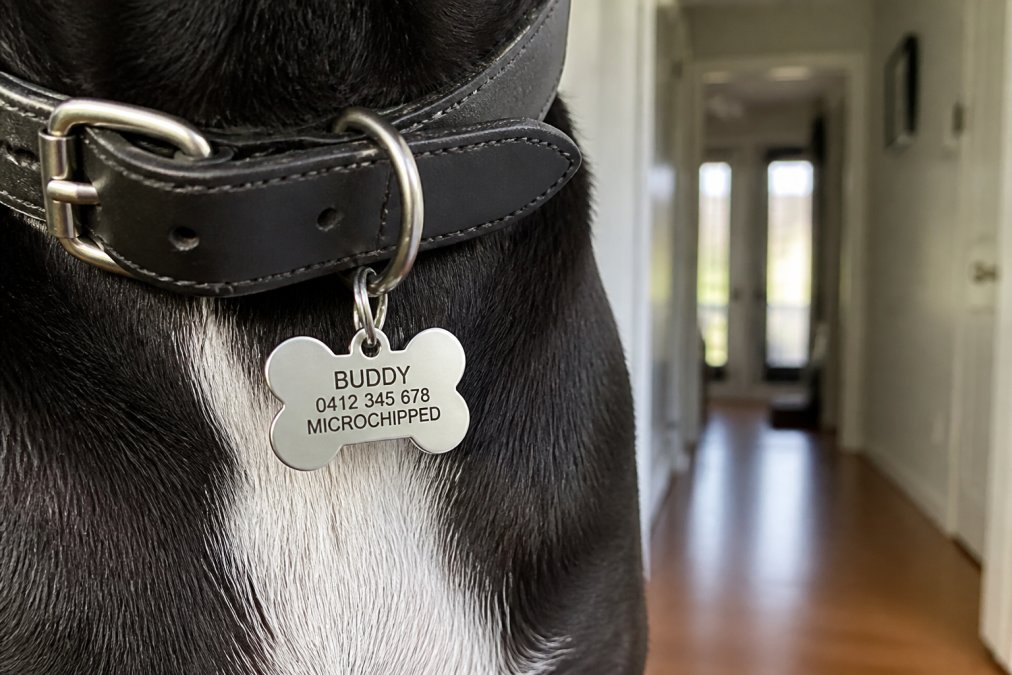
A microchip requires a scanner, and scanners live at vet clinics, shelters, and council pounds. A tag requires only eyes: a neighbour or passerby can read a phone number and call you in minutes.
Vets advise the fastest reunions happen when a pet wears a tag and carries a chip: the tag handles first contact, the chip confirms ownership if the collar slips off.
How Microchips Work and Why They Are Not GPS Trackers
A microchip is a passive transponder, roughly the size of a grain of rice, implanted between the shoulder blades. It holds a unique identification number and nothing else, no battery, no GPS, no signal.
The chip only becomes useful when a scanner passes over it: the scanner's low-power radio signal powers the chip just long enough to read its number, which is checked against a registry database for your contact information.
This is the biggest misconception owners carry. A chip is not a tracker and cannot tell you where your pet is. It only confirms who your pet is, and only after someone has found them and taken them somewhere with a scanner.
Scanner compatibility is a real limitation. Most Australian chips use the ISO 11784/11785 standard at 134.2 kHz, but some older chips run at 125 kHz, and older or non-universal scanners may not read both. A chip that reads at one clinic may fail at another, so a finder may come up empty even though your pet is chipped. A visible tag bypasses this entirely.
Chip migration is another limitation. A chip is not anchored to bone or muscle, so in very active or very young animals it can migrate from between the shoulder blades to the shoulder, neck, or occasionally down the leg. A sweep of only the standard site may miss it, which is why clinics and shelters scan the whole body, and why a collar tag is a useful backup, telling the finder the pet is owned and giving them reason to persist with a full scan.
Chips do not store medical information. A chip holds a number only, no vaccination history, allergies, or conditions. Medical information lives in the registry database, accessible only if the finder or vet looks up the number. A QR code tag can link to a profile with medical notes, an advantage smart tags have over chips and engraved tags.
International travel is where chips become mandatory, not optional. For pets travelling overseas, a microchip is generally required for customs and quarantine identification, and it must be implanted before any rabies vaccination for that vaccination to be valid in many destination countries. A tag is for local recovery and has no role in border control. Think of the chip as your pet's passport and the tag as their phone number: you need both.
A microchip is a permanent, tamper-proof backup that works when someone with the right equipment scans it. It is not a tracker, not a medical record, and not a substitute for a visible tag.
The Benefits of Pet ID Tags for Faster Reunions
The benefits of pet ID tags come down to speed and visibility. A tag works instantly, needs no equipment, and speaks for your pet when you cannot.
Smart Pet ID Tag - QR Code Dog & Cat →
- Instant identification: Anyone can read an engraved phone number without a scanner.
- No power source: Tags never run out of battery or lose signal.
- Proof of ownership: A personalised tag with your pet's name supports your claim if a dispute arises.
- Low cost, high return: A durable engraved tag costs a fraction of a vet visit and lasts for years.
- Works alongside the chip: The tag gets the call made; the chip confirms it is really your pet.
Tag durability matters: cheap stamped tags fade within months, while deep engraving holds up far better. A tag you cannot read is no better than no tag.
Custom Engraved Cat Tags Australia: Choosing the Right ID for Cats
Choosing custom engraved cat tags in Australia comes down to weight and security. Cats tolerate heavy or dangling tags far less than dogs, and an uncomfortable tag is one a cat will work loose.
For cats, prioritise a lightweight tag with deep engraving. Anodised aluminium stays light on the neck while the engraving remains crisp. Keep the text short: your pet's name and one phone number is enough.
Safety collars matter too: a climbing cat can catch a fixed collar on a branch or fence. Breakaway or quick-release collars reduce that risk, though they come off more easily, another reason the chip must stay up to date.
If your cat is an escape artist, a secure harness paired with a tag gives you more control.
Microchip vs Pet Tag: A Side-by-Side Comparison
The table below compares the two forms of identification across the factors that matter most.
| Feature | Microchip | Pet Tag |
|---|---|---|
| How it is read | Scanner required | Read by eye |
| Works instantly | No | Yes |
| Can be removed | No | Yes, with the collar |
| Needs power | No | No |
| Best for | Permanent backup | Immediate contact |
| Updatable | Yes, via registry | Yes, only by new tag |
| Cost | One-off implant fee | Low, per tag |
Common Misconceptions About Microchips and Pet Tags
Several myths keep owners from using both forms of identification, and a few hide real risks most guides never mention.
Why Both Matter: A Layered Approach to Pet Identification
The strongest protection is layered: a visible ID tag for instant contact, a microchip for permanent proof of ownership, and an up-to-date registry record so the chip actually works. Each layer covers a different gap.
Why Both Matter: A Layered Approach to Pet Identification
For the visible layer, a durable engraved tag is the foundation. Pet ID Tags Australia has spent over 20 years engraving tags that stay readable, with deep laser engraving that resists fading and scratching. Our range includes lightweight aluminium and stainless steel tags built for everyday wear, plus smart QR code tags that let a finder scan your pet's profile and reach you instantly.
Frequently Asked Questions
Is a microchip a GPS tracker for my pet?
No. A microchip is a passive radio frequency identification (RFID) device about the size of a grain of rice. It does not transmit a signal or GPS location. It only stores a unique number that can be read when a scanner is passed over it. A pet tag, by contrast, provides immediate visible identification with your contact details, so anyone can call you without needing a scanner or a trip to a vet.
Are pet ID tags legally required in addition to microchipping?
In most Australian states and territories, microchipping is mandatory for dogs and cats, but a physical ID tag is not always a legal requirement. However, local council regulations often require a visible tag with your contact details. Regardless of the law, a tag is the fastest way for a finder to reach you. For example, a personalised engraved tag from Pet ID Tags Australia ensures your details are always readable.
What happens if a pet is found with only a microchip?
If a pet is found with only a microchip, the finder must take it to a vet, animal shelter, or animal control facility to be scanned. This can take hours or even days. If your contact details are not up to date in the registry database, reunification becomes even harder. A visible pet tag bypasses this delay by letting anyone call you immediately, which is why the benefits of pet ID tags go beyond legal compliance.
Can a vet scan a microchip for free?
Most veterinary clinics and animal shelters will scan a microchip at no cost. However, this still requires the finder to transport your pet to a scanner. A pet tag eliminates that step. For cats, custom engraved cat tags Australia offers lightweight options that are comfortable and secure. Pairing a microchip with a tag gives you both permanent identification and instant visibility.
Losing a pet is stressful, and the gap between a quick reunion and a long search often comes down to identification. Pet ID Tags Australia helps you close that gap with deeply engraved tags, smart QR code tags, and durable collars and harnesses, all backed by over 20 years of engraving experience and a 30-day satisfaction guarantee. Get started with Pet ID Tags Australia and give your pet the best chance of coming home.