
Table of Contents
- Why Pet Tags Fade and Become Unreadable
- What Is the Best Material for Dog Tags to Prevent Fading?
- How to Clean Dog Tags Without Damaging the Engraving
- Step-by-Step Guide to Stopping Tag Wear and Tear
- How Often to Replace Pet Tags: A Visual Inspection Checklist
- The Role of Engraving Depth and Protective Coatings
- Conclusion
- Frequently Asked Questions
Last Updated: September 4, 2026
Pet identification is only as reliable as the tag attached to the collar, yet many owners notice the engraving becoming illegible within a matter of months. Understanding how to stop pet tags fading starts with recognising that most wear comes from physical abrasion, chemical exposure, and poor manufacturing quality rather than simple age. At Pet ID Tags Australia, we have spent over 20 years engraving identification tags, and the difference between a tag that lasts a decade and one that fails in a year almost always comes down to material choice and engraving method. Below, we'll show you exactly how to protect your pet's details so they remain readable for years, starting with why tags fail and the specific fixes that prevent it.
Why Pet Tags Fade and Become Unreadable
Pet tags fade through a combination of physical abrasion and chemical attack, but the chemical side is often misunderstood. While friction from collars and surfaces wears down shallow markings, the more insidious damage comes from specific substances your pet encounters daily. Understanding these reactions helps you choose a tag that resists them.
Chlorine and salt water are two of the most aggressive accelerants. Chlorinated pool water reacts with copper and brass to form copper chloride, a compound that pits the metal surface and leaves a greenish residue that obscures engraving. Salt water accelerates galvanic corrosion, especially where the tag meets the stainless steel split ring. This creates a small electrical current that eats away at the softer metal around the hole, eventually causing the tag to fail at the attachment point. For pets that swim regularly, rinsing the tag in fresh water immediately after is non-negotiable.

Flea and tick treatments are a hidden culprit. Spot-on treatments applied to the back of the neck often contain permethrin or fipronil suspended in alcohol-based solvents. These chemicals can run down the coat and pool on the tag. Over weeks, the solvent breaks down protective lacquers and the active ingredients accelerate oxidation on bare metals. A common pattern is a tag that looks fine for six months, then suddenly develops a dull, etched appearance around the engraved letters.
Lawn fertilisers and weed killers are another overlooked risk. Many Australian lawns are treated with iron-based products to promote green growth. Iron sulphate, a common ingredient, leaves a rust-coloured stain on tags and catalyses oxidation on steel. If your dog rolls in freshly treated grass, the residue can sit in the engraved grooves and corrode the lettering from the inside out.
The mechanism of failure is consistent across these exposures: moisture carries the chemical into the recessed engraving, where it sits undisturbed. Unlike the flat surface, the grooves are difficult to wipe clean, so the chemical has time to react. This is why a tag can look clean on the outside while the lettering becomes illegible from within.
This chemical perspective changes the maintenance conversation. It is not enough to wipe the surface; you must actively flush the engraved grooves with fresh water after known exposures. For pets with high chemical exposure, stainless steel is the only material that resists these reactions, because its chromium oxide layer is self-repairing. Brass, copper, and even anodised aluminium will eventually succumb to the specific chemicals listed above.
What Is the Best Material for Dog Tags to Prevent Fading?
Stainless steel is the best material for dog tags when preventing fading is the priority. Unlike brass or copper, which tarnish and react with moisture, stainless steel resists corrosion and maintains its surface integrity under constant friction. With proper care, a stainless steel tag can remain legible for the life of the pet.
Anodized aluminium is a lighter alternative, but the coloured coating can chip, exposing the raw metal beneath. Brass and copper develop a patina over time that can obscure engraved text, and while this can be polished off, doing so also wears the engraving. For active dogs and escape-prone cats, stainless steel offers the best balance of durability and weather resistance. The material does not rust, does not require protective coatings, and its hardness means engraving stays sharp. At Pet ID Tags Australia, our stainless steel range, including the Stainless Steel Bone Pet ID Tag and round options, uses deep laser engraving that cuts into the metal rather than sitting on its surface.

| Material | Fade Resistance | Corrosion Resistance | Best For |
|---|---|---|---|
| Stainless steel | Excellent | Excellent | Active dogs, long-term wear |
| Anodized aluminium | Good | Good | Lightweight needs, indoor cats |
| Brass | Poor | Moderate | Short-term use, decorative |
| Copper | Poor | Poor | Avoid for outdoor pets |
How to Clean Dog Tags Without Damaging the Engraving
Cleaning dog tags is necessary, but the wrong method accelerates fading. A common mistake is using harsh chemical cleaners or abrasive pads, which strip protective layers and scratch the metal surface around the engraving.
For routine maintenance, use a soft microfibre cloth and warm soapy water. Gently wipe the tag to remove dirt and oils, then dry it thoroughly. For tougher grime or early signs of tarnish on brass tags, a paste of white vinegar and baking soda applied with a soft cloth can lift oxidation without scratching. Rinse and dry completely to prevent moisture from sitting in the engraved grooves.
Avoid metal polish on engraved areas. While polish restores shine, it also collects in the lettering and accelerates wear on the edges of the engraving. If you must polish a stainless steel tag, apply it only to the smooth outer edges and keep it away from the text.
Step-by-Step Guide to Stopping Tag Wear and Tear
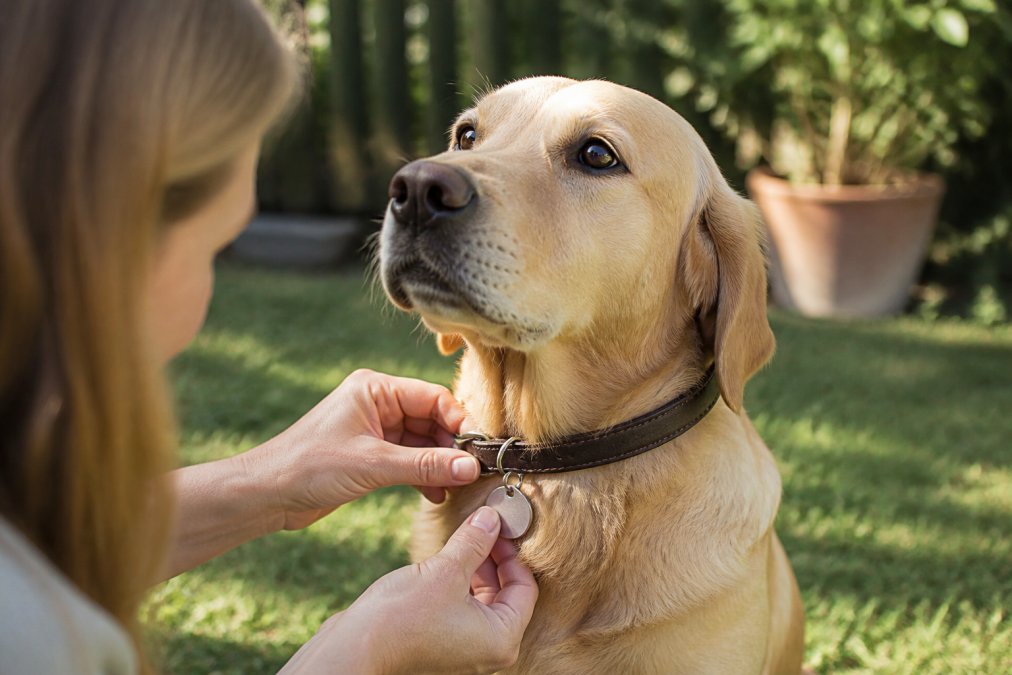
Preventing tag wear requires a routine that addresses both physical friction and chemical exposure. Follow these steps to keep your pet's identification legible:
- Choose deep engraving over printing. Printed or stamped tags wear quickly. Deep laser engraving cuts into the metal, ensuring the information remains readable even as the surface is scratched.
- Use a tag silencer or protective backing. A silencer is a rubber or neoprene surround that holds the tag flat against the collar, reducing the friction that causes most wear. This also prevents the tag from catching on branches or fences.
- Inspect the split ring monthly. A worn or bent split ring can cause the tag to hang at an angle, increasing friction against the collar. Replace it if it shows signs of stretching.
- Remove tags during bathing and swimming. Soap and chlorinated water accelerate oxidation. Take the tag off before washing your pet and dry it before reattaching.
- Clean and dry weekly. Wipe the tag with a microfibre cloth and warm soapy water, then dry thoroughly to remove corrosive residues.
- Rotate the attachment point. If your tag has a single hole, occasionally move the split ring to a different position on the collar to distribute wear.
- Replace worn collars. A frayed or rough collar acts as sandpaper against the tag. Replacing the collar protects both your pet's skin and the tag's surface.
How Often to Replace Pet Tags: A Visual Inspection Checklist
Pet tags should be replaced as soon as the contact information becomes difficult to read, which for many owners is every one to three years depending on the pet's activity level. Rather than waiting for failure, conduct a visual inspection every few months using a simple checklist.
Hold the tag in good light and check for these signs of wear:
- Can you read the phone number clearly from arm's length?
- Are the engraved letters still sharp, or are the edges rounded and smooth?
- Is there any discolouration, pitting, or rust forming on the surface?
- Are the edges of the tag worn thin or sharp to the touch?
- Has the split ring become difficult to open or visibly stretched?
- Is the tag itself bent, cracked, or warped?
If you answer yes to any of these, replace the tag immediately. A tag with faded text provides false security, and the cost of a new tag is negligible compared with the risk of a lost pet. Many owners also replace tags when their contact details change, which is why Pet ID Tags Australia offers durable stainless steel options at accessible price points, with round tags available in a two-for-$35 bundle for multi-pet households.

The Role of Engraving Depth and Protective Coatings
Engraving depth is the single most important factor in tag longevity, but the method used to achieve that depth matters just as much. There are two distinct approaches, and they produce very different results.
Laser etching is the most common method for budget tags. A laser burns away the surface layer to create a shallow mark, typically 0.05 to 0.1 millimetres deep. It is fast and cheap, but the resulting groove is relatively smooth and shallow. On stainless steel, laser etching can also create a heat-affected zone that is slightly softer than the surrounding metal, making it more prone to wear. Many mass-produced tags use this method because it allows for fine detail, but the detail is sacrificed to surface wear within 12 to 18 months of normal use.
Deep mechanical engraving uses a rotating cutting tool to physically carve a channel into the metal. This produces a groove of 0.3 to 0.5 millimetres deep with sharp, defined edges. The depth means the text remains legible even after years of surface abrasion. The trade-off is that mechanical engraving is slower and more expensive, and it cannot achieve the same fine detail as laser etching. For pet ID tags, this trade-off is almost always worth it, you need a phone number that remains readable, not a decorative font that fades.
Protective coatings are a separate consideration, and the debate over clear nail polish and epoxy resins deserves a direct answer. Clear nail polish is not effective for long-term protection. It is a thin acrylic film that chips and peels within weeks on a tag that is constantly moving. Worse, once it begins to peel, it traps moisture and dirt against the metal, accelerating the corrosion it was meant to prevent. Epoxy resins are more durable, but they are difficult to apply evenly in the field, and a poorly applied coat can obscure the engraving or peel at the edges.
For stainless steel, coatings are unnecessary. The material's chromium content forms a self-repairing oxide layer that resists corrosion without any external help. For brass or copper, coatings can extend life, but they are a temporary measure. A two-part marine-grade epoxy, applied by a professional, can last several years, but it adds cost and bulk. The practical verdict is this: if you need a coating to protect the tag, you have chosen the wrong material. A deep mechanically engraved stainless steel tag with no coating will outlast any coated tag with shallow etching.
The depth test is simple. Run your fingernail across the engraved letter. If you can feel a distinct groove, the engraving is deep enough to survive years of wear. If the surface feels smooth or only slightly textured, the tag will likely fail within a year. This test takes five seconds and should be performed before purchase, not after the tag has been on the collar for six months.
Conclusion
Keeping your pet's tag readable comes down to three principles: choose stainless steel with deep engraving, minimise friction with a silencer, and clean the tag gently without harsh chemicals. Many owners accept faded tags as inevitable, but the problem is preventable with the right material and a few minutes of maintenance each month. Pet ID Tags Australia has spent over two decades perfecting deep laser engraving on stainless steel, backed by a 30-day satisfaction guarantee and a 4.91-star rating from verified customers. Shop our range of durable, personalised tags and give your pet identification that stays legible for years.
Frequently Asked Questions
Are there dog tags that don't fade?
Yes. Deeply engraved stainless steel tags are the most fade-resistant option. The engraving cuts into the metal itself, so the text cannot rub off like printed or stamped alternatives. Anodized aluminium is also colourfast, but it can scratch, revealing the raw metal underneath. For long-term legibility, choose a tag with deep laser engraving on stainless steel, then check it monthly for signs of wear.
Does saltwater or swimming affect pet tag longevity?
Saltwater accelerates corrosion on brass and copper tags, causing pitting and tarnishing that erodes engraved text. Stainless steel resists saltwater damage far better, making it the sensible choice for dogs that swim in the ocean. Rinse your dog's tag with fresh water after a beach trip, then dry it with a microfibre cloth to remove salt residue before it can cause damage.
How often should you check your pet's ID tag for readability?
Check your pet's tag at least once a month as part of a quick visual inspection. Run your fingernail over the engraved letters. If you cannot feel the depth of the engraving, or if the text looks shallow and worn, it's time to replace the tag. After activities like beach trips or bushwalks, inspect the tag sooner, since sand and saltwater speed up wear.
Why do engraved pet tags become illegible over time?
Engraved tags become illegible through abrasion and corrosion. As the tag swings against your pet's collar or the ground, friction scratches the surface and wears down the edges of the engraved letters. Moisture and chemicals accelerate this. The result is a tag where the text becomes shallow, scratched, or filled with grime, making it hard for someone to read your contact details in an emergency.
This article was written using GrandRanker