
Your dog just spent the afternoon sprinting through salt spray at the beach or rolling in the dust on a long bushwalk. Now, that high-quality personalised collar is caked in grime and smells like a wet rug. You want to get it clean, but you're likely hesitant to start scrubbing for fear of fraying the embroidery or scratching the custom nameplate. It's a common worry for owners who prioritise both style and safety. Learning how to clean personalised dog collars correctly is the only way to maintain that vital legibility without compromising the material's integrity.
We understand that a collar is more than just an accessory; it's a critical safety tool that needs to last. This guide provides the professional maintenance secrets you need to remove stubborn odours and stains while protecting your investment. You'll learn specific techniques for different materials, from durable nylon to premium leather, ensuring your dog's ID remains clear and the hardware stays tarnish-free. We'll walk you through the safe cleaning agents and gentle methods that keep your gear in peak condition for every adventure.
Key Takeaways
- Regular maintenance prevents bacteria buildup and skin irritation while ensuring your dog's identification remains legible for safety.
- Discover material-specific techniques for how to clean personalised dog collars, ensuring nylon stays vibrant and leather remains supple without cracking.
- Protect custom embroidery and metal hardware by using gentle cleaning agents that prevent snagging, fading, or premature tarnishing.
- Recognise structural red flags like fraying or weakened webbing to determine when a collar is no longer safe for daily use.
Why Regular Maintenance of Personalised Dog Collars is Essential for Safety
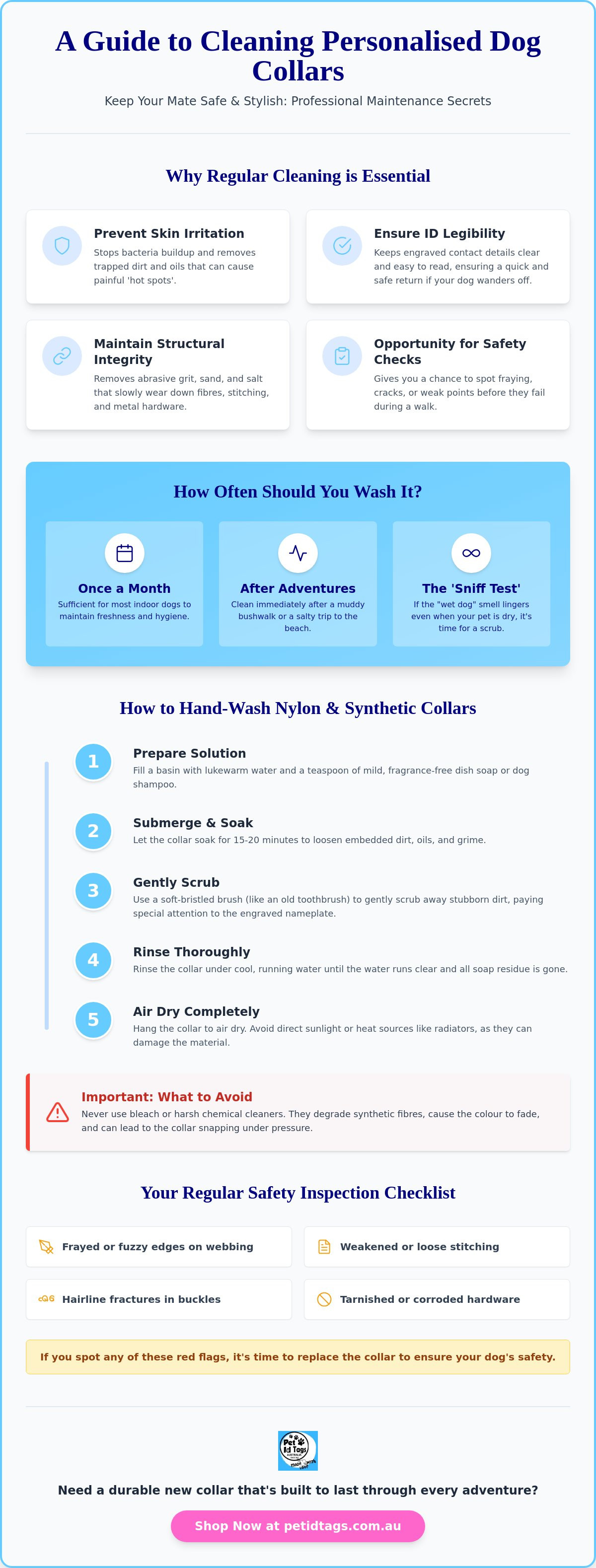
Maintaining your dog's gear is a matter of safety and long-term utility. While many owners focus on the aesthetic appeal of a fresh collar, the functional benefits are far more significant. Dirt, oils, and environmental debris don't just look untidy. They create a breeding ground for bacteria. When trapped against your dog's neck, this buildup often leads to skin irritation or painful "hot spots" that require veterinary attention. Regular cleaning removes these pathogens before they cause discomfort.
Physical durability is the second major concern. Fine particles of grit and sand act as microscopic abrasives. Over time, this friction wears down the fibres of custom embroidery and creates fine scratches on metal nameplates. If you don't prioritise how to clean personalised dog collars, you're essentially allowing the environment to sand away the very details that keep your pet safe. A clean collar remains structurally sound for much longer than one left to rot in the elements.
Regular maintenance also provides a scheduled opportunity for a safety inspection. As you scrub away the grime, you should look for specific signs of wear:
- Frayed or fuzzy edges on the webbing.
- Weakened or loose stitching around the D-ring.
- Hairline fractures in plastic or metal buckles.
- Tarnished or corroded hardware that may seize.
Catching these issues early prevents a catastrophic breakage during a walk. It's the difference between a controlled outing and a lost pet.
The Link Between Hygiene and ID Legibility
Legibility is the primary reason for choosing personalised gear. Mud, dried salt, and skin oils can quickly fill in the grooves of deep-engraved text. This reduces the contrast and makes your contact details impossible to read from a distance. For those using personalised dog collars australia, maintaining this high-contrast visibility is essential for a quick reunion if your dog wanders off. Different Dog collar materials and types react differently to the elements; for instance, salt residue from the Australian coastline can corrode inferior metals if not rinsed off promptly after a beach trip.
Frequency: How Often Should You Wash Your Gear?
The ideal cleaning schedule depends on your dog's lifestyle and the local environment. For most indoor dogs, a thorough wash once a month is sufficient to keep the gear fresh. However, if your weekend involves a muddy bushwalk or a swim in the ocean, you should clean the collar immediately afterward. If the colour of the webbing looks dull or the "wet dog" scent lingers even when your pet is dry, it's time for a scrub. The "sniff test" serves as your primary indicator for non-visible bacterial build-up that requires immediate attention. Keeping a consistent routine ensures you always know how to clean personalised dog collars effectively before the grime becomes permanent.
How to Clean Nylon and Synthetic Personalised Dog Collars: A Step-by-Step Guide
Synthetic materials like nylon and polyester are the preferred choice for owners who value high-visibility safety. These fabrics hold pigments exceptionally well, ensuring your dog's name remains vibrant and easy to read from a distance. However, these fibres are also porous. They trap everything from fine outback red dust to abrasive coastal salt spray. If you want to master how to clean personalised dog collars without compromising the material, you must avoid aggressive chemicals. Bleach is a major offender. It causes dyes to bleed and chemically degrades the synthetic weave, which can lead to the collar snapping under pressure.
Hand washing remains the safest way to maintain your gear while protecting the custom details. It allows you to control the pressure applied to the personalisation, ensuring the threads or prints aren't subjected to unnecessary friction. While synthetic collars are durable, they require a gentle touch to prevent the "fuzzy" look that comes from over-scrubbing.
The Hand-Wash Method for Deep Cleaning
To achieve a professional-level clean at home, follow these steps:
- Step 1: Fill a basin with lukewarm water and a teaspoon of mild, fragrance-free dish soap or dog shampoo. Fragrance-free options are better for dogs with sensitive skin.
- Step 2: Submerge the collar and use a soft-bristled toothbrush to gently agitate the webbing. Focus on the underside of the collar where oils and skin cells accumulate.
- Step 3: For stubborn mud or salt crust, allow a 10-minute soak. Finish with a thorough rinse in cold water until the water runs clear and all soap residue is gone.
Can You Use a Washing Machine?
If you're short on time, a washing machine is an option, provided you take specific precautions. Always place the collar in a dedicated laundry bag. This prevents the metal hardware from hammering against and potentially denting your machine drum. Use a cold, gentle cycle only. High heat is the enemy of synthetic pet gear; it can cause the webbing to shrink or warp the fit, making it unsafe. Most importantly, never put a dog collar in the tumble dryer. The intense heat can melt synthetic fibres or damage the adhesive used in printed elements.
Drying is the final, critical step in the process. The Australian sun is incredibly harsh on wet synthetics. Leaving a damp collar in direct sunlight can make the fibres brittle and prone to cracking over time. Always air-dry the gear in a shaded, well-ventilated area. If you find your current gear is still looking dull or feeling stiff after a wash, you can find a fresh personalised dog collar designed to withstand the local climate. Learning how to clean personalised dog collars properly will significantly extend the life of your gear, but proper drying is what keeps it safe for the long haul.
Preserving Quality: Cleaning Leather and Speciality Personalised Collars
Leather is a biological material that breathes and reacts to its environment. Unlike the synthetic options discussed earlier, leather demands a more nuanced approach to maintenance. If you saturate a leather collar, you risk permanent damage. Water causes the hide to swell and, as it dries, the natural oils evaporate, leaving the leather brittle and prone to cracking or rotting. When you're learning how to clean personalised dog collars made of premium leather, the goal is always moisture management rather than a deep soak.
Maintaining the integrity of laser-engraved or stamped personalisation is particularly important. These decorative elements create small recesses in the leather where dirt and oils accumulate. Aggressive scrubbing or over-saturation can soften the leather around these details, causing the text to blur or lose its definition. Using pH-balanced leather cleaners is essential here. These specialised products remove grime without stripping the essential oils that keep the hide supple and strong.
The "Wipe and Condition" Technique
Consistency is the secret to leather longevity. You don't need a heavy hand; you need the right tools and a gentle touch. Follow this routine to keep the collar in peak condition:
- Step 1: Use a slightly damp microfibre cloth to wipe away surface dust, loose hair, and dried mud. Ensure the cloth is not dripping wet.
- Step 2: For deeper stains, apply a small amount of saddle soap to a soft sponge. Work the soap into the leather using small, circular motions, paying extra attention to the areas around the personalisation without applying excessive pressure.
- Step 3: Wipe away any excess soap residue with a clean, damp cloth.
- Step 4: Once the collar is completely dry, apply a high-quality leather conditioner. This step is non-negotiable. It restores the oils lost during cleaning and creates a protective barrier against future moisture and grime.
Dealing with Saltwater and Mud on Leather
Australian dogs often find themselves in the surf or deep in the bush. Salt is the primary enemy of leather as it aggressively draws out moisture. If your dog takes a plunge in the ocean, you must rinse the leather collar immediately with fresh water to remove the salt crystals. Never dry leather near a heater, fireplace, or in the direct Australian sun. Rapid drying causes the fibres to shrink and snap, leading to irreversible cracking. Instead, let it dry slowly in a cool, shaded area. Long lasting pet id tags made of stainless steel are the best pairing for leather collars because they won't tarnish or corrode when exposed to the moisture required for leather maintenance. Understanding how to clean personalised dog collars with this level of care ensures your gear remains safe and readable for the life of your pet.
Protecting the Personalisation: Caring for Engraving, Embroidery, and Metal Hardware
Personalisation is the most vulnerable part of your dog's gear. While the webbing or leather might be structurally tough, the details that identify your pet require a precision approach. If you apply a stiff brush to custom embroidery, you'll likely snag the threads. If you scrub a printed nameplate with abrasive cleaners, it will fade within months. Knowing how to clean personalised dog collars means understanding the difference between cleaning for hygiene and cleaning for legibility. Your pet's safety depends on that text remaining clear and readable at all times.
Metal components like buckles and D-rings are often overlooked during the cleaning process. In the Australian climate, even high-quality hardware faces challenges from humidity and salt air. Stainless steel remains the gold standard for durability. It resists the corrosion that plagues cheaper aluminium or plated steel alternatives. Maintaining a smooth action on your buckle is a safety requirement; a seized or rusted buckle can fail under tension. Regular cleaning ensures the hardware functions as intended for years.
Maintaining Engraved Nameplates and Buckles
Deep-engraved text can trap a surprising amount of grit and skin oils. A standard cloth often glides right over these grooves, leaving the dirt behind. To fix this, dip a cotton bud in white vinegar to gently lift debris from the letters without scratching the surrounding metal. This mild acidic solution breaks down the oils that hold the dirt in place. To restore the original lustre to stainless steel or brass hardware, use a dedicated jewellery polishing cloth. If your collar features printed personalisation rather than engraving, apply a thin layer of clear nail polish over the text. This creates a sacrificial barrier against friction and UV damage, though it is no substitute for the permanence of deep engraving.
Preserving Embroidered Names and Numbers
Embroidery adds a classic look, but it is prone to "pilling" or fraying if handled roughly. You should never use a circular scrubbing motion on stitched names. Instead, use a "blotting" technique. Press a damp, soapy cloth firmly against the embroidery to lift the dirt, then blot with fresh water to rinse. If you notice small loose threads, don't pull them. Pulling can unravel the entire name. Instead, use small, sharp scissors to trim the fray close to the webbing. Many pet id tag engraving ideas focus on high-contrast thread colours, which are easier to read but also show dirt more clearly. Frequent blotting keeps these colours sharp without wearing out the thread.
If your current personalisation has faded beyond recognition, it's time to invest in gear that stays legible. You can shop durable personalised dog collars that are built to withstand the harshest Australian conditions. Mastering how to clean personalised dog collars is much easier when you start with high-grade materials that are designed to resist wear from the outset.
Knowing When to Upgrade: Selecting a Durable New Personalised Dog Collar
A rigorous maintenance routine extends the life of your gear, but every collar eventually reaches its safe working limit. Even if you have mastered how to clean personalised dog collars, the physical structure of the material will eventually degrade. Fraying edges are the most common red flag; they indicate that the structural integrity of the webbing is compromised. Once the core fibres begin to separate, the collar is no longer capable of withstanding the sudden tension of a dog pulling or lunging. For your pet's safety, a frayed collar must be retired immediately.
Legibility is the other non-negotiable factor. The primary purpose of personalised gear is to provide immediate identification in an emergency. If your contact details are no longer legible from a distance of at least two metres, the collar has failed its safety purpose. Aggressive scrubbing or years of UV exposure can fade even the best-made products. Investing in high-grade materials like stainless steel and heavy-duty nylon saves you money over the long term because these materials resist the environmental stressors that cause cheaper alternatives to fail.
Red Flags That Cleaning Can’t Fix
Sometimes, the damage is internal or mechanical rather than just surface grime. Look for these critical warning signs during your regular maintenance checks:
- Structural Thinning: Check the area where the buckle sits. Constant friction often causes the material to wear thin in this specific spot, creating a weak point that can snap under pressure.
- Permanent Odour: If a persistent "wet dog" smell remains after a thorough deep clean, bacteria have likely colonised the deep fibres of the webbing. This "permanent funk" can lead to recurring skin infections for your pet.
- Mechanical Failure: Buckles that no longer produce a sharp, secure "click" or D-rings that show signs of opening or bending are immediate safety risks.
The Buyer’s Checklist for Your Next Collar
When it's time for an upgrade, choose gear designed for the specific challenges of the Australian landscape. Prioritise deep-engraved stainless steel over printed or plastic components, as engraving cannot be rubbed off or faded by the sun. Look for "Australian-proof" features such as high-grade UV resistance and saltwater-compatible hardware to ensure your new investment lasts as long as possible. If you've been searching for how to clean personalised dog collars only to find your current gear is too far gone, it's time to choose a more resilient solution. Explore the Pet ID Tags Australia range of personalised dog collars for a durable upgrade today.
Maintain Your Dog's Safety for Years to Come
A clean collar is about more than aesthetics; it's a fundamental part of your dog's safety kit. By following these professional steps for how to clean personalised dog collars, you ensure that your contact details remain sharp and readable when they matter most. Whether you're managing salt residue on nylon or conditioning premium leather, regular care prevents skin irritation and keeps the hardware functioning flawlessly. Consistency is the key to preserving both the material and the personalisation for the life of the product.
Beyond maintaining physical gear, ensuring your pet is in safe hands during holidays or work hours is equally important. When using national platforms to find vetted help, you can discover more about Transaction-based booking and service fees to understand how these costs support the verification and insurance of pet sitters across Australia.
If your current gear has reached the end of its life, it's time to invest in a replacement built for the long haul. Our range features deep-engraved stainless steel for lifetime legibility, ensuring your information won't fade or scratch away. As an Australian owned and operated business, we use high-grade materials specifically tested for our harsh climate. Browse our range of durable personalised dog collars today to secure your pet's safety. With the right maintenance, your dog's personalised gear will stay fresh and functional for every bushwalk and beach trip ahead.
Frequently Asked Questions
Can I put my personalised dog collar in the dishwasher?
No, you should never put a dog collar in the dishwasher. The intense heat and caustic detergents used in dishwashers can warp synthetic webbing, rot leather, and cause printed or embroidered personalisation to degrade rapidly. Hand washing remains the safest method to maintain the integrity of the materials and ensure your contact details stay legible for the long term. Stick to lukewarm water and mild soap for a safe result.
How do I get the "wet dog" smell out of a nylon collar?
Eliminating the "wet dog" smell requires a thorough deep clean to remove trapped bacteria. Soak the nylon collar in lukewarm water mixed with a teaspoon of mild dog shampoo for ten minutes. For persistent odours, a small amount of white vinegar added to the rinse water can neutralise the scent without damaging the fibres. Always air-dry the collar completely in a shaded area before putting it back on your dog.
Will the name on my dog’s collar fade if I wash it too often?
Whether the name fades depends entirely on the personalisation method used. Printed names are the most vulnerable to friction and may fade with aggressive scrubbing; however, deep-engraved stainless steel nameplates will never lose their legibility. When you learn how to clean personalised dog collars, you'll find that using a soft toothbrush and avoiding harsh chemicals like bleach prevents unnecessary wear on embroidered or printed details.
What is the best way to clean a mud-caked personalised collar?
The most effective way to handle heavy mud is to let it dry completely first. Once dry, use a soft brush to flick away the bulk of the dried dirt. Follow this with a lukewarm hand wash using a mild detergent to lift the remaining stains from the webbing or leather. This two-stage process prevents you from grinding wet grit deeper into the personalisation or fabric fibres during the cleaning process.
Is it safe to use essential oils to make a dog collar smell better?
You should avoid applying essential oils directly to your dog's collar. Many oils are toxic to dogs if absorbed through the skin or inhaled in high concentrations. Additionally, the oils can chemically degrade synthetic fibres or cause leather to become greasy and attract more dirt. If you want to keep the gear fresh, focus on regular hygiene and proper drying rather than masking odours with potentially harmful substances.
How do I prevent the metal buckle on my dog’s collar from rusting?
Rust prevention starts with consistent rinsing and drying. Always rinse the collar in fresh water immediately after a beach trip to remove corrosive salt crystals. Use a clean cloth to dry the buckle and D-ring thoroughly, paying attention to the internal spring mechanism of the buckle. Choosing gear with high-grade stainless steel hardware is the most effective long-term solution for preventing corrosion in the humid Australian climate.
Can I use a hairdryer to dry my dog’s leather collar faster?
Never use a hairdryer or any direct heat source to dry leather. Rapid drying causes the natural fibres in the hide to shrink and snap, which leads to irreversible cracking and structural failure. The best approach is to blot the leather with a dry towel and let it air-dry slowly in a cool, well-ventilated spot away from the sun. Once dry, apply a leather conditioner to restore any lost moisture.
Does baking soda damage the embroidery on a dog collar?
Baking soda can be used occasionally as an odour neutraliser, but it is an abrasive powder. If you scrub baking soda directly onto embroidered threads, it can cause the fibres to fray or look fuzzy over time. When considering how to clean personalised dog collars with embroidery, it is better to dissolve the soda completely in water first and use it as a soak rather than a scrub. This protects the fine stitching.