

Table of Contents
- Why Dog Tags Matter for Pet Safety
- Pet Registration Requirements and Legal Obligations
- Engraved Dog Tags: Deep Laser Engraving vs Surface Printing
- Stainless Steel vs Aluminium: Material Durability Compared
- Slide-On Dog Tags vs Dangling Tags: Which Works Best
- Choosing the Right Size and Style for Your Dog
- Smart Tags and QR Code Identification
- Tag Maintenance and Longevity
- Frequently Asked Questions
Last Updated: September 1, 2026
Why Dog Tags Matter for Pet Safety
Dog tags are one of the simplest yet most effective tools for keeping your pet safe. When your dog goes missing, a visible identification tag can be the difference between a quick reunion and a lost pet tragedy. A tag provides immediate contact information to anyone who finds your dog, without requiring them to search for a microchip reader or contact a registry.
The reality is that accidents happen. Dogs bolt through open doors, slip out of collars during walks, or wander off during outdoor play. A microchip is valuable backup, but it requires a vet or animal shelter to scan and access the registry. A dog tag works instantly. Someone finds your dog, reads the tag, and calls you within minutes.
At Pet ID Tags Australia, deeply engraved tags have reunited thousands of pets with their owners. The key difference between a tag that works and one that fails is durability. A cheap tag that fades or peels within months becomes useless exactly when you need it most. That's why material choice, engraving depth, and design matter more than price.

Pet Registration Requirements and Legal Obligations
In Australia, pet identification requirements vary by state and territory, but most jurisdictions require dogs to be registered with their local council or shire. Registration typically includes maintaining current contact details and ensuring your dog wears visible identification while in public. The specific rules depend on where you live, so checking your local council's website for current requirements is essential.
Beyond legal registration, responsible pet ownership means ensuring your contact information is always accessible on your dog's tag. If your dog is found, the person who finds them needs to reach you immediately. A tag with outdated or illegible contact details defeats the purpose entirely.
Some councils require specific information on tags, such as your name and phone number at minimum. Others may require a registration number or council tag. The best approach is to include your current mobile number and a secondary contact (a trusted friend or family member) so someone can reach you even if your phone is unavailable.
Engraved Dog Tags: Deep Laser Engraving vs Surface Printing
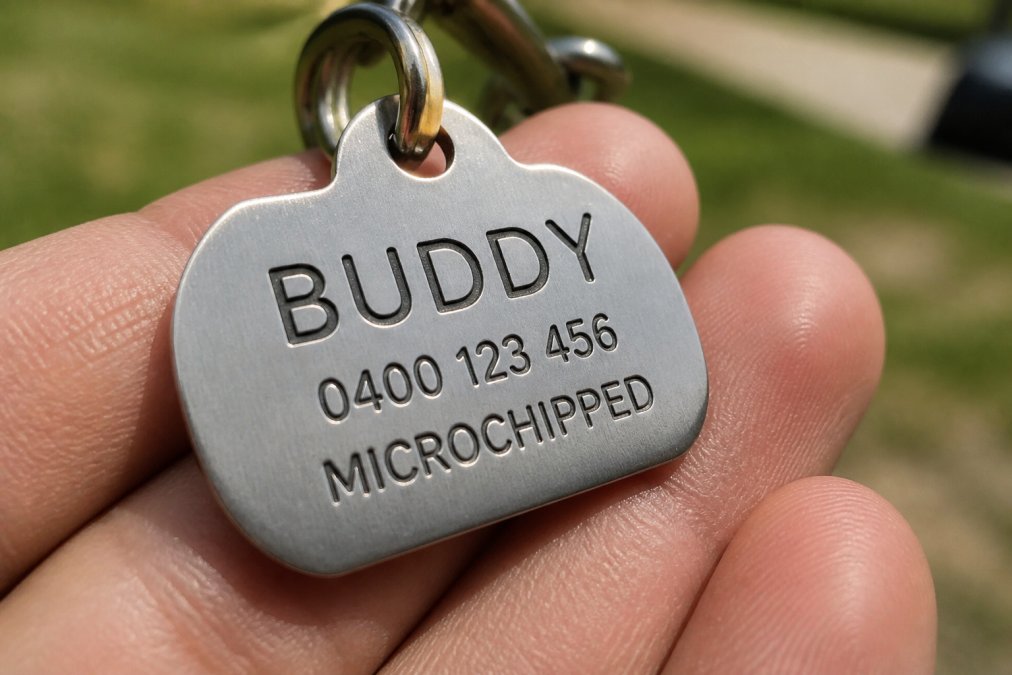
Deep laser engraving and surface printing are two fundamentally different approaches to creating readable information on dog tags. Understanding the difference is crucial because it directly affects how long your tag remains legible.
Why Deep Engraving Resists Fading
Surface printing applies ink or paint to the tag's surface. Over months of wear, friction from your dog's collar, exposure to sun, and contact with moisture cause the printed text to fade, peel, or wash away completely. A printed tag might be readable for six months, but after a year or two, the information becomes illegible.
Deep laser engraving burns text directly into the metal or material, creating a permanent groove that cannot fade or peel. The engraved text becomes part of the tag's structure. Even after years of wear, the grooves remain visible because the information is literally carved into the material. This is why deeply engraved tags last for the life of your pet.
The contrast matters too. A deeply engraved tag on polished metal creates natural shadow contrast that makes text easier to read, even as the tag ages. A printed tag relies entirely on surface colour, which deteriorates with time.
What Information to Engrave
The most critical information on any dog tag is your current mobile phone number. This is the single piece of information that allows someone to reunite with your pet immediately. Include your name as well, so the finder knows who the dog belongs to.
If space allows, add a secondary contact number, a trusted friend or family member who can help if you're unreachable. Some pet owners include their address, though this is less critical if your phone number is current and accessible.
Avoid including your dog's microchip number on the tag. While microchips are valuable, the tag's purpose is to provide immediate contact, not to advertise that a chip exists. The finder needs to call you, not search for a microchip reader.
Keep text concise and legible. Cramming too much information into a small space makes the engraving shallow and harder to read. Focus on name, your number, and a secondary contact if there's room.
Stainless Steel vs Aluminium: Material Durability Compared
Stainless steel and aluminium are the two most common materials for durable dog tags, and each has distinct advantages and trade-offs.
Stainless steel is highly resistant to rust and corrosion. It's durable, scratch-resistant, and maintains its appearance even after years of exposure to moisture, salt, and weather. A stainless steel tag will not tarnish or degrade. The downside is weight, stainless steel tags are heavier than aluminium, which can be uncomfortable for small dogs or cats wearing the tag continuously.

Aluminium is lightweight, making it ideal for smaller pets or those sensitive to collar weight. Aluminium tags are anodised to create a protective coating that resists corrosion and fading. Modern anodised aluminium is highly durable and suitable for most Australian climates. The trade-off is that aluminium is softer than stainless steel, so it's more prone to denting if subjected to impact.
For most dogs, either material works well when properly engraved and maintained. Stainless steel is the premium choice for durability and longevity, particularly for active dogs or those in coastal areas where salt exposure is a concern. Aluminium is an excellent option for smaller pets where weight matters, and the anodised coating provides adequate protection in typical conditions.
Pet ID Tags Australia offers both Black Aluminium Bone Pet ID Tag - Personalised Engraved at $17.90 and Stainless Steel Bone Pet ID Tag - Personalised Engraved at $19.90, both deeply engraved for lasting readability. The choice depends on your dog's size, activity level, and your climate.
Slide-On Dog Tags vs Dangling Tags: Which Works Best
Slide-on tags and dangling tags represent two different attachment methods, each with practical advantages.
Dangling tags hang from a split ring attached to the collar. They're visible, easy to read, and simple to attach or replace. The tag moves freely, which is why some people prefer them, the tag is always visible and accessible. The downside is noise. A dangling tag jingles with every movement, which some pet owners find annoying and some dogs find irritating.
Slide-on tags slide directly onto the collar itself, sitting flat against the material. They're quieter because they don't move independently, and they're less likely to catch on obstacles. Slide-on tags are more secure, they can't fall off unless the collar itself fails. The trade-off is that they're slightly less visible and slightly more difficult to read if the collar is thick or if the tag sits against the dog's fur.
For dogs prone to losing tags or for owners who want maximum security, slide-on tags are superior. For owners who prioritise visibility and easy tag replacement, dangling tags are more practical. Many pet owners use both, a dangling tag for visibility and a slide-on backup tag for security.
Choosing the Right Size and Style for Your Dog
Dog tag size should match your dog's breed and the collar thickness. Tags come in small, medium, and large sizes, and choosing the right size ensures the tag is readable and doesn't overwhelm your dog's appearance.
Small tags (roughly 25-30mm) are appropriate for toy breeds, small dogs, and cats. These tags are lightweight and proportionate to a small collar. The text is still legible when deeply engraved, but there's less space for information.
Medium tags (roughly 30-40mm) work for most dogs, small to medium breeds and average-sized mixed breeds. This is the most versatile size, offering adequate space for contact information while remaining proportionate to a standard collar.
Large tags (40mm and above) are suitable for larger breeds and dogs wearing thicker collars. The larger surface area allows for deeper, more legible engraving and space for additional information.
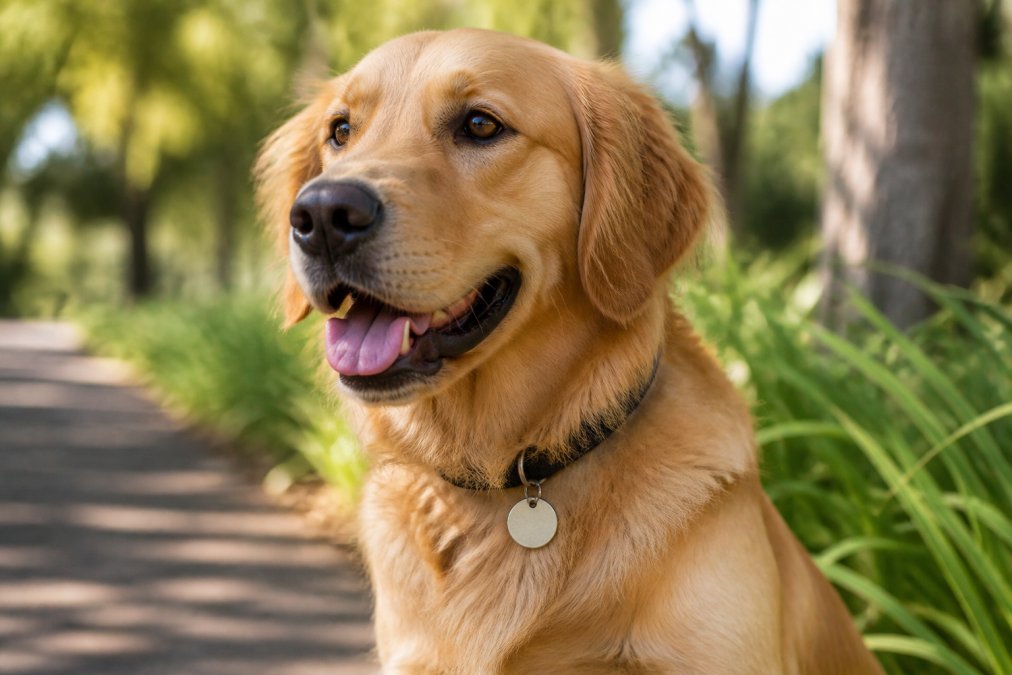
Beyond size, style reflects your dog's personality. Bone-shaped tags are classic and universally recognised as dog identification. Round tags offer a modern alternative. Some owners choose tags with specific colours or finishes, polished metal, matte finishes, or anodised colours, to match their dog's personality or collar.
The style you choose matters less than ensuring the tag is durable, deeply engraved, and easy to read. A well-engraved bone-shaped tag in stainless steel will serve your dog far better than a trendy but poorly engraved tag.
Smart Tags and QR Code Identification
Smart tags represent the modern evolution of dog identification. Rather than relying solely on someone reading your phone number, a smart tag uses a QR code that links to your pet's digital profile.

When someone finds your dog, they scan the QR code with their smartphone. This takes them to a dedicated page with your pet's photo, name, medical information, and your contact details. You can update this information at any time without replacing the tag, which addresses a common frustration, if your phone number changes, you don't need a new tag.
Smart tags also allow you to add details like medical conditions, allergies, or dietary requirements. If your dog is found by someone unfamiliar with pets, this information could be lifesaving. Some smart tag systems also allow you to mark your pet as "lost" in a public database, which can alert other users in your area.
The Smart Pet ID Tag - QR Code Dog & Cat Identification Tag from Pet ID Tags Australia costs $34.90 and combines traditional identification with modern technology. It works as a backup to traditional tags and provides an extra layer of security.
The downside of smart tags is that they require someone to have a smartphone and be willing to scan a code. In rural areas or with older individuals, this might not always happen. The best approach is to use a smart tag as a secondary identification method alongside a traditional deeply engraved tag with your phone number.
Tag Maintenance and Longevity
A deeply engraved dog tag can last for the life of your pet if properly maintained. Unlike surface-printed tags that fade within months, a well-made engraved tag remains readable for years.
Maintenance is straightforward. Rinse your dog's tag occasionally with fresh water to remove dirt and salt buildup, particularly if you live near the coast or in areas with high humidity. This prevents corrosion and keeps the engraved text clear. A soft cloth can be used to gently clean the tag without damaging the engraving.
For stainless steel tags, occasional polishing maintains shine and makes the engraved text more visible. For anodised aluminium tags, gentle cleaning is sufficient, avoid abrasive scrubbing that might damage the protective coating.
Check the tag periodically to ensure it's still securely attached to the collar and that the engraved text remains legible. If you notice any damage, fading, or wear, it's time to consider a replacement. However, with deep laser engraving, this typically takes several years rather than months.
If your contact information changes, you get a new phone number, move to a new address, or change your name, you have two options. You can order a new tag with updated information, or if you're using a smart tag system, you can simply update your digital profile without replacing the physical tag.
The longevity of your tag depends entirely on the quality of the initial engraving and the material chosen. A cheap surface-printed tag might need replacement within a year. A deeply engraved stainless steel tag from Pet ID Tags Australia can last for a decade or more.
Your dog's safety depends on identification that actually works when it matters most. A deeply engraved dog tag is your pet's fastest route home if they ever go missing. Pet ID Tags Australia has spent over two decades perfecting the craft of durable, readable identification tags. Our deep laser engraving resists fading far longer than surface printing, and our materials, stainless steel and anodised aluminium, hold up to years of wear. Whether you choose a classic bone-shaped tag or a modern smart tag with QR code backup, the difference is in the durability and the detail. Get started with Pet ID Tags Australia and ensure your dog wears identification that will actually save their life.
Frequently Asked Questions
Q: What information is legally required on a dog tag?
A: Most councils require your pet's name and at least one contact number on the tag. Some also require a registration number linked to your local council's pet register. Check your specific council's requirements, as they vary by region. Avoid putting your full address on the tag for security reasons; a phone number is sufficient for reuniting you with your pet.
Q: Why do engraved dog tags last longer than printed ones?
A: Deep laser engraving cuts the design into the material itself, making it resistant to fading, scratching, and wear. Printed or surface-coated tags can peel, fade, or scratch away after months of contact with collars and weather exposure. Stainless steel and aluminium tags with deep engraving maintain readability for years, ensuring your contact details remain visible when it matters most.
Q: What's the difference between slide-on and dangling dog tags?
A: Slide-on tags attach directly to the collar by threading through a slot, reducing noise and movement. Dangling tags hang from a ring or loop, making them more visible but creating more noise when your dog moves. Slide-on tags work well for active or anxious dogs sensitive to noise, while dangling tags are easier to attach and replace. Choose based on your dog's comfort and your preference for visibility versus quiet.
Q: How do I know if a dog tag will survive my pet's rough play?
A: Stainless steel and anodised aluminium are the most durable materials available. Look for tags with deep laser engraving rather than surface printing, as engraving won't fade or peel with use. Rust-proof and weather-resistant materials ensure longevity in wet conditions. Many quality tags are designed to last years of daily wear, and a 30-day satisfaction guarantee lets you test durability risk-free before committing.
This article was written using GrandRanker