

Could the size label be the least useful clue when choosing walking gear for your Corgi? For corgi harness short legs chest support, start with your dog’s measurements, then check how the gear sits and moves. A broad chest and short legs can make a standard fit sit awkwardly, rub beneath the front legs or interfere with a natural stride.
It’s understandable to want a secure fit without restricting your furry mate. This guide explains which measurements to take, how to compare chest coverage and what to check during a gentle movement test. You’ll also learn to spot rubbing or limited shoulder movement, and how walking gear can work alongside a collar for visual identification. These practical checks can help you choose more comfortably for everyday walks with your Aussie Corgi.
Key Takeaways
- For corgi harness short legs chest support, start with chest girth and follow the chosen gear’s size guide rather than relying on a label alone.
- Compare chest coverage, strap placement and adjustment options to balance a secure fit with room for a natural stride.
- Use a simple fit check: adjust the gear, inspect it while your Corgi is standing, observe their movement and recheck after a walk.
- Consider a personalised no-pull option with reflective straps, then judge the fit and movement on your own dog.
- Pair walking gear with a collar for a hybrid system that supports exercise and visual identification.
Why Corgi Walking Gear Needs Chest Fit and Short-Leg Clearance
A Corgi’s shape can make standard size expectations a poor guide. A broad chest, long body and short legs create different fitting needs from those of a dog with longer limbs or a narrower frame. The Pembroke Welsh Corgi breed information describes the breed’s distinctive build, a useful reminder that proportions matter when choosing everyday walking gear.
A good fit should sit securely around the chest without pressing into the body, rubbing beneath the front legs or getting in the way of a natural stride. For a Corgi, look for secure chest coverage and clear space for the front legs to move freely. That’s more useful than choosing a size based on weight alone.
How a Corgi’s proportions affect everyday fit
A Corgi’s chest can be broad while their legs remain close to the ground. This leaves less space between the body and front legs for straps to sit clear of movement. As your dog walks, turns or picks up pace, a strap in that area may repeatedly brush the skin. A fit that looks fine while your Corgi stands still may feel different once they’re moving.
Weight and broad size labels offer only a starting point. Two dogs of similar weight can have different chest shapes or body proportions, so the same size may sit differently on each. Assess the fit on your own dog rather than treating a weight range as proof of comfort.
Chest support versus comfortable movement
Chest coverage should help keep walking gear positioned securely, but more coverage isn’t automatically better if it sits close to the shoulders or front legs. Watch your Corgi walk naturally: their front legs should move without the gear catching, shifting sharply or pressing into the skin. A snug fit that limits movement isn’t comfortable.
Here, “support” means practical positioning for everyday walks. It doesn’t mean medical or therapeutic support, and ordinary walking gear shouldn’t be treated as a solution for a health concern. If your dog needs equipment for a medical reason, seek advice from your veterinarian about what’s suitable.
Check your dog’s skin and behaviour after wearing new gear. Look for visible redness, rubbed areas or fur that appears repeatedly disturbed where straps touch. Also pay attention if your Corgi seems distressed, resists moving or tries to get the gear off. Stop using it if you notice these signs, then reassess the fit before the next walk. Your furry mate’s comfort is the clearest guide: secure positioning matters, but it should never come at the expense of easy movement.
How to Measure a Corgi for Chest Support and a Secure Fit
Take measurements while your Corgi is standing comfortably on a level surface. Keep the tape flat against the coat without compressing the chest. This gives you a useful starting point; the chosen product’s size guide explains how to apply the measurement. An individual chest measurement is more useful than breed alone when comparing sizes.
Measure chest girth accurately
Use a soft measuring tape around the broadest part of the chest, usually just behind the front legs. Keep the tape level as it passes around the body. It should sit comfortably close without being pulled tight. If your Corgi shifts or the tape slips, pause and reset it rather than estimating. A calm, steady reading is more useful than a rushed one.
- Have your dog stand squarely and settle before you begin.
- Place the tape around the broadest part of the chest, keeping it level and close without squeezing.
- Write down the result in the same units used by the product’s size guide.
- Compare the measurement with that guide. Take neck, body or other measurements only if it requests them.
Record the number as you take it rather than relying on memory. If you repeat the measurement, use the same tape position and posture so the readings can be compared. If they differ, check that the tape hasn’t slipped behind the legs or angled across the chest. Don’t round the figure to make a size seem suitable. Use the guide’s instructions to interpret the measurement and select a starting size.
Check leg clearance and body movement
After adjusting the walking gear as directed, look at your Corgi standing naturally. Check where the straps sit in relation to the front legs, then watch your dog walk and turn at an easy pace. Notice whether the gear stays in position or twists and shifts. Watching your dog move can reveal contact that isn’t obvious when they’re standing still.
Look for repeated strap contact, rubbing or signs your dog is uncomfortable. If you see these, stop and reassess rather than assuming the measurement alone has settled the choice. Chest girth helps narrow the options; movement checks show how the selected size works on your own dog. A comfortable fit balances chest positioning with enough clearance for natural steps.
Once you’ve measured, use the product’s own sizing and adjustment guidance as you compare options. You can explore personalised walking gear with your Corgi’s recorded measurement and movement in mind.
Which Corgi Walking Gear Features Matter Most?
With your Corgi’s measurements in hand, compare how each design sits and works during everyday walks. Look beyond the size label: chest coverage, strap position, adjustment points and ease of putting the gear on all affect comfort. The aim is a steady fit that leaves room for the shoulders and front legs to move freely.
Compare chest coverage and strap placement
Front panels vary in shape and width. A broader panel may spread contact across more of the chest, while a narrower design leaves more of the body uncovered. Neither shape is automatically right for every dog. Check how the panel rests on your Corgi, and whether its edges or connecting straps sit close to the armpits as your dog steps forward or turns.
Adjustment points can help you position the gear for your dog’s build, but they’re only useful if they allow a stable fit without pulling straps tight against the body. Easy-to-use fastenings also matter if you’ll put the gear on regularly. Follow the product’s fitting instructions and watch how it sits once your dog is moving. Chest coverage is for everyday positioning, not medical support, and no design should be assumed to prevent injury.
Match design details to your Corgi’s routine
Think about your usual outings. Gear used for frequent walks may need to be straightforward to put on and adjust consistently. For shorter, occasional outings, consider how comfortably it sits through your dog’s movements. Either way, prioritise a fit you can check and repeat over a feature that looks useful but doesn’t suit your Corgi.
Reflective details are another practical consideration, particularly if some walks take place in low light. Compare where they sit and whether they’ll be visible from the angles that matter on your outings. Treat them as one feature, not a substitute for checking the overall fit and your surroundings. Pet ID Tags Australia offers a personalised no-pull option with reflective straps. Assess it using the same fit and movement checks as any other walking gear.
| Feature | Useful fit check |
|---|---|
| Chest panel | Does it sit securely without pressing or shifting? |
| Strap placement | Do straps stay clear of the armpits as your Corgi steps? |
| Adjustability | Can you achieve a steady fit without restricting movement? |
| Fastenings | Can you put the gear on and secure it correctly each time? |
| Reflective details | Are they positioned to suit your usual walking conditions? |
The right combination of features balances steady positioning with clear movement through your Corgi’s shoulders and legs. Compare the details against your dog’s routine, then check the fit in motion before settling on everyday walking gear. When setting up your walking routine, you can also explore complementary accessories and dog wellbeing supplies through online pet specialists like rjpetco.co.uk.
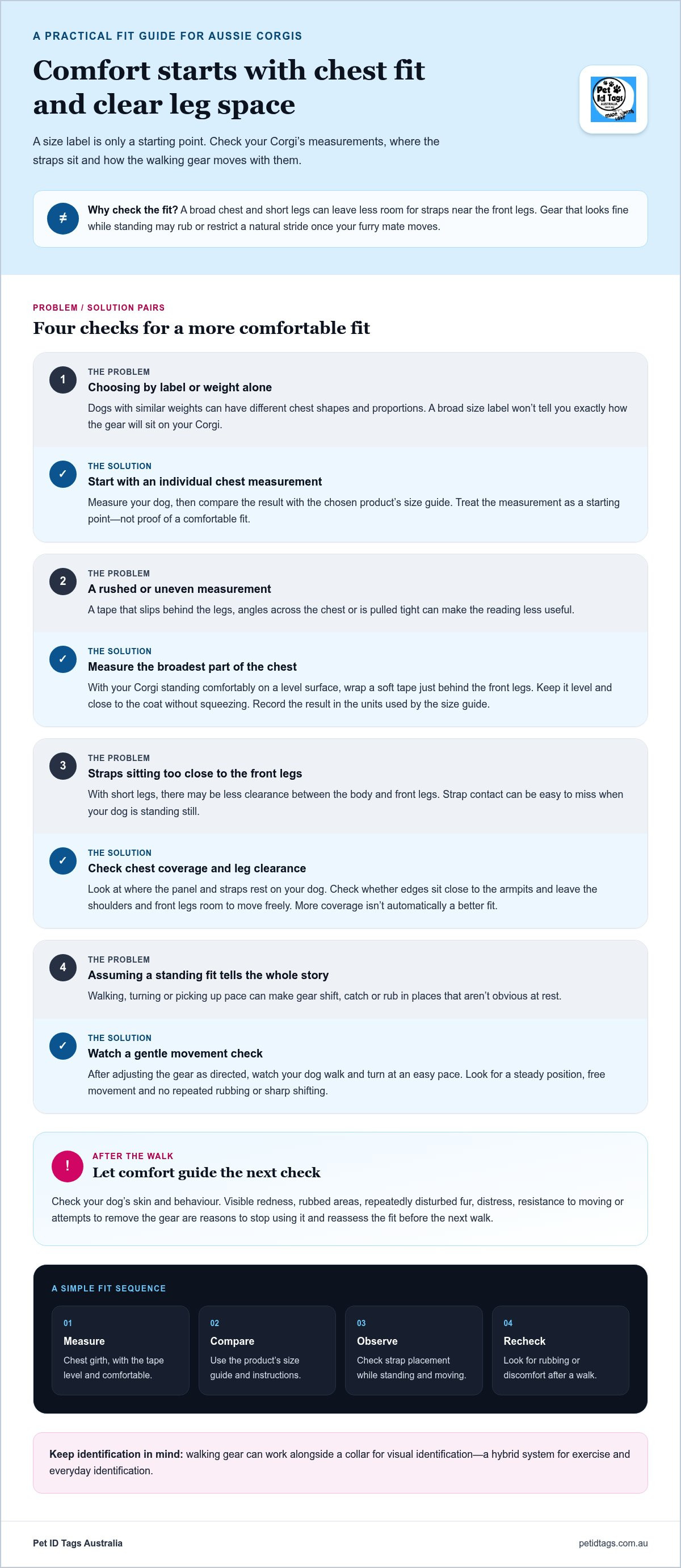
A Corgi Fit Check: From First Adjustment to First Walk
A careful fit check is more useful than relying on how the gear looks while it’s sitting still. Follow the product’s size guide and adjustment instructions, then check your Corgi standing, turning and walking. Introduce new gear calmly at home first. Once your furry mate seems settled, try a brief initial walk before heading out for a longer outing.
- Adjust it as directed. Start with the product’s instructions. Position and fasten each part as shown, making small adjustments rather than pulling straps tight to stop movement.
- Inspect the standing fit. Check that the chest area sits securely without digging into the body. Look closely at the space around the short front legs, especially where straps meet the chest. The gear should sit in place without pinching or crowding the legs.
- Check a few natural movements. Let your dog stand, turn and take several steps on a flat surface. Watch whether the straps stay positioned or twist and shift. Notice if your Corgi shortens their steps, moves differently or seems reluctant to walk.
- Take a brief walk, then recheck. Keep the first outing short and observe your dog as they move. Afterwards, inspect the areas where straps touch the coat and check whether anything has shifted.
Inspect the fit before leaving home
Give your Corgi time to get used to the feel of the gear before attaching it for a walk. Stay calm and let them move at their own pace. If they seem unsure, pause and allow them to settle rather than rushing to leave. A relaxed introduction makes it easier to notice whether discomfort comes from the fit or from simply being unfamiliar with the gear.
Before stepping outside, check the chest and underarm areas again. Confirm the gear stays in place when your dog stands and turns. If it slides towards a front leg during a turn, adjust it according to the instructions and repeat the check. Don’t assume a secure-looking position at rest will stay the same in motion.
Recheck comfort after movement
During and after the short walk, watch for rubbing, unusual changes in gait, repeated attempts to remove the gear or reluctance to keep moving. If straps shift, stop somewhere safe and reassess their position. Don’t keep walking if your Corgi appears uncomfortable. Stop the outing and reassess the fit at home before using the gear again.
Use the same sequence each time you make an adjustment: settle your dog, check the standing fit, observe movement and inspect the contact areas after walking. This repeatable routine helps you judge whether chest positioning and leg clearance work together in everyday use. If discomfort continues despite following the product instructions, leave the gear off and seek advice from your veterinarian.
Once you know what to look for, you can explore personalised walking gear with fit, movement and everyday comfort in mind.
Choose a Corgi Walking Setup That Balances Control and Identification
A dependable everyday setup has two jobs: give you a practical way to manage walks and make your dog’s identification easy to see. Choose walking gear by how it fits your Corgi, not by appearance alone. Chest position, clear space around the front legs, adjustability and your dog’s usual routine should guide the decision.
For corgi harness short legs chest support, assess the complete setup on your own dog: the chest fit should stay in place, the legs should move freely and the design should suit the walks you actually take.
Build a practical hybrid system
A hybrid system pairs walking gear for exercise and control with a collar for visual identification. They have different everyday roles. Walking gear is used for outings, while a collar carrying an identification tag lets someone read contact details directly from your dog, without scanning equipment. Keep the tag’s details readable and up to date, and check that the collar sits comfortably as part of your dog’s normal routine.
Choose with fit and safety in mind
Before settling on walking gear, return to the measurement you recorded and the product’s size guide. Then judge the fit in motion. Does the chest area stay positioned? Do the straps remain clear of the front legs as your dog walks and turns? Does the adjustment suit your usual routine, whether that means getting ready for regular outings or occasional walks? If the gear shifts, rubs or restricts a step, reassess rather than accepting an uncomfortable fit.
Pet ID Tags Australia offers a personalised no-pull option with reflective straps. Reflective detail may suit your walking routine, but it doesn’t replace a direct fit check. Follow the product’s sizing and adjustment guidance, then observe how it sits and moves on your furry mate.
For visual identification, a collar and readable tag can complement walking gear by keeping contact details visible during everyday wear. Whichever setup you choose, keep its two purposes clear: walking gear for outings, identification on the collar. That practical combination supports control on walks and gives passers-by a simple way to read your pet’s details.
Choose based on your Corgi’s measured chest, free leg movement and daily routine, then check the fit again as needed. Explore personalised options for your furry mate to bring walking gear and clear identification together.
Make Your Next Walk a Comfortable One
Your Corgi’s comfort is something you can keep checking as part of everyday care. Before heading out, notice how the walking gear sits and whether your dog moves easily. If their shape or routine changes, revisit the fit rather than assuming yesterday’s adjustment will always feel right.
Keep the goal simple: corgi harness short legs chest support should mean a secure position that allows a natural stride, not tightness or pressure. Pair suitable walking gear with clear identification for greater peace of mind for you and your furry mate.
Pet ID Tags Australia has supported pet families since 2004, with more than 100,000 pets identified. Explore personalised options for your Corgi and choose a setup for your daily walks: explore personalised options for your Corgi.
A few thoughtful checks can help make each outing more comfortable. Here’s to many happy walks together.
Frequently Asked Questions
How do I measure a Corgi’s chest for walking gear?
Use a soft tape while your Corgi stands comfortably, and measure around the broadest part of the chest, usually just behind the front legs. Keep the tape level and close to the coat without squeezing. Record the result, then compare it with the selected product’s size guide. If the tape slips or your dog moves, pause and repeat the measurement rather than estimating.
Should I choose walking gear for my Corgi by weight or chest size?
Use the chest measurement as your main reference, then follow the product’s size guide. Weight can help you understand a general size range, but it doesn’t show how a Corgi’s chest and legs are proportioned. For example, two dogs at a similar weight may need different adjustments because their builds differ. Avoid choosing by breed label alone, and use additional measurements only if the guide requests them.
Can walking gear rub a Corgi’s short legs?
Yes, straps can rub if they sit close to the front legs or shift as your dog moves. Check the coat and skin around the armpits after a walk, especially when trying a new design or adjustment. Repeated contact, redness or your Corgi resisting movement are reasons to stop and reassess the fit. Don’t assume the gear is comfortable just because it looks correctly positioned while your dog is standing still.
How tight should chest-support walking gear fit on a Corgi?
It should sit securely without digging into the chest or restricting your dog’s steps. There isn’t one adjustment that suits every design, so follow the product’s fitting instructions rather than tightening by guesswork. Check the fit while your Corgi stands, turns and walks. If the gear slips, presses into the body or affects movement, review the position and size guidance before using it again.
Is a personalised no-pull option suitable for every Corgi?
No single option should be assumed to suit every dog. Pet ID Tags Australia offers a personalised no-pull option with reflective straps, but your Corgi’s individual shape, comfort and walking routine still matter. Use the product’s size and adjustment guidance, then observe how it sits during movement. If it rubs, shifts or restricts your dog, stop using it and reassess the fit rather than relying on the product label.
Can my Corgi wear a collar and walking gear together?
Yes, they can serve different purposes as part of a hybrid system. Walking gear is for exercise and control, while a collar can carry a tag for visual identification. Check that both sit comfortably and don’t press against or catch on each other during movement. Keep contact details on the tag readable and current, so someone who finds your dog can see how to reach you.
What should I do if my Corgi’s walking gear shifts during a walk?
Pause the walk somewhere safe and check whether the straps have twisted or moved towards your dog’s front legs. Reposition them according to the product’s instructions, then watch your Corgi take a few steps before continuing. If the gear keeps shifting, causes rubbing or your dog seems uncomfortable, end the walk and reassess the size and fit at home. Don’t keep walking with gear that affects movement.