

What good is a dog tag if your Border Collie’s name and number are hard to read after everyday adventures? Choosing a border collie active lifestyle dog tag means balancing clear identification with a comfortable, practical fit for your furry mate.
Think about weight and durability as well as appearance. A tag needs to stay legible through daily wear, and emergency contact information should be easy to find when someone spots your dog. The right choice depends on your Border Collie’s routine and the identification you want close at hand.
This guide compares aluminium and 316-grade stainless-steel tags, along with traditional deep-engraved identification and QR-code options. You’ll learn how visual identification differs from a scannable code linked to a digital pet profile, and what to consider when choosing between them. We’ll also cover how to keep contact details current, so you can choose a clear, durable option for your Aussie dog’s everyday adventures.
Key Takeaways
- Choose a border collie active lifestyle dog tag by matching its material and attachment to your dog’s daily routine.
- Prioritise clear visual identification so a finder can read essential contact details without scanning a code.
- Compare engraved tags with QR-code options to decide what information should be visible on the tag and what can sit in a digital pet profile.
- Check the tag’s readability and attachment as part of your regular pet-care routine.
- Pet ID Tags Australia offers traditional engraved tags and smart tag options to suit different identification preferences.
Why an Active Border Collie Needs Clear, Everyday Identification
An energetic dog can stray from a familiar walking route or take an unexpected detour. If someone finds your Border Collie, a readable tag gives them a direct way to see who your dog belongs to and how to get in touch. Choose a border collie active lifestyle dog tag for everyday practicality, not appearance alone.
A dog ID tag is a small identification plate worn on a collar, displaying details a person can read directly. It supports quick identification, but it can’t guarantee that a finder will see the tag, make contact or reunite your family. Clear, current details give the tag its best chance of helping.
Border Collies are often associated with active work and movement, but every dog has their own routine. The Border Collie Wikipedia page provides background on the breed’s origins and characteristics. When choosing a tag, focus on the adventures your own furry mate enjoys, from daily walks to outdoor play.
What makes an active-dog tag practical?
Start with three basics: legible engraving or print, a size that suits your dog, and an attachment that holds the tag securely to their collar. Contact details need enough room to be read without making the tag unnecessarily large or awkward. Check that the tag isn’t hidden by the collar or crowded by other items.
Notice how the tag sits and moves during normal walks and play. A tag that swings, catches or knocks against other attachments may distract some dogs. Comfort is individual, so observe your Border Collie wearing it and consider their build, collar fit and usual activity. That quick look can help you spot whether the tag gets in the way.
Visual identification and the role of a dog tag
Visual identification means a finder can read the information directly, without scanning equipment. A tag showing a current phone number gives someone a clear way to contact you. Unclear markings or outdated details may make that first step harder. Choose the details you want displayed and check them regularly.
QR codes work differently. A person scans the code with a compatible smartphone to access information held in a digital pet profile. This offers another way to share details, but it depends on the finder scanning the code and accessing the profile. Consider whether you want contact information visible on the tag, available by scan, or both.
Material is another practical consideration for a tag worn regularly. If you’re weighing up stainless steel for everyday identification, the Australian stainless-steel dog tag buying guide explains what to consider when comparing this material.
Which Dog Tag Features Matter for an Active Border Collie?
A practical tag balances three things: details a person can read, a material that suits your dog’s routine, and an attachment that fits their collar. Start with function, then choose a look you like. A border collie active lifestyle dog tag should make essential information easy to find without feeling awkward for your furry mate to wear.
Use this checklist when comparing options:
- Readable details: Keep the name and emergency contact information concise enough to read clearly on the tag.
- Suitable material and size: Consider how the tag’s weight and dimensions suit your dog and their collar.
- Secure attachment: Choose an attachment that fits the collar your dog wears for everyday outings and is easy to inspect.
Deep-mill engraving is mechanical engraving that cuts identification deeply into the tag material.
Readability, size and emergency contact information
Prioritise details a finder can read at a glance. A name and current phone number are useful starting points. Adding too much text can make each line harder to read on a small surface, so judge the lettering at the tag’s actual size rather than relying on a product image. For more ideas on keeping the wording clear and purposeful, explore these pet ID tag engraving ideas.
Keep the information up to date. If your phone number or other details change, update the tag so a finder has a current way to reach you. Personalisation is most useful when it reflects contact details you actively check.
Material and attachment for everyday wear
Material affects how a tag feels, so weigh it against your dog’s routine. 316-grade stainless steel is corrosion-resistant, while aluminium tags are lightweight and designed and made in Australia. Neither material removes the need to check the tag as your dog wears it. Consider the size and weight that suit your dog, then check that the surface and engraving style keep the details easy to see.
Attachment matters too. The tag should connect securely to the collar your dog wears and remain easy to inspect. Check that it sits neatly, doesn’t cover the engraved details and isn’t crowded by other items. A tag quick clip is another option for connecting a tag to a collar. Whatever the method, look for signs that the tag has shifted or the connection needs attention.
Keep clear visual identification central, even if you’re also considering a smart tag. A readable name and contact number can be seen directly; information accessed through QR codes requires a scan. With these criteria in mind, you can view personalised pet ID options and compare styles, materials and formats for your Border Collie.
Engraved or QR-Code Dog Tag: Comparing Options for Daily Use
Traditional engraved tags and QR-code smart tags give a finder access to information in different ways. Engraving puts chosen details on the tag itself. A QR code can provide access to a digital pet profile. Choose based on what you want someone to see straight away and what you prefer to keep in a digital record.
| Consideration | Traditional engraved tag | QR-code smart tag |
|---|---|---|
| How information is accessed | A person reads the details marked on the tag. | A person scans the QR code to access a digital pet profile. |
| What is visible directly | The engraved details, such as a name and contact number, can be read without scanning equipment. | The code is visible, but profile details are reached by scanning it. |
| Everyday consideration | Keep the engraved information concise, legible and current. | Consider whether you’re comfortable relying on a finder to scan the code to view further details. |
Traditional engraved tags and visual identification
With a traditional tag, a finder can read the engraved contact details directly. The available space limits how much information fits, so choose details that are useful and easy to make out. Pet ID Tags Australia uses a high-powered fibre machine for engraving and has over 20 years of experience producing identification tags.
QR-code tags and digital pet profiles
A QR code provides a route to information rather than displaying all of it on the tag. Scanning can open a digital pet profile, which may hold more identification and contact details than can fit on the tag’s surface. Because a code doesn’t show those details directly, consider whether you also want some information visible without a scan.
For an active Border Collie, format choice depends on your routine and preferences. An engraved tag may suit you if you want a finder to see contact details immediately. A QR-code tag may suit you if you value linking to more information. You can also pair visible details with a scannable code, keeping a direct contact route on the tag while providing further information in a profile.
Whichever option you choose, keep its information useful over time. Review the details when contact information changes, and check that the tag remains readable as part of your dog’s regular care. To compare how QR-code identification works in practice, explore this Australian smart pet tag guide.
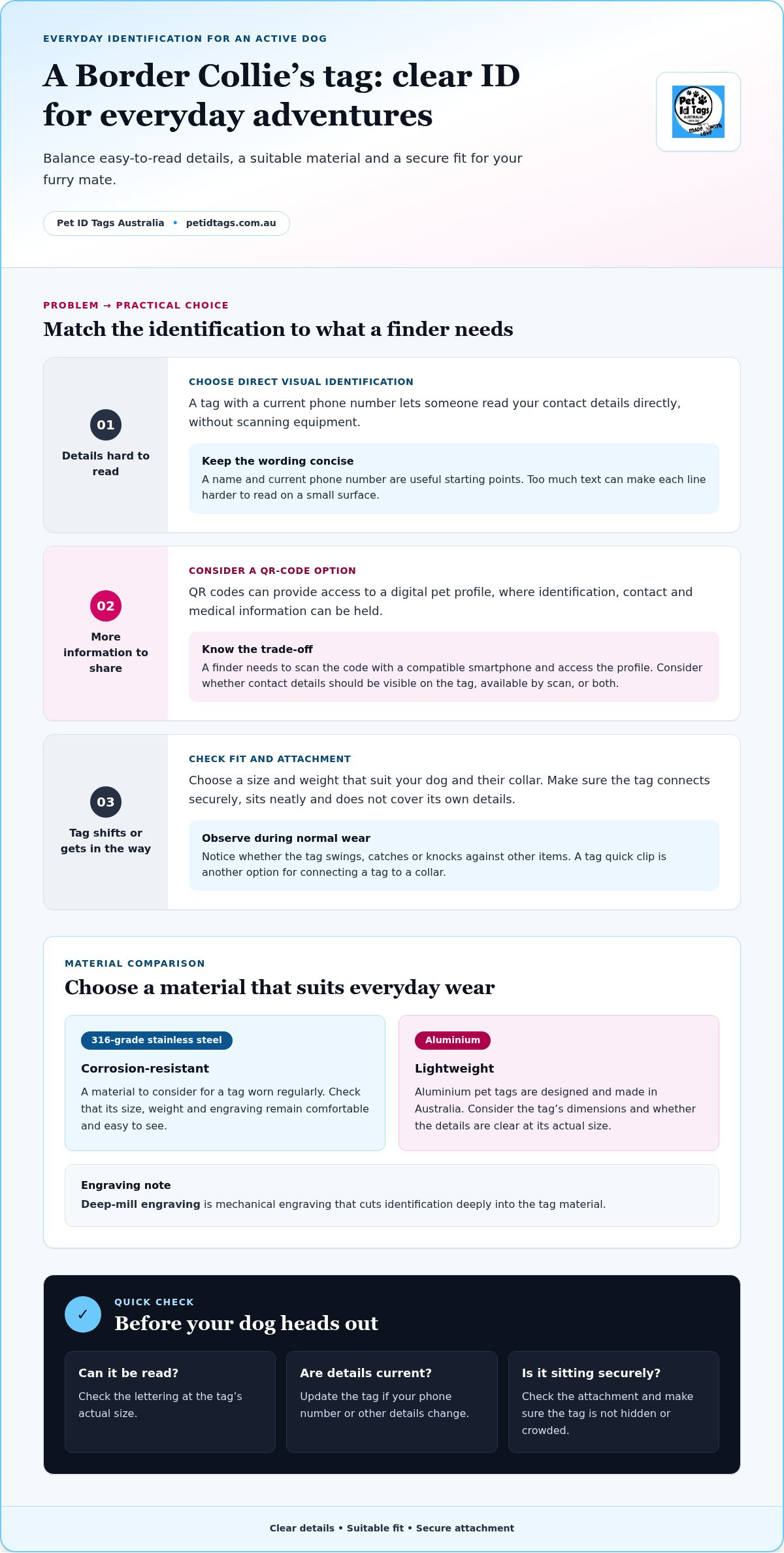
How to Choose and Check a Border Collie’s Dog Tag
A useful tag should suit the way your Border Collie spends the day, not just look right when first fitted. Follow these four steps to choose an option and keep its identification useful as your dog’s routine changes.
- Review their routine. Think about daily walks, play and where your dog wears identification. Note which collar they wear most often, and whether the tag might be covered or crowded by other items.
- Choose the format. Decide whether you want contact details readable directly on an engraved tag, information reached through QR codes, or both. Consider what a finder can access at a glance.
- Check readability. Look at the tag from a normal viewing distance. Make sure the name and emergency contact information are legible, with enough space between details to read them clearly.
- Inspect the attachment. Confirm the tag is connected to the collar, sits comfortably and hasn’t shifted into a position where its details are difficult to see.
Match the tag to the dog’s routine
Consider how your furry mate moves on everyday outings and during play, and which collar they wear for those activities. A larger tag may offer more room for text, while a smaller one may sit differently on the collar. There’s no single shape or material that suits every Border Collie. Balance readable details with size and comfort for your individual dog.
Once you’ve chosen a tag, make a quick visual check part of your regular pet-care routine. Look at the information, see how the tag hangs and notice whether anything has changed since your last check. This can help you spot a problem or update details before you head out.
Check the tag, information and attachment
Read the engraved details periodically to make sure they’re still clear. If your phone number or other contact information changes, update the tag promptly. An old number won’t help a finder reach you. Also check that the attachment remains in place and that the tag sits comfortably on the collar your dog wears.
For a closer look at attachment options, the dog tag quick clip guide covers how a quick clip connects a pet tag to a collar. Include your chosen attachment in routine checks rather than assuming it’s still in place.
A border collie active lifestyle dog tag works best when its details remain easy to read and its fit suits your dog’s everyday wear. Review your furry mate’s routine, then choose a personalised pet ID tag to meet those practical needs.
Choosing Pet ID Tags Australia for Your Border Collie
Choosing identification for an active dog comes down to practical details: information a finder can read, a format that suits your preferences and an option that fits everyday wear. Pet ID Tags Australia is an Australian pet identification specialist operating since 2004. The business has over 20 years of engraving experience and has helped identify over 100,000 pets.
Its identification options include 316-grade stainless-steel tags, aluminium tags, smart tags and quick clips. These offer different ways to carry your dog’s details. Choose based on your Border Collie’s routine and what you want a finder to see directly.
Traditional engraving experience and material options
Deep engraving marks identification into the tag material, giving a finder details to read from the tag itself. This visible information can help someone identify your dog and find a way to contact you. Pet ID Tags Australia deeply engraves its tags in its Australian workshop, drawing on over 20 years of engraving experience.
Material is another consideration. 316-grade stainless steel is a speciality for the business, while aluminium tags offer another option for everyday wear. Weigh up your priorities, including the tag’s feel, size and how clearly its details can be read. Whichever material you choose, check that the identification remains legible and current.
Choose an identification format that fits your priorities
An engraved tag suits owners who want key contact details visible without a scan. A smart tag with QR codes offers another approach: scanning can provide access to a digital pet profile rather than displaying all its information directly on the tag. Consider which option makes sense for your household and your dog’s daily outings. Either way, keep the information accurate and think about how quickly a finder can act on what they see.
For an active Border Collie, readable identification is a practical priority, whether you choose direct visual details, QR-code access or both. Consider how the tag fits your dog’s routine, then check its details and attachment regularly. A well-chosen tag can offer added peace of mind without promising what will happen if your dog is found.
Ready to choose a border collie active lifestyle dog tag? Choose a personalised ID tag for your furry mate from Pet ID Tags Australia’s identification options.
Make Your Dog’s Identification Part of Everyday Care
Identification is most useful when the people caring for your Border Collie know what to do with it. If a family member or pet-sitter takes your dog out, let them know which ID your dog wears and how to reach you if plans change. This simple handover helps everyone feel prepared for everyday outings.
Choosing a border collie active lifestyle dog tag is one thoughtful way to support your furry mate’s safety. The right choice can fit naturally into the life you share, from familiar walks to new adventures.
Pet ID Tags Australia offers personalised options to suit different preferences, including traditional engraved tags and smart tags. Choose the format and details that work for your family.
Choose a personalised ID tag for your furry mate and head into your next adventure with added peace of mind.
Frequently Asked Questions
Is a dog tag useful for an active Border Collie?
Yes, particularly if your dog is taken out by different people. Make sure family members, dog-sitters or walkers know where the tag is and can read the details if needed. If your Border Collie sometimes wears a different collar for an outing, check that their identification goes with them. A quick handover helps everyone feel prepared when your furry mate is away from home.
Can I use a QR-code tag and a traditional engraved tag together?
Yes. If you use both, make sure the physical tag and digital pet profile don’t give conflicting information. Scan the QR code yourself after setting up the profile and review what a finder will see. Repeat the check after changing profile details. Keep the engraved text concise so both forms of identification are clear.
How often should I check my Border Collie’s ID tag?
Build checks around changes to your dog’s gear and care routine, rather than relying only on a calendar reminder. For example, take a look after a collar has been swapped, adjusted or returned by a dog-sitter. Check that the tag hasn’t become trapped beneath another attachment. These moments make it easier to spot a problem before your Border Collie heads out with someone else.
What should I do if my contact number changes?
Update the old number wherever it appears on your dog’s identification. If you have more than one tag or use a digital pet profile, update each separately. Before fitting an updated tag, read the number back carefully to catch a transposed or missing digit. You may also want to use a contact number that will be answered while your dog is out with a walker or another family member.
Can a dog tag become difficult to read with everyday use?
It can. Check whether the smallest characters are still distinct, not just whether the tag’s surface looks clean. Try reading every letter and digit without relying on memory, since familiar details can be easy to fill in unconsciously. If you’re unsure about a character, compare it with the information originally supplied. If the marking itself is unclear, arrange a replacement rather than guessing.
What happens if my Border Collie loses their tag?
If the tag is missing, a finder won’t be able to read or scan the information it carried. Keep your dog supervised while you arrange replacement identification, and check the collar and attachment for signs that may explain how the tag came off. If you have a spare, confirm its details are current before using it. Otherwise, fit a replacement as soon as practical.