

Table of Contents
- Quick Comparison: Dog Harness Sets at a Glance
- How to Measure a Dog for a Harness (Step-by-Step)
- 1. Personalised Dog Harness & Lead Set with Car Seat Belt Bundle
- 2. Personalised Dog Harness & Lead Set
- 3. Harness with Dog Tag Combo
- 4. Personalised No-Pull Dog Harness
- Best Dog Harness for Pulling: What to Look For
- Dog Harness vs Collar Safety: Which Is Right for Your Dog?
- Frequently Asked Questions
Last Updated: September 29, 2026
Quick Comparison: Dog Harness Sets at a Glance
Choosing dog harness sets comes down to what your dog needs on a walk: a no-pull design for a chronic puller, a car-safe bundle for road trips, or a harness with a matching tag for everyday strolls.
| Set | Price | Best For | Key Feature |
|---|---|---|---|
| Harness & Lead Set with Car Seat Belt Bundle | $64.90 | Walks and car travel | Bungee lead + seat belt clip |
| Harness & Lead Set | $59.90 | Everyday walks | Padded bungee lead handles |
| Harness with Dog Tag Combo | $54.90 | New puppies and rescues | Harness + engraved ID tag |
| Personalised No-Pull Harness | $39.90 | Training and pullers | Front and back clip points |
How to Measure a Dog for a Harness (Step-by-Step)
Measuring a dog for a harness takes about two minutes and three measurements: chest, neck, and belly. Get these right and you avoid the two most common fit failures, rubbing under the front legs and a harness that slips over the head mid-walk.

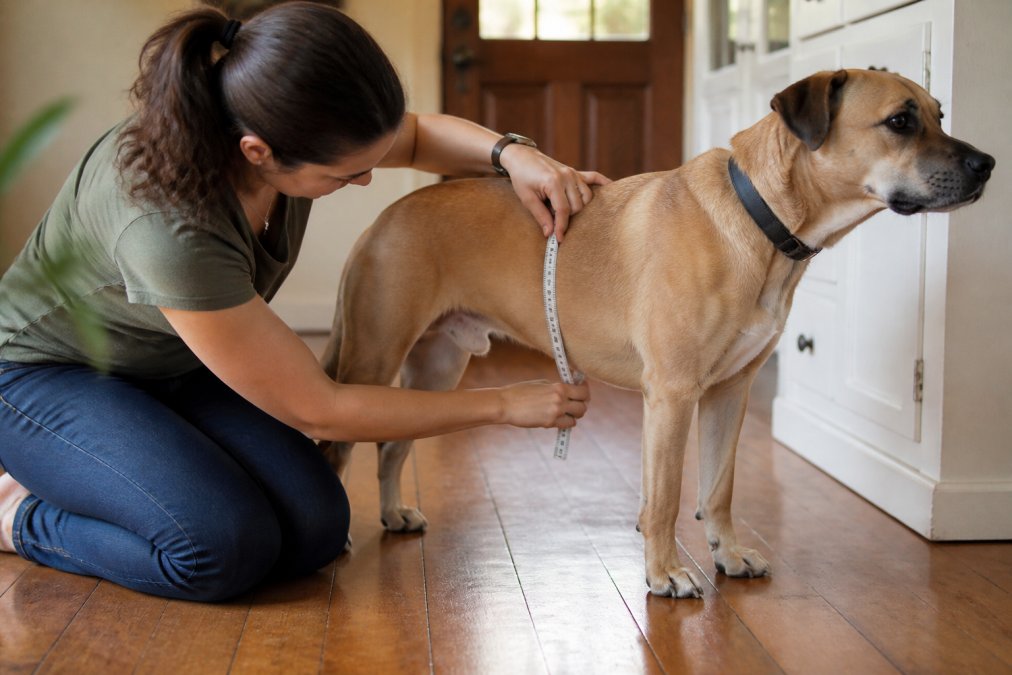
- Measure the chest at its widest point, just behind the front legs
- Measure the neck loosely around the base
- Check the belly strap sits flat without pinching on deep-chested breeds
Turning measurements into a size
A chest measurement alone does not pick a size, because brands build size charts around different girth ranges. Compare the chest number against the specific set's chart, then check the neck range as a second filter. If the chest lands in a medium but the neck sits at the top of the small range, go with the medium and tighten the neck strap.
Where each strap should sit once it is on
- Chest strap: level across the breastbone, roughly a hand's width behind the front legs. If it rides forward into the armpit, it will rub on every stride.
- Neck strap: high enough that the harness cannot be backed out of, but loose enough to slide two fingers flat underneath.
- Belly strap: parallel to the ground, not angled up toward the ribs. An angled belly strap is the usual cause of a harness rotating to one side under load.
The two-finger and pull tests
Once the harness is on, run two checks. Slide two fingers under every strap; if you can fit more, tighten it, and if your fingers cannot fit, loosen it. Then apply gentle backward pressure on the lead attachment point. A correctly fitted harness stays centred on the chest and shoulders; if it slides, twists, or the dog can step out of a leg loop, adjust before the next walk.
Fit by chest shape, not just size
Two dogs with the same chest measurement can need different harness shapes. Deep, narrow-chested breeds such as Greyhounds and Whippets tend to back out of standard step-in harnesses, so a longer body panel and snug belly strap suits them better. Broad, barrel-chested breeds such as French Bulldogs and Boxers need a shorter back panel and wider neck opening so straps clear the shoulders.
Re-check the fit as your dog changes
Fit is not a one-off task. A puppy measured at twelve weeks will outgrow that setting within a month or two, and adult dogs change shape with coat growth, weight loss, or age. Re-run the two-finger and pull tests every few weeks, and any time you notice a bald patch, a red mark, or your dog side-stepping when the harness goes on.
1. Personalised Dog Harness & Lead Set with Car Seat Belt Bundle
This is the most complete set in the range, and the one to pick if your dog travels in the car as often as it walks. It pairs a no-pull harness with a shock-absorbing bungee lead and a seat belt clip, so the same gear handles a park walk and a drive to the vet.
Personalised Dog Harness & Lead Set →
2. Personalised Dog Harness & Lead Set
The standard lead set is the bundle most owners actually need: the same no-pull harness, custom printed with your dog's name, plus a matching bungee lead with two padded handles.

3. Harness with Dog Tag Combo
The combo set solves two problems at once: walking control and identification. It bundles a custom harness with a deep-engraved stainless steel ID tag, so your dog's name is on the harness and your contact details are on the tag.
4. Personalised No-Pull Dog Harness
The standalone no-pull harness is the entry point, and for many dogs it's all you need. At $39.90, it's the lowest-cost way to get a padded, adjustable harness with your dog's name printed on it.
Best Dog Harness for Pulling: What to Look For
The best harness for a pulling dog is a front-clip, no-pull design with padded chest panels and adjustable straps. Back-clip harnesses give a determined puller more use, not less.
- Front-clip attachment point redirects momentum sideways, turning the dog back toward you
- Padded chest panels spread force across the body instead of concentrating it at the throat
- Adjustable straps at chest and belly keep the harness from rotating under load
- A top handle lets you hold a dog steady without grabbing the collar
How a front clip actually changes the pull
A back-clip harness sits over the shoulders, close to where a sled dog's pulling harness sits. When your dog leans into the lead, pressure lands behind the shoulders and the dog can drive forward against it. A front clip moves the attachment to the chest: when the dog surges ahead, the lead pulls the chest sideways, so its own momentum turns it back toward the handler.
The trade-offs nobody mentions
A front-clip harness is not a magic fix, and it has real downsides.
- Lead tangling. A loose lead can slip under the dog's front leg on a front clip. A shorter lead and a steady hand reduce this.
- Gait change. Some dogs shorten their stride or cross their front legs slightly when a front clip is under tension. If your dog moves oddly only when pulling, that is usually why.
- Not for every dog. Dogs with very narrow chests can slip a front-clip harness if the belly strap is not snug. Re-check the fit before relying on it.
- Training still required. A front clip makes pulling less rewarding, but it does not teach your dog what you want instead. Pair it with reward-based loose-leash training.
Dual-clip setups and when to use each point
Many no-pull harnesses, including the sets in this guide, give you both a front and a back attachment. Use the front clip for training walks and busy environments where you need steering control, and the back clip for relaxed sniff walks or a long line in an open park. A double-ended lead clipped to both points gives the most control and suits adolescent dogs still learning not to lunge.
How to tell whether it is working
Give a new no-pull harness two to three weeks of consistent use before judging it. Signs it is helping: less tension in the lead, fewer sudden lunges, and your dog turning back toward you when it hits the end. Signs it is not: the harness rotating to one side, the dog still leaning hard into the lead, or chafing under the front legs.
Personalised Dog Harness & Lead Set →
Matching the harness to the pulling style
Not all pulling looks the same. A dog that lunges at other dogs or bikes needs steering control, so a front clip plus a top handle is the priority. A dog that pulls steadily on every walk, such as a working breed or a young dog with energy to burn, benefits most from a front clip plus a bungee section in the lead to absorb the jolt.
Dog Harness vs Collar Safety: Which Is Right for Your Dog?
A harness is the safer choice for most dogs, particularly those that pull, have a flat face, or have a history of neck or tracheal problems. A collar remains the right choice for carrying identification, and most owners should use both.
Frequently Asked Questions
What features should I look for in a dog harness set?
Look for a no-pull design with front and back clip points, adjustable straps at the chest and neck, and breathable mesh or padded lining to prevent chafing. Reflective stitching helps with low-light walks, and a quick-release snap buckle makes it easy to put on and take off. Matching collar and leash sets add convenience. If your dog pulls, a front-clip harness that redirects momentum is more effective than a back-clip only design.
How do I measure my dog for a harness set correctly?
Use a soft measuring tape to measure three points: the widest part of the ribcage just behind the front legs (chest), loosely around the base of the neck, and the belly strap area for deep-chested breeds. If your dog falls between two sizes, choose the larger size for comfort. A well-fitted harness should be snug enough that it will not slip over the head, but loose enough that two fingers slide easily underneath.
Are harness sets better than standard collars for puppies?
Harness sets are generally safer for puppies because they distribute pressure across the chest and shoulders rather than concentrating it on the throat. This matters for puppies still learning loose-leash manners, as collar pressure can strain a developing trachea. A no-pull harness with adjustable straps also gives you more control during training. Pair it with a lightweight ID tag on the harness itself so your puppy is identifiable even if the collar comes off.
What is the best dog harness for pulling?
A front-clip no-pull harness is the most effective design for dogs that pull. The front attachment point redirects your dog's forward momentum back toward you rather than letting them drag you forward. Look for padded panels that spread pressure across the chest, a top reach handle for instant control in busy areas, and durable nylon construction that withstands enthusiastic pullers. Adjustable straps ensure a secure fit that will not shift during walks.
Why do some dog trainers prefer harnesses over collars?
Trainers often prefer harnesses because they avoid pressure on the throat and trachea, which is especially important for breeds prone to tracheal issues, puppies, and senior dogs. A no-pull harness with a front clip gives you better control during training without causing discomfort. Harnesses also reduce the risk of neck injuries if a dog lunges suddenly. For dogs that pull, a harness paired with consistent training is more humane and effective than a standard collar.