

The best dog collar material for tags isn’t simply the one that looks toughest. A collar needs to suit your dog’s daily routine, while the tag needs a secure attachment and clear, readable details so someone can contact you if your furry mate wanders.
It makes sense to weigh up Biothane’s low-maintenance appeal against leather’s classic feel. Both can carry an ID tag, but wet conditions, dirt, wear and care habits may affect which is more practical for your dog. The collar material and tag material are separate decisions, too: a suitable collar can hold a clearly engraved tag without being made from the same material.
This guide compares Biothane and leather for everyday tag use, including what to consider around wet weather, cleaning and ongoing care. You’ll also learn what to check on the collar, tag and attachment so identification stays secure and easy to read. Pet ID Tags Australia offers personalised pet identification tags and accessories, including collars and smart tags. Pairing a suitable collar with clear visual identification helps make your dog’s details easier to access.
Key Takeaways
- The best dog collar material for tags depends on your dog’s routine and the care each material requires.
- Check the collar, ID tag and attachment as separate parts of the setup, including the attachment’s fit and condition.
- Follow the collar’s care directions, especially after wet or messy outings, and inspect its attachment regularly.
- Choose a tag with clear, readable details so someone can identify your dog without scanning equipment.
- Compare Biothane and leather against your everyday needs before choosing a collar to carry your furry mate’s identification.
Choosing a dog collar material for tags starts with the job
A collar, an ID tag and the hardware that joins them are three separate parts of your dog’s identification setup. The collar sits around your dog’s neck, the tag carries readable details, and the attachment connects the two. The best dog collar material for tags is the one that suits your dog’s routine, but material alone can’t confirm that a tag will stay secure.
A tag-ready collar has an attachment point suited to carrying an ID tag, positioned so the tag remains visible and readable. A general Dog collar overview introduces the range of collar materials and types, but your choice also needs to account for how the tag connects and sits.
What does the collar material change?
Material affects how a collar feels in your hands, how you care for it and how well it fits your dog’s usual activities. Think about your furry mate’s week: mostly dry walks, time outdoors in wet conditions, or regular trips where the collar may need cleaning? Check the maker’s care directions for the specific collar rather than assuming all materials should be treated alike.
Keep comfort and tag legibility as separate checks. The collar should suit your dog’s wear routine; the tag’s text should be easy to read. A material that works well for one dog may not be the right fit for another.
What makes a collar suitable for an ID tag?
Attachment hardware matters because it forms the connection between the collar and your dog’s identification. Check that the attachment point is intended to carry a tag, fits securely and shows no signs of wear or damage. Then look at how the tag sits: it should hang clear of the collar and other items, rather than being covered or difficult to turn towards someone reading it.
Before choosing, check these parts together:
- Attachment: Does the tag connect securely to a suitable point on the collar?
- Position: Can someone see and read the tag while your dog wears the collar?
- Condition: Do the collar and joining hardware look secure and free from noticeable wear?
These checks help separate a material preference from the practical job of carrying identification. Once the connection and visibility are considered, you can compare Biothane and leather in light of your dog’s routine and care needs.
Biothane vs leather dog collars for everyday tag wear
Neither material guarantees that an ID tag will stay attached or easy to read. The collar’s design, the condition of its attachment hardware and the way the tag sits all matter. Biothane and leather can each suit different preferences, but check the maker’s care and material information for the particular collar rather than relying on general claims. The American Kennel Club’s guide to choosing the right dog collar is a useful starting point for considering fit and everyday use.
| Consideration | Biothane | Leather |
|---|---|---|
| Handling | Feel and flexibility can vary by construction. Check how the collar sits and moves when fitted to your dog. | Feel can vary with the leather and its finish. Check fit and comfort on your dog rather than assuming all leather collars feel alike. |
| Cleaning | Follow the specific maker’s care directions. Confirm which cleaning methods are suitable. | Care depends on the product and its finish. Use the maker’s instructions rather than applying a general leather-care rule. |
| Water exposure | If your dog often gets wet, confirm the maker’s claims about water exposure and aftercare before choosing. | Check the maker’s advice for wet conditions and what to do after the collar gets damp. |
| Tag attachment | Check that the collar has a suitable attachment point and that the tag hangs clear. | Check that the attachment point and hardware are secure, in good condition and suitable for the tag. |
When might a Biothane collar suit a dog’s routine?
If your dog regularly encounters wet or messy conditions, Biothane may be worth considering, provided the collar’s maker confirms it suits that use and explains how to clean it. Don’t assume every product has the same performance. Check the fit, hardware and attachment point, then make sure the tag remains visible. Pet ID Tags Australia offers personalised dog collars and pet ID tags, though this comparison isn’t a claim that it sells Biothane collars.
When might a leather collar suit a dog’s routine?
Leather may appeal if you prefer its look and feel and are comfortable following the care instructions for that specific collar. Care needs can differ by product, so check what the maker recommends, especially if the collar may get wet. Inspect the collar and tag attachment regularly for wear, and confirm the tag still hangs securely and can be read.
Whichever material you choose, the collar doesn’t determine the tag’s engraving material or readability. Those are separate decisions. The best dog collar material for tags is the option that fits your dog’s routine and care needs, paired with a secure attachment and clear identification. You can also explore personalised collars and pet ID tags as separate parts of your dog’s identification setup.
Compare tag attachment and readability, not material alone
A collar can be in good condition while its tag attachment needs attention. Check the collar, the tag and the connection as separate parts of your dog’s identification setup. The collar material doesn’t tell you whether the tag is engraved clearly, whether its details are current or whether the attachment is secure.
Tag material and engraving affect the tag itself; the collar and joining hardware affect how it’s carried. A tag with clear details still needs to sit where someone can see and read it. For practical attachment tips, see this dog tag attachment guide.
How should a dog ID tag sit on a collar?
Check the tag while your dog is wearing the collar. Can you read it without taking it off? Let your dog move naturally and see whether the tag stays visible, or rubs against the collar or another item, turns out of view or becomes obstructed. If the attachment feels loose, inspect it before relying on the setup. No single attachment method can promise a tag won’t come loose.
What should you check during a collar inspection?
Look over the fastening, stitching or other construction, and the tag attachment. Check for visible wear, damage or a closure that doesn’t appear secure. After cleaning the collar or moving the tag to another one, check the fit and connection again. A small change in how the tag hangs can affect how easily someone can read it.
Quick check: confirm the attachment is secure and in good condition, then make sure the tag hangs clear and its details are readable while your dog moves.
- Check that the fastening closes as intended and the collar fits your dog.
- Look for wear around the point where the tag joins the collar.
- Make sure the tag isn’t rubbing, hidden or difficult to read.
- Recheck the setup after cleaning or changing collars.
This is a useful check whatever collar you choose. The best dog collar material for tags still needs a suitable attachment and readable identification; routine inspection helps you spot changes before they affect your furry mate’s setup.
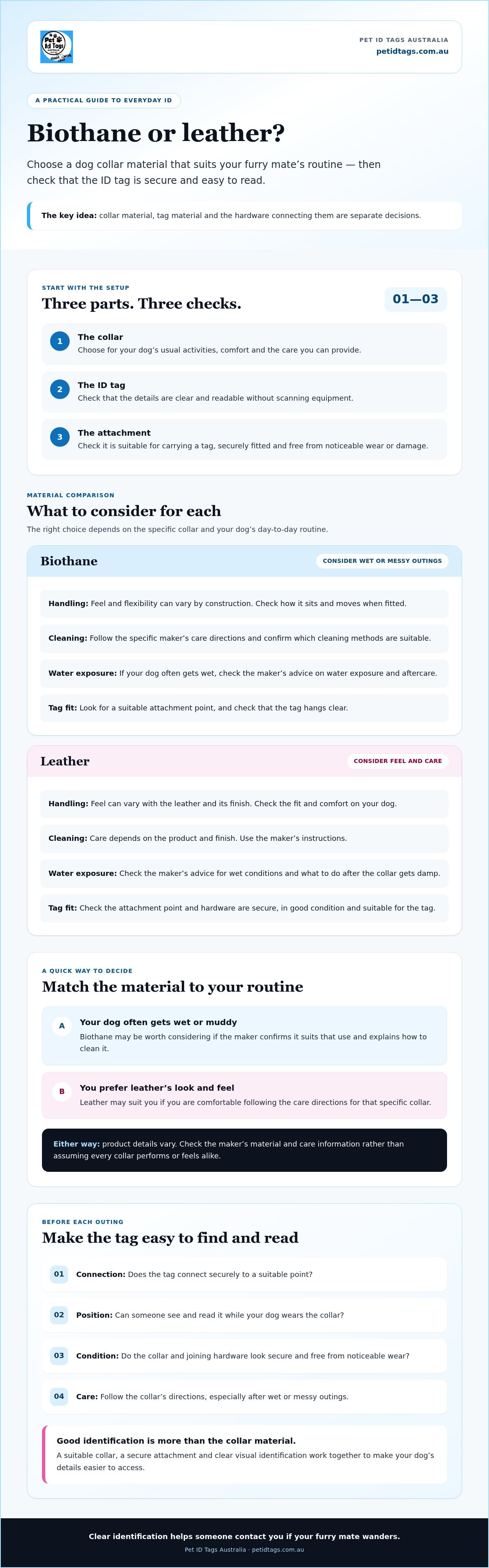
Match the collar material to your dog’s routine
The right choice starts with your furry mate’s normal week, not a promise that one material suits every dog. Think about how often the collar will be worn, whether it may get wet, and what cleaning the maker recommends. Then check that the ID tag can be attached securely and stays readable. This simple process helps you judge the best dog collar material for tags against practical needs rather than appearance alone.
Questions to ask before choosing a collar
- How often will your dog wear it, and what care does the maker recommend after everyday use, wet conditions or cleaning?
- Does the collar have an attachment point suited to your dog’s ID tag, with hardware that closes securely?
- Can the tag stay visible and readable while your dog moves comfortably?
Use those answers to compare the specific collars you’re considering. Follow the maker’s care instructions rather than assuming that similar-looking materials need the same treatment. Check the collar’s fit regularly, too. If it shifts, sits awkwardly or changes how the tag hangs, reassess the setup.
Keep the collar and tag working as a pair
A collar and tag need routine attention. Look over the collar, fastener and tag attachment for visible wear, and check that the tag hasn’t become obscured or difficult to read. Recheck the fit and attachment after cleaning or moving the tag to a different collar. For more detail on choosing a collar, read this personalised dog collar guide.
Clear details matter as much as a suitable attachment. Check that the information on the tag is easy to read and gives someone a practical way to contact you. These dog tag engraving ideas can help you plan what to include.
- Consider the routine: Think about everyday wear, wet conditions and how often the collar may need cleaning.
- Check care directions: Follow the maker’s instructions for cleaning and looking after that collar.
- Inspect the attachment: Look for wear and confirm the tag is connected securely.
- Confirm readability: Check that the tag stays visible and readable while your dog moves.
For a closer look at the available options, view personalised dog collars and pet ID tags as separate choices for your dog’s everyday identification setup.
Choose a readable ID tag to complete the collar
Your collar material choice should follow your dog’s routine and the care you’re prepared to provide. Then assess the tag separately: check its attachment, position and readability. A well-chosen collar can carry identification, but the tag must still be easy to see and its details clear enough to use.
Visual identification means details a person can read directly, without scanning equipment. A traditional engraved tag provides this when the text is clear, visible and current. Check that the tag sits where someone can turn or view it without removing it from your dog’s collar.
Traditional engraving or a smart pet tag?
Traditional engraved tags and smart pet tags offer different ways to share identification details. A tag with QR codes can provide a route to a digital pet profile, while an engraved tag can display readable details directly. A finder may not scan a code, so don’t treat digital access as a substitute for visible, readable information. Consider which option suits your dog and what a person can access at a glance.
Whichever tag you choose, check the information regularly and make sure the attachment suits the collar. The collar’s material doesn’t determine the tag’s engraving material or whether its details are easy to read. Those need their own checks.
A practical next step for Australian pet owners
Compare the available tag options, then check which attachment fits your dog’s collar securely. Look at the details from a person’s point of view: are they visible and easy to read while your dog is wearing it? A quick review of the collar, fastening, tag and connection helps keep the whole setup working together.
Pet ID Tags Australia offers personalised identification tags for dogs and cats, including engraved tags and smart pet tags. For Australian pet families, these options support a practical approach to displaying pet identification. The best dog collar material for tags is the one that suits your furry mate’s routine, paired with a tag that remains attached and readable.
- Choose a collar based on your dog’s routine and its care instructions.
- Confirm the tag attachment fits securely and the tag remains visible.
- Check that identification details are clear, current and readable.
Ready to compare options? Explore personalised pet ID tags and collars and choose the combination that suits your dog.
Choose a collar setup that keeps ID clear
The best dog collar material for tags is the one that suits your dog’s routine and care needs. Biothane or leather may fit different preferences, but neither material alone confirms that a tag will stay attached or readable. Check the collar’s fit and care directions, then inspect the attachment and make sure the tag’s details are easy to see.
Collar material and tag material are separate choices. Pair a suitable collar with clear visual identification, and check both regularly so your furry mate’s details remain useful. Traditional engraving offers readable information on the tag itself, while smart options can provide another way to access details.
Pet ID Tags Australia offers personalised pet identification tags, including stainless steel dog tags, as well as collars and smart pet tags.
Ready to choose identification for your dog? Explore personalised pet ID tags and collars, compare the options and check which attachment suits your collar. A few careful checks can help keep your dog’s identification clear and accessible.
Frequently Asked Questions
Is Biothane or leather better for a dog collar that carries tags?
Neither material is the right choice for every dog. The best dog collar material for tags depends on your dog’s routine, the collar’s care directions and whether its attachment point suits the tag. Compare the specific products rather than relying on broad material claims. Check fit and comfort, how the collar should be cleaned, and whether the attached tag remains secure, visible and readable during everyday movement.
Can you attach an ID tag to a Biothane dog collar?
Yes, if the collar has an attachment point that suits the tag and the connection is secure. Biothane alone doesn’t confirm that a tag will fit or stay attached. Before use, check the maker’s instructions and inspect the collar’s hardware. Attach the tag, then make sure it hangs clear, doesn’t feel loose and can be read while your dog is wearing the collar.
Can you attach an ID tag to a leather dog collar?
Yes, provided the collar has a suitable attachment point and the tag connects securely. Check the specific collar’s design and maker’s directions, as leather collars can differ in construction and hardware. Once attached, check that the tag hangs freely without being obstructed. Inspect the collar and joining hardware regularly for visible wear, and confirm the tag remains easy to read on your furry mate.
Will water damage a leather or Biothane dog collar?
It depends on the particular collar and its maker’s care instructions. Don’t assume every leather collar responds to water in the same way, or that every collar described as Biothane has identical care requirements. Check the product information before exposing it to wet conditions, and follow the recommended cleaning and drying directions. After it’s dry, inspect the collar and tag attachment for visible changes or wear.
Does collar material affect whether a dog tag stays readable?
Collar material doesn’t determine the tag’s engraving material or whether its details are legible. Readability depends on the tag’s markings, the information shown and whether the tag remains visible when attached. Check that it hangs clear, isn’t rubbing against another item and can be read without removing it from your dog. Keep the contact details current, too, so they’re useful if someone finds your furry mate.
What should I check before putting a dog ID tag on a new collar?
Check the collar’s fit, fastening and construction, then inspect the tag attachment for a secure connection and visible wear. Make sure the tag doesn’t feel loose or sit where it could be hidden. With the collar on your dog, confirm the tag stays visible and readable during ordinary movement. Recheck everything after cleaning the collar or moving the tag to another collar.
Is a personalised collar enough identification for my dog?
A personalised collar can provide visual identification if its details are clear, current and readable while your dog wears it. Check what information is marked and whether it’s easy for someone to see. A separate engraved ID tag is another way to display contact details, while smart pet tags can provide access to a digital pet profile. Choose an option that suits your dog and check it regularly.