

Table of Contents
- How Common Pet Identification Methods Compare
- Pet ID Tags vs Microchips: Visible and Permanent Identification
- Smart Pet Tags: QR Codes, NFC and Digital Profiles
- GPS Tracker for Dogs and Cats: Tracking Versus Identification
- What to Put on a Pet ID Tag
- Registration, Databases and Keeping Owner Information Current
- Costs, Subscriptions and Lifetime Ownership Expenses
- Which Identification Setup Suits Your Pet?
- Frequently Asked Questions
Last Updated: October 7, 2026
How Common Pet Identification Methods Compare
Pet identification methods fall into three broad groups: visible identification (tags and engraved collars), permanent identification (microchips), and digital or tracking options (smart tags and GPS devices).
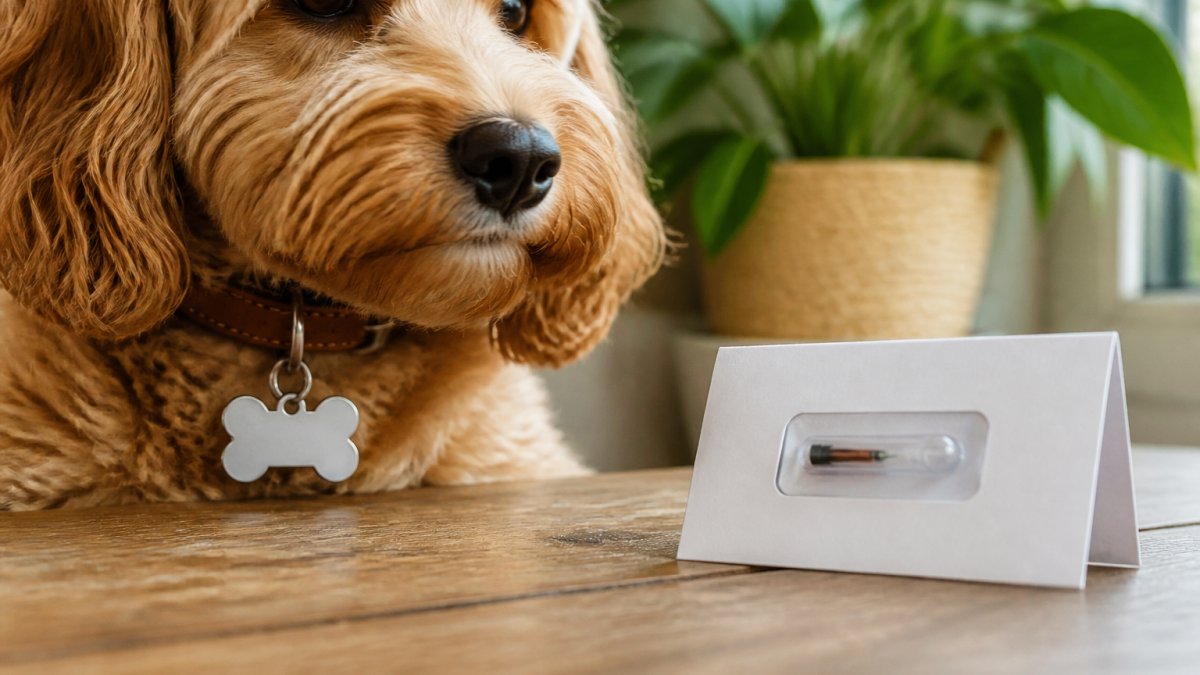
What Each Method Actually Does
An engraved pet ID tag is the only method a member of the public can read instantly, with no equipment. A microchip is a permanent identifier stored under the skin, but it only works when someone scans it and the database record is current. A smart tag displays a QR code a finder scans with a phone.

At-a-Glance Comparison Table
| Method | Readable By Public | Needs Power | Update Without Replacing | Best Role |
|---|---|---|---|---|
| Engraved ID tag | Yes, instantly | No | No | Everyday visible ID |
| Microchip | No, needs scanner | No | Yes, online | Permanent backup |
| Smart QR tag | Yes, with phone | No | Yes, online | Contact detail changes |
| GPS tracker | No, owner only | Yes | Yes, in app | Active search |
Pet ID Tags vs Microchips: Visible and Permanent Identification
The honest answer is that these two are not competitors. A pet ID tag is visible identification anyone can act on immediately. A microchip is permanent identification that survives a lost collar, but it depends on a scanner and a current database record. Together they cover each other's weaknesses.

Where Engraved Tags Win
A deep laser-engraved tag works the moment someone finds your pet. No appointment, no scanner, no app. That immediacy is why a readable tag remains the fastest route home. Our Stainless Steel Bone Pet ID Tag is engraved on both sides, so your pet's name and your contact details stay legible at a glance.
Where Microchips Win
A microchip cannot fall off, be removed, or fade. If a collar comes loose during an escape, the microchip is still there. The catch is that a chip is only as good as its registration. If you move house or change your number and never update the record, a vet who scans your pet finds outdated details.
Smart Pet Tags: QR Codes, NFC and Digital Profiles
A smart pet tag carries a scannable code that opens a digital profile. The finder points a phone at the tag, sees your pet's details and your contact information, and calls you. The tag itself never needs re-engraving, because you edit the profile online instead.
How a Scannable Tag Links to Owner Contact Details
Each tag is tied to a unique identifier that points to a profile you control. When your number changes, you log in and update it. Our Smart Pet ID Tag works this way: create a digital profile, and anyone who finds your pet can scan the QR code to reach you.
Privacy and Data Security to Weigh Up
Keep the public profile minimal. A first name, a phone number, and a note that the pet is microchipped is enough. Avoid your full address and your pet's medical history on any publicly scannable page. The same caution applies to microchip databases: only authorised users should be able to see your details.
GPS Tracker for Dogs and Cats: Tracking Versus Identification
A GPS tracker for dogs and cats answers a different question from an ID tag. It tells you where your pet is right now. It does not tell a stranger who your pet belongs to. Tracking and identification are separate jobs, and the best setups use both.
Battery Life, Range and Subscription Costs
Most trackers need regular charging, and battery life is the number that matters most. A tracker that lasts a few days is fine for a known escape window; one that lasts weeks suits a roaming cat. Range depends on mobile coverage, so a tracker can lose signal in rural areas.
What to Put on a Pet ID Tag
Keep it short and readable. A pet's name, your mobile number, and one backup contact are all a finder needs. Space on the tag is limited, so prioritise the number you answer most.
Engraving, Fade Resistance and Durability
Deep engraving outlasts printed or painted lettering, which rubs off with wear. Anodised aluminium suits cats and small dogs because it is light; stainless steel resists scratches better for larger, active dogs. Our Black Aluminium Bone Pet ID Tag is a good fit for cats and puppies, while the Silver Stainless Steel Round Tag takes more punishment.

- Pet's name, kept short
- Your mobile number, the one you always answer
- A second contact number or a suburb, space permitting
Registration, Databases and Keeping Owner Information Current
Registration is where many owners quietly fail, and it is the single most fixable weak point in any identification plan. A microchip number on its own identifies nothing, it is a string of digits that only becomes useful when it is linked to your current contact details in a database a vet, pound or shelter can search.
How Microchip Registration Actually Works
A microchip is implanted by a vet or authorised implanter, who scans the chip and records its unique number. That number then needs to be enrolled against your details. In practice there are two layers to get right:
- The implant record, the vet or implanter logs the chip number and your details at the time of implantation.
- The database record, the chip number is held in a national or state-based companion animal register, and this is the record a scanner search will return.
A common pattern is for owners to assume the vet has "done the registration" and never confirm it. The safer habit is to ask for the chip number in writing, then verify it appears against your name in the relevant register before you leave the clinic.
Which Databases Hold Your Pet's Record
Companion animal registration in Australia is handled at state and territory level, and each jurisdiction runs or recognises its own register. That means the database a scanner checks depends on where your pet was chipped and where it is found. Two practical consequences follow:
- If you move interstate, confirm whether your record needs to be transferred or re-registered in the new jurisdiction.
- If you rehome a pet, the record must be transferred to the new owner's details, leaving it in your name means a finder reaches the wrong person.
state and territory companion animal register contacts
How to Check and Update a Microchip Record
Checking a record takes minutes and is worth doing once a year:
Smart Pet ID Tag - QR Code Dog & Cat Identification Tag →
- Find the microchip number on your implantation paperwork, vet record, or a recent scan.
- Search the number in the relevant state or territory register.
- Confirm the name, phone number and address returned are current.
- Update online, or contact the register directly if the record is locked or shows another owner.
- Re-check after any move, number change, or rehoming.
If a search returns no record at all, the chip may never have been enrolled, contact the implanter or the register to resolve it.
Digital Profiles Need the Same Discipline
A smart tag is only as current as the information behind it. If you change your number and forget to update the profile, a finder scans the tag and reaches a dead line. Treat the digital profile like the microchip record: update it the same day your contact details change, and review it alongside your annual chip check.
Costs, Subscriptions and Lifetime Ownership Expenses
One-off purchases and ongoing fees behave very differently over a pet's life, and the gap between them is the number most owners never calculate. A tag is bought once. A tracker is rented, in effect, for as long as you want it to work.
One-Off Versus Recurring Costs
The cost models split cleanly:
- Engraved tag or engraved collar, a single payment, no ongoing fee, replaced only if lost or worn out.
- Smart QR tag, typically a single payment with the digital profile included; check whether profile hosting is genuinely free for the life of the tag or only for an introductory period.
- GPS tracker, hardware plus a monthly or annual subscription, because the device needs mobile data and a mapping service to report location.
Our engraved tags start at $17.90, and a Personalised Leather Collar with your pet's name and number laser-engraved into the leather starts at $39.90. Both are one-off purchases with no subscription attached.
What Drives Tracker Subscriptions
A tracker subscription is not arbitrary. It typically covers:
- Mobile data so the device can transmit its location.
- Access to the mapping and alert platform.
- Ongoing firmware and app maintenance.
Because of this, subscription pricing varies with the plan, the coverage, and how often the device reports. A plan that updates every few minutes costs more to run than one that reports on a longer interval. Over a decade, a modest monthly fee compounds well past the price of any tag.
A Lifetime Cost Comparison
| Option | Cost Model | Ongoing Fees | Update Method |
|---|---|---|---|
| Engraved tag | One-off from $17.90 | None | Replace tag |
| Smart QR tag | One-off $34.90 | None | Edit profile online |
| Leather engraved collar | One-off from $39.90 | None | Replace collar |
| GPS tracker | Hardware plus subscription | Monthly or annual | App settings |
The practical takeaway: a layered plan built around a tag and a microchip carries almost no recurring cost, while a tracker adds a fee every month for as long as it is active. That does not make trackers poor value, it makes them a different kind of purchase, best reserved for pets with a genuine roaming risk.
Hidden Costs to Budget For
Beyond the headline price, allow for:
- Replacement tags if a collar is lost, cheap, but worth keeping a spare.
- Collar wear on engraved leather, which may need replacing every few years.
- Chip re-registration or transfer fees if you move interstate or rehome.
Which Identification Setup Suits Your Pet?
Match the setup to the pet, not to the trend. An indoor cat that bolts for the door needs a light, secure tag and a well-fitted collar. A dog that roams needs a durable engraved tag plus a microchip.
- Indoor cat: lightweight aluminium tag, secure collar, current microchip
- Active dog: stainless steel tag, microchip, annual record check
- Escape artist: engraved tag, smart tag, GPS tracker as backup
A layered plan costs little more than a single method, and it closes every gap.
Frequently Asked Questions
Are pet ID tags or microchips better?
They do different jobs, so neither replaces the other. A microchip is permanent identification that sits under the skin and can only be read by a scanner, which means a vet, pound or shelter needs to scan your pet before your details appear. An engraved tag is visible identification that anyone can read on the spot, without equipment. Most pet safety advice is to use both: the tag gets your pet home fast, and the microchip stays with them if the collar comes off.
Can a microchip track a lost pet?
No. A microchip is not a GPS tracker. It stores a microchip number that links to your registration record in an identification database, and it only works when someone scans it. If your pet is lost, a GPS tracker for dogs and cats, or a smart tag with a QR code, gives you or a finder a way to act immediately. The microchip is your backup identification, not a live location feed.
What information should I put on my pet's ID tag?
At minimum, your pet's name and a phone number you actually answer. Add a second contact number if there is space, and consider a suburb rather than a full street address for privacy. Avoid putting your pet's name alone on the front with nothing on the back. Deeply engraved details resist fading far better than printed or lightly etched text, which matters if your pet is an escape artist and the tag takes a beating.
Do pets need both a microchip and an ID tag?
Yes, and this is the setup most vets and shelters recommend. Collars and tags can fall off, snag or be removed, so a microchip covers that gap as permanent identification. A tag covers the far more common situation where a neighbour or passer-by finds your pet and wants to call you straight away. Layering a visible tag, a registered microchip and, for escape-prone pets, a GPS tracker gives you the best chance of a fast reunion.
Are GPS trackers worth it for dogs and cats?
They are worth it if your pet bolts regularly or you live near busy roads, but understand the trade-offs. GPS trackers need charging, rely on network coverage, and often carry a monthly subscription on top of the purchase price. They also add weight, which matters more for cats than dogs. If your cat hates collar hardware, a lightweight smart tag with a QR code is a lower-burden option that still gives a finder a way to reach you.
Losing a pet is frightening, and the difference between a quick reunion and a long search often comes down to whether the identification on them is readable and current. Pet ID Tags Australia engraves durable, deeply cut tags and smart tags designed to stay legible for years, with fast local dispatch and a 30-day satisfaction guarantee. Build your pet a layered identification plan, then shop dog tags with us and give them the best chance of coming home.