

Searching for “pug harness breathing friendly no choke” is a sensible starting point, but a label can’t tell you how walking gear will feel on your dog. Check that it sits securely without obvious rubbing or limiting natural movement. How it fits your pug matters more than how it looks on the product page.
It’s natural to worry about pressure around your pug’s neck, and it can be hard to tell whether chest straps suit their compact shape. A considered walking setup should balance comfort, control and visibility, while keeping your furry mate easy to identify if you become separated.
This guide explains what to check before choosing walking gear, from strap placement and movement to signs of rubbing or discomfort. You’ll also learn when to pause a walk and seek veterinary advice, and how clear identification can add peace of mind. Pet ID Tags Australia offers a personalised no-pull dog harness with reflective straps, as well as identification products for everyday use. Choose based on your pug’s fit and observed comfort, rather than relying on a product label alone.
Key Takeaways
- Use the product’s size guidance and measure your pug as directed before choosing walking gear.
- For a pug harness breathing friendly no choke fit, assess where straps sit and whether your dog moves freely.
- Compare collar-led, chest-led and combination setups by their intended use, then judge comfort on your own dog.
- Before each walk, check closures, strap condition and visible identification. Reassess fit after changes in growth, weight or coat.
- Consider a personalised no-pull option with reflective straps as one practical choice, not a substitute for checking fit and comfort.
Pug Walking Gear and Breathing: What Should Owners Look For?
Pug owners want secure control on walks without uncomfortable pressure around their dog’s neck. A breathing-conscious fit should sit securely, show no obvious rubbing and allow natural movement. It shouldn’t press against the throat or shift into an uncomfortable position as your pug walks, turns or pauses.
That’s a practical starting point, not a medical guarantee. Labels such as “no-choke” or “breathing-friendly” can describe what an owner hopes to find, but they can’t confirm how a particular pug will feel in particular walking gear. Check the fit on your own furry mate and pay attention to their response.
Why a pug’s shape matters when choosing walking equipment
A pug’s short muzzle is part of its flat-faced, or brachycephalic, shape. This anatomy can make breathing comfort especially relevant during exercise, so check equipment for pressure and movement rather than choosing by appearance alone. Pug health issues on Wikipedia includes background on brachycephaly and related health considerations.
Breed characteristics aren’t a diagnosis. Each dog has their own anatomy and health history, and equipment can’t assess either one. If your pug already has breathing difficulties, or you notice a new change in breathing, pause walks and seek advice from your veterinarian before continuing.
What no-choke and breathing-friendly claims can, and can’t, tell you
Treat these claims as prompts to inspect the equipment closely, not proof of a medical or safety outcome. Poor placement or fit may lead to rubbing, slipping or unwanted pressure. A secure fit should stay in position without restricting your pug’s ordinary movement.
A product label cannot replace checking fit on the individual dog. Watch how your pug responds while standing and moving, and remove the gear if it seems to rub, shift or cause discomfort. If you’re unsure whether a breathing change is related to the equipment or something else, don’t try to diagnose it yourself. Your veterinarian can advise on your dog’s individual needs.
Fit and comfort vary between dogs, so don’t assume a design that suits one pug will suit another. Body shape, health history and movement all matter. Keep the goal practical: walking gear should allow comfortable movement and reliable handling, while you stay attentive to your dog throughout the walk.
How to Check Pug Walking Gear for a Secure, Comfortable Fit
A careful fit check is more useful than choosing by breed label or appearance. Follow the maker’s sizing and fitting instructions, and measure your pug exactly as directed. Don’t guess from weight or assume one size will suit every pug. Body shape and proportions vary, so check how the equipment sits on your own dog.
Before the first outing, check that the straps lie flat and don’t press against the throat. The gear should stay in position without digging in or shifting excessively. Make adjustments gradually, following the product instructions rather than tightening straps until movement looks restricted.
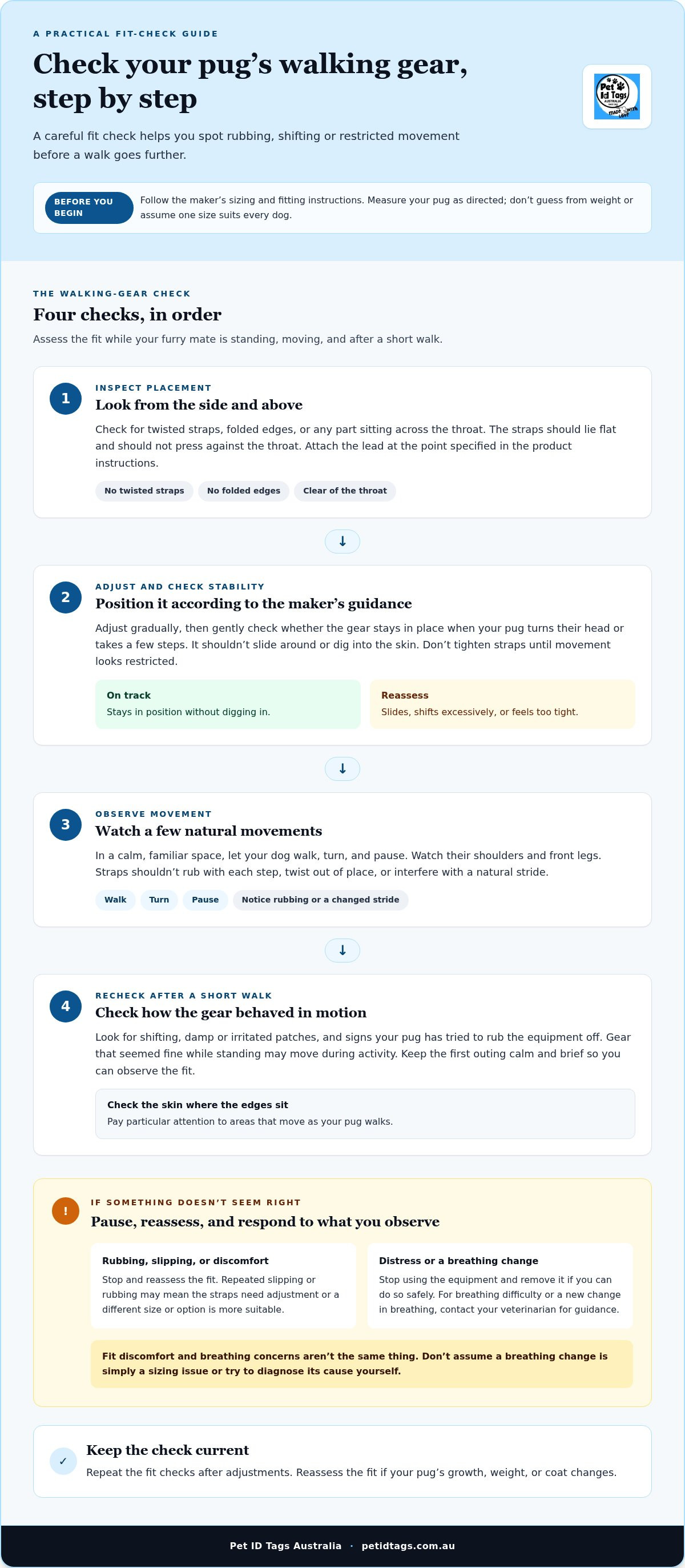
Use this check in order
- Inspect placement. Look at the equipment from the side and above. Check for twisted straps, folded edges or any part sitting across the throat. Make sure the lead attaches at the point specified by the product instructions.
- Adjust and check stability. Follow the maker’s fitting guidance to position the straps. Gently check whether the gear stays put when your pug turns their head or takes a few steps. It shouldn’t slide around or dig into the skin.
- Observe movement. Let your dog walk, turn and pause in a calm, familiar space. Watch their shoulders and front legs. The straps shouldn’t rub with each step, twist out of place or interfere with a natural stride.
- Recheck after a short walk. Look for shifting, damp or irritated patches, and signs that your pug has been trying to rub the equipment off. Gear that seems fine while your dog is standing may move during activity, so check it again before making the next walk longer.
Know when to adjust, stop or seek advice
Repeated slipping or rubbing may mean the straps need adjustment or that a different size or option is more suitable. Check the skin where the edges sit, especially around areas that move as your pug walks. Redness, sore-looking patches, repeated attempts to escape, reluctance to move or a changed gait are reasons to stop and reassess rather than carry on regardless.
Fit discomfort and breathing concerns aren’t the same thing. If your pug seems distressed, stop using the equipment and remove it if you can do so safely. If you notice breathing difficulty or a new change in breathing, contact your veterinarian for guidance. Don’t assume it’s simply a sizing issue or try to diagnose the cause yourself.
Repeat these checks after adjusting the fit, and keep the first outing calm and brief so you can observe how the gear behaves in motion. Pet ID Tags Australia offers personalised dog walking gear. Follow the sizing guidance, then assess placement and comfort on your furry mate.
Pug Walking Equipment Compared: Neck Pressure, Control and Visibility
Different setups serve different purposes. A collar can carry identification, while chest-led walking gear provides a place to attach the lead. Some owners combine both. Compare setups by intended use, then assess how each piece sits on your pug and how your dog moves in it. No arrangement suits every dog, and no equipment choice replaces supervision or attention to individual comfort.
Collar, chest-led walking gear or a hybrid system?
A collar is useful for identification, but check that it sits comfortably and doesn’t rub. Chest-led walking gear provides a separate place to attach the lead, so the collar can remain focused on identification. A hybrid system means using a collar for permanent identification and separate walking equipment for exercise and control. Personalised dog collars pair clear details with everyday wear.
| Setup | Intended use | What to check |
|---|---|---|
| Collar-led | Primarily for identification; if used with a lead, consider where pressure falls. | Check it sits comfortably and doesn’t press on the throat, rub or slip. |
| Chest-led | Walking equipment with a lead attachment away from the collar. | Check strap placement, shoulder movement, stability and signs of rubbing. |
| Combination | A hybrid system that keeps identification on the collar and uses separate gear for walks. | Check each item individually, and make sure they don’t twist, catch or interfere with each other. |
Use the table as a starting point, not a verdict. Your pug’s build, behaviour and health needs all matter. Check that the lead attachment and straps stay positioned during ordinary movement, and reassess if your dog seems uncomfortable. If your pug has breathing concerns, get veterinary guidance on suitable exercise and equipment rather than relying on a general recommendation.
When reflective details matter on everyday walks
Reflective details may help make a dog easier to notice when light catches them, such as during a walk in dim conditions. Their usefulness depends on the setting and available light. They don’t replace supervision, a lead or clear identification. Consider visibility alongside fit, comfort and how easy the gear is to use.
Pet ID Tags Australia offers a personalised no-pull dog harness with reflective straps. Assess its fit on your pug and watch how your dog moves in it. Reflective details don’t guarantee visibility or breathing comfort. For a practical walking setup, start with your dog’s comfort and needs, then consider useful features and identification. You can explore walking gear and identification options as part of that decision.
A Practical Pug Walking Checklist for Fit, Comfort and Everyday Use
A quick check before each outing can catch loose straps, wear or discomfort before you head out. In a hybrid setup, the collar carries identification while separate walking gear attaches to the lead. Inspect both items, as each has a different role in your pug’s everyday safety.
What to inspect before each outing
- Fit and adjustment: Check that straps lie flat, haven’t twisted and don’t press on your pug’s throat. Look for loose adjustments or edges that could rub.
- Closures and condition: Make sure fastenings are secure and straps show no fraying, tears or other damage. Don’t set off if a closure won’t fasten properly.
- Movement: Check that your pug can stand, walk and turn comfortably. If the gear slips, digs in or changes your dog’s movement, pause and reassess.
- Identification: Ensure the ID is readable and attached securely to the collar. Stainless steel dog tags offer visual identification that can be read directly without scanning equipment.
Fit may change as your pug grows, gains or loses weight, or develops a noticeably different coat. Recheck sizing and placement after these changes, using the product’s fitting guidance. Don’t rely on an old adjustment if the equipment now sits differently or moves more than before.
When to pause and get professional advice
Stop the walk if your pug seems distressed, uncomfortable or reluctant to move. Don’t continue just because you’ve only just set out. If you notice an unusual change in breathing, pause and seek veterinary advice rather than assuming an adjustment will resolve it.
For breathing symptoms, recurring concerns or guidance tailored to your dog’s health, speak with your veterinarian. If you choose walking gear described as “no-choke” or “breathing-friendly”, assess its fit and your pug’s comfort rather than treating the wording as a medical assurance. Explore personalised walking gear alongside identification options, and choose with your furry mate’s needs in mind.
Choosing Pet ID Tags Australia Walking Gear for Your Pug
Choose in the right order: fit first, comfort in motion next, then practical features and identification. A product description can help you understand the gear, but your pug’s response is the real test. Notice how it sits when your dog moves, whether it stays in place, and whether anything rubs or restricts natural movement.
Pet ID Tags Australia has focused on Australian pet safety since 2004, with over 20 years of experience engraving identification tags. That experience informs the practical side of a walking setup too: exercise gear and ID serve separate purposes, and both deserve attention in everyday use.
What the personalised no-pull option may suit
Pet ID Tags Australia’s personalised no-pull dog harness with reflective straps is one option to consider for walks. Treat the product description as a starting point, not proof that the fit will suit your pug. Follow the sizing guidance, then observe your dog standing, turning and walking. Check that the gear stays positioned and your pug appears comfortable. The name doesn’t guarantee a breathing or safety outcome.
Consider practical features after checking fit. Reflective details may help your dog be noticed when light catches them, but their value depends on the conditions. They don’t replace supervision, a lead or clear ID. Check whether the gear is straightforward to put on and adjust, and inspect its condition as part of regular care. If it doesn’t sit well on your dog, prioritise a better fit over a feature that looks useful on paper.
Pair walking equipment with clear pet identification
In a hybrid system, walking equipment is for exercise and lead control, while a collar carries identification. Keep readable visual identification attached securely to the collar, so a person can see your dog’s details without scanning equipment. Keep contact details current and check that the tag hasn’t become difficult to read or loose from its attachment.
Deciding what to include? These pet ID tag engraving ideas can help you choose useful details. Keep the information easy to read, and check it periodically as your contact details change. Clear ID complements a considered walking setup, giving someone a practical way to reach you if you become separated from your furry mate.
There isn’t one setup that suits every pug. Weigh fit, movement, your dog’s behaviour and any veterinary advice before settling on walking gear. When you’re ready to compare options for your pug and their identification needs, explore personalised pet safety options.
Make your pug’s next walk a more considered one
A good walking setup is one you can check and adjust as your pug’s needs change. Keep observing how your furry mate moves. Treat any new breathing concern as a reason to pause and seek veterinary advice, not as a problem to solve with different gear alone.
Use “pug harness breathing friendly no choke” as a prompt to assess fit, not a promise of a particular result. Your pug’s comfort is individual. Choose equipment that sits securely, allows natural movement and works alongside clear identification. Pet ID Tags Australia has helped identify over 100,000 pets and has more than 3,400 five-star reviews.
Ready to find practical options for your dog’s walks and identification? Explore personalised pet safety options and choose with your pug’s comfort in mind. Small, thoughtful checks can help you head out with greater confidence and care.
Frequently Asked Questions
Can a pug’s walking equipment affect breathing?
Uncomfortable pressure or a poor fit may distress your pug, but that doesn’t show what’s causing a breathing problem. For a pug harness breathing friendly no choke fit, assess how the equipment sits and how your dog responds, rather than relying on its label. Stop the outing if symptoms occur. Ask your veterinarian about breathing changes or existing health concerns, as product wording isn’t a medical assessment.
How do I know if walking gear fits my pug properly?
Follow the product’s fitting instructions and use the measurements it requests, rather than choosing by breed alone. Straps should lie flat and away from the throat. Watch your pug walk and turn. Rubbing, shifting, restricted movement or distress means you should stop and reassess. Fit varies between individual dogs, so check again after growth, weight changes or other noticeable changes to your pug’s body.
Is a collar or chest-led walking setup better for a pug?
There isn’t one setup that’s right for every pug. A collar can carry visual identification, while separate walking gear serves a different purpose during outings. Consider your dog’s fit, comfort and behaviour, along with any veterinary advice specific to them. A hybrid system means using a collar for identification and separate equipment for exercise. Whichever arrangement you choose, stay attentive to how your dog responds on walks.
Should my pug wear a collar as well as walking equipment?
Owners may choose a hybrid system, with a collar carrying identification and separate equipment used for walks. Check both items: the collar and tag should stay secure and readable, while the walking gear should remain comfortable and in good condition. These serve distinct needs. Identification helps someone recognise your pug and find contact details; walking equipment supports outings. No setup can guarantee your dog will be returned if they go missing.
When should I stop a walk and contact a veterinarian?
Stop if your pug seems distressed or uncomfortable, or you notice an unusual change in breathing. Move to a calm place and let your dog rest while you assess what you’re seeing. Contact a veterinarian about breathing symptoms, recurring concerns or advice tailored to your pug’s health. Don’t treat an equipment adjustment or replacement as a solution to a medical concern. Your vet can advise on appropriate next steps.
Do reflective straps make a pug safe on night walks?
No reflective detail can guarantee that your dog will be seen. It may help visibility when light catches it, but conditions vary, so keep your pug under active supervision and maintain control throughout the walk. Check that the gear remains fitted correctly and that reflective areas aren’t covered or turned away. Treat reflective details as one practical feature, not a replacement for attentive handling or clear identification.