

The collar that fits your puppy today matters more than one bought to last through every growth spurt. A new puppy starter kit collar lead and tag should suit everyday walks now, with a fit you can check and adjust as your furry mate grows.
It’s easy to get caught up in colours and styles when you’re preparing to welcome a new puppy. But a comfortable collar, a practical lead and an easy-to-read ID tag are the essentials that help make outings safer and give your family peace of mind. The tag also needs to stay securely attached, so it can do its job when someone needs to contact you.
This guide explains what to look for in each item, how to check collar fit as your puppy grows, and what information to put on a tag for clear identification. You’ll also learn how to weigh style against everyday use, and how traditional engraved tags and smart options differ. Pet ID Tags Australia has focused on practical pet identification since 2004, with more than 20 years of engraving experience. By the end, you’ll know how to choose useful essentials without assuming they come as a packaged kit.
Key Takeaways
- Build a new puppy starter kit collar lead and tag item by item, choosing essentials for your puppy’s needs today.
- Measure your puppy and follow the product’s sizing guidance rather than relying on breed or age alone.
- Check collar adjustments regularly as your puppy grows, and choose walking gear suited to your everyday routine.
- Compare traditional visual identification with smart tag options, and consider which approach makes your contact details easiest to access.
- Before buying, check tag readability and attachment, along with the materials and fit of each item.
What belongs in a new puppy starter kit with a collar, lead and tag?
You don’t need to find everything in one package. A useful starter kit can be assembled item by item, so you can choose each essential for your puppy and your routine. Think of the new puppy starter kit collar lead and tag as a practical checklist, not a claim that a packaged set is available.
The three essentials are a properly fitted collar to carry an ID tag, a suitable lead to guide walks, and a readable tag that helps someone identify your puppy and contact you. Each has a separate job. Together, they support everyday outings and make your puppy easier to identify if they become separated from you.
What does each puppy walking essential do?
The collar sits around your puppy’s neck and provides a place to attach a visible ID tag. Choose one that fits your puppy now, and check the fit as they grow. A lead gives you a way to guide walks; choose one that feels manageable for you and suits your puppy’s size and walking routine. Not every collar is designed for lead use, so check the maker’s instructions. For an overview of types of dog collars, see Wikipedia’s guide.
The tag provides visual identification: someone can read it directly without scanning equipment. Keep the engraving clear and easy to read, with contact details that can help a person reach you. Check that the tag stays securely attached and doesn’t interfere with your puppy’s movement. These simple checks help keep identification useful during everyday wear.
What else should you consider for a puppy’s first walks?
Start with your puppy, not a matching set. Consider their current size, temperament and the kinds of walks you expect to take. A small puppy may need lighter-feeling gear, while an energetic or easily startled pup may call for extra thought about how you’ll guide them. Follow each product’s sizing instructions and check that the collar, lead and tag work together without getting in the way.
If you’re unsure what information belongs on an ID tag, consult an essential puppy ID tag guide for ideas. Whichever style you choose, put readability and secure attachment ahead of appearance. A simple, well-chosen set of essentials can help you feel more prepared for those first Aussie walks with your furry mate.
How should a puppy collar, lead and ID tag fit together?
Fit is something to check on your puppy, not guess from breed or age. Puppies grow at different rates, and two pups of a similar size may need different adjustments. For a new puppy starter kit collar lead and tag, use each item’s own sizing and care instructions, then check how the full set sits and works together before heading out.
The collar should sit comfortably and stay in place without restricting normal movement. The tag should be visible and readable, but shouldn’t catch or get in your puppy’s way as they move. The lead must attach securely to the point on the chosen walking equipment that the maker specifies. Don’t assume every collar or attachment is designed for lead use.
How can you check a puppy collar’s fit?
Measure your puppy as the product maker instructs, then use that measurement with the product’s sizing guide to choose a starting size. Once the collar is on, follow its adjustment directions and watch how it sits during ordinary movement. Avoid relying on a breed label or age estimate as a substitute for checking your individual puppy.
Repeat the fit check as your puppy grows and whenever you adjust the collar. Look for signs that it has shifted, become too tight or no longer stays in place as intended. If the collar is damaged or the fit seems poor, stop using it and seek suitable advice from the product maker or a qualified pet professional.
Where should the ID tag sit on the collar?
Position the tag so its details are easy to see and read at a glance. Attach it according to the tag and collar instructions, then check that it hangs freely without interfering with your puppy’s normal movement. Give the attachment a visual check after fitting and include it in routine gear checks. If it looks loose or worn, address it before your next walk.
A legible tag can help someone contact you without needing scanning equipment. Keep the details clear and current, and make sure the tag stays securely attached through everyday activity. If you’re considering personalised options, you can explore pet identification tags and check the details that suit your puppy.
Which collar, lead and puppy ID tag options suit your routine?
The right combination depends on your puppy’s size, walking routine and the kind of identification you want people to access. Compare practical details first. Colour and decoration can come later, once you’re confident the items fit, the lead attaches securely and the tag is easy to read.
Use this comparison as a starting point for choosing a new puppy starter kit collar lead and tag. Check the maker’s product information for exact sizing, materials and care instructions, as these can differ between items.
| Item | Fit and material | Visibility and identification | Routine to consider |
|---|---|---|---|
| Collar | Check your puppy’s current measurements against the maker’s sizing guide. Confirm the product’s materials and care details. | Provides a place to attach an ID tag. Check that the tag can be seen and doesn’t obstruct normal movement. | Consider how it feels during everyday wear and whether you can check and adjust it as your puppy grows. |
| Lead | Choose according to the maker’s guidance and your puppy’s needs. Don’t assume a particular material or attachment suits every item. | It doesn’t identify your puppy; it gives you a way to guide walks when attached securely to compatible walking equipment. | Think about where you walk and what feels manageable for you to hold and use. |
| Engraved ID tag | Check that its size and attachment suit the collar. Pet ID Tags Australia confirms 316-grade stainless steel tags. | Offers visual identification that a person can read directly. Prioritise clear, legible details. | Check the engraving and attachment during regular gear checks. |
| Smart tag | Check the product details to understand how it attaches and what information it supports. | QR codes can provide access to a digital pet profile. A person needs a compatible device to scan the code. | Consider whether you’re comfortable keeping digital details up to date, and how the tag fits your usual walks. |
Should you choose a traditional tag or a smart pet tag?
A traditional engraved tag gives someone visual identification without needing to scan it. A smart tag using QR codes may provide access to a digital pet profile, depending on the product’s features. These options serve different purposes, and one won’t suit every family. For a fuller feature comparison, consult the existing smart pet tags guide.
What should you prioritise when comparing materials and styles?
Start with comfort, fit, legibility and secure attachment. Confirm the specific product’s material and care directions rather than assuming they’re the same across collars, leads and tags. Pet ID Tags Australia uses 316-grade stainless steel for its tags; this is a confirmed material, not a reason to assume any unverified lifespan. For more collar comparisons, see the existing personalised dog collar buying guide. Choose a colour or decorative detail only after the practical checks are covered.
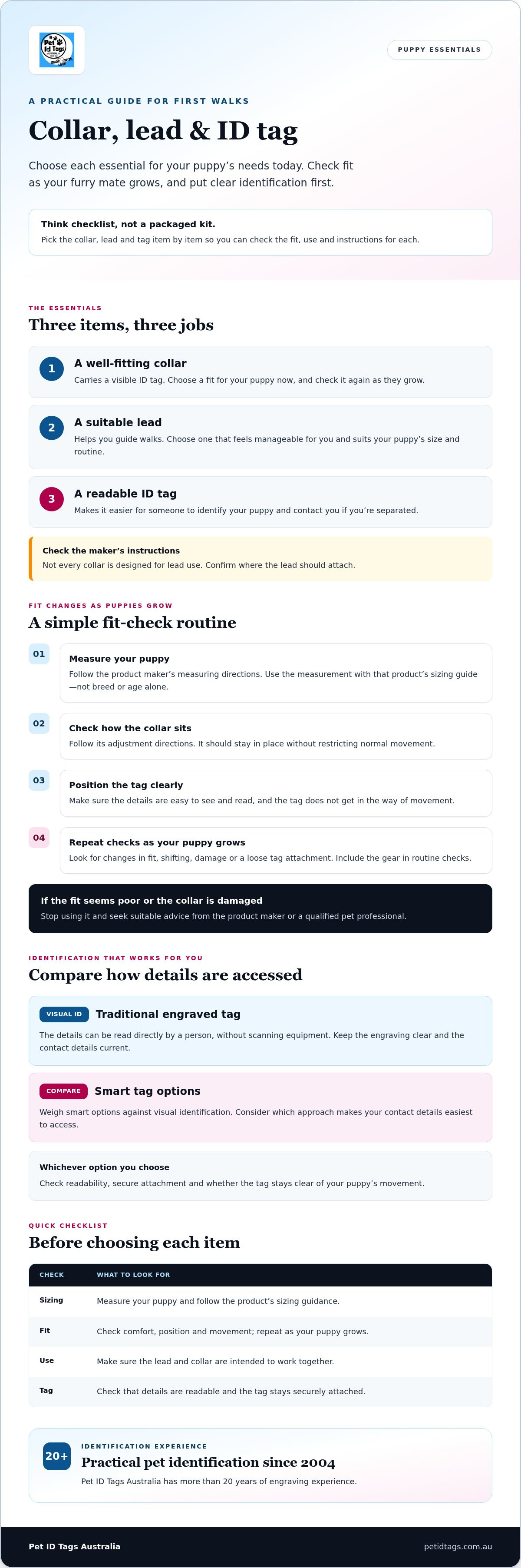
What should you check before buying a new puppy collar, lead and tag?
A quick check before you add items to your cart can help you avoid mismatched gear and personalisation mistakes. Use this checklist for your new puppy starter kit collar lead and tag, then check the items again once they arrive.
- Measure your puppy. Follow the product maker’s instructions and use the current measurement with that item’s sizing guide. Don’t choose by breed or age alone.
- Check compatibility. Confirm the lead can attach securely to the walking equipment you’ve chosen, following the maker’s directions. Check that the tag attachment suits the collar and tag.
- Check visibility. Make sure the tag’s identification can be read clearly, and consider whether the tag will hang where it can be seen without getting in the way.
- Review personalisation. Check the spelling of your puppy’s name and every character in the emergency contact information before submitting your order.
- Plan regular checks. As your puppy grows, inspect the fit, tag attachment and legibility. Adjust or replace items that no longer fit or are damaged.
What information should you prepare for a puppy ID tag?
Choose concise, accurate contact details that someone can use to reach you. Check that the number is current and easy to read, and consider which contact number you’ll reliably answer. For more wording ideas, look for the existing pet ID tag engraving ideas checklist. Before submitting personalisation, read the details slowly and check every letter and digit. A small typo could make it harder for someone to contact your family.
How can you check the set after it arrives?
Follow the maker’s instructions to check the collar fit and confirm the lead connects securely to the intended attachment point. Check the tag is fastened firmly and that its details are legible in good light. Look over the items for damage or loose parts before using them. If anything is damaged, doesn’t fit properly or won’t attach securely, stop using it and seek suitable advice from the product maker.
Repeat these checks as your puppy grows and the gear gets regular use. A collar that fitted at first may need adjustment, while an attachment that once sat securely can loosen over time. For personalised identification options, explore pet ID tags for your puppy and check the engraving details carefully before ordering.
Where can you find a puppy collar, lead and tag with clear identification?
A practical puppy set starts with the right fit, walking gear suited to your routine and identification that’s easy to read. Check that the collar fits your puppy now, that the lead connects securely to the chosen walking equipment, and that the tag is attached firmly and displays clear contact details. Recheck fit and attachment as your puppy grows.
Pet ID Tags Australia is a nationwide online specialist in personalised pet identification. The business has operated since 2004 and brings more than 20 years of engraving experience to its identification work. Confirmed tag options include 316-grade stainless steel. Check the current product details to understand the material and identification method for the specific tag you’re considering.
What makes personalised identification useful in a puppy starter kit?
If your puppy is found away from home, a clearly marked tag can help someone identify them and contact you directly. Keep the details legible and current, and make sure the tag stays securely attached during everyday activity. Personalisation is useful only if the information is accurate and readable, so check the wording carefully before ordering.
Engraving processes can depend on the selected tag. Review its product details rather than assuming a particular method applies to every option. For a closer look at material choices, consult the existing stainless steel dog tag buying guide.
What is the next step for choosing your puppy’s ID?
Use your checklist to compare available collar, lead and tag options. Confirm sizing, attachment compatibility, materials and personalisation details on the current product pages. A combined option may also be listed, but check its availability and exact contents rather than assuming it forms part of a packaged puppy kit.
Choose clear identification and everyday practicality first; colour and style can help make the set feel like your puppy’s own once those checks are covered. Pet ID Tags Australia offers traditional engraved and smart identification options. Check the information for each tag type to see which details and features suit your family.
Ready to compare identification options for your furry mate? Explore personalised pet ID tags and accessories.
Get your puppy’s everyday essentials ready
A practical new puppy starter kit collar lead and tag doesn’t need to be complicated. Measure your puppy and follow each item’s sizing instructions, rather than choosing by breed or age. Check that the lead connects securely to the walking gear, and that the ID tag is firmly attached and easy to read. Recheck the fit and attachment as your puppy grows.
Keep safety and clear identification ahead of colour or decoration. A well-chosen collar and lead support everyday walks, while readable contact details help someone get in touch if your furry mate is found. Compare traditional engraved tags and smart options against the details you want people to access, and confirm the current product information before choosing.
Pet ID Tags Australia is a nationwide online specialist in personalised pet identification, with over 20 years of engraving experience. Explore the available options and choose what best suits your puppy and family: Explore personalised pet ID tags and accessories. With a few careful checks, you’ll be ready to enjoy those first walks with greater peace of mind.
Frequently Asked Questions
What should be in a new puppy starter kit?
A useful starter kit includes a well-fitting collar, a lead suited to your walks and an ID tag with clear contact details. Beyond walking gear, broad puppy preparation also involves everyday nutrition, where owners often source quality options such as Wellness CORE dog food UK through specialist pet retailers. Choosing each essential separately helps you match them to your puppy’s size and routine. The phrase new puppy starter kit collar lead and tag describes a practical checklist, not necessarily a packaged set. Check each item’s sizing and attachment instructions before buying.
Should a puppy wear a collar with an ID tag?
A collar carrying a readable ID tag provides visible identification that someone can check without scanning equipment. Make sure the collar fits comfortably, the tag is attached securely and its contact details are current. A tag can help a person reach you if your puppy is found. Check your local council’s current requirements for any rules that may apply to dogs in your area.
How do I choose the right collar size for a puppy?
Measure your puppy as the collar maker instructs, then compare the measurement with that product’s sizing guide. Don’t choose a size based only on breed or age, as puppies grow at different rates. Once fitted, follow the maker’s directions for adjustment and check the fit again regularly. If the collar is damaged or doesn’t fit properly, stop using it and seek suitable advice.
Can I use a regular lead with a puppy collar?
Only attach a lead to a collar if the product maker says that collar is suitable for lead use and describes the correct attachment point. Check that the lead’s clip connects securely and is compatible with the walking equipment you’ve chosen. If the collar isn’t intended for walking attachment, select compatible walking gear instead. Follow both products’ instructions and inspect the connection before each outing.
What information should go on a puppy ID tag?
Use concise, accurate emergency contact information that someone can read easily and use to reach you. A contact number is a practical choice; include your puppy’s name if it fits clearly. Check every letter and digit before submitting personalised details, and update the tag if your contact information changes. Make sure the engraving remains legible and that the tag stays securely attached to the collar.
Are QR code pet tags a good choice for a new puppy?
QR code tags can be useful if you want a tag to link to a digital pet profile, but their features depend on the specific product. They require someone to scan the code, so consider whether you also want visual identification that can be read directly. Check how the tag works, what information the profile displays and how to keep those details current. No single option suits every family.
How often should I check my puppy’s collar and tag?
Check the collar fit regularly as your puppy grows, and inspect the tag and its attachment during routine gear checks. Before walks, look for visible damage, loose fittings or details that are difficult to read. Follow the maker’s instructions for adjustment and care. If the collar no longer fits, or the tag or attachment is damaged or insecure, stop using the affected item until it’s addressed.