

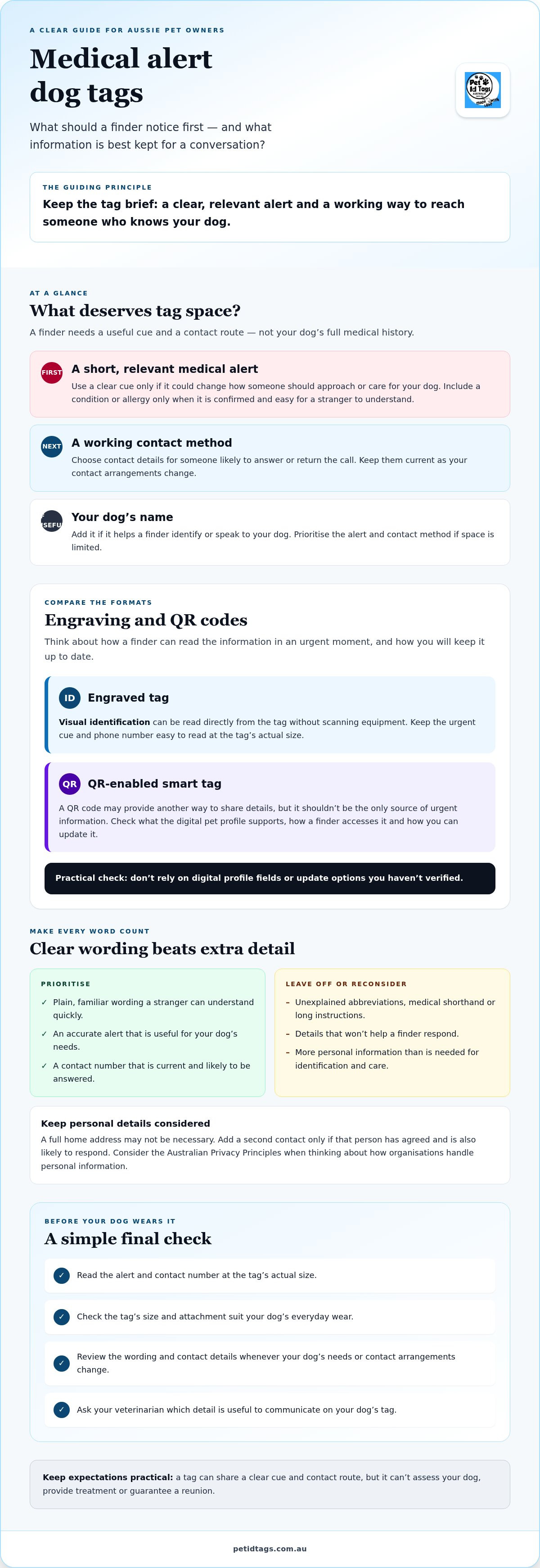
What should a stranger notice first if your dog is found and needs medical care? With medical alert dog tags Australia, engraving space is limited, so every word needs to earn its place. A short, clear medical cue can draw attention, but it shouldn’t make your contact number difficult to read.
It’s understandable to want your furry mate protected while keeping personal details private. A tag provides information a person can read straight away. A QR code may offer another way to share details, but it shouldn’t be the only source of urgent information. Before choosing a smart tag, check what its digital pet profile supports, how it’s accessed and how you can update it.
This guide covers what to prioritise on an engraved tag, how to compare engraving with a QR-enabled option, and how to keep emergency contact details current without sharing more than you need to. Pet ID Tags Australia sells personalised pet identification tags, including stainless steel tags and smart pet tags. Use the steps below to choose wording and a format that suit your dog’s needs.
Key Takeaways
- For medical alert dog tags Australia, prioritise a brief, accurate alert and a contact method someone can use.
- Choose wording that signals a relevant need, not a diagnosis, and leave out details that aren’t actionable.
- Compare engraved tags with QR codes by considering how information is accessed, updated and read in an urgent moment.
- Check the tag’s legibility, size and attachment to make sure it suits your dog’s everyday wear.
- Before choosing a smart tag, check the digital pet profile’s available fields and update process.
What Is a Medical Alert Dog Tag, and What Can It Tell Someone?
A medical alert dog tag is an ID tag that flags a relevant health need or handling consideration. It doesn’t provide a diagnosis or explain a dog’s full medical history. Its purpose is to give a finder a clear cue and a way to contact someone who knows the dog. For general background on medical ID formats and their purpose, see this Medical identification tag overview. A dog’s tag should communicate only information that’s useful for that animal.
Visual identification is information a person can read directly from a tag, without scanning equipment. That matters if a finder can’t or doesn’t scan a tag. A short alert, alongside current emergency contact information, can help a finder recognise that the dog may have a specific need and get in touch with the owner. A tag can’t assess your dog, provide treatment or guarantee a reunion, so keep expectations practical.
When comparing medical alert dog tags australia, ask what a stranger needs to know first. Aim for a brief, readable cue and a contact route that reaches someone who can explain what to do next.
Which medical details may be useful on a dog tag?
Include a concise, current alert only if it could change how someone should approach or care for your dog. A significant allergy or ongoing condition may be relevant, but include it only if it’s accurate and clear to a stranger. Ask your veterinarian which detail is useful to communicate on a tag and which information is better explained in a conversation with the owner.
What should stay readable at a glance?
Give the most urgent cue and a working contact method priority over less urgent details. Use plain, familiar wording rather than abbreviations or medical shorthand a finder may not understand. Check that the alert and phone number are easy to read on the tag at its actual size. For more wording inspiration, consult the existing guide Pet ID Tag Engraving Ideas.
Keep the information accurate as your dog’s needs or contact details change. A tag is one part of your dog’s safety plan. Clear wording makes it easier for someone to take a useful next step: contact you for guidance.
What Information Should You Put on a Medical Alert Dog Tag?
Space is limited, so decide what a finder needs to know and do first. A practical order is a short, relevant medical alert, your dog’s name if it helps, then a contact method for someone likely to respond. The most useful details are accurate, current and actionable, not a full medical history.
Simple rule: use the tag for the urgent cue and a working way to reach you. Leave extra detail for a conversation or a digital pet profile you’ve checked. For general guidance on keeping medical ID information clear and relevant, see these guidelines on what to include. The source is written for people, so use it as a clarity reference, not as veterinary advice for your dog.
How can you make a medical alert short and clear?
Choose plain wording a stranger can understand quickly. Avoid unexplained abbreviations, long instructions and details that won’t help someone respond. For example, name a relevant condition or allergy only if it’s confirmed for your dog and the wording is clear to someone unfamiliar with their care.
Before finalising the engraving, check the text at the tag’s actual size. If the alert or phone number is difficult to read, shorten or rearrange the wording rather than squeezing in more detail. Ask your veterinarian which information is most useful to communicate for your dog’s needs.
How much personal information should a tag show?
Include enough emergency contact information for a finder to make a useful call, but don’t assume a full home address or other personal details are necessary. A mobile number is useful only if it’s current and someone can answer or return the call. Consider adding a second contact only if that person has agreed and is also likely to respond.
A digital pet profile may make room for extra information, but check which medical and contact fields the service supports, how a finder accesses them and how you can update the details. Don’t rely on fields you haven’t verified. The Australian Privacy Principles are a useful privacy consideration when thinking about how organisations handle personal information. This isn’t legal advice. Share only what’s needed for your dog’s identification and care.
For Aussie pet owners considering medical alert dog tags australia, keep the physical tag focused and review its details whenever your dog’s needs or contact arrangements change. You can also explore personalised dog tags and check whether the available engraving space suits your alert and contact number.
Engraved Medical Alert Tags vs QR Codes: Which Is More Practical?
Both formats can help share identification details, but they work differently. Engraving puts a short message on the tag itself. A QR code may link to a digital pet profile with room for more information, depending on the service and the details the owner adds. Neither format guarantees that a finder will see the alert or respond.
| Consideration | Engraved tag | QR-enabled tag |
|---|---|---|
| Visibility | Visual identification can be read directly, without scanning equipment. | A finder needs to notice and scan the QR code to reach the linked information. |
| Information space | Best suited to a brief alert and contact detail. | A digital pet profile may hold more information, subject to its available fields. |
| Access | The message is on the tag. | Check the device, connection and any other access conditions needed to view the profile. |
| Updates | Changed details may require a newly engraved tag. | Check how profile information is edited and whether updates appear as expected. |
When does traditional deep engraving make sense?
Choose engraving if you want a concise alert and contact detail that can be read without a scan. Engraved wording is fixed on the tag, so check every letter and number before ordering. Review the tag if your dog’s needs or contact details change. For material considerations, see the Stainless Steel Dog Tags Australia buyer’s guide.
When can a QR-enabled smart tag add useful detail?
A scan may lead to extra information if the digital pet profile is completed and accessible. Before relying on it, verify which medical fields it supports, how a finder opens the profile and how you can update the details. Access may depend on conditions set by the profile service, so don’t assume the information will always load. For setup and feature considerations, consult the Smart Pet Tags Australia guide.
For medical alert dog tags australia, a practical approach may combine a brief visible cue with extra profile details, rather than relying on a scan alone. Keep the urgent message readable on the tag itself, then use the profile for details that need more space.
How to Choose and Maintain a Medical Alert Dog Tag
Use a simple process to choose identification that suits your dog’s needs and everyday routine. Confirm the alert with your veterinarian, decide which details matter most, choose an engraved or QR-enabled format, then check that the essential information is easy to read and access.
A tag is useful only when its details remain readable and current. As you compare medical alert dog tags Australia, consider the tag’s size, how it attaches to your dog’s collar and whether it’s comfortable for everyday wear. The message should be easy to see without making the tag awkward or covering other identification.
How can you check the tag is easy to read?
Look at the tag in ordinary light and at its actual size. Can you read the alert and contact number without magnification? Check the engraved or printed details for wear and make sure the attachment is secure. The tag should sit where its information is accessible and not cover other identification your dog wears.
If the wording becomes difficult to read, contact details change or the alert no longer applies, update or replace the identification. Keep the message short enough to remain legible instead of adding details that crowd the most useful information.
How should you keep digital details current?
After a change to your contact details or your dog’s medical information, review the digital pet profile. Scan the QR code with a phone and check that the profile opens and shows accurate information. Confirm which medical fields it supports and how to update them rather than assuming the profile contains every detail you need.
Check your dog’s identification during your normal collar and tag checks, and whenever their needs or your contact arrangements change. A microchip and a personal ID tag provide complementary forms of identification. Neither should be treated as a replacement for the other. For more context, see the Pet Tag vs Microchip Australia guide.
Once you know what wording your dog needs, explore personalised dog tags and check whether the available format suits your alert and contact details.
Medical Alert Dog Tags from Pet ID Tags Australia: Practical Options
Pet ID Tags Australia sells personalised pet identification tags, including stainless steel tags and smart pet tags. These are identification options, not medical devices. Choose a format by considering what a finder needs to see straight away, how much information you want to share and whether the tag suits your dog’s everyday wear.
Before deciding, check that the medical alert is accurate and easy to read, and that the emergency contact information is current. For a smart tag, confirm what its digital pet profile can display and how a finder can access it. Choose a format that communicates useful information clearly, without relying on a promise of medical care or a guaranteed reunion.
What can traditional engraved identification offer?
Personalised engraving puts concise information directly on a tag, where a person can read it without scanning equipment. Pet ID Tags Australia offers stainless steel dog tags and other personalised pet identification options. Check the current tag details and available engraving space before settling on an alert or layout.
Keep the wording focused: a short, relevant cue and a readable contact method. Then consider whether the tag’s size and attachment suit your dog’s routine. If the alert or contact details change, update the physical identification too.
What should you check before choosing a smart tag?
A QR code may lead a finder to a digital pet profile, but the profile’s usefulness depends on what it supports and how it’s set up. Check which medical fields and contact details are available, how you can update them and what a finder needs to access the profile. A compatible scanning device is required, and access may depend on the profile service’s conditions. Keep a brief visible cue on the tag rather than relying only on a scan.
Choose based on the information the tag and profile can actually provide, not the technology alone. Compare what can be read on the tag with the additional details the profile supports, then decide which approach suits your furry mate. Explore personalised pet identification options and review the current tag details before choosing a format for your dog’s needs.
Choose Clear Identification for Your Dog
A useful medical alert tag keeps its message short, accurate and easy to read. Put the urgent cue and a working contact method first, then choose between direct engraving and a QR code based on the information you want a finder to access. If you choose a smart tag, check the digital pet profile’s available fields and keep them current.
For medical alert dog tags australia, Pet ID Tags Australia offers personalised pet tags, including stainless steel tags and smart pet tags. Compare the formats by checking the available engraving space, what information can be accessed digitally and how each option suits your dog’s everyday wear. Identification can help communicate a need, but it does not provide medical care or guarantee recovery.
Give your furry mate a tag that suits their needs and everyday life. Browse personalised dog tags and smart pet tags to compare available formats and choose identification for your dog.
Frequently Asked Questions
What should I put on a medical alert dog tag?
Put the shortest useful medical alert first, followed by a contact number someone can use. Add your dog’s name if space allows and it helps identify them. Choose plain wording a stranger can understand, and include only details that are accurate and actionable. Check the text at the tag’s actual size so the alert and number are readable. For medical alert dog tags Australia, prioritise clarity over extra detail.
Can a dog tag show allergies or medical conditions?
Yes, a dog tag can display a brief alert about a relevant allergy or condition if it’s accurate for your dog. Use wording a finder can understand quickly, rather than a diagnosis or a long medical history. Ask your veterinarian which detail is useful to communicate. The tag can flag a need, but it can’t assess your dog or provide treatment.
Are QR-code dog tags enough for a medical alert?
A QR code can lead to a digital pet profile, but it’s best not to rely on a scan alone for an urgent cue. A finder needs a compatible device and access to the profile, and the available fields depend on the service. Keep essential information visible on the tag, then check what extra details the profile supports and how to update them.
Is an engraved tag or a smart tag better for a dog with medical needs?
Neither format suits every dog. Engraving puts a short alert and contact detail directly on the tag for visual identification. A smart tag may link to a digital pet profile with additional information, depending on its available fields and access requirements. Compare readability, space and update needs. If you choose a QR-enabled tag, keep a brief urgent cue visible rather than depending only on a scan.
Can I put my dog’s medication details on an ID tag?
Do medical alert dog tags replace a microchip?
No. A tag and a microchip provide different forms of identification. A tag offers visual identification, so a person can read its details directly. A microchip needs a scanner to be read. They can complement each other, but neither guarantees a reunion. Keep the tag’s contact information current and ensure the microchip’s associated details are also up to date.
How often should I check my dog’s medical alert tag?
There’s no set checking schedule here. Check the tag during your usual collar and ID checks, and whenever your dog’s medical needs or contact details change. Confirm that the alert and number are legible, the tag is securely attached and it doesn’t obscure other identification. For QR codes, scan the tag and confirm the digital pet profile opens and displays current information.