

A kitten’s first collar should be chosen for safety and comfort, not just appearance. If you’re worried about snagging, a poor fit or a tag that feels too heavy, this kitten first collar and tag safety guide will help you make a confident start.
Take things slowly. Kittens grow quickly, so a collar that fits today may need adjusting as your furry mate grows. A cat collar with a safety-release buckle is designed to release if caught, helping reduce the risk of strangulation. A clear, suitably sized ID tag gives someone a way to contact you if your kitten wanders off.
This guide covers what to look for in a collar and tag, how to introduce them gradually and signs your kitten may need a break. You’ll also find simple checks for fit, condition and readability, so you can build a routine that supports your kitten’s comfort and identification.
Key Takeaways
- This kitten first collar and tag safety guide helps you weigh identification, comfort and safe fit when choosing a first setup.
- Look for a safety-release buckle, a comfortable fit and a tag that’s readable without being cumbersome.
- Introduce the collar gradually and watch how your kitten responds as they get used to wearing it.
- Check fit, comfort, tag legibility and attachment regularly as your kitten grows.
- Keep emergency contact information current so the tag can help someone identify your furry mate.
Why a kitten’s first collar and tag need a safety-first setup
A first collar and ID tag can feel like a balancing act: clear identification matters, but so do comfort and a safe fit. Choose a cat-appropriate collar, a readable tag and a secure attachment. Each has a different job, and the complete setup needs regular checks as your furry mate grows.
A tag provides visual identification, which means a person can read the details directly without scanning equipment. That gives someone who finds your kitten a practical way to get in touch. The tag doesn’t replace checking that the collar is comfortable and suitable for everyday wear.
What a collar and tag each do
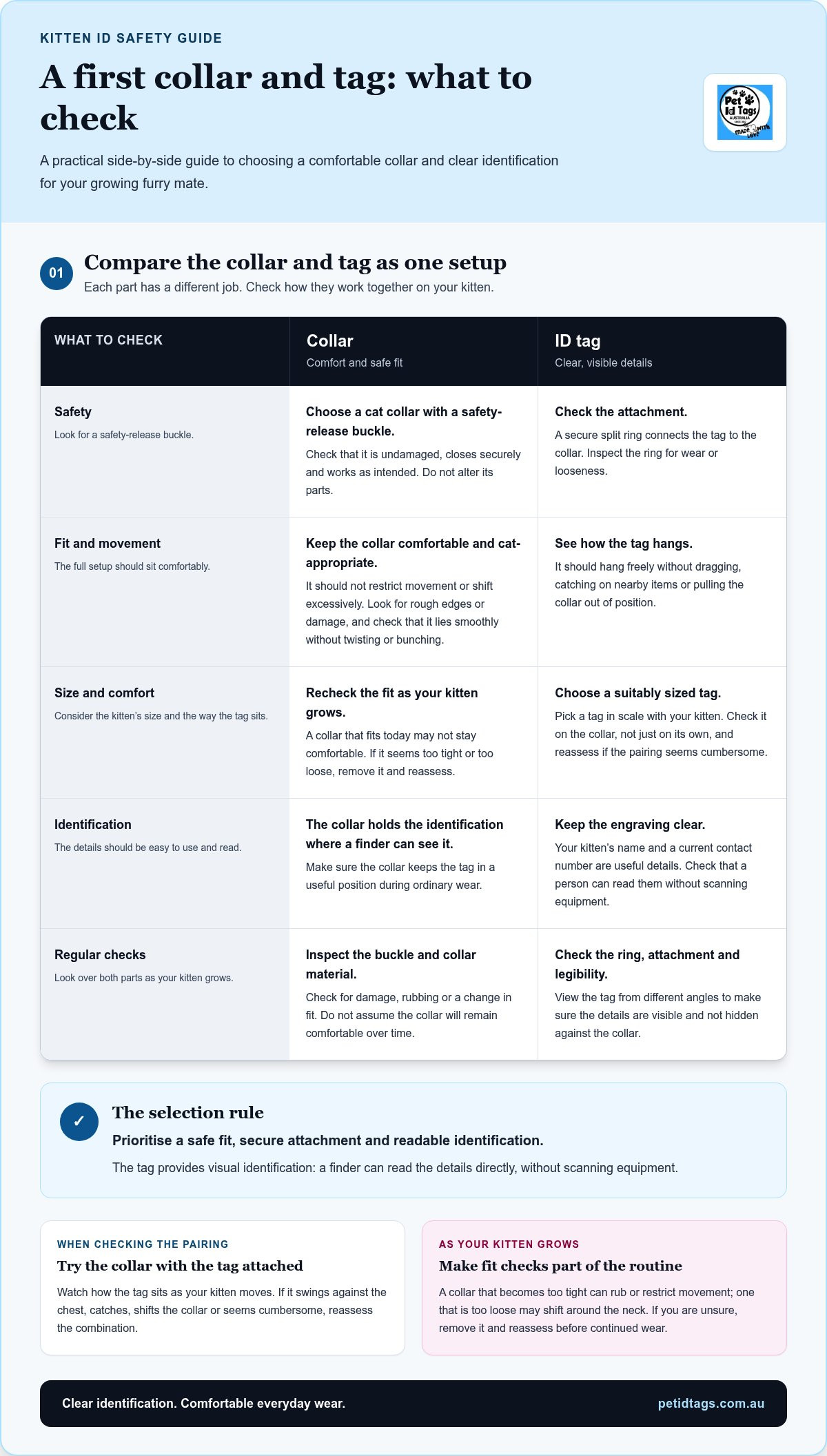
The collar holds the identification where a finder can see it. The tag carries details such as your kitten’s name and a contact number. Keep the information clear enough to read at a glance, and check that the tag stays attached during ordinary wear. A secure split ring helps connect the tag to the collar, but inspect it regularly for wear or looseness.
Fit and identification work together, but they aren’t the same thing. The collar should sit comfortably and be appropriate for a cat. The tag should be legible and not so cumbersome that it gets in the way. A safety-release buckle is designed to release if the collar gets caught, helping reduce the risk of strangulation. For a general overview of types of cat collars and safety features, consider how the design supports safe everyday wear as well as identification.
Why kittens need a different introduction
Kittens are still growing, so a fit that seems right now may not stay comfortable. Check the collar regularly rather than assuming it will fit over time. A collar that becomes too tight can rub or restrict movement; one that’s too loose may shift around the neck. If you’re unsure about the fit, remove it and reassess before continued wear.
The sensation may be new, too. Your kitten might sniff the collar, paw at it or scratch briefly while noticing the material or moving tag. Those behaviours don’t tell you exactly how your kitten feels, so watch their response rather than insisting on a long first wear. If they seem persistently uncomfortable, take the collar off and try again later in a calm moment.
This kitten first collar and tag safety guide starts with a simple principle: identification should be useful without compromising comfort. A cat collar with a personalised tag makes contact details visible, while gradual introduction and regular checks help you notice changes as your kitten grows. Aim for a setup that stays readable, secure and comfortable in everyday life.
Choose a kitten collar and tag by checking safety, fit and readability
A suitable setup depends on how the collar and tag work together. Look for a cat collar with a safety-release buckle, check the fit around your kitten’s neck, then see how the attached tag sits as they move. It should hang freely without dragging, catching on nearby items or pulling the collar out of position.
Use these checks when choosing and assessing a setup:
Collar safety: Choose a cat collar with a safety-release buckle. Check that the buckle is intact and works as intended.
Fit: The collar should sit comfortably without restricting movement or shifting excessively. Recheck it as your kitten grows.
Tag size: Choose a tag that’s in scale with your kitten. Check how it hangs on the collar, not just how it looks on its own.
Readability: Check that the engraved details are clear and easy to read without scanning equipment.
Selection rule: prioritise a safe fit, secure attachment and readable identification. It’s a practical starting point for this kitten first collar and tag safety guide, keeping comfort and useful identification in view together.
What to look for in a cat collar
A safety-release buckle is a feature to look for in a cat collar. Check that it’s undamaged and closes securely. Don’t alter its parts. Look over the collar material for rough edges or damage that could irritate your kitten’s neck. It should lie smoothly rather than twist or bunch as your kitten moves.
Try the collar with the tag attached. A tag that hangs at an awkward angle or swings against your kitten’s chest may affect how the full setup sits. If it shifts the collar, catches as your kitten moves or seems cumbersome, reassess the combination rather than focusing on collar fit alone.
How to assess the tag and its attachment
Keep the engraving simple enough to read clearly. Your kitten’s name and a current contact number are useful details to consider. Make sure the number is legible and belongs to someone who can be reached. For help deciding what emergency contact information to include, see Pet Tag Engraving Ideas.
Pet ID Tags Australia tags come with free engraving and a strong split ring for attachment. Once the tag is on the collar, inspect the ring closure and check that the tag hangs freely. View it from different angles to make sure the details are visible and aren’t hidden against the collar.
For a ready-made identification option, explore the cat collar with pet tag. Check the complete pairing on your kitten: the collar should sit comfortably, the attachment should stay secure and a person should be able to read the identification.
Avoid common first-collar worries without compromising kitten safety
It’s understandable to wonder whether a collar and tag are right for a small kitten. Clear identification can be useful, but it shouldn’t come at the expense of comfort. Rather than assuming your kitten will simply get used to the setup, watch how the collar and tag sit together and respond to what you notice.
For this kitten first collar and tag safety guide, the key distinction is between brief curiosity and a setup that affects comfort or movement. Your kitten may sniff the tag, paw at it or pause to investigate the unfamiliar feeling. Keep early wears calm and brief, and stay close enough to step in if something doesn’t look right.
Is some collar curiosity normal?
Your kitten may turn to sniff the collar or briefly paw at the tag. These actions are observations, not a diagnosis of distress. Give your furry mate a chance to explore the unfamiliar feeling, and keep first wears short enough for you to watch closely. There’s no fixed adjustment schedule, so let your kitten’s response guide what happens next.
Notice whether your kitten can move comfortably and behave as usual, or seems persistently unsettled. Brief investigation is different from repeated attempts to remove the collar, restricted movement or the collar catching on something. If you see a problem, take the collar off and check the complete setup before considering another wear.
What if the kitten keeps pawing at the tag?
First, look at the tag while it’s attached. Check that it hangs freely, doesn’t press awkwardly against the collar and isn’t catching on nearby objects. Then check the collar’s position and fit. A tag that shifts the collar or catches as your kitten moves may make an otherwise suitable pairing uncomfortable.
If the tag catches, the collar restricts movement or you notice visible irritation around the neck, remove the setup and reassess it. Don’t alter the safety-release buckle or add extra items to distract your kitten. Those changes can affect how the collar works or how the tag sits without addressing the cause of discomfort.
Use what you observe to decide whether the setup needs attention. A kitten who investigates briefly and then moves freely is different from one who keeps pawing, struggles to move normally or repeatedly gets caught. Check the collar and tag together rather than assuming only one part is the problem. If discomfort continues after you remove and reassess the setup, leave the collar off and seek advice from a veterinarian.
Identification and comfort can go together, but neither should be assumed. Observe your kitten during early wears, remove the collar if there’s a clear fit or snagging issue, and don’t alter the safety-release mechanism. This gives you a practical way to respond to your kitten’s behaviour without forcing an adjustment or overlooking a concern.
Introduce the first collar and tag with a calm, repeatable routine
A steady routine helps you check comfort and identification without turning the first wear into a struggle. Choose a quiet moment when your kitten is relaxed, not during a noisy interruption or when they’re already unsettled. Stay nearby and let their behaviour guide your next step. There’s no need to rush towards all-day wear.
Use this sequence for the first introduction:
- Check the collar. Look over the material and safety-release buckle, then fit the collar comfortably. It shouldn’t be loose enough to slip over your kitten’s head or so tight that it restricts movement.
- Attach the tag. Secure it to the collar’s ring and check that it hangs freely. Make sure the ring is closed and the tag doesn’t pull the collar out of place.
- Supervise a short first wear. Keep the setting calm and stay close enough to observe your kitten. Notice whether they can move, groom, eat and play as they normally would.
- Remove and reassess. Take the collar off if your kitten seems distressed, can’t move comfortably or the tag catches on anything. Check the fit and attachment before considering another calm, supervised try.
This kitten first collar and tag safety guide is based on observation, not a set timetable. A short session lets you see whether the collar shifts, the tag swings awkwardly or your kitten’s movement changes. If something doesn’t look right, pause and review the setup rather than expecting your kitten to push through discomfort.
The first supervised wear
Choose a time when your kitten is settled and you can give them your attention. Watch them turn their head, walk, groom and reach their food or toys. Check that the collar stays comfortably positioned and the tag doesn’t catch or interfere with movement. If there’s a problem, remove the collar promptly and reassess before trying again.
Build a simple ongoing check
Fit can change as kittens grow, so make collar checks part of your regular care routine. Inspect the collar, tag and split ring for looseness, damage or signs that the attachment is no longer secure. Check that the engraved details are still easy to read. For general attachment principles, a dog-tag guide may offer useful ideas, but assess how the method works with a cat collar and its safety-release buckle.
Check the fit again as your kitten grows. Revisit it regularly, and whenever the collar appears to sit differently or your kitten’s movement changes. A quick check can help you spot a collar that has become too tight, shifted out of position or loosened enough to slip.
For a personalised identification option to pair with your routine, explore cat collars with pet tags. Keep the focus on a comfortable fit, secure attachment and contact details that remain clear during everyday wear.
Keep your kitten’s identification clear as they grow
A collar and tag need more than a one-time fit check. As your kitten grows and goes about everyday life, the collar may shift, the tag can wear and contact details can become outdated. Build a quick review into regular care so your furry mate’s identification stays comfortable, secure and easy for a finder to read.
Use this simple check:
- Fit and comfort: Look for a collar that has become tight, loose or uncomfortable, and check that it still sits as intended.
- Condition: Look over the collar and attachment for damage, wear or looseness.
- Tag attachment: Confirm the tag remains securely connected and hangs without catching.
- Legibility: Read the engraved details and check they haven’t become worn or obscured.
- Contact details: Make sure the emergency contact information is current and readable.
There’s no need to follow an arbitrary replacement timetable. Reassess whenever you notice a change in fit, comfort or condition. A damaged or loose attachment, or details that are no longer easy to read, are reasons to address the setup rather than wait for a routine replacement date.
When to reassess the collar and tag
Check the collar and tag if your kitten has grown noticeably, the collar sits differently, or you spot fraying, damage or a loose ring. Look for irritation where the collar rests, too. If the tag is obscured or the engraving is difficult to read, it may not help someone trying to contact you. Keep emergency contact information current, especially if your phone number changes.
Traditional engraved tags provide visual identification. A QR-code tag works differently: its code can be scanned to access a digital pet profile. These options share identification information in different ways, so understand what a finder needs to do to access the details. Neither format guarantees a particular outcome.
Make identification part of your kitten-care routine
Pair the check with a familiar care moment, such as grooming or a calm cuddle. Look at the fit, feel for damage and read the tag before putting the collar back on. That small habit can help you notice a problem early, before the collar becomes uncomfortable or the details are no longer clear.
For a separate product comparison, explore the Best Cat Tags for Kittens guide. A well-maintained setup supports clear identification while keeping comfort in view. If you’re considering personalised cat identification, explore Pet ID Tags Australia’s options for a collar and tag pairing that suits your kitten.
Make safe identification part of growing up
Your kitten’s needs will change as they grow, so think of their first collar and tag as the start of an ongoing care habit. Keep identification clear, check the setup as your furry mate gets bigger, and update contact details if they change. These simple steps can support comfort and peace of mind over time.
Taking a kitten first collar and tag safety guide approach means prioritising safety and readable identification from the beginning. Pet ID Tags Australia provides personalised tags with free engraving and a strong split ring, helping you add clear contact details to your kitten’s collar.
Ready to choose an identification option for your kitten? Explore personalised kitten identification options and find a setup that suits your furry mate’s everyday needs.
Frequently Asked Questions
At what age can a kitten wear its first collar and tag?
There’s no single age that suits every kitten, so focus on readiness rather than a birthday. Consider your kitten’s size and comfort, and whether the collar can be fitted correctly. Start with a short, supervised wear and follow the introduction steps in this guide. Choose a calm moment when you can stay close and observe how your kitten moves.
Should an indoor kitten wear a collar and ID tag?
An indoor kitten can still benefit from visible identification if they unexpectedly get outside, such as when a door is left open or a visitor arrives. Choose a cat-appropriate collar that fits comfortably and a tag a person can read. Check the setup regularly, especially as your kitten grows or their routine changes. A collar and tag can help someone identify your kitten, but they can’t guarantee a safe return.
Can a kitten wear a collar while sleeping?
There isn’t a blanket rule that suits every kitten or collar. Choose a cat-appropriate design, observe your kitten during the introduction and pay attention to comfort. If your kitten settles and moves normally, continue checking fit and condition. If the collar catches, irritates the neck or affects movement, remove it and reassess the setup before further wear. For concerns about your kitten’s individual needs, seek veterinary advice.
How can I tell if my kitten’s collar is irritating them?
Watch for persistent scratching at the collar, redness, rubbing or reluctance to move as usual. If you notice these signs, remove the collar and check whether it’s too tight, damaged or sitting awkwardly. Don’t try to diagnose or treat a skin problem yourself. If irritation persists after the collar is off, or you’re unsure what you’re seeing, contact a veterinary professional for advice.
Will a tag make my kitten’s collar noisy?
A hanging tag may make some sound as it moves. The amount depends on the tag and collar setup. During a supervised wear, listen as your kitten walks and plays, then check that the tag is securely attached and doesn’t interfere with movement. Don’t assume every tag will be silent or that changing the attachment will remove all sound. Comfort and clear identification should remain the priorities.
What should I do if my kitten’s collar gets caught?
Stay calm and help your kitten get free without pulling sharply on the collar or tag. If your kitten is injured, trapped or having difficulty breathing, seek urgent veterinary help. Once your kitten is safe, stop using that setup until you’ve reassessed the collar’s fit, release mechanism and tag attachment. Don’t modify the buckle. Check what caught the collar before deciding whether the setup is suitable for further wear.