

Imagine you're walking down a busy street in Sydney when your dog spots a lorikeet and suddenly backs out of their harness. It's a heart-stopping moment that happens to many Australian pet owners because of a simple adjustment error. We understand the frustration of wrestling with confusing buckles and the genuine worry that a loose fit could lead to a dangerous escape near traffic. You want your dog to walk happily without the risk of skin irritation or restricted shoulder movement. This guide teaches you how to fit a dog harness correctly to ensure maximum security and comfort on every Aussie adventure.
A secure fit is about more than just preventing an escape; it's about protecting your dog's long-term health and mobility. We agree that navigating various straps and adjustment points should be straightforward rather than a guessing game. You'll master the essential two-finger rule and learn how to position straps to avoid painful rubbing. We also preview the latest 2026 legal requirements for pet identification across different states, ensuring your dog is both comfortable and compliant. By the end of this guide, you'll have the confidence to gear up and head out, knowing your equipment is reliable and your mate is safe.
Key Takeaways
- Learn why a precise fit is critical for preventing "Houdini" escapes and protecting your dog's sensitive throat and neck during high-energy walks.
- Master the step-by-step process of how to fit a dog harness correctly for the most common Australian gear styles to ensure immediate security.
- Understand the industry-standard two-finger rule to guarantee a snug fit that prevents skin irritation without restricting your dog's natural movement.
- Discover how to troubleshoot common fitting problems, such as gear sliding to one side or your dog refusing to move in their new harness.
- Understand the importance of pairing your harness with a durable stainless steel ID tag to meet Australian legal requirements and ensure a fast recovery.
Why a Properly Fitted Dog Harness is Essential for Australian Adventures
Every Aussie dog owner knows the unpredictability of the local environment. Whether you're navigating a coastal track in Queensland or a suburban park in Melbourne, the sudden sight of a brush turkey or a local kangaroo can send even the most well-behaved mate into a frenzy. This is why understanding how to fit a dog harness correctly is a fundamental safety skill. A secure fit acts as your first line of defence against the "Houdini" escape. This occurs when a panicked or excited dog manages to back out of their gear, leaving them unrestrained near busy traffic or thick bushland.
Beyond immediate security, a harness is a mechanical tool designed to protect your dog's long-term health. Unlike a traditional collar, which concentrates all pulling force on the sensitive throat and windpipe, a harness distributes pressure across the broad surface of the chest. This prevents spinal misalignment and reduces the risk of chronic joint strain. By spreading the load, you ensure your dog remains mobile and comfortable, even if they have a habit of lunging when they spot a distraction.
For owners of powerful breeds who require the ultimate in security and behavioural reliability, you can learn more about Protection Dogs and their specialised training programs.
In our harsh Australian climate, the fit of the gear becomes even more critical. High humidity and frequent trips to the beach mean your dog's gear is often damp. If the harness isn't adjusted properly, the constant friction against salt-encrusted fur leads to painful sores. A well-fitted custom dog harness eliminates this movement, protecting the skin while providing total control.
The Danger of an Ill-Fitting Harness
An improperly adjusted harness creates several physical risks for your dog:
- Chafing and Sores: Loose straps move back and forth with every step, causing "armpit" sores that can quickly become infected in the heat.
- Restricted Movement: If the straps are too tight or positioned poorly, they block the natural rotation of the shoulder blades.
- Snagging Hazards: In the Aussie scrub, excess strap length can easily snag on low-hanging branches or wire fencing, potentially trapping your dog.
Harness vs. Collar: When to Use Which?
Harnesses are the gold standard for lead training and high-energy walks because they offer superior leverage and safety. However, the collar still plays a vital role in the Australian safety setup. While the harness handles the physical restraint, a collar provides a permanent, reliable home for your contact details. We recommend using both in tandem. You can find high-quality personalised dog collars australia that ensure your mate is always identifiable, even when the harness is removed after a walk. Knowing how to fit a dog harness correctly ensures these two pieces of equipment work together to provide maximum security for every adventure.
Step-by-Step: How to Fit the Two Most Common Harness Styles
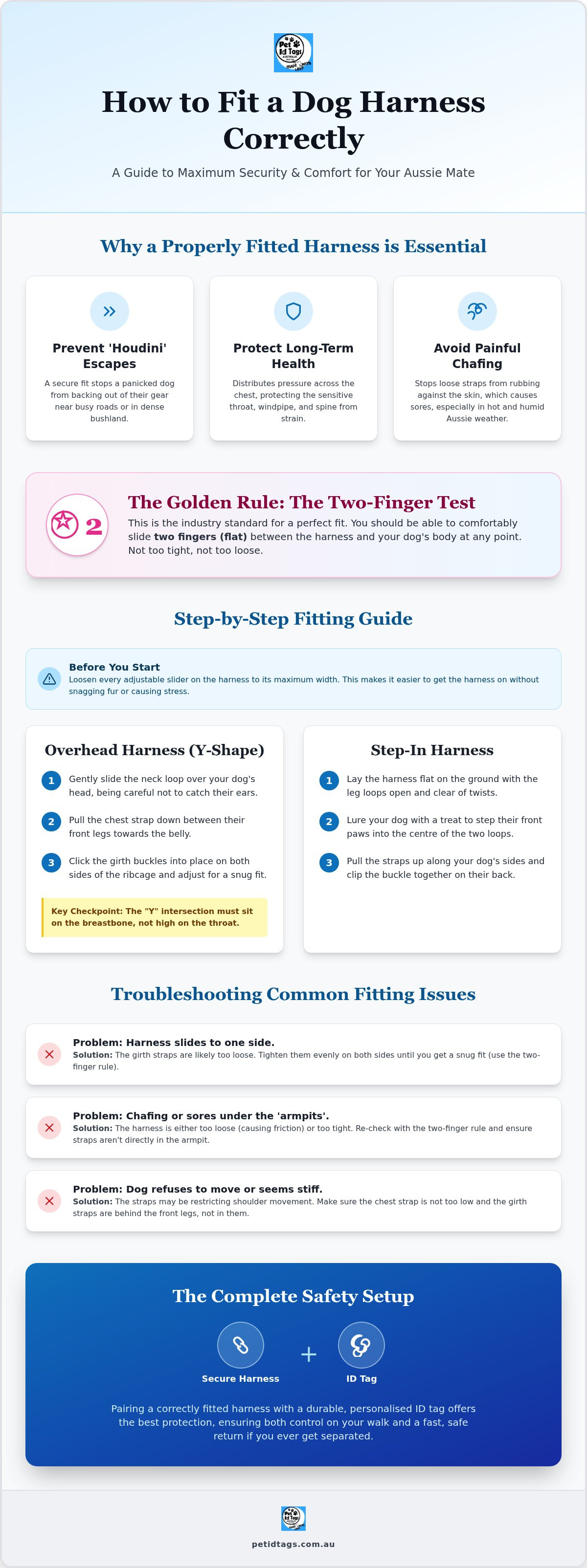
Success starts before you even approach your dog. Most owners struggle because they try to adjust the gear while it's already on a wriggling pet. Before you begin, loosen every adjustable slider to its maximum width. This provides the slack you need to get the harness into position without causing stress or snagging fur. It's also the best time to identify the orientation of the gear. Look for the D-ring; this is almost always located on the back for lead attachment. The chest plate is usually the more padded or wider section. Mastering how to fit a dog harness correctly requires this initial preparation to ensure a smooth, professional result.
The Overhead Harness (Y-Shape or H-Shape)
This style is favoured for its security and ergonomic design. Gently slide the neck loop over your dog's head. Be careful not to catch their ears; this is a common reason dogs become fearful of harnesses. Once the loop is around the neck, pull the chest strap between the front legs toward the belly. Click the girth buckles into place on both sides of the ribcage. The most critical check here is the "Y" intersection. This should sit firmly on the breastbone. If it sits too high, it will press against the throat and cause coughing. If it's too low, it will impede shoulder movement.
The Step-In Harness
Step-in styles are excellent for dogs that are head-shy. Lay the harness flat on the ground, ensuring the leg loops are open and clear of twists. Lure your dog forward with a high-quality treat so they stand directly over the gear. Once their paws are in the centres of the loops, pull the straps up the sides of their body. Secure the buckle over the shoulder blades. You may need to adjust the front chest strap specifically to prevent the harness from gapping when the dog moves. Learning how to fit a dog harness correctly in this style is often faster for anxious pets who dislike things being pulled over their heads.
Once the buckles are clicked, perform a final "shake test". Gently grasp the back of the harness and give it a firm but careful wiggle. It should move slightly but stay centred on your dog's body. If it slides completely to one side or gaps significantly at the chest, tighten the sliders evenly. For a more tailored feel, many owners prefer custom dog harnesses that offer more adjustment points than standard shop-bought versions. Always reward your mate with a treat after fitting to build a positive association with their gear. To find a healthy, high-quality reward, you can explore E-commerce sales of premium fish-based dog food and subscriptions online. This ensures they'll be standing ready and waiting for their next walk.
The Two-Finger Rule and Checking for a Snug Fit
The "Two-Finger Rule" is the definitive benchmark for pet safety in Australia. It's the simplest way to verify you've mastered how to fit a dog harness correctly. To perform this test, slide two fingers between the harness webbing and your dog's body. The straps should feel snug against your fingers without pinching the dog's skin or requiring force to insert your hand. If you can easily fit three or four fingers, the gear is too loose and poses a high escape risk. If you can't slide two fingers in comfortably, it's too tight and will likely restrict your dog's breathing or blood flow.
A common mistake is only checking the fit while your dog is standing perfectly still. In reality, a dog's physical profile changes significantly as they move. A harness that feels perfect while standing may gap at the chest when they sit or pinch the ribcage when they lie down. Always run the two-finger test in all three positions. This is especially vital for fluffy breeds like Border Collies or "Oodles." Their thick coats can create a false sense of security; you must ensure you're measuring against the actual body, not just the volume of the fur.
Australia's unique conditions also play a role in gear maintenance. If you've been for a swim at the beach or caught in a sudden tropical downpour, the material of your harness may stretch or stiffen. Nylon webbing often expands when wet, which can lead to a sudden escape if you don't re-adjust. Always verify the fit once the gear is damp and again once it's fully dry to maintain a consistent level of security. This is where high-quality custom dog harnesses excel, as they often use materials designed to hold their shape better in harsh environments.
Where to Apply the Two-Finger Test
Precision matters when checking the straps. Apply the test under the neck loop first. This ensures the harness doesn't interfere with the windpipe or restrict deep breathing during exercise. Next, check the girth strap behind the front legs. This area is prone to painful chafing if the fit is too loose. Finally, perform a safety pull. If you can pull the buckled harness over your dog's head, it is far too loose. A correctly fitted harness should stay firmly behind the shoulder blades regardless of the lead's angle.
Movement and Comfort Checks
Observation is just as important as the physical test. Watch your dog's gait as they trot. If you notice "bunny hopping" or a refusal to extend their front legs fully, the harness is likely blocking their shoulder blades. Check for gapping at the chest plate when they sit; a large gap can allow a leg to get caught. After your walk, always inspect the skin. Any signs of redness, fur breakage, or sores indicate that you need to re-evaluate how to fit a dog harness correctly for your dog's specific shape.
Troubleshooting Common Fitting Issues and Resistance
Even when you understand the mechanics of how to fit a dog harness correctly, your mate might have other ideas. It is common for dogs to exhibit "statue" behaviour when they first feel the weight of a new harness. They may freeze in place or refuse to walk because the sensation of the straps feels restrictive to their natural movement. This is usually a temporary phase. You can overcome it by ensuring the straps are adjusted evenly on both sides. If a harness keeps sliding to one side during your walk, it is almost always because the girth straps are asymmetrical. Tighten the loose side slightly to centre the gear on the spine.
Managing a dog that is "head shy" requires a different tactical approach. Many dogs find the sensation of gear passing over their ears highly stressful. If your dog flinches or tucks their tail, consider switching to a step-in style or a harness with a buckle on the neck loop. For those with growing puppies, remember that a fit which was perfect last week may be dangerously tight this week. Check the sliders every few days during growth spurts. Similarly, a thick winter coat can significantly change the required strap length compared to a clipped summer coat. Regular adjustments are the only way to maintain safety year-round.
My Dog Hates the Harness: What Now?
Resistance is often a reaction to the sound of the buckles or the physical pressure of the webbing. You can desensitise your dog by clicking the buckles near them while offering high-value treats. This creates a positive association with the sound before the gear even touches their fur. Start with short, indoor sessions where they wear the harness for just five minutes during meal times. Before you head out, always check the hardware for hidden "pinch points." A stray bit of fur caught in a plastic buckle can turn a fun walk into a painful experience, leading to long-term gear aversion.
Dealing with the "Houdini" Escapologist
Some dogs are master escapologists who have learned to tuck their heads and back out of a harness when startled. If you have a backing-out dog, a front-clip harness is a superior choice. When the dog pulls back, the front attachment point redirects their momentum toward you, making it much harder to slip the gear. For absolute peace of mind, use a safety backup lead that connects the harness to the collar. This ensures that even if the harness fails, your dog is still tethered to you. If you are starting with a young dog, refer to our puppy id tag australia guide to ensure their early-stage safety setup is complete.
Mastering these adjustments ensures your dog remains secure regardless of their temperament or the environment. If you find that standard shop-bought gear doesn't cater to your dog's unique proportions, explore our range of custom dog harnesses designed for a precision fit. A well-adjusted harness is the difference between a stressful outing and a confident Aussie adventure.
The Complete Safety Setup: Harness + Personalised ID
Mastering how to fit a dog harness correctly is the first step toward a safe walk, but even the best-adjusted gear is not a substitute for visible identification. If your dog manage to slip their harness or if a buckle fails during a high-energy moment, a durable ID tag is the only thing standing between a quick recovery and a lost pet. A harness without a tag is a missed opportunity. While many owners rely on the microchip, a physical tag provides an instant way for a neighbour or a ranger to contact you without needing a scanner. This immediate connection is vital for your peace of mind.
One critical technical detail often overlooked is the attachment point. Always attach your dog's ID tag to a dedicated ID ring rather than the heavy-duty D-ring used for the lead. Lead attachment points are designed for strength and are often too thick for standard split rings, leading to lost tags. Using a separate, smaller ring ensures the tag stays clear of the lead's hardware, preventing it from being accidentally unclipped or damaged during a vigorous walk. This simple adjustment keeps your contact details secure and readable regardless of how active your mate is.
Why Every Harness Needs a Stainless Steel Tag
In the harsh Australian environment, material choice is everything. While aluminium tags are lightweight, they often corrode or fade when exposed to salty coastal air and the intense Aussie sun. We recommend deep-engraved stainless steel tags because they remain legible for a lifetime. If you want to understand more about why certain materials fail, read our guide on why pet id tags fade. To make moving your identification between different sets of gear effortless, you can use a dog tag quick clip australia, which allows you to swap tags from a collar to a harness in seconds without breaking a fingernail.
The Benefit of Custom Dog Harnesses
Modern pet safety has evolved to include visual identification built directly into the gear. Custom dog harnesses with embroidered names provide instant recognition from a distance. This is particularly helpful for nervous dogs, as it allows strangers to identify the dog's name or a "Caution" message without having to grab the collar or get too close. This visual ID works perfectly alongside a physical tag. For a truly modern setup, consider adding a smart pet tag to the harness. This provides a digital backup that can store multiple contact numbers and medical information, ensuring your dog has a comprehensive safety net.
By combining your knowledge of how to fit a dog harness correctly with a robust identification strategy, you create a complete safety system. Your dog stays comfortable, you maintain control, and your contact details are always present. This professional approach to gear ensures that every Aussie adventure is defined by security and confidence rather than worry.
Ready for Your Next Secure Aussie Adventure
Mastering how to fit a dog harness correctly is one of the most practical ways to ensure your mate stays safe and comfortable on every outing. By consistently applying the two-finger rule and checking the fit in various positions, you eliminate the risk of "Houdini" escapes and painful skin irritation. Remember that gear needs regular attention; always adjust for seasonal coat changes and re-verify the tension after a swim at the beach. A secure harness paired with a robust identification strategy provides the professional safety net every pet owner deserves.
Since 2004, we have been a trusted partner for Aussie pet owners, providing high-quality solutions designed for local conditions. Our deep-engraved stainless steel tags are built to remain legible for a lifetime, even when exposed to harsh salt air and intense sun. Don't leave your dog's security to chance with generic, flimsy alternatives. Browse our range of Custom Dog Harnesses and Stainless Steel Tags to find a durable, precision-engineered setup for your dog. With the right fit and reliable ID, you can head out on your next adventure with total confidence.
Frequently Asked Questions
How tight should a dog harness be?
A dog harness should be snug enough to stay in place without restricting your mate's breathing or natural movement. You should be able to slide two fingers between the straps and your dog's body comfortably. If the gear is too loose, your dog might slip out during a walk; if it is too tight, it will cause painful chafing. Always perform this check while your dog is standing to get the most accurate result.
Can a dog wear a harness and a collar at the same time?
Your dog can certainly wear both a harness and a collar simultaneously. In fact, many Aussie owners prefer this setup because it provides a safety backup if one piece of equipment fails. The harness handles the physical restraint during the walk, while the collar serves as a permanent home for legal identification tags. This ensures your dog is always identifiable, even when the harness is removed at the end of the day.
Is it better to have a front-clip or back-clip harness for pulling?
Front-clip harnesses are superior for managing dogs that tend to lunge or pull on the lead. By attaching the lead to the chest, the harness gently redirects your dog's momentum back toward you whenever they try to surge forward. Back-clip harnesses are excellent for well-trained dogs or those with sensitive necks, but they can actually encourage pulling in some breeds by engaging their natural opposition reflex.
How do I know if the harness is rubbing my dog?
You will notice signs of rubbing by looking for redness, fur breakage, or thinning patches of hair, particularly in the "armpit" area or across the chest. Inspect your dog's skin after every walk for any signs of heat or irritation. If the fur looks crimped or broken, it is a clear indicator that the straps are moving too much. Understanding how to fit a dog harness correctly is the best way to prevent these painful sores from developing in the first place.
Should I leave the harness on my dog all day at home?
It is not advisable to leave a harness on your dog for extended periods while they are indoors or unsupervised. Constant wear can lead to skin irritation and fur matting, especially in the humid Australian climate. There is also a risk of the harness snagging on furniture or your dog chewing through the webbing. Remove the gear once you return from your walk to allow the skin to breathe and stay healthy.
What is the best way to measure a dog for a harness fit?
Use a flexible fabric measuring tape to find the circumference of the widest part of the ribcage, usually a few centimetres behind the front legs. You should also measure the lower neck where the harness loop will sit. Always refer to the specific size chart for your chosen gear, as dimensions vary significantly between different brands. Taking accurate measurements is the first step in learning how to fit a dog harness correctly for a secure walk.
How do I stop my dog from backing out of their harness?
Most dogs back out because the girth strap is too loose or the neck loop is too large for their head size. Tighten the adjustments so they pass the two-finger test in all positions, including when the dog is sitting. If you have a known "Houdini," look for a harness with an extra belly strap that sits further back on the narrowing waist. This physical barrier makes it almost impossible for the dog to pull their shoulders through the loops.
Can a puppy wear a harness from 8 weeks old?
Puppies can begin wearing a lightweight harness as soon as they are ready for basic lead training at 8 weeks old. Introducing the gear early helps them become accustomed to the sensation before they start formal walks in public. Choose a soft, highly adjustable model that can grow with them during their rapid development phase. Frequent checks are essential, as a puppy can outgrow their harness fit in a matter of days.