

Table of Contents
- What Makes a Cat Tag Safe for a Kitten?
- Quick Comparison: Top Cat Tags for Kittens
- Cat Collar with Pet Tag: The All-in-One Safety Solution
- Paw Pet Tag - Aluminium: Lightweight Everyday Identification
- Round and Bone Aluminium Tags: Affordable Personalised Pet ID Tags
- Smart Pet ID Tag: Digital Identification with QR Code
- Understanding Breakaway Cat Collars for Kittens
- Kitten Safety Collar Guidelines: Weight, Size and Fit
- Frequently Asked Questions
Last Updated: September 7, 2026
Choosing the best cat tags for kittens isn't about picking the cutest shape or the brightest colour, it's about safety first. A tag that is too heavy, too large, or attached to the wrong collar can turn a simple identification accessory into a hazard for a growing feline. Kitten-specific cat tags for kittens need to be lightweight, durable, and compatible with the breakaway collars that most owners rely on for safety. At Pet ID Tags Australia, we have spent over 20 years helping pet owners choose safe, reliable identification.
The most important rule is this: a tag should never outweigh the collar it hangs on, and the engraving must remain readable for the life of the tag. Below, we break down what makes a tag genuinely safe for kittens, compare the top options available, and show you exactly how to match a tag to a growing cat's size and weight.
What Makes a Cat Tag Safe for a Kitten?
A safe cat tag for a kitten is lightweight, smoothly finished, and securely attached with a split ring that will not snag. Kitten-sized tags should weigh only a few grams, because a heavy tag pulls on a young neck and can cause discomfort or even injury during active play. The material matters as much as the weight: anodised aluminium offers a balance of durability and lightness that suits kittens, while stainless steel is heavier and better reserved for adult cats or larger breeds.
Engraving depth is another safety consideration. Deep laser engraving keeps your contact information readable for years, whereas printed tags can peel or fade quickly, leaving your kitten with no working identification when it matters. Look for tags with rounded edges and no sharp burrs that could scratch a kitten's skin during grooming or play. A tag that is silent or attached to a breakaway collar will also reduce the risk of the tag catching on branches, fences, or furniture.
Quick Comparison: Top Cat Tags for Kittens
The table below summarises the best kitten-safe cat tags we offer, based on weight, durability, and how well each suits a growing cat.
| Tag Option | Material | Starting Price | Best For | Key Safety Feature |
|---|---|---|---|---|
| Cat Collar with Pet Tag | Anodised aluminium + nylon | $29.00 | All-in-one safety | Elastic breakaway release |
| Paw Pet Tag - Aluminium | Lightweight aluminium | $16.50 | Everyday lightweight wear | Large bold engraving both sides |
| Bone Aluminium Tags | Anodised aluminium | $17.90 | Affordable personalised ID | Scratch-resistant finish |
| Smart Pet ID Tag | Aluminium + QR code | $34.90 | Digital identification | Updateable profile, no re-engraving |
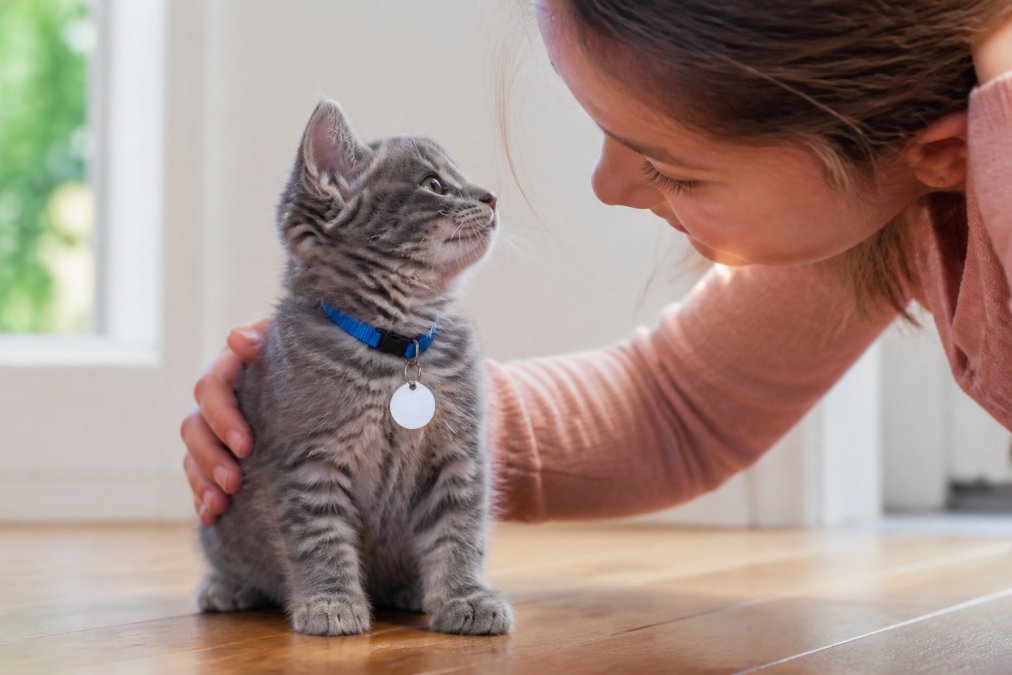
Every option here is lightweight enough for a kitten, but the right choice depends on whether you want a collar included, a simple tag to add to an existing collar, or a digital profile you can update as your contact details change.

Cat Collar with Pet Tag: The All-in-One Safety Solution
Our top pick for kittens is the Cat Collar with Pet Tag, priced at $29.00. This Australian-made set pairs a personalised anodised aluminium tag with an adjustable nylon webbing collar designed specifically for feline safety. The collar features a two-part release buckle with elastic, which allows a kitten to escape if the collar gets caught on something, a critical feature for young, adventurous cats.

The tag itself is personalised with deep laser engraving on both sides, and the collar includes a stainless steel D-ring to secure the tag firmly. A matching bell is included, which helps you keep track of an active kitten exploring the house. This is the simplest way to ensure your kitten has both a safe collar and a reliable tag from day one, with no risk of mismatched components.
Paw Pet Tag - Aluminium: Lightweight Everyday Identification
For owners who already have a safe breakaway collar and just need a dependable tag, the Paw Pet Tag - Aluminium at $16.50 is an excellent choice. Made in Australia from lightweight aluminium, this tag is barely noticeable to a kitten, which means less fiddling and fewer attempts to remove it. The paw print design is charming, but the real value is the large, bold font used for your pet's name and the clear, readable contact details on the back.
This tag uses laser engraving on both sides, so the information will not rub off or fade with daily wear. It is a practical, fashionable option that keeps your kitten comfortable while ensuring anyone who finds them can read your details at a glance.
Round and Bone Aluminium Tags: Affordable Personalised Pet ID Tags
The Round and Bone aluminium tags, including the Black, Blue, Pink, Red, Green, and Purple Bone options, all priced at $17.90, are the budget-friendly workhorses of personalised pet ID tags. Each is crafted from lightweight anodised aluminium and professionally engraved with your kitten's name and contact details. The anodised finish resists scratches and corrosion.

These tags are suitable for both cats and dogs, and they come with a durable split ring for easy collar attachment. The vibrant colours make the tag easy to spot, and the crisp white engraving stays legible for years. If you want a reliable, affordable tag that comes in a colour your kitten will be proud to wear, these are the ones to choose.
Smart Pet ID Tag: Digital Identification with QR Code
The Smart Pet ID Tag at $34.90 is the modern answer to a common problem: what happens when your phone number changes? Instead of buying a whole new engraved tag, this option links a scannable QR code to a digital profile you can update online at any time. If your kitten is found, the finder simply scans the code with a smartphone to access your current contact information.
This tag is a brilliant companion to a traditional engraved tag, offering an extra layer of protection for kittens who are prone to wandering. It is lightweight enough for daily wear and attaches easily to any cat collar. For owners who want peace of mind without the hassle of reordering tags every time their details change, this is the smart choice.
Understanding Breakaway Cat Collars for Kittens
Breakaway cat collars are the single most important safety device for a kitten that spends any time outdoors or in a house with accessible windows, balconies, or high shelves. Unlike a standard buckle collar, a breakaway collar is designed with a two-part release mechanism that separates when a specific amount of force is applied, typically between 2.5 and 4.5 kilograms of pull. This allows a kitten to slip free if the collar catches on a branch, fence post, or piece of furniture, preventing strangulation or a prolonged entrapment.
How the Release Mechanism Works
There are two main types of breakaway mechanisms. The first is a plastic buckle with a curved release tab that pops open when pressure is applied from the correct angle. The second is a magnetic clasp that separates when pulled apart with sufficient force. Both are effective, but they behave differently with a tag attached. A plastic buckle mechanism requires the collar to twist or pull at an angle to release, while a magnetic clasp releases more readily with a straight pull. For kittens, a magnetic clasp is often preferred because it releases more predictably, but it also means the collar may come off more easily during rough play.
The Tag Weight Problem
Here is the issue most guides miss: a heavy tag can defeat the purpose of a breakaway collar. When a kitten runs, jumps, or shakes their head, the tag swings and creates momentum. If the tag weighs more than roughly 10% of the collar's release threshold, that momentum can trigger the breakaway mechanism during normal movement. The result is a collar that pops off in the backyard, not because it snagged on anything, but because the tag's weight caused a false release. This is why pairing a 3-5 gram aluminium tag with a breakaway collar rated for 2.5-3.5 kilograms is the recommended combination for kittens. A heavier stainless steel tag, even on a properly rated collar, can cause intermittent releases that leave your kitten unidentified.
Testing the Release Before First Wear
Before fitting a breakaway collar on your kitten, test the release mechanism yourself. Attach the collar to a fixed point, then pull steadily on the tag end. The collar should release with a firm, consistent pull, not so easily that it falls off when the kitten scratches, but not so firmly that it would not release under a genuine snag. Most quality breakaway collars are tested to release within a specific force range, but batch variation exists. If the collar does not release when you pull with moderate force, return it and try a different brand.
Fitting the Collar Correctly
A breakaway collar only works if it is fitted correctly. The collar should sit high on the neck, just below the jawline, not low on the throat where it can cause discomfort or interfere with swallowing. You should be able to slide two fingers comfortably between the collar and the neck. Kittens grow quickly, often gaining 100-150 grams per week in their first few months, so check the fit every three to four days and loosen it as needed. A collar that becomes too tight can rub the skin raw or, in extreme cases, become embedded. A collar that is too loose can slip over the head or catch on the kitten's lower jaw during grooming.
Kitten Safety Collar Guidelines: Weight, Size and Fit
Kitten safety collar guidelines start with the fit. A collar should be snug enough that you can slide two fingers between the collar and your kitten's neck, but loose enough that it does not rub or choke. Kittens grow quickly, so check the fit weekly and adjust the collar as needed to prevent it from becoming too tight.
The tag itself should be proportionate to the kitten's size. A small or medium tag is appropriate for most kittens, while a large tag could be uncomfortable and cause the collar to twist. The engraving quality is your last line of defence: deep, clear engraving ensures that if your kitten does slip out and get lost, the person who finds them can read your number and bring them home. At Pet ID Tags Australia, every tag is engraved to order in our local workshop and inspected before dispatch.
Choosing the right cat tags for kittens comes down to three things: lightweight materials, deep engraving, and compatibility with a breakaway collar. The wrong choice can mean a lost tag, a lost kitten, or worse, an injury from a heavy or snagged accessory. Pet ID Tags Australia offers a range of kitten-safe tags, from the all-in-one Cat Collar with Pet Tag to lightweight aluminium options and updateable smart tags, all backed by over 20 years of engraving experience and fast delivery from our local workshop. Get started with Pet ID Tags Australia and give your kitten safe, reliable identification they can grow into.
Frequently Asked Questions
At what age can a kitten safely wear a collar and tag?
Most kittens can start wearing a collar and tag around 8 weeks of age, once they are eating solid food and their neck has reached a safe size. The collar should fit snugly with room for two fingers between the collar and the neck. Choose a lightweight aluminium tag weighing under 5 grams so it does not strain a growing kitten's neck. Always use a breakaway collar with an elastic safety release so the collar releases if it catches on anything.
What is the best type of tag for a kitten?
A lightweight aluminium tag is the best choice for kittens because it provides clear identification without weighing down a small neck. Look for tags with deep laser engraving on both sides, which stays readable for years. Slide-on tags that attach directly to the collar are another safe option because they do not dangle or get caught on objects. Avoid heavy stainless steel tags until your kitten reaches adult size, and always pair the tag with a breakaway collar.
Should I put an ID tag on my indoor kitten?
Yes, indoor kittens should wear an ID tag too. Even indoor cats can slip through an open door or escape through a torn screen. A personalised pet ID tag with your phone number gives anyone who finds your kitten a direct way to contact you. Microchipping is important, but a microchip only helps once the kitten reaches a vet or shelter. A visible tag gets your kitten home much faster, often within hours instead of days.
What information should be included on a kitten's ID tag?
Include your kitten's name and your mobile phone number as the primary contact. If space allows, add a second contact number or a simple message like 'I am lost, please call'. Avoid putting your home address on the tag for privacy reasons. For kittens, the name and phone number are usually enough, since the goal is a quick phone call. Deep laser engraving keeps the details readable even after months of daily wear.
What is the difference between aluminium and stainless steel tags for kittens?
Aluminium tags are roughly half the weight of stainless steel, making them the safer choice for kittens whose necks are still developing. A typical aluminium tag weighs only 3 to 5 grams, which a kitten can wear comfortably. Stainless steel tags are more scratch-resistant but are heavier and better suited to adult dogs or larger cats. For kittens, aluminium offers the right balance of lightweight comfort, durability and clear engraving.