

Table of Contents
- 1. Use a Secure Dog Harness and Lead for Complete Control
- 2. Ensure Your Dog Wears a Dog Collar and ID Tag
- 3. Master Recall and Keep Your Dog Close
- 4. Maintain Safe Distance from Unfamiliar Dogs and Read Body Language
- 5. Follow Dog Park Etiquette and Supervise Play
- 6. Protect Against Environmental Hazards and Heat
- 7. Know What to Do If Your Dog Gets Lost
- Frequently Asked Questions
Last Updated: October 10, 2026
1. Use a Secure Dog Harness and Lead for Complete Control
A secure harness and lead are your first line of defense when keeping your dog safe in public. Unlike a standard collar, a well-fitted harness distributes pressure across your dog's chest and shoulders, giving you complete control without risking neck or throat injury.
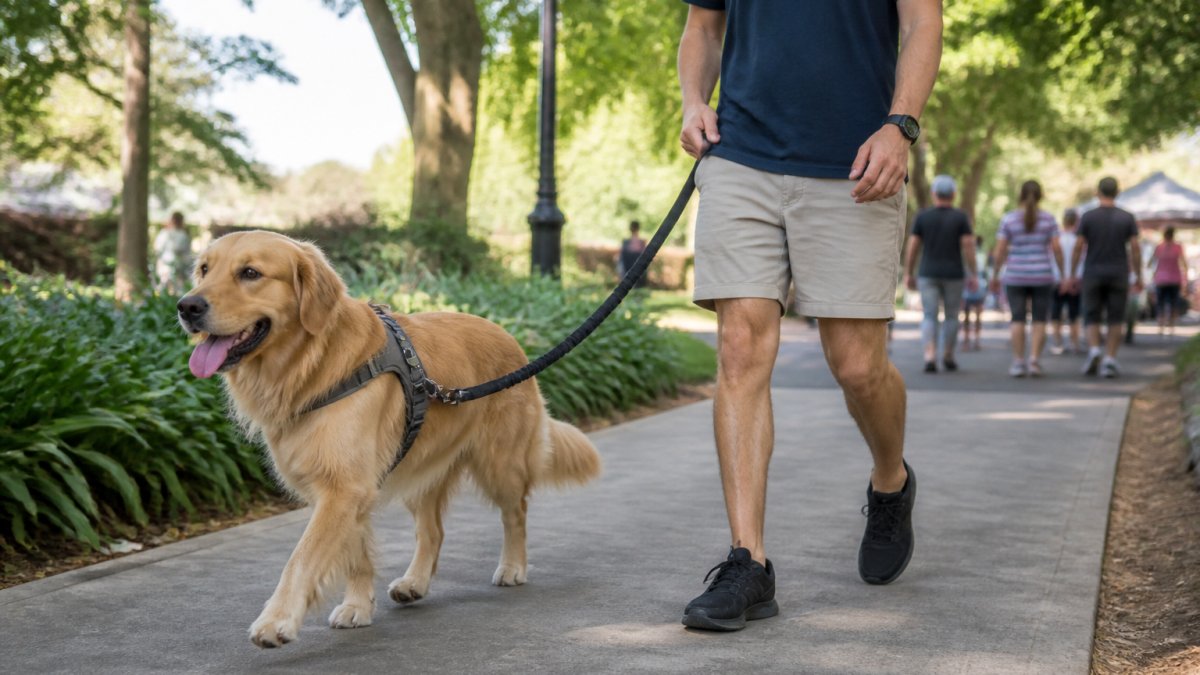
The no-pull design redirects your dog's forward momentum when they lunge, gently guiding them back to your side rather than letting them drag you forward. A padded harness with adjustable straps ensures a snug fit that won't slip over your dog's head, even for escape artists.
Our Personalised No-Pull Dog Harness ($39.90) combines breathable mesh with reflective straps and a front-clip attachment point. It's available in five sizes across all breeds, with custom personalisation so your dog's details are visible. The padded design reduces chafing during long walks.
Pair your harness with a shock-absorbing lead. Our Bungee Dog Lead ($19.90) stretches when your dog pulls, softening sudden jolts and reducing strain on both you and your dog. The padded handle provides a secure, comfortable grip during long outings.
2. Ensure Your Dog Wears a Dog Collar and ID Tag
Your dog should always wear a collar with an ID tag when in public spaces. If your dog becomes separated from you, an ID tag is often the fastest way for someone to reunite you with your pet. A collar with your contact details provides immediate identification without requiring a smartphone scan or database lookup.

Deep laser engraving ensures your details remain readable for years, even after daily wear and rough play.
Our Pink Personalised Reflective Dog Collar ($34.90) comes custom engraved with your dog's name and phone number. The reflective material helps your dog stand out during walks, especially in low-light conditions or near traffic. This dual benefit, visibility and identification, makes reflective collars essential for public outings.

For added security, consider a smart tag alongside your traditional collar. Our Smart Pet ID Tag with QR Code ($34.90) features a scannable code linked to your pet's digital profile. When someone finds your dog, they can scan the QR code with any smartphone to access your contact information and update it online anytime without replacing the tag.
3. Master Recall and Keep Your Dog Close
Strong recall is one of the most important safety skills among the 7 ways to keep your dog safe in public. A dog that responds reliably to their name or a recall command can be brought back to your side instantly if they bolt toward traffic, another dog, or an unfamiliar person.
Start recall training in low-distraction environments and gradually increase difficulty. Use high-value rewards, treats, praise, or play, every single time your dog returns to you. Consistency builds reliability. Never call your dog to you for something unpleasant (like ending playtime or giving medication), as this teaches them to ignore the recall command.
In public spaces, keep your dog within arm's reach or on a short lead, especially in areas with traffic, crowds, or other dogs. Even well-trained dogs can be distracted by wildlife, other animals, or novel environments. Maintaining physical control through a lead or close proximity prevents split-second decisions that could lead to injury.
4. Maintain Safe Distance from Unfamiliar Dogs and Read Body Language
Not every dog you encounter in public is friendly or well-socialised. Maintaining safe distance from unfamiliar dogs and learning to read canine body language helps you avoid confrontations that could injure your dog or escalate into an attack.
Personalised Dog Harness & Lead Set with Car Seat Belt Bundle →
A dog showing stiff body posture, direct stare, raised hackles, or a tucked tail is stressed or fearful. A dog with forward-facing ears, relaxed mouth, and loose body movement is typically calm. If an unfamiliar dog approaches, create distance by moving sideways or backward, and keep your own dog close to your body.
Never allow your dog to greet an unfamiliar dog without permission from their owner, and never assume a dog is friendly because it's small or looks approachable. Reactive dogs, those that lunge, bark, or snap at other dogs, can cause serious injury even if they don't intend to.
If an off-leash dog approaches aggressively, use your body as a shield between the dogs, raise your voice with a firm "No," and back away slowly. Do not run, as this can trigger a chase response. Once you're at safe distance, contact the dog's owner or local animal control to report the incident.
5. Follow Dog Park Etiquette and Supervise Play
Dog parks offer valuable socialisation and exercise, but they require active supervision and respect for other park users. Always keep your dog within sight, intervene immediately if play becomes too rough, and remove your dog if they're showing signs of stress or fear.
Before entering, check that your dog is up-to-date on vaccinations and parasite prevention. Ensure the park has separate areas for small and large dogs, as size mismatches can lead to accidental injury during play.
Watch for play styles that don't match your dog's comfort level. Some dogs enjoy wrestling and intense play, while others prefer calmer interactions. If your dog is being overwhelmed or is overwhelming others, it's time to leave. Responsible dog park behaviour means recognising when your dog has had enough and exiting before conflict occurs.
Clean up after your dog immediately. Leaving waste creates health hazards for other dogs and is disrespectful to other park users and maintenance staff. Carry waste bags and dispose of them in designated bins.
6. Protect Against Environmental Hazards and Heat
Public spaces present hazards beyond other dogs. Heat, toxic substances, choking hazards, and traffic all pose risks during outdoor outings. Protecting your dog means identifying and avoiding these dangers before they cause harm.
On warm days, check that pavement or sand isn't too hot for your dog's paws by placing your hand on the surface for five seconds. If you can't hold your hand there comfortably, your dog can't either. Carry water and offer regular breaks in shade. Never leave your dog in a parked car, even for a few minutes, temperatures inside a vehicle rise dangerously fast.
Avoid areas where toxic substances are present: pesticide-treated gardens, discarded food, antifreeze, or chocolate. Watch for small objects your dog might swallow, such as sticks, stones, or packaging. If your dog shows signs of choking, gagging, drooling excessively, or difficulty breathing, seek veterinary help immediately.
Keep a basic first-aid kit during outings: bandages, antiseptic wipes, and any medications your dog requires. Know the location of the nearest emergency veterinary clinic before you need it.
7. Know What to Do If Your Dog Gets Lost
Despite your best efforts, dogs sometimes go missing. Knowing how to respond quickly increases the chances of a safe reunion. The first hours after a dog goes missing are critical.
Personalised Dog Harness & Lead Set with Car Seat Belt Bundle →
If your dog escapes, search the immediate area thoroughly. Check hiding spots: under bushes, behind parked cars, or in nearby gardens. Ask neighbours and local businesses if they've seen your dog.
Contact your local animal shelter, veterinary clinics, and animal control to report your dog missing. Provide a detailed description, including any identifying marks, breed, size, and colour. Leave your contact number so they can reach you if your dog is brought in.
Microchipping through your veterinarian is essential. If someone takes your dog to a vet or shelter, a microchip scan will identify you as the owner. Ensure your microchip registration details are current, an outdated address or phone number defeats the purpose.
ID tags with your current phone number are the fastest way for a stranger to contact you directly. This is why keeping your contact details current on both traditional tags and smart tags matters.
| Safety Layer | Purpose | How It Helps |
|---|---|---|
| Harness and lead | Physical control | Prevents escape and pulling in public spaces |
| ID collar and tag | Immediate identification | Allows finders to contact you directly |
| Recall training | Emergency control | Brings your dog back if they slip away |
| Safe distance from unfamiliar dogs | Conflict prevention | Avoids confrontations and bites |
| Dog park supervision | Active monitoring | Catches problems before they escalate |
| Environmental awareness | Hazard avoidance | Prevents heat, toxin, and traffic injuries |
| Microchip and current registration | Permanent identification | Ensures reunion even if collar is lost |
These 7 ways to keep your dog safe in public require multiple layers of protection working together. A secure harness gives you control, an ID tag enables quick reunion if your dog escapes, and recall training provides a backup safety system.
At Pet ID Tags Australia, we've helped over 100,000 pet owners protect their dogs with durable, personalised identification and secure accessories. Our Personalised Dog Harness & Lead Set with Car Seat Belt Bundle ($64.90) combines a no-pull harness, shock-absorbing bungee lead, and car seat belt attachment in one complete safety system.

Frequently Asked Questions
What's the best way to keep your dog safe in public spaces?
The foundation of public safety is a secure harness, a reliable lead, and proper identification. A no-pull harness redirects your dog's forward momentum through a front-clip attachment, preventing escape and reducing strain on their neck. Pair this with a shock-absorbing lead and ensure your dog wears a personalised ID tag or smart QR code tag so they can be identified quickly if separated from you. Practise recall regularly and keep your dog close in busy areas.
How do I choose the right secure dog harness for public outings?
A secure dog harness should have adjustable straps for a snug fit, padded panels to prevent chafing, and ideally a front-clip attachment point to reduce pulling. Measure your dog's chest, neck, and belly to ensure proper sizing; a well-fitted harness won't slip over their head but allows two fingers to slide underneath comfortably. Look for durable materials and reflective stitching for visibility. The Personalised No-Pull Dog Harness ($39.90) offers five sizes, breathable mesh, and a no-pull design that works well for dogs of all sizes.
Should my dog wear both a collar and a harness in public?
Yes. A collar with an engraved ID tag or smart tag provides immediate identification if your dog becomes separated from you, while a harness offers secure control during walks. A personalised reflective collar like the Pink Personalised Reflective Dog Collar ($34.90) provides both safety and identification. For maximum security, combine a harness with a collar and ID tag, if your dog slips the harness, the collar and tag ensure they can still be identified and returned to you.
What should I do if my dog gets lost in a public place?
Act quickly. If your dog has a microchip or smart ID tag with a QR code, notify the microchip registry and contact local vets and animal shelters immediately. Post on local lost-pet groups and social media with a clear photo. If your dog wears a traditional engraved tag, anyone who finds them can call directly. Smart tags like the Pawzee Smart Pet ID Tag ($34.90) allow finders to scan a QR code and access your contact details instantly without calling anyone. Keeping your contact information current on any ID system is critical.
How important is dog park etiquette for keeping my dog safe?
Dog park etiquette is essential for preventing injuries and conflicts. Always supervise your dog, keep them on a lead until inside the designated off-leash area, pick up waste promptly, and remove your dog if they show signs of stress or aggression. Avoid bringing toys or treats that trigger resource guarding, and respect other owners' boundaries. Recognise signs of fear or tension in other dogs and maintain distance. A well-managed dog park with responsible owners reduces the risk of incidents significantly.